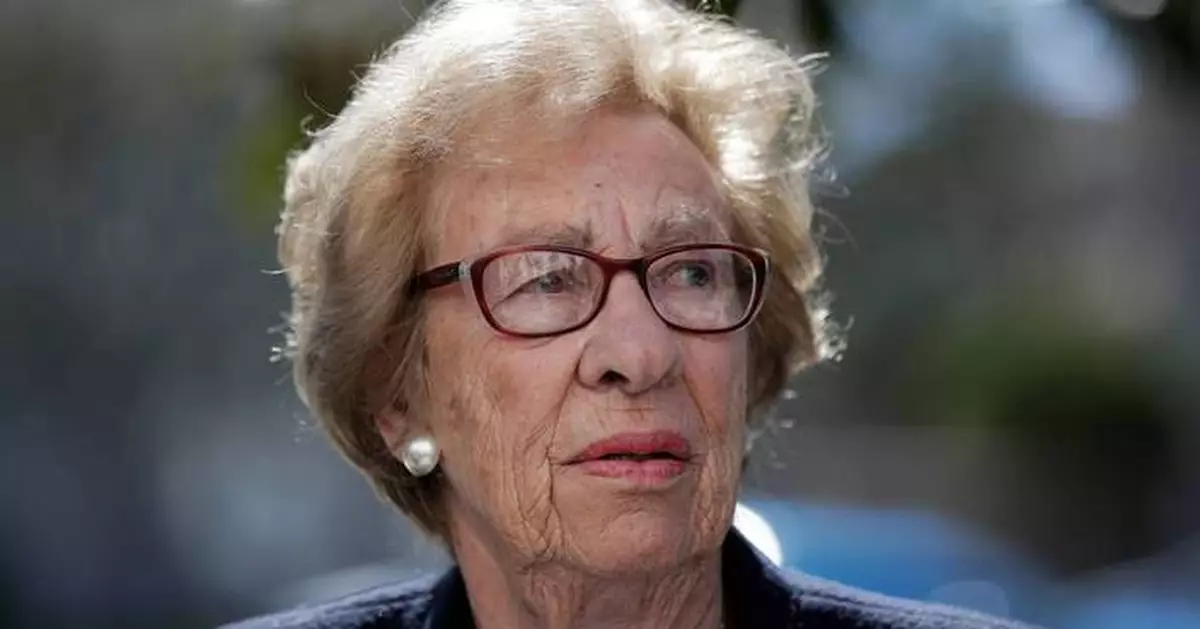
LONDON (AP) — Auschwitz survivor Eva Schloss, the stepsister of teenage diarist Anne Frank and a tireless educator about the horrors of the Holocaust, has died. She was 96.
The Anne Frank Trust UK, of which Schloss was honorary president, said she died Saturday in London, where she lived.
Britain’s King Charles III said he was “privileged and proud” to have known Schloss, who co-founded the charitable trust to help young people challenge prejudice.
“The horrors that she endured as a young woman are impossible to comprehend and yet she devoted the rest of her life to overcoming hatred and prejudice, promoting kindness, courage, understanding and resilience through her tireless work for the Anne Frank Trust UK and for Holocaust education across the world,” the king said.
Born Eva Geiringer in Vienna in 1929, Schloss fled with her family to Amsterdam after Nazi Germany annexed Austria. She became friends with another Jewish girl of the same age, Anne Frank, whose diary would become one of the most famous chronicles of the Holocaust.
Like the Franks, Eva's family spent two years in hiding to avoid capture after the Nazis occupied the Netherlands. They were eventually betrayed, arrested and sent to the Auschwitz death camp.
Schloss and her mother Fritzi survived until the camp was liberated by Soviet troops in 1945. Her father Erich and brother Heinz died in Auschwitz.
After the war, Eva moved to Britain, married German Jewish refugee Zvi Schloss and settled in London.
In 1953, her mother married Frank’s father, Otto, the only member of his immediate family to survive. Anne Frank died of typhus in the Bergen-Belsen concentration camp at the age of 15, months before the end of the war.
Schloss did not speak publicly about her experiences for decades, later saying that wartime trauma had made her withdrawn and unable to connect with others.
“I was silent for years, first because I wasn’t allowed to speak. Then I repressed it. I was angry with the world,” she told The Associated Press in 2004.
But after she addressed the opening of an Anne Frank exhibition in London in 1986, Schloss made it her mission to educate younger generations about the Nazi genocide. Over the following decades she spoke in schools and prisons, at international conferences and told her story in books including “Eva’s Story: A Survivor’s Tale by the Stepsister of Anne Frank.”
She kept campaigning into her 90s. In 2019, she traveled to Newport Beach, California to meet teenagers who were photographed making Nazi salutes at a high school party. The following year she was part of a campaign urging Facebook to remove Holocaust-denying material from the social networking site.
“We must never forget the terrible consequences of treating people as ‘other,’” Schloss said in 2024. “We need to respect everybody’s races and religions. We need to live together with our differences. The only way to achieve this is through education, and the younger we start the better.”
Schloss’ family remembered her as “a remarkable woman: an Auschwitz survivor, a devoted Holocaust educator, tireless in her work for remembrance, understanding and peace.”
“We hope her legacy will continue to inspire through the books, films and resources she leaves behind,” the family said in a statement.
Zvi Schloss died in 2016. Eva Schloss is survived by their three daughters, as well as grandchildren and great-grandchildren.
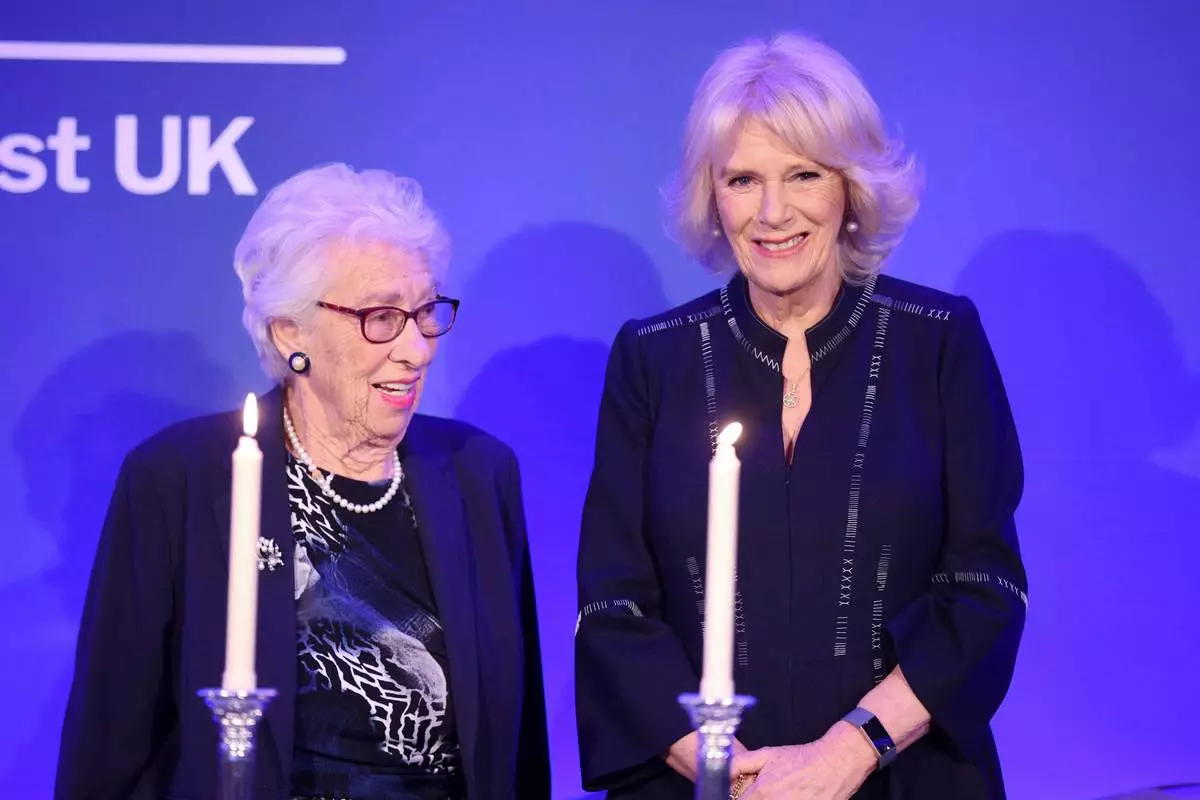
FILE - Britain's Camilla, Duchess of Cornwall, right, and Eva Schloss, step-sister of Anne Frank and Honorary President of the Anne Frank Trust UK, take part in a candle lighting ceremony during a reception for the Anne Frank Trust in London, Thursday Jan. 20, 2022. (Chris Jackson/Pool via AP, file)
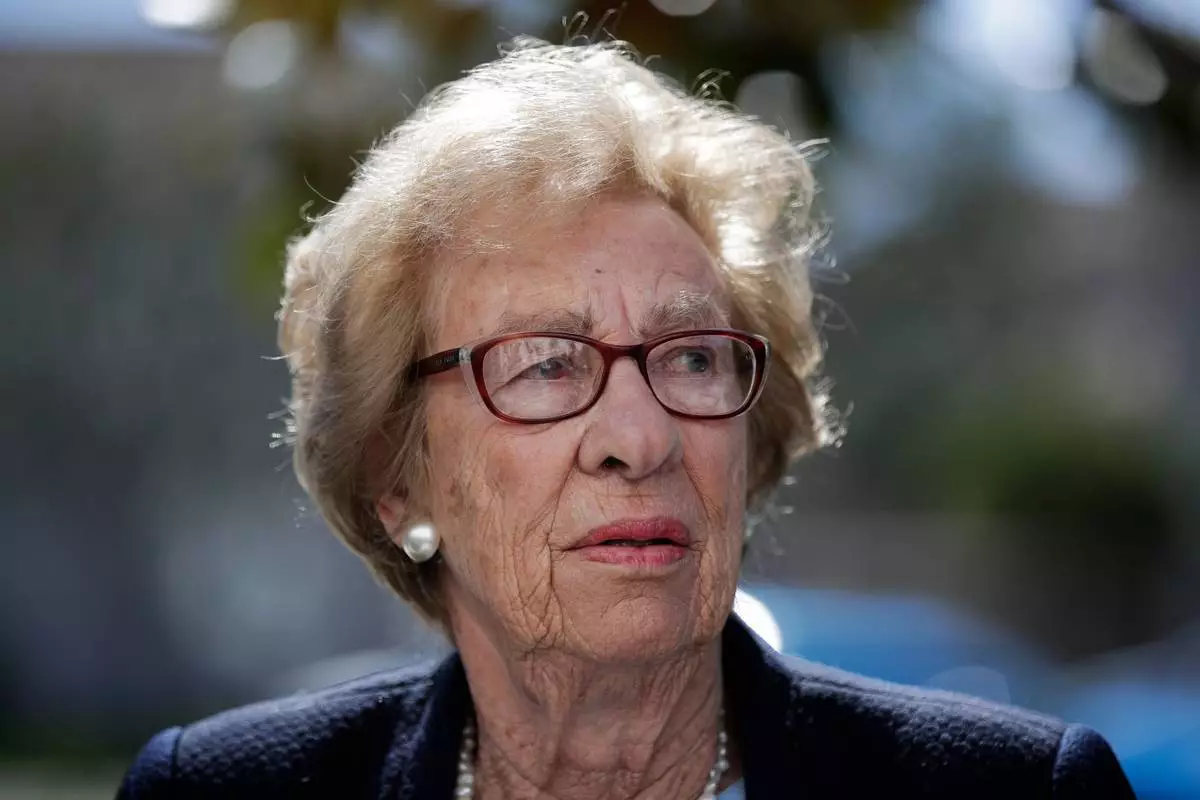
FILE - Eva Schloss, the stepsister of Anne Frank and a Holocaust survivor, attends a news conference in Newport Beach, Calif. Thursday, March 7, 2019 (AP Photo/Jae C. Hong, file)
DUBAI, United Arab Emirates (AP) — Semiofficial news agencies in Iran published a chart Thursday suggesting the country’s paramilitary Revolutionary Guard put sea mines into the Strait of Hormuz during the war, in a message that may be intended to pressure the U.S. as uncertainty hangs over a days-old two-week ceasefire and further negotiations are expected in Pakistan.
The charts were released by the ISNA news agency, as well as Tasnim, which is believed to be close to the Guard. They showed a large circle marked “danger zone” in Farsi over the Traffic Separation Scheme, which was the route ships take through the strait, the narrow mouth of the Persian Gulf through which 20% of all oil and natural gas traded once passed.
The chart suggested ships travel further north through waters closer to Iran’s mainland near Larak Island, a route that some ships were observed taking during the war.
The charts were dated from Feb. 28 until Thursday, April 9, and it was unclear if the Guard had cleared any mining on the route since then.
Oil rose again to above $97 a barrel and Asian stocks were trading lower Thursday on skepticism over the ceasefire. Brent crude, the international standard, was up 2.9% to $97.46 per barrel. It had fallen briefly to below $92 following the temporary ceasefire announcement. Benchmark U.S. crude was 3.7% higher Thursday at $97.94 per barrel.
Ship-tracking data from Kpler showed only four vessels with their Automatic Identification System trackers on passed through the Strait of Hormuz on Wednesday, the first day of the ceasefire. However, that does not include so-called “dark fleet” vessels, which travel with their AIS trackers turned off. Many of those “dark fleet” ships carry sanctioned Iranian crude oil out to the open market.
U.S. President Donald Trump posted a statement insisting that his surge of warships and troops will remain around Iran “until such time as the REAL AGREEMENT reached is fully complied with.”
Trump’s comments on his Truth Social platform appeared to be a way to pressure Iran.
“If for any reason it is not, which is highly unlikely, then the ‘Shootin’ Starts,’ bigger, and better, and stronger than anyone has ever seen before,” Trump wrote.
He also insisted Iran would not be able to build nuclear weapons and “the Strait of Hormuz WILL BE OPEN & SAFE.”
The U.S. and Iran both claimed victory after reaching the ceasefire agreement, and world leaders expressed relief. But more drones and missiles hit Iran and Gulf Arab countries after the deal was announced.
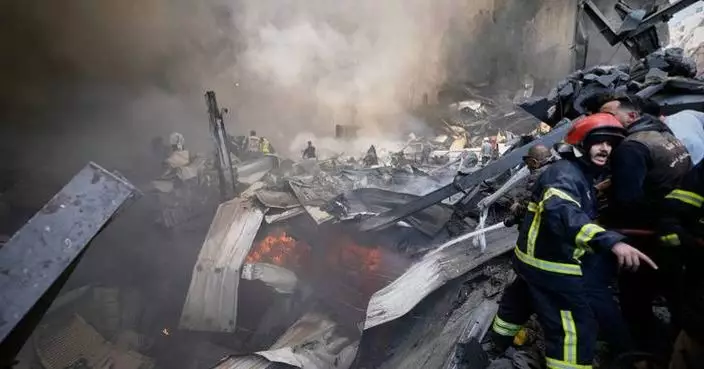
Israel also intensified its attacks on the Hezbollah militant group in Lebanon on Wednesday, hitting commercial and residential areas in Beirut. At least 182 people were killed in the deadliest day of fighting there. First responders searched overnight for missing people still under the rubble after the deadly Israeli strikes.
The violence threatened to scuttle what U.S. Vice President JD Vance called a “fragile” deal.
Iran's parliament speaker said Wednesday that planned talks were “unreasonable” because Washington had broken three of Tehran’s 10 conditions for an end to the fighting. In a social media post, Mohammad Bagher Qalibaf objected to Israeli attacks on Hezbollah, an alleged drone incursion into Iranian airspace after the ceasefire took effect and U.S. refusal to accept any Iranian enrichment capabilities in a final agreement.
Iranian Foreign Minister Abbas Araghchi insisted that an end to the war in Lebanon was part of the ceasefire deal, but Israeli Prime Minister Benjamin Netanyahu and Trump said the truce did not cover Lebanon. When the deal was announced, the prime minister of Pakistan, which served as a mediator, said in a social media post that it applied to “everywhere including Lebanon and elsewhere.”
A New York-based think tank warned the ceasefire “hovers on the verge of collapse.”
The Soufan Center said Israel's strikes on Lebanon on Wednesday added to the risk the deal would fall apart.
“Even if Lebanon was formally outside the deal, the scale of Israel’s strikes was likely to be viewed as escalatory, nonetheless,” it wrote in an analysis published Thursday. “Israel’s strikes can be understood both as an effort to drive a wedge between Iran and its proxies and as a response to being allegedly sidelined in the original ceasefire discussions.”
The White House said that Vice President JD Vance would lead the U.S. delegation to talks in Islamabad aimed at ending the war, which are set to start Saturday.
Iran’s negotiating team will arrive in Islamabad on Thursday night, the Iranian ambassador there said.
Reza Amiri Moghadam wrote on X that the “Iranian delegation arrives tonight in Islamabad for serious talks based on 10 points proposed by Iran,” without identifying who was on the Iranian team.
Those points include Iran enriching uranium, maintaining its control of the Strait of Hormuz and other issues that have been nonstarters in the past for Trump. The White House has repeatedly described the 10 points issued by Iran as false.
Moghadam wrote that the Iranians would come to Islamabad despite “skepticism of Iranian public opinion due to repeated ceasefire violations by Israeli regime to sabotage the diplomatic initiative,” likely referring to Israel’s strikes on Lebanon, which Israel and the U.S. have said wasn’t included in the shaky ceasefire.
Becatoros reported from Athens, Greece. Chan Ho-him in Hong Kong, Zeke Miller in Washington and Kareem Chehayeb and Hussein Malla contributed to this report.
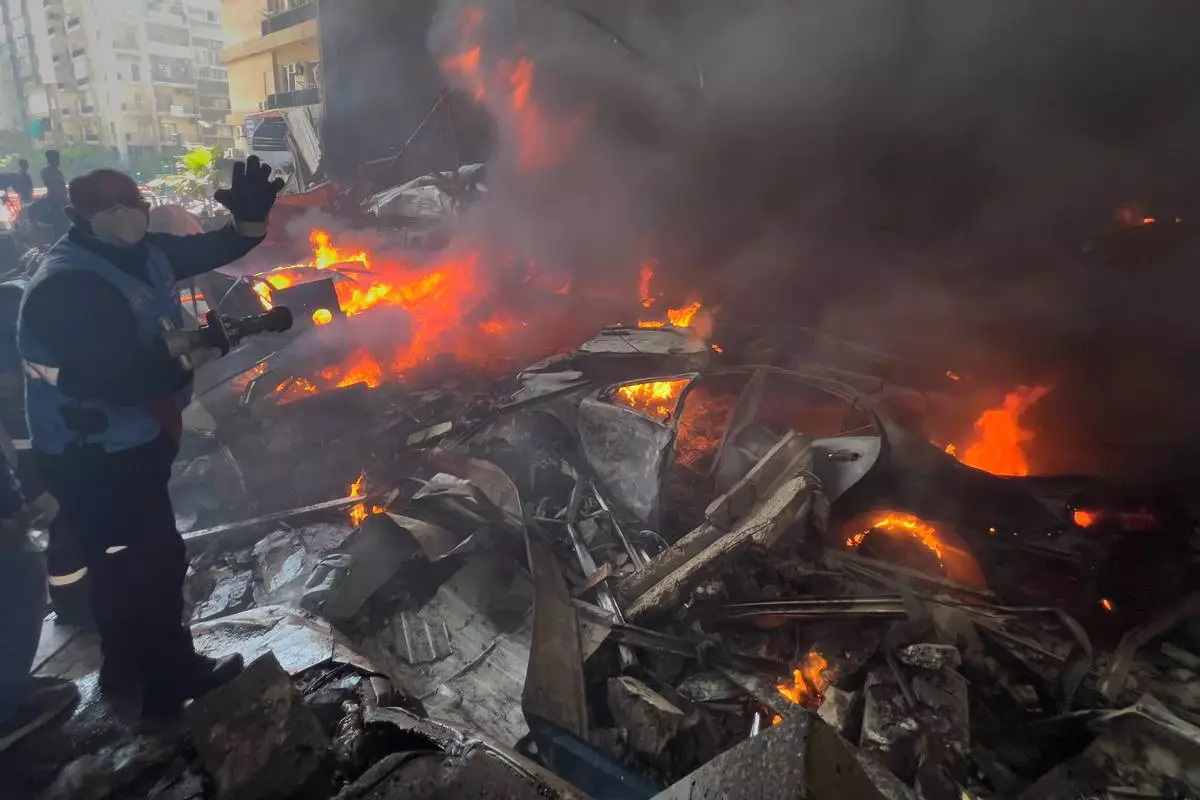
A rescue worker extinguishes burning cars at the site of an Israeli airstrike in central Beirut, Lebanon, Wednesday, April 8, 2026. (AP Photo/Hussein Malla)
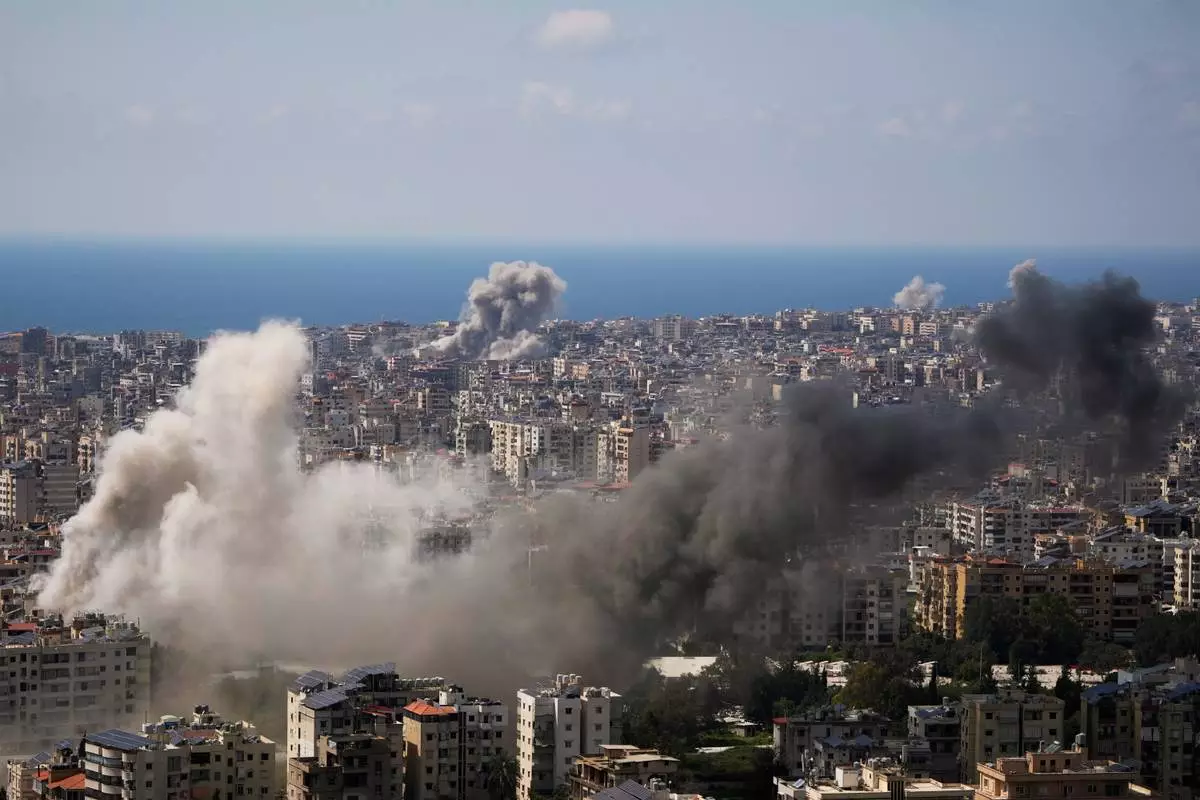
Smoke rises following several Israeli airstrikes in Beirut, Lebanon, Wednesday, April 8, 2026. (AP Photo/Hassan Ammar)
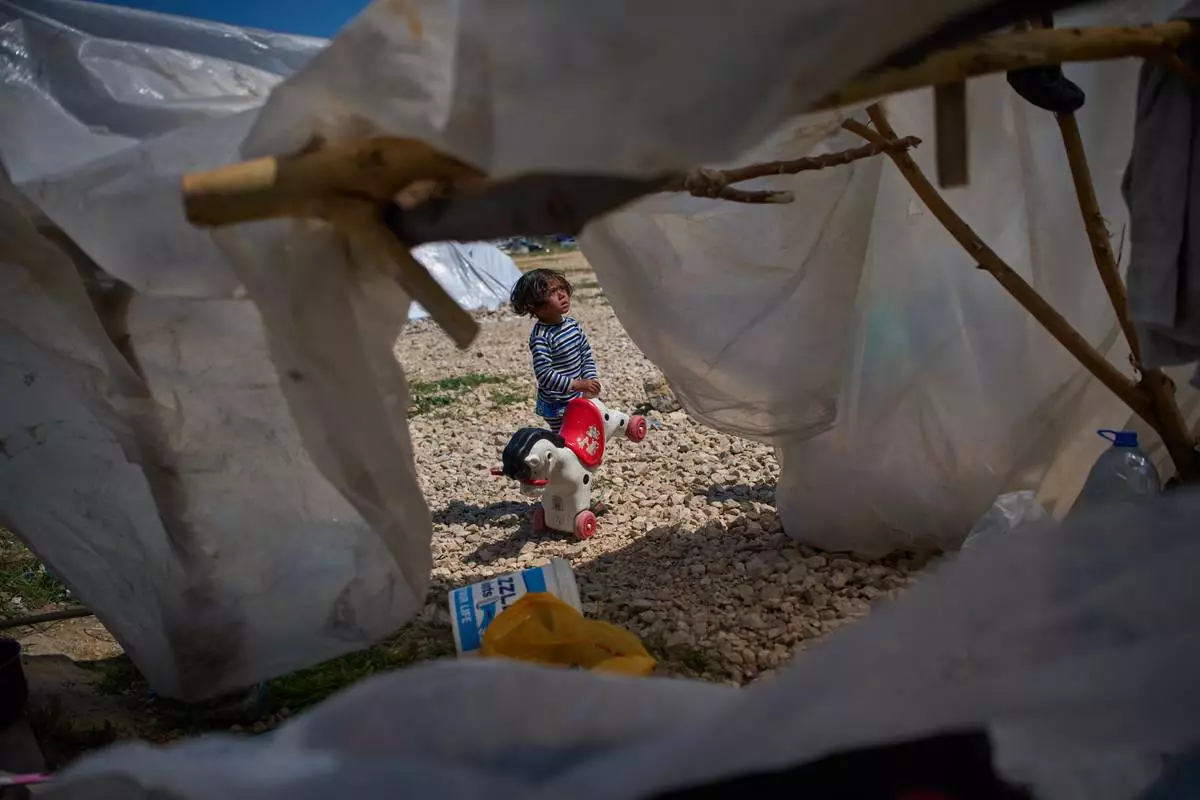
Ali, 4, holds a toy horse next to the tent his family uses as a shelter after fleeing Israeli bombardment in southern Lebanon, in Beirut, Lebanon, Wednesday, April 8, 2026. (AP Photo/Emilio Morenatti)
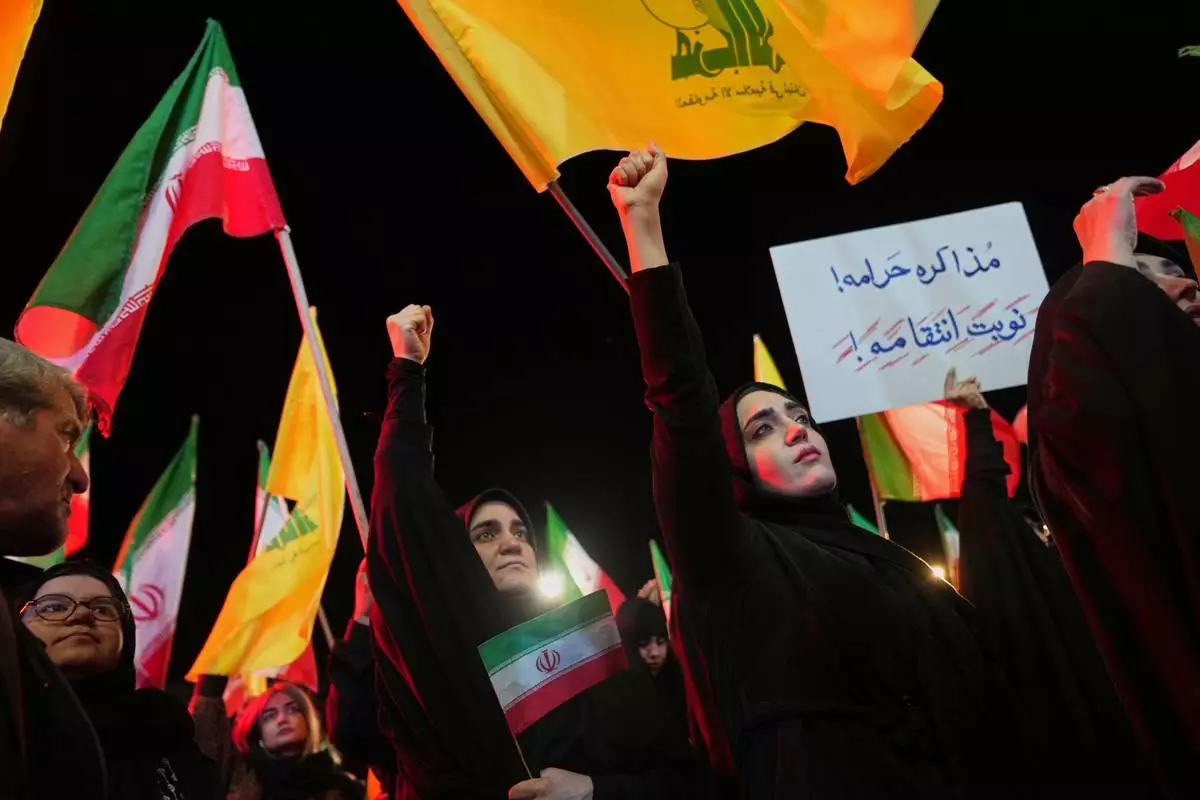
Government supporters gather ahead of the funeral procession for Maj. Gen. Majid Khademi, head of intelligence for Iran's paramilitary Revolutionary Guard, in Tehran, Iran, Wednesday, April 8, 2026. (AP Photo/Francisco Seco)
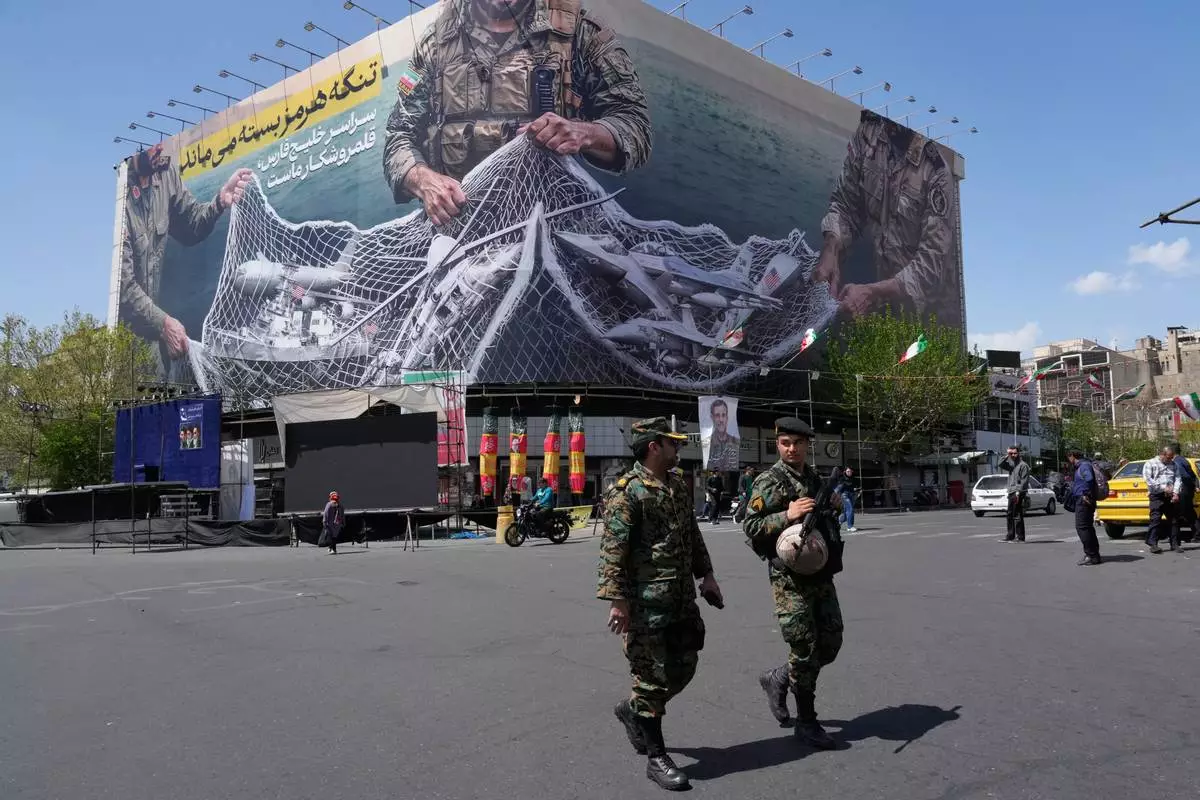
FILE - Two police officers walk in front of an anti-U.S. billboard depicting American aircraft being caught by Iranian armed forces in a fishing net beneath the words in Farsi, "The Strait of Hormuz will remain closed, The entire Persian Gulf is our hunting ground," in Tehran, Iran, Sunday, April 5, 2026. (AP Photo/Vahid Salemi, File)