A global logistics service platform in China's Shanghai has seen falling volume of orders for routes to Venezuela, especially the port of La Guaira, which was damaged by the U.S. military airstrike on Jan. 3.
The aftermath of the strike has impacted trade in goods between China and Venezuela, which grew by 52.5 percent year on year to 6.4 billion U.S. dollars in 2024.
The latest data from the Shanghai-based global digital logistics platform YQN show that some exporters have suspended their plans of delivery at the port of La Guaira. And for containers that have already left China, exporters generally wanted to shift the route to the Port of Colon in Panama, or stop at a port of transshipment.
"Around 20 percent of our Latin America-related clients have called us to learn about the relevant situations in Venezuela. And most of the clients are holding a wait-and-see attitude," said an employee serving Latin America routes of the YQN.
"The order volume has indeed declined, and the relevant clients are mostly having a wait-and-see attitude. In the longer term, there will be more impacts on exports to Venezuela in terms of insurances and clauses of trade contracts," said Liu Yuanlu, expert on Latin America routes of the YQN.
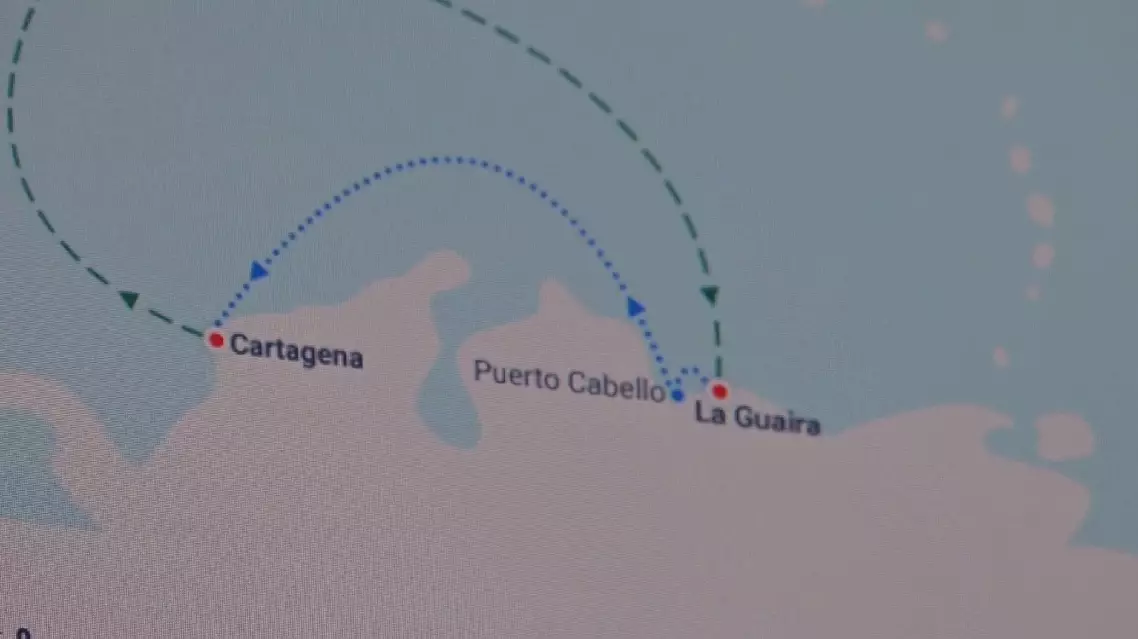
U.S. airstrike on Venezuela's La Guaira port has lasting impact on trade: logistics platform

Nigeria's fuel market is undergoing a rare shake-up as competition pushes prices lower, bringing relief to local consumers while raising concerns over business durability.
In the capital city of Abuja, the state oil firm Nigerian National Petroleum Company (NNPC) has been selling petrol at about 815 naira per liter (about 0.57 U.S. dollars per liter), down from about 0.66 U.S. dollars per liter earlier in 2026. Other stations supplied by private giant Dangote are offering even lower prices, selling at around 750 naira (about 0.53 U.S. dollars) per liter.
For millions of Nigerians, the drop has been easing pressure on transport, food and daily living costs.
"I spend relatively lower on fuel and, by implication, transportation now than what it used to be," said Salifu Usman, a local resident in Abuja.
"We are happy with what we are seeing, because, of course, for a very long time, we are witnessing the crash down of price, even during festive period," said Jonathan Madaki, another resident.
The price cut has also allowed for higher profit margins for local small business operators, who have long relied on petrol-powered generators to cope with chronic power shortages.
Behind the price cuts is a growing battle for market share. The Nigeria-based Dangote Refinery, the largest in Africa, has boosted domestic supply and slashed its wholesale price to around 700 naira (about 0.49 U.S. dollars) per liter.
The move has forced importers and the state oil company to lower their own prices to stay competitive. But as margins shrink, analysts warn, what now appears to be a price war may not last.
"My own interpretation is that we are going to that stage where, especially those that, if it keeps coming down, I think those that bring in products may find it not so attractive again. So I don't actually see how sustainable this price war, if I may use that term, will be," said energy expert Paul Ogwu.
Nigeria petrol price cuts ease living costs, raise durability concerns