Skip to Content Facebook Feature Image

US intentions in Greenland violates Int'l law, targets oil: Spanish expert

China

China

China

US intentions in Greenland violates Int'l law, targets oil: Spanish expert

2026-01-15 17:08 Last Updated At:01-16 01:07

The United States' desire to take over the territory of another country and grab its natural resources is a clear violation of international law and sets a dangerous precedent for the entire world, a Spanish analyst has warned.

The recent actions undertaken the U.S., including its shocking overnight raid on Venezuela and the Trump administration's repeated claims over its need to take control of Greenland -- a strategic, mineral-rich autonomous territory within the Kingdom of Denmark -- have sparked serious concerns across Europe.

U.S. President Donald Trump said Wednesday that anything less than Greenland becoming a part of the United States "is unacceptable," comments which came hours before Danish Foreign Minister Lars Lokke Rasmussen and his Greenlandic counterpart, Vivian Motzfeldt, met with U.S. Vice President JD Vance and Secretary of State Marco Rubio at the White House to discuss the issue.

Rasmussen later said that both sides have agreed to establish a "high-level working group" to explore possible areas of compromise since a "fundamental disagreement" persists over the future of Greenland.

In an interview with the China Media Group (CMG), Marta Montolo, vice chairwoman of the Spanish Catedra China Foundation, a multidisciplinary think tank, condemned the actions of the U.S. administration in its attempt to acquire the island.

"I believe the U.S.'s interests are very clear. U.S. President Trump has made it clear that main interest of the U.S. in Venezuela is its oil, and the U.S. said it wants Greenland. It is an extremely dangerous statement, not only for the people of Europe but for the entire world. Just like the situation in Venezuela, we must make international law clear. We cannot ignore the fact that Greenland belongs to [Denmark in] Europe. No third country has the right to seize another nation's property, invade its territory, or take its resources. This is a severe violation of international law," said Montoro.

While Trump has claimed the move is based around security, many believe that he is in fact motivated by a desire to seize vital resources like oil from Greenland, which is also viewed as one of the prime reasons for how the U.S. acted in Venezuela.

"You know, he wants the oil, and I guess there's some sense to that," said George, a U.S. tourist traveling in Spain.

US intentions in Greenland violates Int'l law, targets oil: Spanish expert

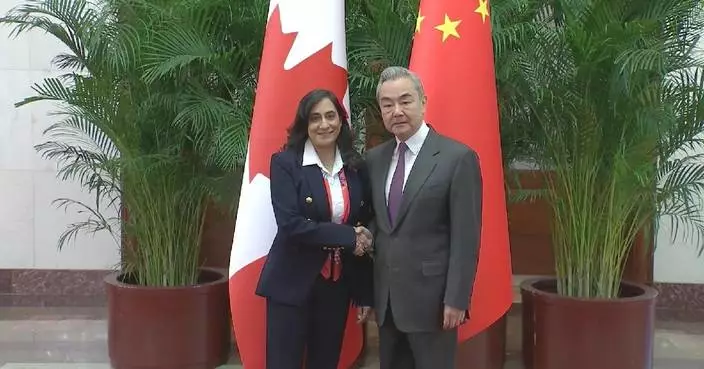
US intentions in Greenland violates Int'l law, targets oil: Spanish expert
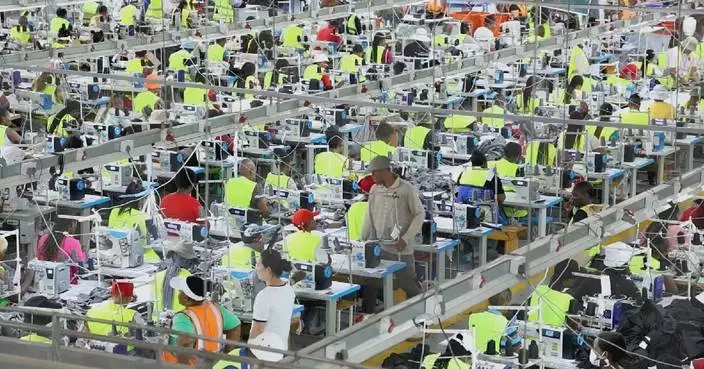
Canadian Prime Minister Mark Carney's official visit to China signals a policy shift towards building a more pragmatic relationship between the two countries, according to a Canadian researcher.

Carney arrived in Beijing on Wednesday to begin an official visit to China through Saturday, which marks the first trip by a Canadian Prime Minister to the country in eight years.

Robert Hanlon, director and principal investigator of Canada and the Asia Pacific Policy Project (CAPPP) at Thompson Rivers University in British Columbia, told the China Global Television Network (CGTN) that Carney's visit indicates Canada is recalibrating its strategic perception of China, which could cement the foundation for the country's economic diversification efforts and boost the development of bilateral cooperation.

"I think it's a clear message that he has moved Canada's strategy to a much more pragmatic, interest-based, -focused relationship with our trading partners, moving away from values-based narratives that we might have heard on previous governments. Canada has spoken about moving from what the Prime Minister's Office is calling "from reliance to resilience", and that means diversifying our economies and our trade everywhere in the world. And so China being our second largest trading partner, it makes perfect sense for our PM to head to Beijing," he said.

The scholar also noted the huge cooperation potential between the two sides in economic and trade fields, citing Canada's efforts to step up shipments of liquefied natural gas (LNG) and the planned construction of an oil pipeline in Alberta which aims to increase export access to Asian markets. "Canada and China both share tremendous economic opportunities together and so finding ways to enhance our exports. Canada specifically looking to build out its LNG and oil, kind of export market. We know Canada is a major producer of critical minerals and China is a buyer. And so there's a lot of synergy between that kind of those kind of markets," he said.

Canadian PM's visit to China paves way for more pragmatic trade ties: scholar

Canadian PM's visit to China paves way for more pragmatic trade ties: scholar

Recommended Articles