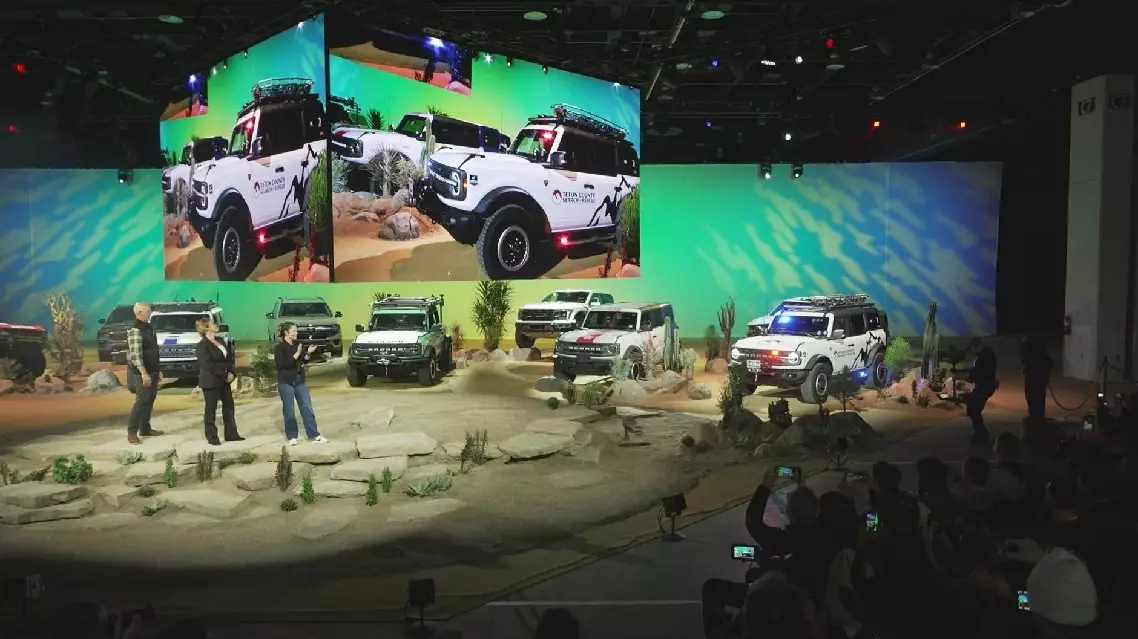
U.S. automaker Ford is delaying domestic electric vehicle (EV) sales and shifting next‑generation development toward cost cuts and efficiency, citing policy changes that have disrupted the American market. The Michigan-based auto giant joined other carmakers in showcasing multiple new models at the North American International Auto Show (NAIAS), which opened in Detroit on Wednesday. Yet beneath the show's glitz, the U.S. auto sector is facing strong headwinds, and Ford is no exception.
The setback stems from the One Big Beautiful Bill signed by U.S. President Donald Trump in July 2025, which eliminated the 7,500-USD federal tax credit for purchasing or leasing electric vehicles. The move has dealt a sharp blow to domestic EV sales for American automakers, prompting several automakers to reassess their electric strategies.
Ford had already announced by the end of 2025 the cancellation of several large-scale EV projects and a 19.5 billion-USD write down of EV assets.
However, despite the near-term pullback, Ford is not exiting the EV race. The company is now channeling efforts into developing more affordable electric models, including what it claims will be the world's lowest-cost electric motor. That technology, Ford says, should enable it to launch an electric pickup truck priced around 30,000 U.S. dollars by 2027. At the Detroit event, Ford's CEO Jim Farley expressed the company’s continued ambitious vision for the future.
"I think 2026 is one of the most important years for the company. We want to go from top domestic quality to top quality for the US industry and globally. That's going to take another leap forward in quality for us," he said. According to the CEO, reducing costs and improving efficiency will be the key themes guiding Ford's development in the coming years.
"That affordable EV is, to me, a Model T moment. But the biggest focus for us is the execution of those new electric architectures and those new products that will be coming out in the next couple of years. That is our focus. It's on us. We own our future," Farley said.
"Overall, Ford's in fine shape. Obviously globally, they continue to sell EVs in overseas markets, and here in the U.S. they are planning a next generation of electric products and they're changing how they make vehicles. It's not just going to be a standard assembly line process. They're splitting up the line into what they call an assembly tree, where this vehicle will be built in three separate parts, a rear, sort of bottom, and a front that snap all together at the end. Ford says it saves time, it saves money," said Michael Martinez, a reporter from Automotive News.
Ford delays electrification plans in US amid policy headwinds, cost cuts