Japanese activists and residents on Friday criticized Prime Minister Sanae Takaichi's decision to dissolve the lower house as "illogical" and "irresponsible," saying it ignored the current state of the domestic economy and people's livelihoods.
Japan's House of Representatives was formally dissolved on Friday at the outset of the ordinary parliamentary session, with a general election set for Feb. 8.
Takaichi announced on Monday that she would dissolve the 465-seat lower house for a snap election, aiming to capitalize on her cabinet's current high approval ratings.
At the rally site, Hiroshi Kawauchi, a member of the Centrist Reform Alliance who had just left the House of Representatives dissolution meeting, expressed his regret over the decision.
"This is a move that completely disregards the lives of the people, as it involves simply shelving the budget, which is illogical. Moreover, this is happening at such a time. Previously, the Kaohsiung mayor had asked, 'What do you think of me?' and 'What do you think of the cabinet?' Since she raised these questions, we have clearly stated that we do not trust Takaichi's cabinet, we want to overthrow it, and we want to support the lives of the people," he said.
Protesters and residents also said that the decision has added more uncertainty to Japan's political and economic instability.
As is customary, the new fiscal year budget is to be reviewed and passed before the end of March. However, Takaichi's dissolution of the House of Representatives has forced a delay in the legislative review schedule, which will have a significant impact on the review and passage of the budget bill and a series of tax reform bills.
If the new fiscal year budget cannot be approved by the new Diet in time, the lives of Japanese people and the economy will inevitably be affected in fiscal year 2026, which begins on April 1.
"Given the overall scale, finalizing a budget naturally takes time. Depending on the circumstances, a new budget may need to be prepared. In that case, it's uncertain whether the budget will be approved before the long weekend, which seems highly irresponsible," said a protester.
Since 2000, Japan has implemented the Happy Monday System, which moved a number of national holidays to Monday in order to obtain a long weekend.
"The reason given by Takaichi for dissolving the House of Representatives is, frankly, 'I hope everyone will trust me.' This is entirely based on her personal opinion, and I believe that such a thing should absolutely not be done," said a Tokyo resident.
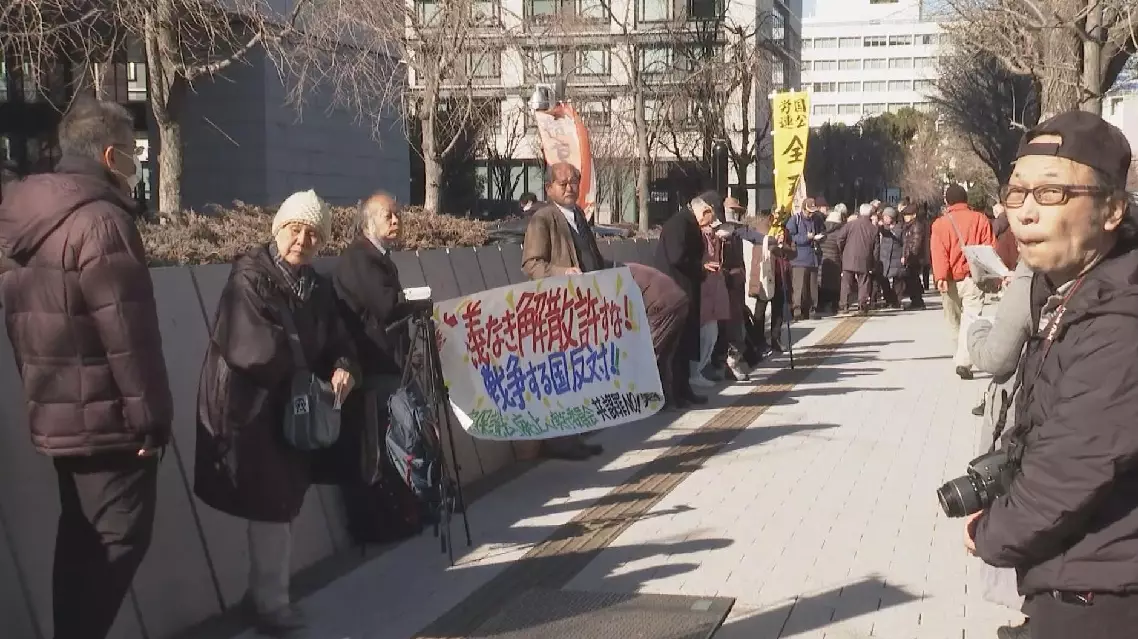
Japanese protesters criticize lower house dissolution as illogical, irresponsible