The future of mobility is speeding ahead in the United Arab Emirates (UAE) with the launch of fully driverless commercial services to the public, marking a major step forward in the country's quest to transform the future of road transport.
The local government in the UAE's capital Abu Dhabi has granted permission for Chinese autonomous driving brand Apollo Go -- in collaboration with the UAE autonomous mobility company Auto Go -- to first roll out services on the city's Yas Island, a popular tourism destination known for its theme parks, with plans to gradually expand to other parts of Abu Dhabi.
Driverless vehicle developments are also stepping up in Dubai. The city has issued its first autonomous vehicle testing permit to Apollo Go and inaugurated its first integrated autonomous driving operations base, providing a strong foundation for follow-up deployment.
Dubai officials said the project forms part of the city's ambitious Smart City 2030 Strategy, which aims to shift 25 percent of urban travel to autonomous modes by 2030.
As the second-largest economy in the Arab world, the UAE has been accelerating economic diversification in recent years to reduce reliance on oil, with smart transportation emerging as a key pillar of this transformation.
Authorities in both Abu Dhabi and Dubai have introduced a series of strategies to fast-track the adoption of intelligent mobility, offering policy support and favorable conditions for research, development, and the testing of autonomous vehicles.
Industry analysts attribute the UAE's rise as a global hub for autonomous driving deployment to its open regulatory environment and strong capital support for advanced technologies.
"Dubai is in a strong position because it has excellent infrastructure and strong government coordination. The roads are modern, well maintained, and clearly regulated, which is very important for a driverless technology. Government entities like the RTA work closely together. We should expect new policies, but they'll be well thought out, tested and aligned with Dubai's high standards," said Hessa Abdulla Al Nuaimi, a researcher for the UAE's Trends Research and Advisory, an independent research institution.
Beyond new policy initiatives and increased investment, favorable road conditions, advanced communications networks, and high public acceptance of new technologies have also created the right environment for the speedier adoption of autonomous vehicles.
"Dubai has already proven public trust in automation, from the full autonomous metro system to smart government services used daily by residents. In addition, high smart phone penetration, advanced 5G networks, and smart traffic systems provide the digital foundation that autonomous vehicles depend on," said Oleg Savikov, Deputy CEO for Global Business Development at Rewatt Tech, Russia's largest electric vehicle charging equipment manufacturer.
According to data from market research firm WENKH, the global autonomous driving systems market exceeded 30 billion U.S. dollars in 2025 and is projected to expand at a staggering compound annual growth rate of around 56 percent, taking it above 700 billion U.S. dollars by 2032.
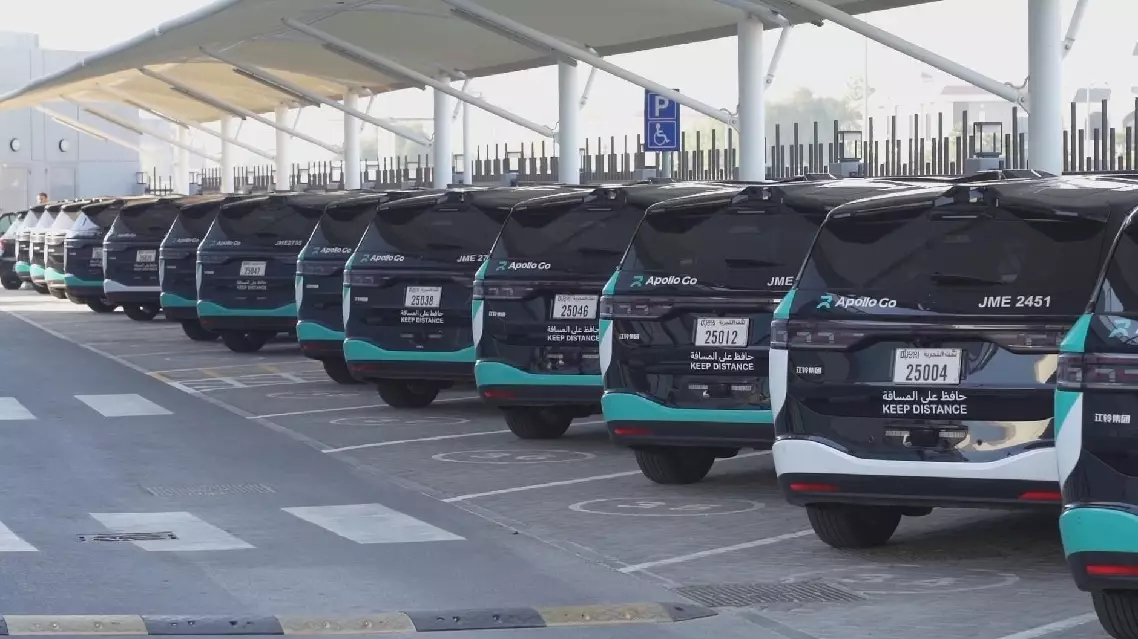
UAE speeds ahead with launch of autonomous vehicle services to public
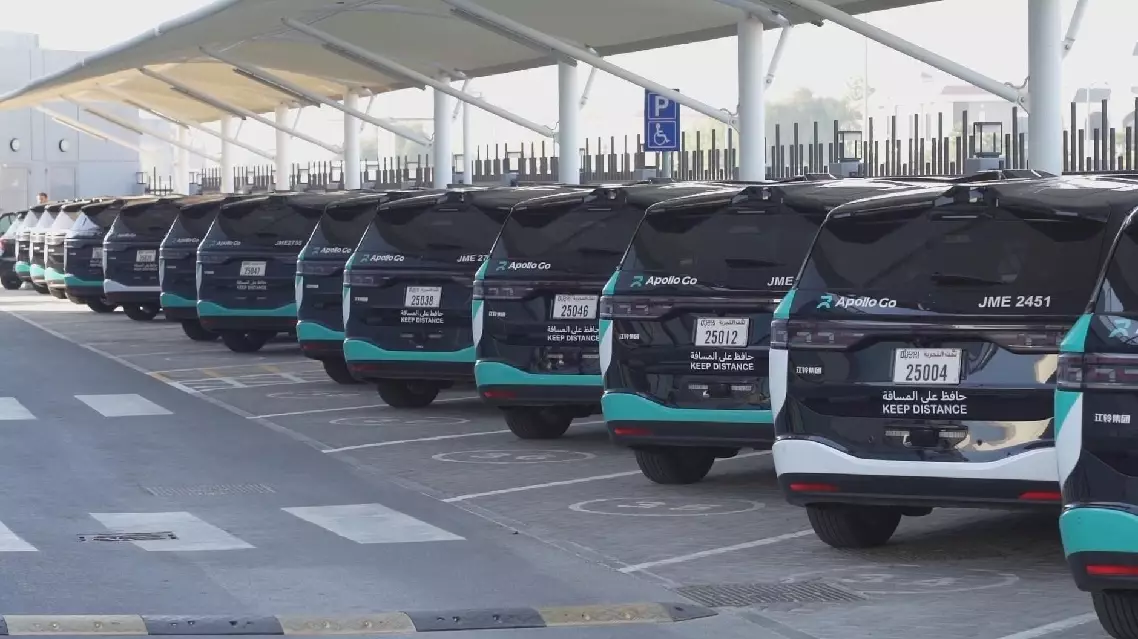
UAE speeds ahead with launch of autonomous vehicle services to public
A World Health Organization (WHO) medical epidemiologist on Sunday sought to ease public concerns over a hantavirus outbreak linked to a cruise ship, stressing that the virus is not airborne like COVID-19 and that the average person has no reason to worry.
Spain began evacuating passengers the same day from the hantavirus-stricken cruise ship MV Hondius, which had anchored earlier off the Port of Granadilla on the island of Tenerife.
The MV Hondius departed Argentina on April 1 with more than 140 passengers and crew from 23 countries on board. The ship has reported eight infections, including three deaths. Six of the cases have been laboratory-confirmed as Andes virus infections, caused by a rodent-borne hantavirus endemic to South America and the only known hantavirus strain capable of limited human-to-human transmission.
Boris Pavlin, a medical epidemiologist with the WHO, said the cruise ship affected by a hantavirus outbreak had been carefully managed by Spanish authorities and posed little risk to the general public. "This is not COVID. The average person does not need to be worried about hantavirus here in this setting. These folks are being managed very carefully, very deliberately, by the Spanish authorities; they're getting off the ship, they are getting into small boats, they are being spaced apart in the buses so there's no risk to one another. Even if one were to become symptomatic -- we know that none of them were symptomatic as they have been leaving the ship -- they're going straight to their aircraft and they're being taken to their respective national jurisdictions," he said.
Pavlin said the exact source of exposure remained under investigation, but the initial cases appeared to be linked to a pre-cruise land excursion in South America.
"From what we understand of the initial cases, there was -- as one does often on a cruise -- there was a land-side excursion before the cruise in which places were visited that are home to these specific rodents that are associated with the Andes hantavirus. These are not worldwide rodents; the long-tailed rice rat is very specific to the Andes Cordillera region of South America, and that's where people who are exposed to the rodents were. So it was in one of those places they were exposed. We don't know exactly because there are several possibilities, and I believe that the Argentinian authorities are actually even going to look at that and try to do some animal sampling to get to the very bottom of it. But that part's not unexpected at all," he said.
The official praised Spanish authorities' handling of the ship and described the response as a closely coordinated international effort.
"This has been an extremely cooperative, collegial international effort. The Spanish authorities are very diligent and deliberate about what's happening here. There's nothing that would surprise us. I think that somebody might become exposed; we want to obviously make sure that people who are coming off the ship are not newly exposed to one another as they get off and go to their respective places, and we're not seeing that," Pavlin said.
But while the immediate disembarkation process had gone smoothly, he emphasized that health officials were not letting their guard down.
"However, the contact tracing and follow-up of every person who has been in even the lightest contact with the patients will continue until a maximum incubation period. In any case, there are contingency plans should someone become ill, and we know that it doesn't just spread like wildfire, so even if they were to become ill, we don't expect a large outbreak after this," the official said.
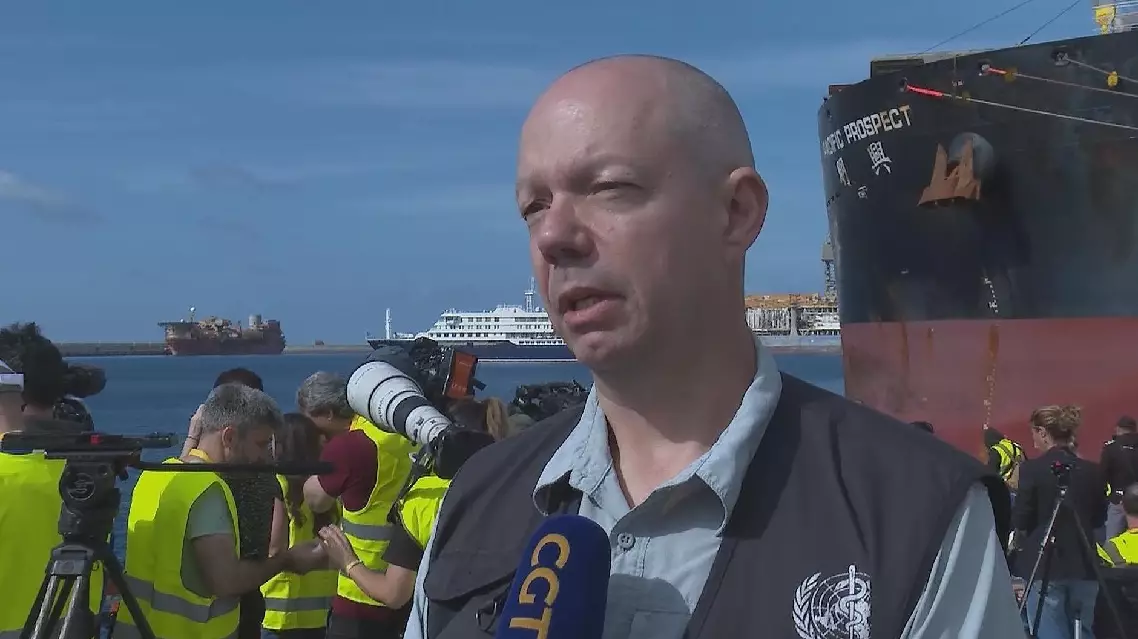
Cruise ship hantavirus outbreak "not COVID," poses low public risk: WHO expert