BELMONT, Calif.--(BUSINESS WIRE)--Jan 28, 2026--
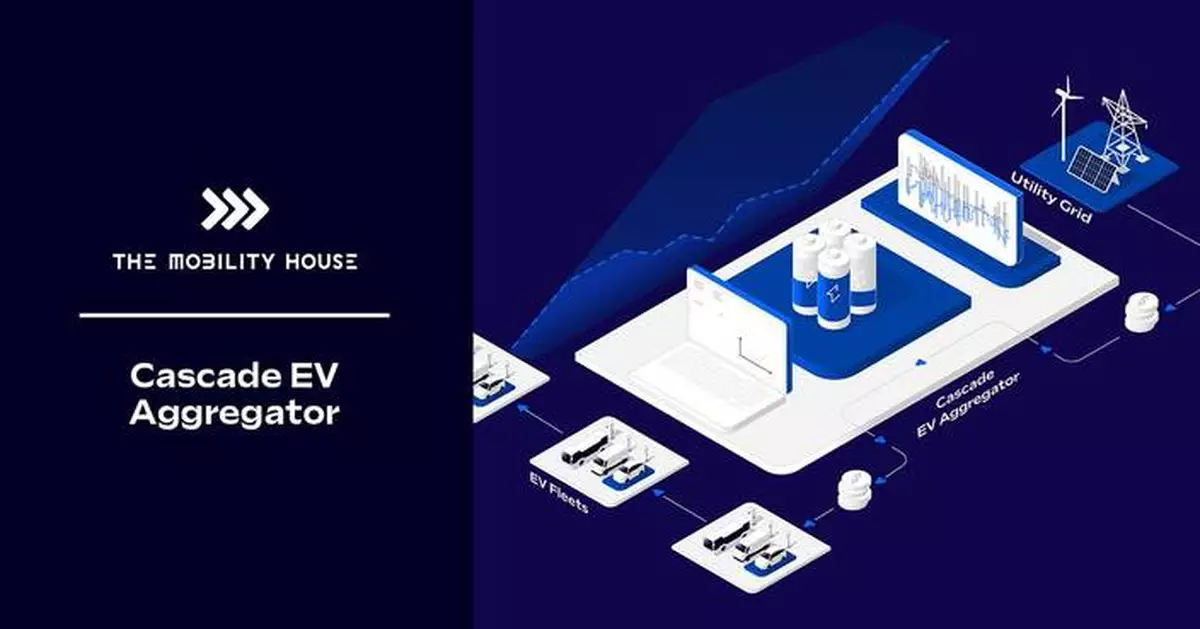
The Mobility House North America today announced the unveiling of Cascade EV Aggregator, a vehicle-grid integration platform for utilities. This technology represents the most versatile EV load aggregation tool in North America, allowing charging and discharging optimization across a variety of charger and vehicle asset classes, from home chargers to electric school bus fleets.
This press release features multimedia. View the full release here: https://www.businesswire.com/news/home/20260128205754/en/
"Electric vehicle batteries can play a substantial role in meeting the tremendous challenge of load growth on the electrical grid,” said Greg Hintler, CEO of The Mobility House North America. “The Mobility House is committed to developing the technology that harmonizes EV charging with reliable grid operations.”
A recent report from BNEF forecasted that electric vehicle battery capacity on U.S. roads will reach 4 TWh in the next ten years, which would make them the largest Distributed Energy Resource (DER) if aggregated and optimized, or a significant burden on grid infrastructure if unmanaged. This rapid load growth, added to massive new load from data center installations, is already creating significant and unprecedented challenges for electric utility providers.
The Mobility House North America has built Cascade to address EV load challenges and grid constraints alongside electric utility partners in the United States and Canada. Fleet customers and utilities can now benefit from the charging flexibility offered by the platform’s optimization. While a charge management system (CMS) such as The Mobility House’s ChargePilot® manages charging optimization for a fleet operator, Cascade can work with each CMS at thousands of sites to create flexibility for the distribution grid. Cascade is also unlocking vehicle-to-grid (V2G) value for school bus fleets currently being deployed in California, Massachusetts, and New York.
"The electric school buses in our fleet work hard every day to get students to school safely,” said Ernest Epley, Transportation Director, Fremont Unified School District. “And now as a part of The Mobility House’s Cascade Aggregator they can earn revenue for the district supporting the energy grid while they are parked at the depot.”
How it works
Cascade EV Aggregator allows electric vehicles to serve as energy storage assets and provide energy services such as demand response, dynamic rate optimization, and grid constraint management. The platform can manage both unidirectional smart charging to incentivize load shifting (V1G) and bidirectional vehicle-to-grid (V2G) chargers exporting power from EV batteries to the grid. Cascade receives real-time signals from utilities or market programs and engages EV fleet charge management systems and residential chargers across a service area. Cascade creates individualized charging plans that are optimized to the signal and to vehicle mobility needs, then aggregates the response to provide essential grid services including load reduction and export.
“Cascade provides a critical aggregation layer and optimization that coordinates charging activities to enable EVs to participate in virtual power plants,” said Russell Vare, VP of VGI, The Mobility House North America. “This is a powerful tool that enables vehicles to deliver flexibility to the grid at scale, making homes and businesses more energy and financially resilient.”
For more detail about the Cascade EV Aggregator from The Mobility House North America, visit https://www.mobilityhouse.com/usa_en/vehicle-grid-integration-vgi.
About The Mobility House
The Mobility House is shaping the zero emissions future of energy and mobility. Our resilient charging technology makes EV charging reliable and flexible, and provides drivers the freedom of zero emissions, zero cost charging. We integrate flexible charging with energy systems to stabilize the electrical grid and free it from fossil fuels. Across Europe, Asia-Pacific, and North America, The Mobility House currently manages more than 2,700 EV fleet charging facilities, charges hundreds of thousands of electric vehicles, and trades power from more than 180 MWh of energy storage. Visit MobilityHouse.us
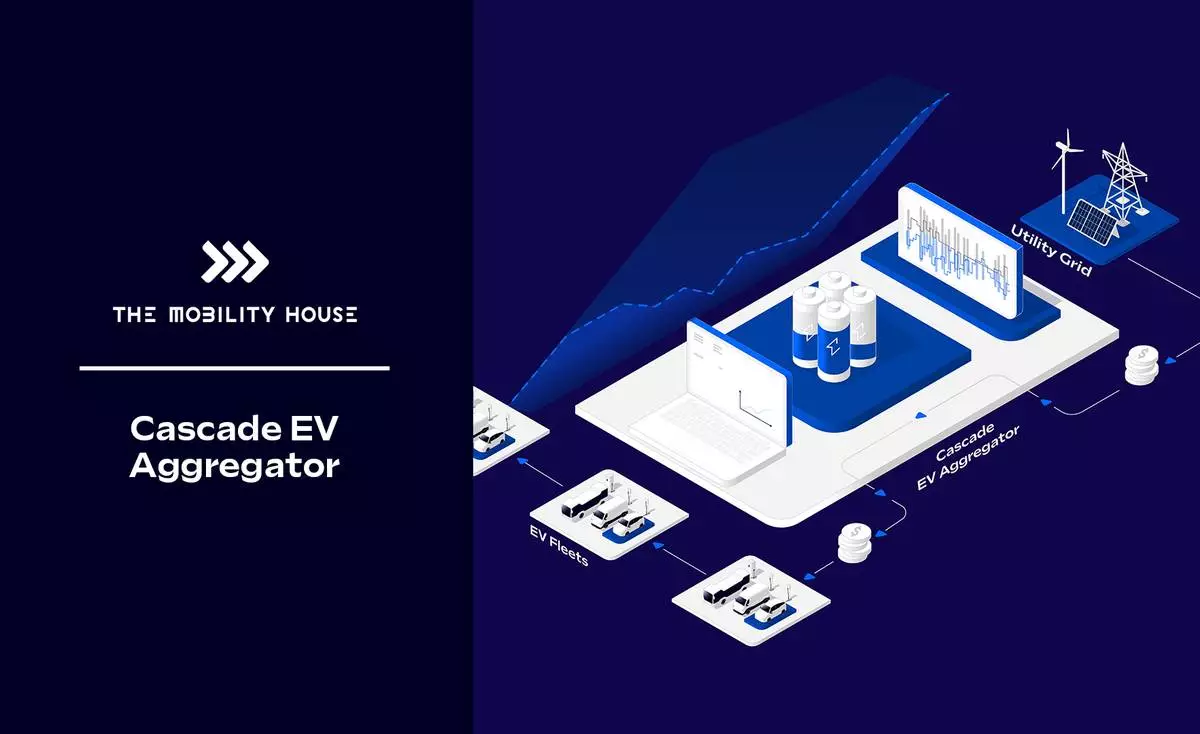
Cascade EV Aggregator is the most versatile EV load aggregation tool in North America, allowing charging and discharging optimization across a variety of charger and vehicle asset classes.