Hsiao Hsu-tsen, vice chairman of the Chinese Kuomintang (KMT) party, said his delegation's visit to the mainland aimed to reflect mainstream public opinion in Taiwan by pragmatically establishing a platform for cross-Strait dialogue.
Hsiao led a KMT delegation to Beijing from Tuesday to Wednesday to attend a think tank forum co-hosted by research institutes affiliated with both the Communist Party of China (CPC) and the KMT party.
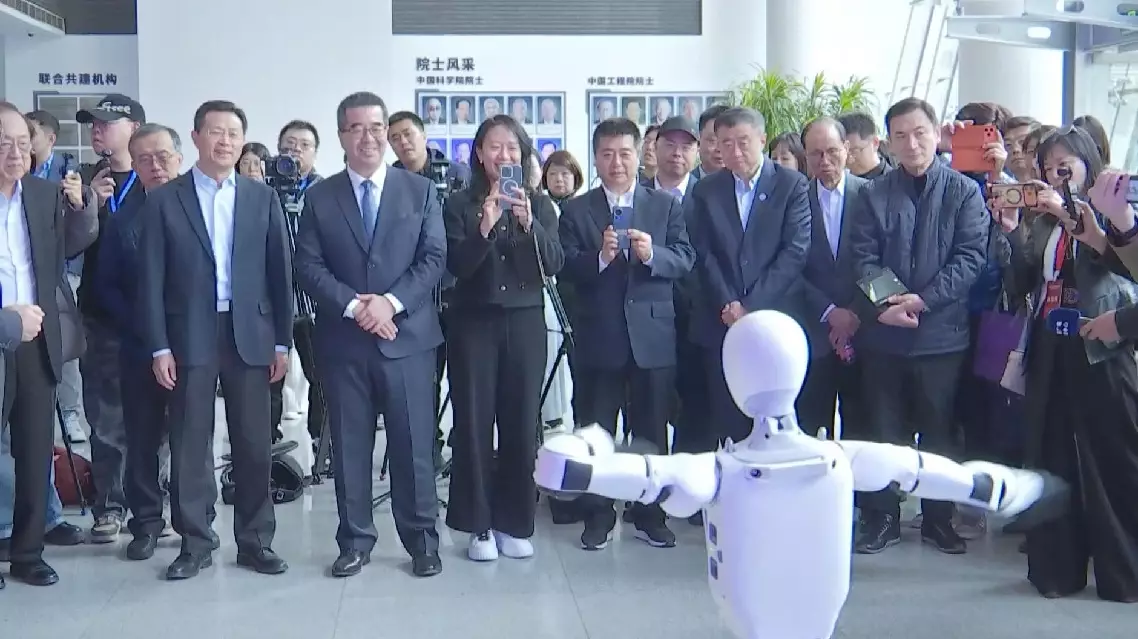
Following the solicitation of 15 shared views by both parties to promote cross-Strait exchanges and cooperation at the forum on Tuesday, Hsiao led his delegation to visit Tsinghua University's Institute for Artificial Intelligence on Wednesday afternoon. There, they met with students and faculty to explore opportunities for collaboration across industry, academia, and research sectors in areas such as AI applications, disaster prevention and mitigation, and renewable energy.
"Healthcare and elderly care are important issues on both sides of the Strait. I believe that in the future, integrating AI into medical research and development will be something the general public truly need," said Hsiao.
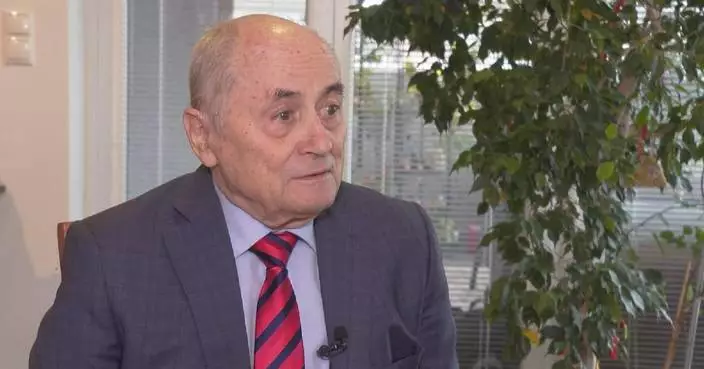
"I believe both sides of the Strait have outstanding talent in AI, as well as excellent enterprises to support its development. So if we can form an effective synergy, it will definitely lead to surprising results in this field between the two sides," said Yao Qizhi, academician of the Chinese Academy of Sciences and dean of the Institute of Artificial Intelligence, Tsinghua University.
After the visit, Hsiao said that one of the most important goals of the trip was to speak up for the industries and people in Taiwan.
"This was one of the most important purposes of our trip to the mainland, to speak for Taiwan's industries and people, and to build a platform for communication. Once we reached a consensus, the mainland quickly announced such a positive policy. This is exactly the kind of practical action the Kuomintang is taking. I believe this is just the beginning," said Hsiao.
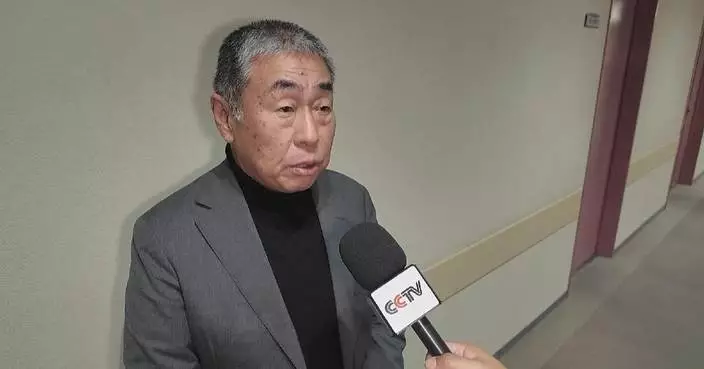
Meanwhile, Lee Hong-yuan, deputy chair of the KMT's National Policy Foundation, led a separate delegation to visit Tsinghua's Institute for Carbon Neutrality (ICON).
"Our approach is summed up in two words: 'pragmatic action.' Our first hope is for cross-Strait peace, but how do we achieve peace? It must come from concrete, feasible initiatives that bring real benefits to people on both sides," said Lee.
On the same day the forum concluded, China's Ministry of Culture and Tourism announced the resumption of travel for Shanghai residents to Kinmen and Matsu. Hsiao called it a promising start.
In response to public interest in the potential for higher-level exchanges between the two parties in the future, Hsiao replied with the phrase, "as winter ends, spring returns," emphasizing that as long as a communication platform is established, higher-level interaction will naturally follow.
The forum, themed "Prospects for Cross-Strait Exchange and Cooperation," was attended by over 100 participants from both sides of the Taiwan Strait, including think tank members of the CPC and the KMT, as well as representatives and experts from various fields.
Platform built for pragmatic cross-Strait dialogue: KMT vice chairman