U.S.-based employers announced 108,435 job cuts in January, a surge of 118 percent from the 49,795 cuts announced in the same month of last year, a report showed Thursday.
The report, released by global outplacement and executive coaching firm Challenger, Gray and Christmas, said the U.S. companies announced the highest number of job cuts in January since the deep recession of 2009.
The report also showed that hiring intentions fell 13 percent year on year to 5,306 people, the weakest January hiring figure since the agency began keeping records in 2009.
According to the report, the three main reasons for the January layoffs were contract losses, market and economic conditions, and restructuring,
Andy Challenger, the company's chief revenue officer, said January's high total means most of job cut plans were set at the end of 2025, indicating employers are "less-than-optimistic about the outlook for 2026."
Meanwhile, according to data released by the U.S. Department of Labor on Thursday, in the week ending January 31, the number of Americans filing initial claims for unemployment benefits was 231,000, an increase of 22,000 compared to the revised number of initial claims in the previous week.

U.S. layoffs surge by 118 percent in January: report

U.S. layoffs surge by 118 percent in January: report
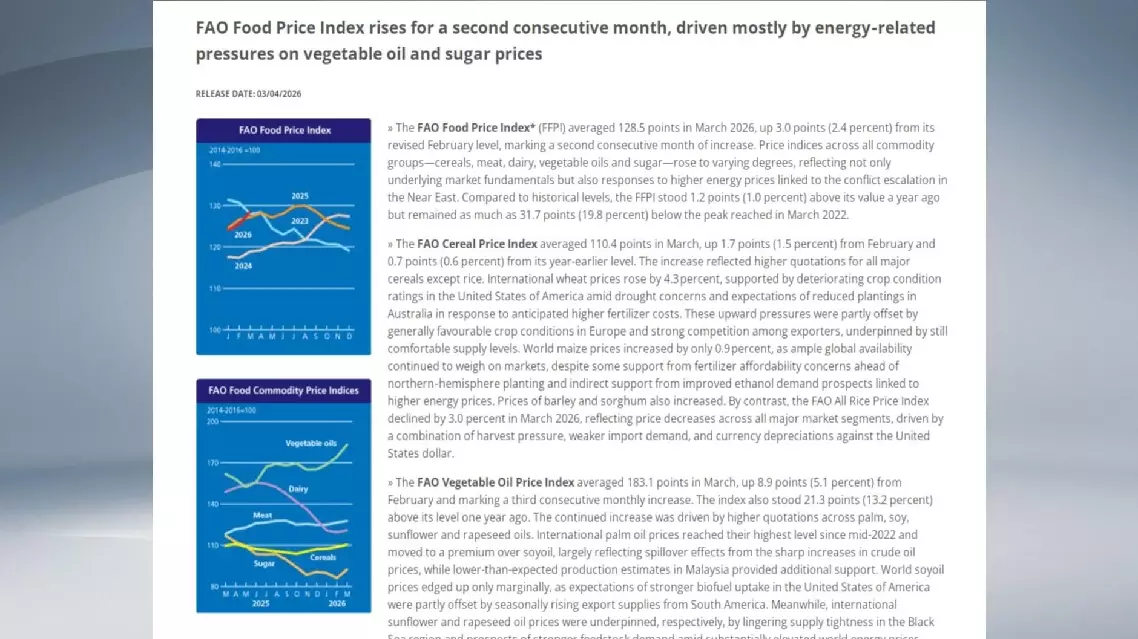
Global food commodity prices climbed for a second consecutive month in March, driven mainly by higher energy costs linked to escalating conflict in the Middle East, the Food and Agriculture Organization of the United Nations (FAO) said in report released on Friday.
The FAO Food Price Index, which tracks monthly changes in the international prices of a basket of globally traded food commodities, averaged 128.5 points in March, up 2.4 percent from February and 1.0 percent above its level a year ago.
According to the report, the FAO Vegetable Oil Index and Sugar Price Index showed the largest increases, up 5.1 percent and 7.2 percent, respectively.
The FAO Cereal Price Index increased by 1.5 percent from the previous month, driven primarily by higher world wheat prices, which rose 4.3 percent.
The FAO Meat Price Index rose by 1.0 percent from the previous month, and the FAO All-Rice Price Index declined by 3.0 percent in March, according to the report.
FAO stated that rising energy and fertilizer prices have been driving up agricultural input costs.
If the conflict stretches beyond 40 days, farmers will have to choose to farm the same with fewer inputs, plant less, or switch to less intensive fertilizer crops, according to FAO Chief Economist Maximo Torero.
These choices will hit future yields and shape food supply and commodity prices for the rest of this year and beyond, Torero said.
Global food prices rise for 2nd consecutive month in March amid Middle East conflict: FAO