Moments after the news broke about the apparent abduction of “Today” show host Savannah Guthrie’s mother, the floodgates opened on social media.
Influencers relayed the timeline from the hours after Nancy Guthrie was last seen and posted photos of the blood found on her front porch that later was a match for the 84-year-old grandmother. Others called out individuals connected to the case as looking “sus” or filmed themselves walking through her neighborhood to help find her.
The desperate search for Guthrie, who authorities believe was taken a week ago against her will from her home just outside Tucson, Arizona, has become the latest investigation to pique the widespread interest of online armchair detectives.
As the search continues with no suspects or persons of interest, posts across Instagram, TikTok, X, Facebook and YouTube have put millions of eyeballs on tips and theories surrounding her disappearance. But they’ve also helped to amplify rumors and forced law enforcement to repeatedly set the record straight on at least one crucial detail.
Michael Alcazar, adjunct professor at John Jay College of Criminal Justice and retired New York Police Department detective, said overall the positives outweigh the negatives when it comes to the onslaught of social media posts.
“More people are aware; It keeps people alert," he said. "If they know she hasn’t been found yet, perhaps people will remember that and if they see something, they might say something.”
He compared it to the widespread online response to the disappearance and death of Gabby Petito in 2021 and the impact that may have had on her body being found.
Two YouTubers said at the time that an image they posted showed Petito and her boyfriend's white van and that it led investigators to the area where her body was found. But the FBI didn't specify what led to the discovery.
“I think it’s just something that we have to adapt to as far as law enforcement," Alcazar said. “The true crime community is growing. ... There’s a lot of people out there that want to help.”
But with the widespread posts also comes the proliferation of misinformation.
Ashleigh Banfield, a contributor to the cable network NewsNation, announced on her podcast Wednesday that a law enforcement source told her a Guthrie family member is the prime suspect. She seemed to quickly walk-back the statement seconds later, saying the person “may be a prime suspect,” and adding that family members are often looked at first. The information quickly took off across social media, with people posting photos of the person she named.
Pima County Sheriff Chris Nanos addressed the rumor early in a news conference Thursday, saying authorities don't have any suspects or persons of interest. That remained the case Friday.
“I plead with you to be careful of what it is we put out there. ... You could actually be doing some damage to the case, you could do some damage to the individual, too,” he said later in the news conference. “Social media’s kind of an ugly world sometimes.”
Other posts have included a medium expressing her feeling that Guthrie is close by and a woman using astrology to point her viewers in the direction of what may have happened.
Calvin Chrustie, who has more than three decades of experience in negotiations for kidnapping, ransom and extortions, said if the public truly understood the toll those situations can have on family and law enforcement, they might not hastily post unsubstantiated information.
“This stuff on X and other stuff out there that’s pure speculation is actually making it more difficult for the families and making it more difficult to the police to secure the safe, you know, the safe return of the hostage,” he said.
Julie Urquhart, an elementary school teacher in New Brunswick, Canada, has been posting about the case on TikTok, Instagram and Facebook. She said she was drawn to the disappearance because she has a mother near Guthrie's age and was fascinated that someone could have taken her seemingly without a trace.
Urquhart said her information comes from national news sites and law enforcement news conferences. One of her posts on TikTok and Instagram amassed more 4 million views, she said.
“That’s 4 million eyes that now saw that story and now maybe will see something or know something or know someone who does," she said. "There's just so many people it hits.”
__
This story was first published Feb. 7, 2026. It was updated on Feb. 9, 2026 to clarify that journalist Ashleigh Banfield is a contributor to cable network NewsNation and is not a staff member.
—-
Associated Press reporter Safiyah Riddle in Montgomery, Alabama, contributed.
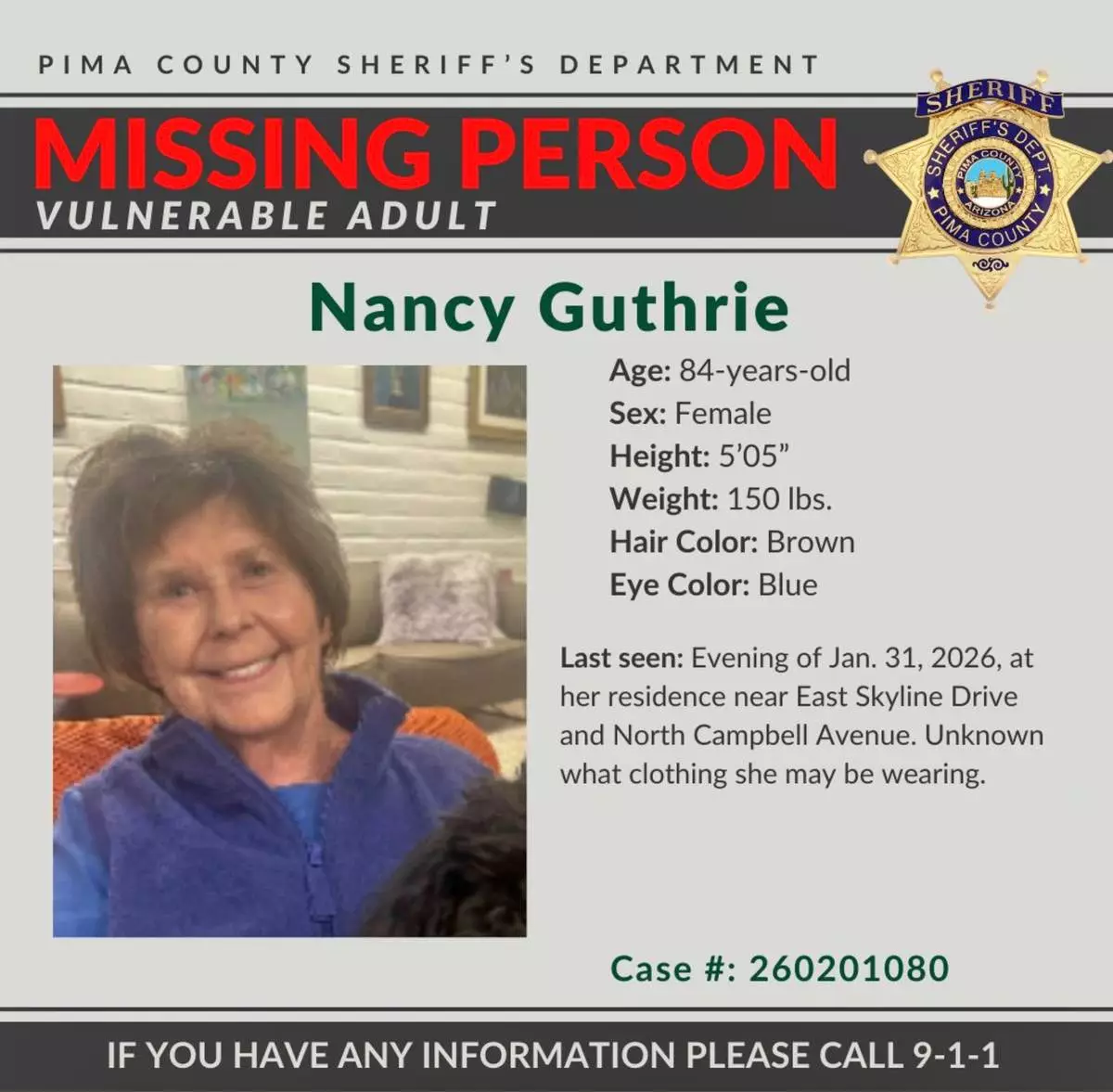
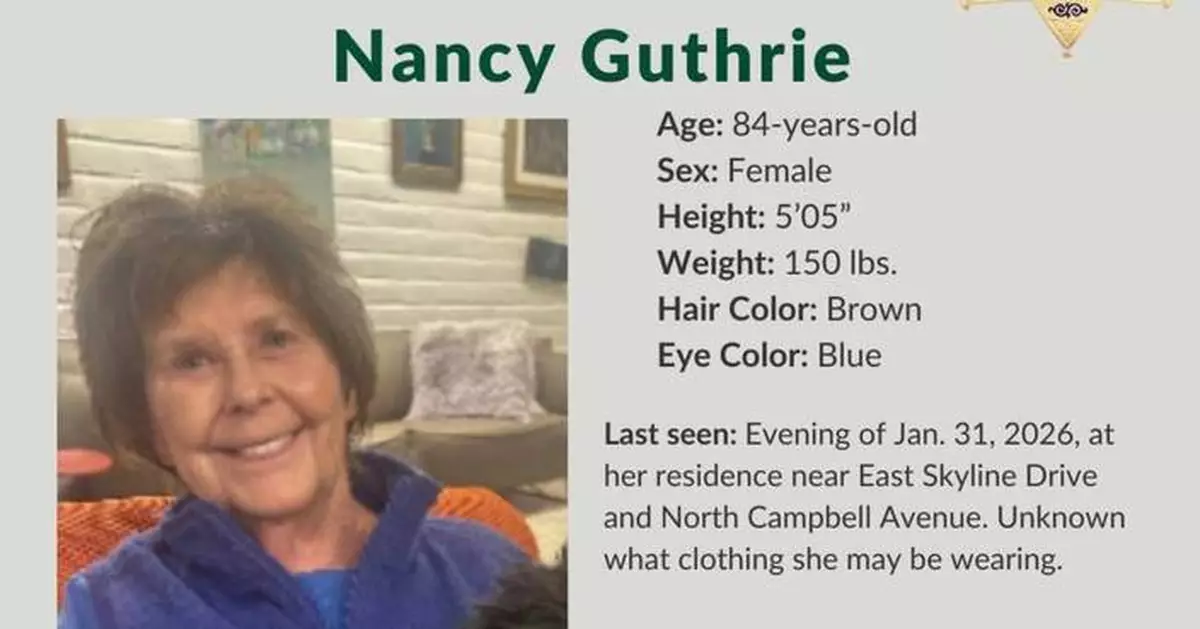
FILE - This image provided by the Pima County Sheriff's Department on Feb. 2, 2026, shows a missing person alert for Nancy Guthrie. (Pima County Sheriff's Department via AP, File)
Iran reversed its decision to reopen the Strait of Hormuz and warned that it would continue to block transit through the strait as long as the U.S. blockade of Iranian ports remained in effect.
The escalating standoff over the critical choke point threatened to deepen the energy crisis roiling the global economy and push the two countries toward renewed conflict, even as mediators expressed confidence that a new deal was within reach.
The strait is closed until the U.S. blockade is lifted, Iran’s Revolutionary Guard navy said Saturday night. Hours earlier, two gunboats from Iran’s Revolutionary Guard opened fire on a tanker transiting the Strait of Hormuz, the British military’s United Kingdom Maritime Trade Operations center said. It reported that the tanker and crew were safe, without identifying the vessel or its destination.
Roughly one-fifth of the world’s oil passes through the strait and further limits would squeeze the already constrained supply, driving prices higher once again. Meanwhile, a 10-day truce between Israel and the Iran-backed Hezbollah militant group in Lebanon appeared to be holding.
The fighting in the Middle East conflict, which is approaching the two-month mark, has killed at least 3,000 people in Iran, nearly 2,300 in Lebanon, 23 in Israel and more than a dozen in Gulf Arab states. Thirteen U.S. service members have also been killed.
Here is the latest:
Iran’s chief negotiator says his country wants “a lasting peace so that war is not repeated again.”
Parliamentary Speaker Mohammad Bagher Qalibaf made the comments in a televised interview late Saturday, a few days before a ceasefire deadline is set to expire, according to Iranian state media.
“What is fundamental for us is distrust of the United States,” he said. “At the same time, we have good intentions and seek a lasting peace — one that prevents the recurrence of war.”
He said that the Islamabad negotiations didn’t address the mistrust, but that the U.S. and Iranian negotiators “reached a more realistic understanding of one another.”
He said that the two sides achieved progress in the Islamabad talks, but disagreement remained on some key issues, including the nuclear program and the Strait of Hormuz.
“The gaps remain wide and some fundamental issues are still unresolved,” he said.
He didn’t elaborate with further details.
The Lebanese army said in a statement Sunday that it reopened the Khardali road that links the southern city of Nabatiyeh with the town of Marjayoun.
The army said that it also reopened the road that links the port city of Tyre with the village of Bourj Rahhal. The army is also working on reopening other roads, including a bridge on the Litani River in the village of Tayr Filsay.
During Israel’s invasion of southern Lebanon over the past several weeks, Israel’s air force has destroyed several bridges on the river.
After a 10-day ceasefire was declared as of midnight Thursday, the Lebanese army and the Litani Authority have been working on putting up temporary bridges to replace the destroyed ones.
Iran’s parliamentary Speaker Mohammed Bagher Qalibaf says the Strait of Hormuz will remain closed as long as the U.S. imposes a naval blockade on Iran.
“It is impossible for others to pass through the Strait of Hormuz while we cannot,” he said in televised comments aired by Iranian semiofficial media late Saturday.
Qalibaf, who is Iran’s chief negotiator with the United States, said that the strait is now under Iran’s control, linking the choke point’s reopening to the U.S. lifting of its blockade.
“If the U.S. does not lift the blockade, traffic in the Strait of Hormuz will definitely be restricted,” he said.
He said that the ceasefire was on verge of collapse when the U.S. attempted to mine-clear the strait.
He said Iran viewed the U.S. attempt as a violation of the ceasefire.
“The situation escalated to the point of conflict but the enemy retreated,” he said.
Israel’s military says another soldier died in combat in southern Lebanon, the second death announced in under 12 hours.
It brought the total number of soldiers killed in Lebanon to 15, and was the second soldier killed in combat since the ceasefire.
The military said that another soldier was badly wounded, along with four moderately wounded and four slightly injured.
The navy of Iran’s Revolutionary Guard Corps said that it extended the closure to the corridor it had earlier designated for the safe passage of vessels through the strategic waterway and declared the strait fully closed until the U.S. blockade on Iranian ports and ships is lifted.
On Friday, Iran said that vessels could move through the strait in coordination with it and against the payment of a toll.
But in a statement late Saturday carried by Iran’s state media, the navy warned that any violating vessel would be targeted.
Iran considers the U.S. blockade a violation of the ceasefire between the two countries. Two vessels were attacked earlier on Saturday in the Strait of Hormuz and off Oman’s coast, at least one of them by Iranian gunboats.
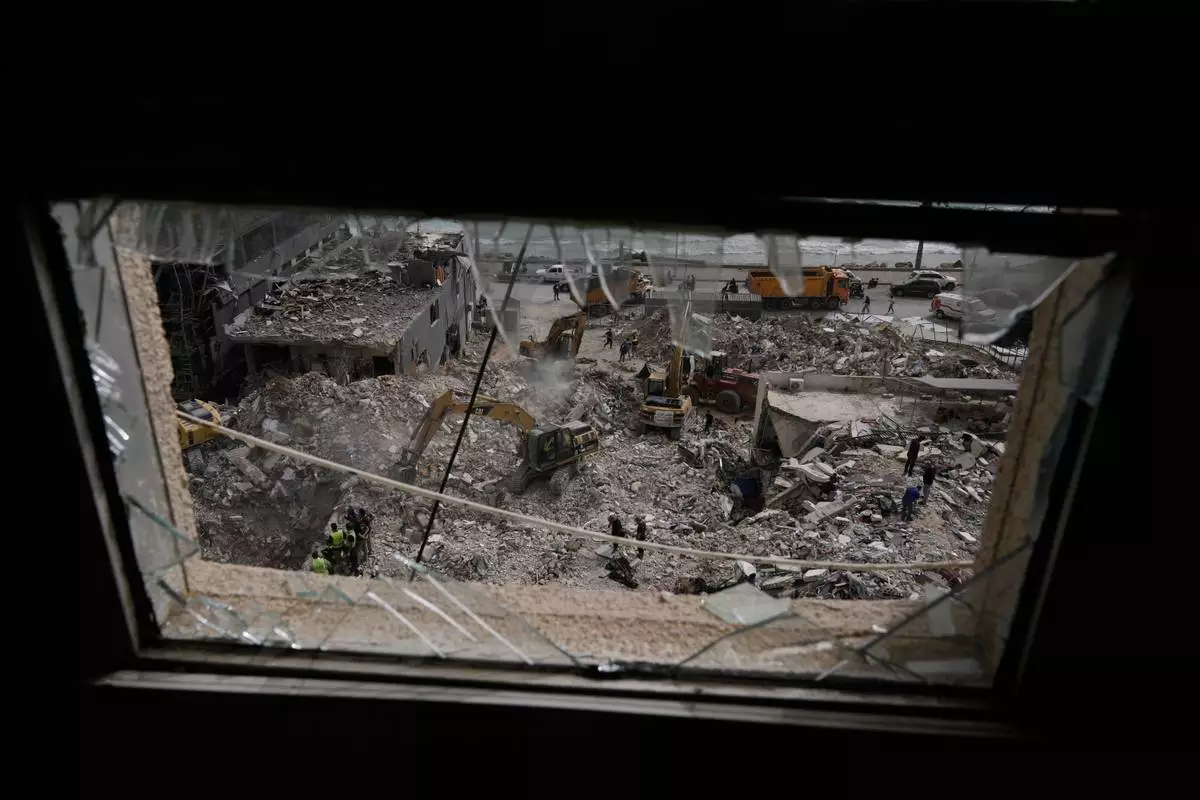
Excavators remove rubble from destroyed buildings that were hit on Thursday by Israeli airstrikes, as they keep searching for victims in Tyre city, southern Lebanon, Saturday, April 18, 2026. (AP Photo/Bilal Hussein)
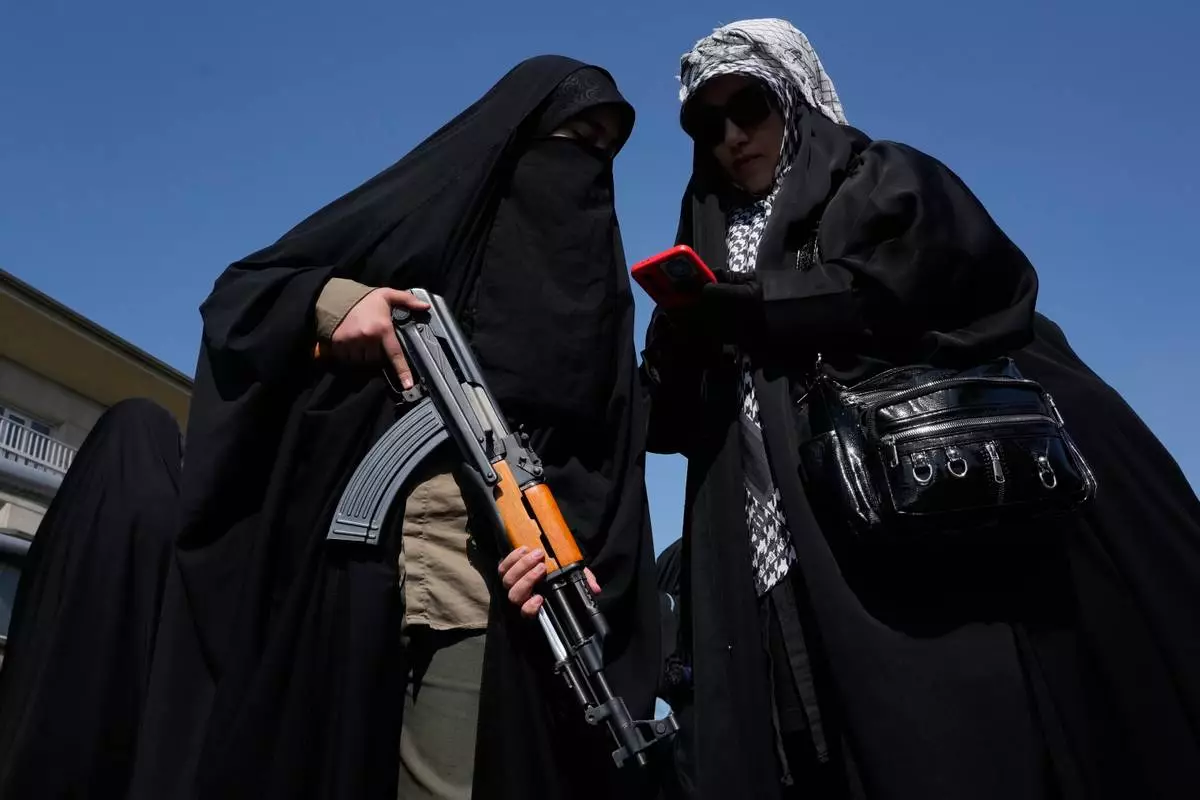
A woman member of the Basij paramilitary, affiliated with Iran's Revolutionary Guard, holds her gun during a state-organized rally in support of the supreme leader marking National Girl's Day in Tehran, Iran, Friday, April 17, 2026. (AP Photo/Vahid Salemi)
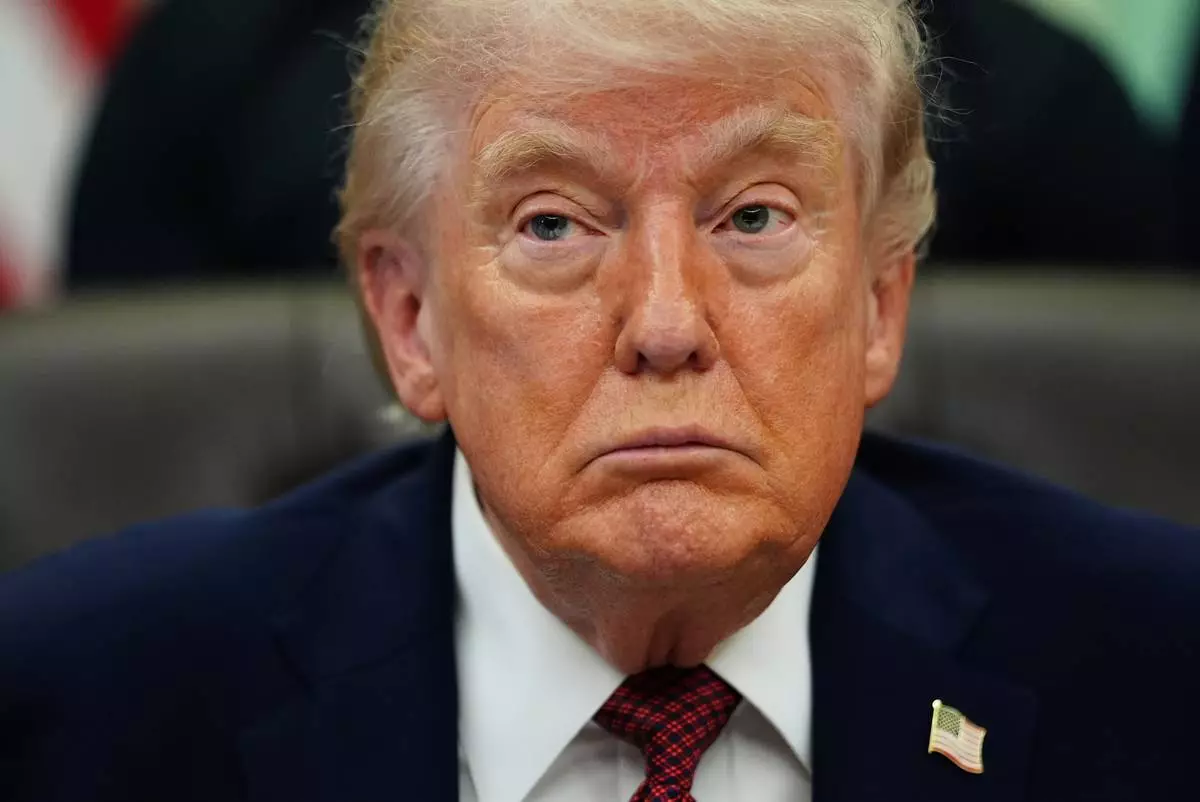
President Donald Trump listens to speeches before signing an executive order in the Oval Office of the White House, Saturday, April 18, 2026, in Washington. (AP Photo/Julia Demaree Nikhinson)
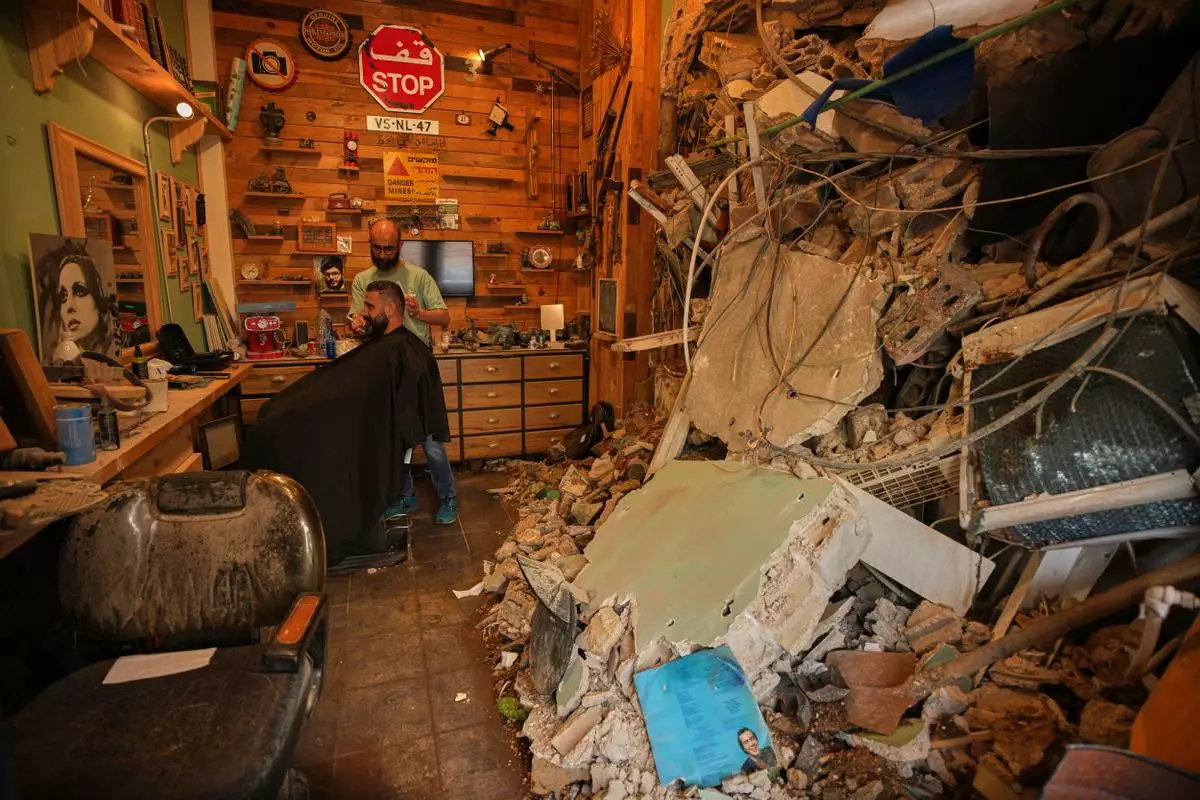
Barber Mohammad Mehdi cuts the hair of his client Ayman Al Zein inside his shop, which was damaged in an Israeli airstrike that also damaged Al Zein's shop, in Dahiyeh, Beirut's southern suburbs, Lebanon, Saturday, April 18, 2026. (AP Photo/Hassan Ammar)
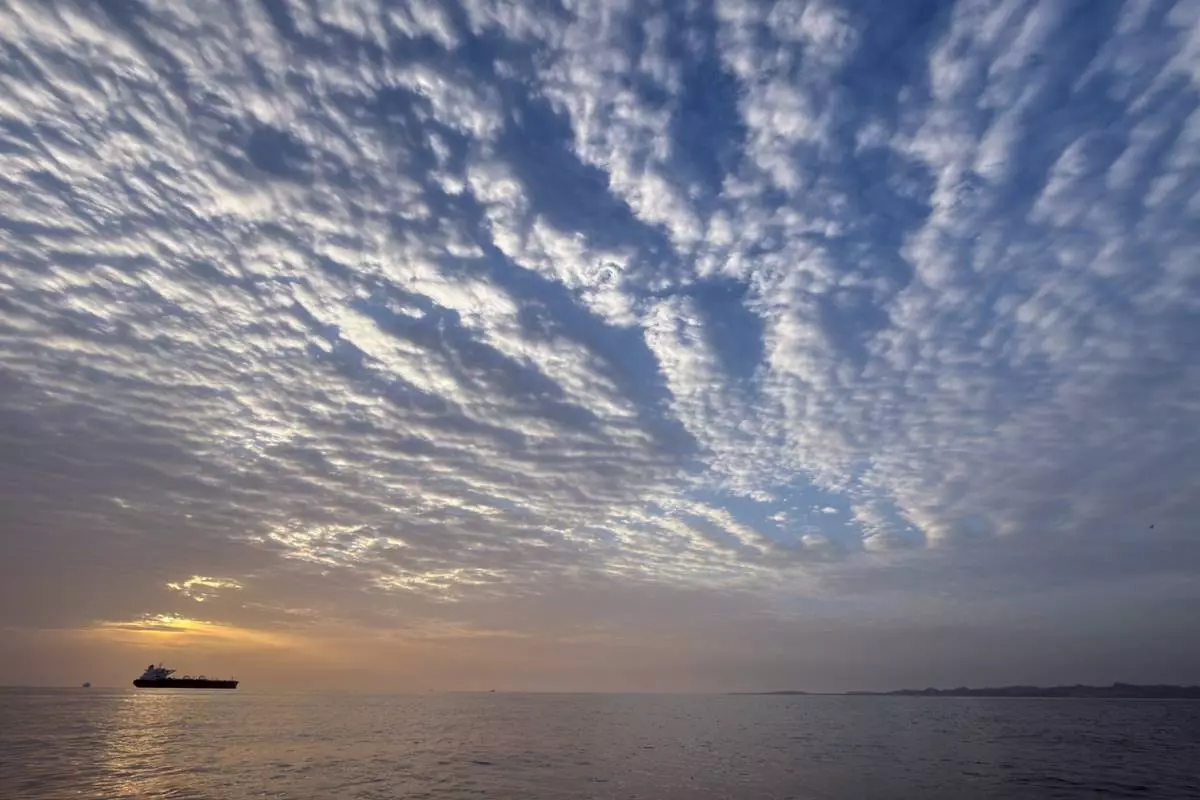
The sun rises behind a tanker anchored in the Strait of Hormuz off the coast of Qeshm Island, Iran, Saturday, April 18, 2026. (AP Photo/Asghar Besharati)