China's ratio of total social logistics costs to gross domestic product (GDP) fell to 13.9 percent in 2025, dropping below the 14 percent threshold for the first time, the country's top economic planner said on Saturday.
The reading was 0.8 percentage points lower than the level at the end of the 13th Five-Year Plan period (2016-2020), according to the National Development and Reform Commission (NDRC).
The steady decline of logistics costs indicates the gradual improvement of economic operation efficiency, the NDRC said.
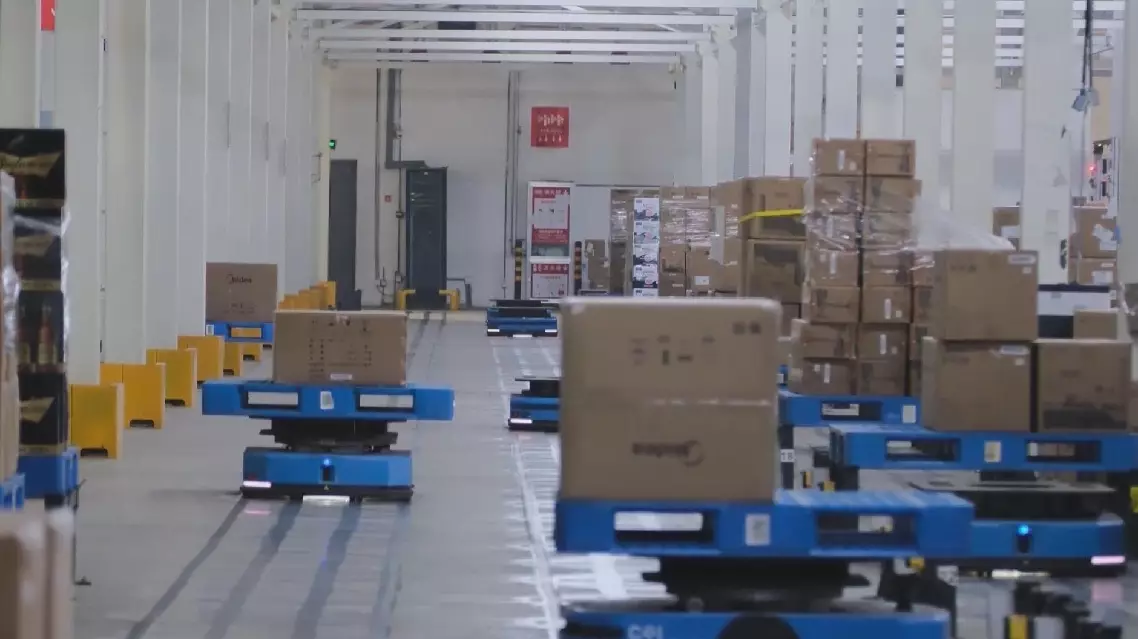
At a highly automated warehouse in central China, more than 7,000 Chinese Spring Festival parcels have been dispatched every hour. The efficiency was achieved after the logistics system was upgraded into a smart network, alongside the deployment of 50 robots capable of carrying heavy loads. "This year we are handling three times the parcel volume of last year. With the the implementation of this digital logistics system, the same number of workers can now complete the entire process -- from picking to packing and shipping -- for a single parcel in just 120 seconds," said Gao Chenglin, a warehouse operation manager.
Nationwide, automated sorting centers have achieved near full coverage among leading courier firms, accelerating cost reductions and efficiency improvement.
China's logistics sector has also benefited from structural improvements in transport. A shift from road transport to waterways and rail have boosted efficiency and lowered costs.
In 2025, waterborne freight turnover accounted for more than 50 percent of the total, while rail-road intermodal volumes rose more than 130 percent year on year. Bulk cargo and long-distance shipments were increasingly transported in cheaper and more environmentally-friendly ways.
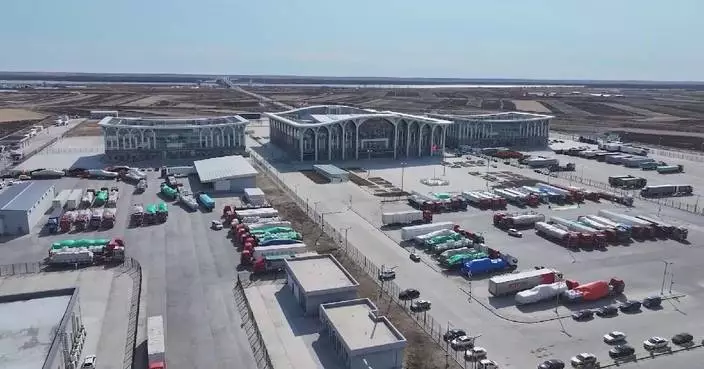
Closer integration between logistics hubs and manufacturing clusters has become a key driver of lower transport costs. By locating logistics centers next to factories and industrial parks, goods can move directly from production lines into distribution networks, cutting out extra steps and reducing expenses.
China now has 181 national logistics hubs linked with industrial belts and commercial markets, creating large-scale, specialized transport services that lower supply chain costs.
In Wuhu, a city in east China's Anhui Province, a logistics hub is connected to an intelligent auto industrial park, allowing cars to be shipped out at a rate of 1.5 vehicles per minute. In Foshan, a city in south China's Guangdong Province, another hub ties into the furniture and appliance industry cluster, enabling products to reach more than 220 countries and regions.
"We will systematically advance the construction and upgrading of national logistics hubs, promote balanced regional development of logistics, strengthen information sharing, and extend logistics services along the supply chain, so as to further reduce overall logistics costs and better support the growth of the real economy," said Kang Min, deputy director of the NDRC's Department of Trade.
China's logistics costs-to-GDP ratio hits record low in 2025