Lawrence Ma Yan-kwok, a barrister and chairman of the Hong Kong Legal Exchange Foundation, has rejected claims of curtailed press freedom in the Hong Kong Special Administrative Region (HKSAR) following the sentencing of Jimmy Lai, saying that national security represents a crucial red line.
The High Court of the HKSAR on Monday sentenced former newspaper publisher Jimmy Lai to 20 years in prison, after considering his "serious and grave criminal conduct."
Lai was found guilty on two charges of conspiring to collude with external forces and a charge of conspiracy to publish seditious materials. The court found that Lai was "the mastermind and driving force behind these conspiracies."
Prosecutors said that Lai, disguised as a media man while acting as an agent for external anti-China forces, was the principal mastermind and perpetrator of a series of riots that shook Hong Kong and undermined the fundamental interests of both the country and the HKSAR.
In an interview with China Global Television Network (CGTN), Ma rejected criticism from Western governments and media, saying that the verdict in Lai's case reflects a "red line" of national security considerations.
"A lot of criticism from the Western media is that 'well, we will lose freedom of expression', 'Hong Kong's press freedom and freedom of expression has been curtailed because of national security law'. I don't think that this is true. There's also a red line. National security offenses and national security interests is the red line. You can't publicly go and ask your citizens to overthrow the government. You can put out constructive criticism. You can say the government is wrong, and then you constructively provide a positive opinion of what should be done," he said.
"But Jimmy Lai is different. He is so adamant. He's going to overthrow it, regardless of what the government does, what the good things its done, or whether things that the government has contributed to people and helping the community, that doesn't matter, as long as he doesn't like the politics of it. The Hong Kong government is born to be disliked, according to him, and he is there to overthrow it, and he made it pretty clear. So I mean, this is not press freedom. This is using the press as a sedition, subversion, succession tool to overthrow a government -- that is completely different from exercising a right conferred by the law," he said.
Ma said that the rule of law in Hong Kong remains intact.
"The rule of law has not been changed. We as lawyers and judges uphold the rule of law without external inferences. No one is going to talk to the judge, or tell the judge, hey, look, you got to rule against who and who, or you have to rule for so and so. I mean, there is security of tenure. You can't sack a judge. Hong Kong judges have not been sacked for making a bad decision against anyone's interest. And Hong Kong judges are not corrupted. There's no incidence of Hong Kong judges being bribed. So, I mean Hong Kong still, the rule of law in Hong Kong is still protected by very strenuous judicial independence. And therefore our rule of law is intact and maintained. So this is important," he said.
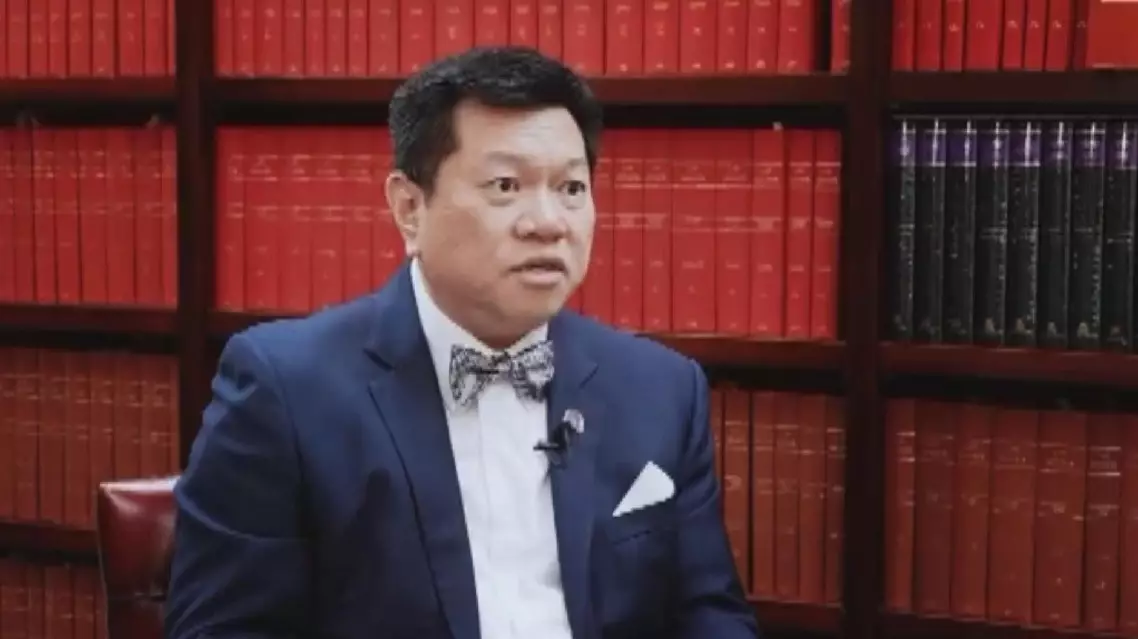
Barrister rejects claims of curtailed press freedom in HK, saying national security represents red line