China is extending the popularity of its homegrown films beyond cinema screen, with an immersive art exhibition in Shanghai offering visitors a technology-driven encounter with the country's original animation heritage.
Alongside the release of new domestic films in this year's Spring Festival season, several popular titles from previous years have returned in innovative formats, bringing fresh cultural experiences to visitors.
The immersive art exhibition "Yao-Chinese Folktales", inspired by the animated classics, has opened in Shanghai as its first stop and will run through May 5.
Blending traditional Chinese aesthetics with modern technology, the exhibition invites visitors to experience the creative appeal of original Chinese animation.
The exhibition features more than 300 pieces of creative material. A number of scene design drafts from well-known episodes and early character sketches for beloved figures are being displayed publicly for the first time, offering visitors a clear view of how original Chinese animation develops from initial concepts to finished visual works.
In addition to recreating traditional Chinese-style visual settings, the exhibition incorporates interactive theater, 3D mirrored installations, AI interaction and augmented-reality technology, further enriching the on-site experience.
"The 'jade rabbit' in this exhibition area features AI voice interaction. Here visitors can enjoy immersive experiences as well as motion-capture interactive animations," said Xue Tianchong, a teacher from the Central Academy of Fine Arts' School of Design.
The exhibition also traces the evolution of Chinese animation classics, from "Havoc in Heaven" released in 1957 to the contemporary Yao-Chinese Folktales series, evoking visitors' cultural memories of animations indigenous to China.
In addition, the exhibition is ingeniously supported by a gift shop, allowing visitors to take home souvenirs of cultural and creative products boosted by digital technology.
"Cultural and creative derivatives account for a relatively large part of this exhibition. It is a kind of more scenario-based form of consumption, offering visitors a better closed-loop experience," said Hu Jing, project coordinator of the art expo.
With a week to go before the Spring Festival holiday, box office pre-sales for the holiday movie season in China have began on Monday, with advanced booking exceeding 93.3 million as of 12:21 on Tuesday noon.
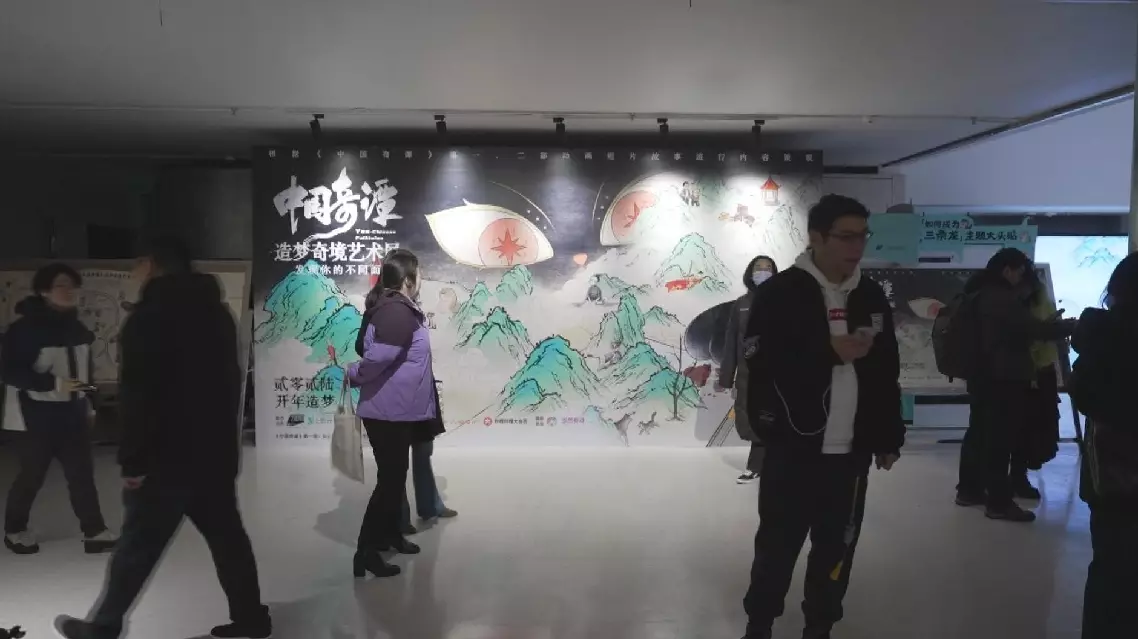
China's classic animation finds new life in immersive art expo ahead of Spring Festival
China's classic animation finds new life in immersive art expo ahead of Spring Festival