Skip to Content Facebook Feature Image

How NASCAR's founding family transformed Daytona Beach into a motorsports mecca

Sport

How NASCAR's founding family transformed Daytona Beach into a motorsports mecca
Sport

Sport

How NASCAR's founding family transformed Daytona Beach into a motorsports mecca

2026-02-11 10:03 Last Updated At:14:46

DAYTONA BEACH, Fla. (AP) — Before a new landlord shuttered the iconic Brickyard Lounge and Grill last month, you could walk into the tiny, race-themed restaurant located two miles from Daytona International Speedway, skip the menu and ask them to bring you what NASCAR chairman Jim France orders.

A 1-pound cheeseburger and basket of crispy fries appeared.

More Images
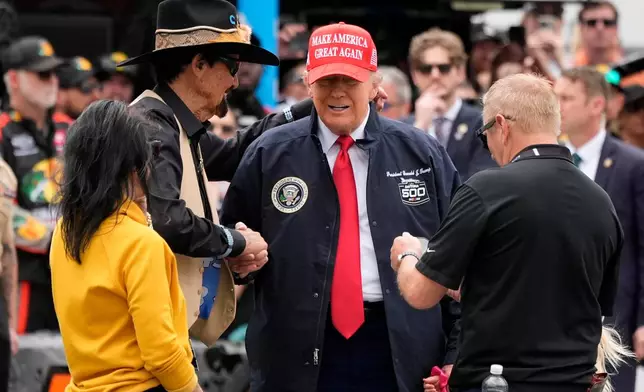
FILE - President Donald Trump, second right, shakes hands with NASCAR Hall of Fame driver Richard Petty at the NASCAR Daytona 500 auto race at Daytona International Speedway, Feb. 16, 2025, in Daytona Beach, Fla. (AP Photo/John Raoux, File)
FILE - President Donald Trump, second right, shakes hands with NASCAR Hall of Fame driver Richard Petty at the NASCAR Daytona 500 auto race at Daytona International Speedway, Feb. 16, 2025, in Daytona Beach, Fla. (AP Photo/John Raoux, File)

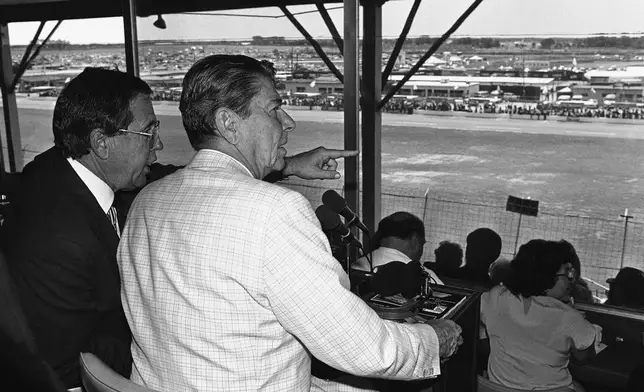
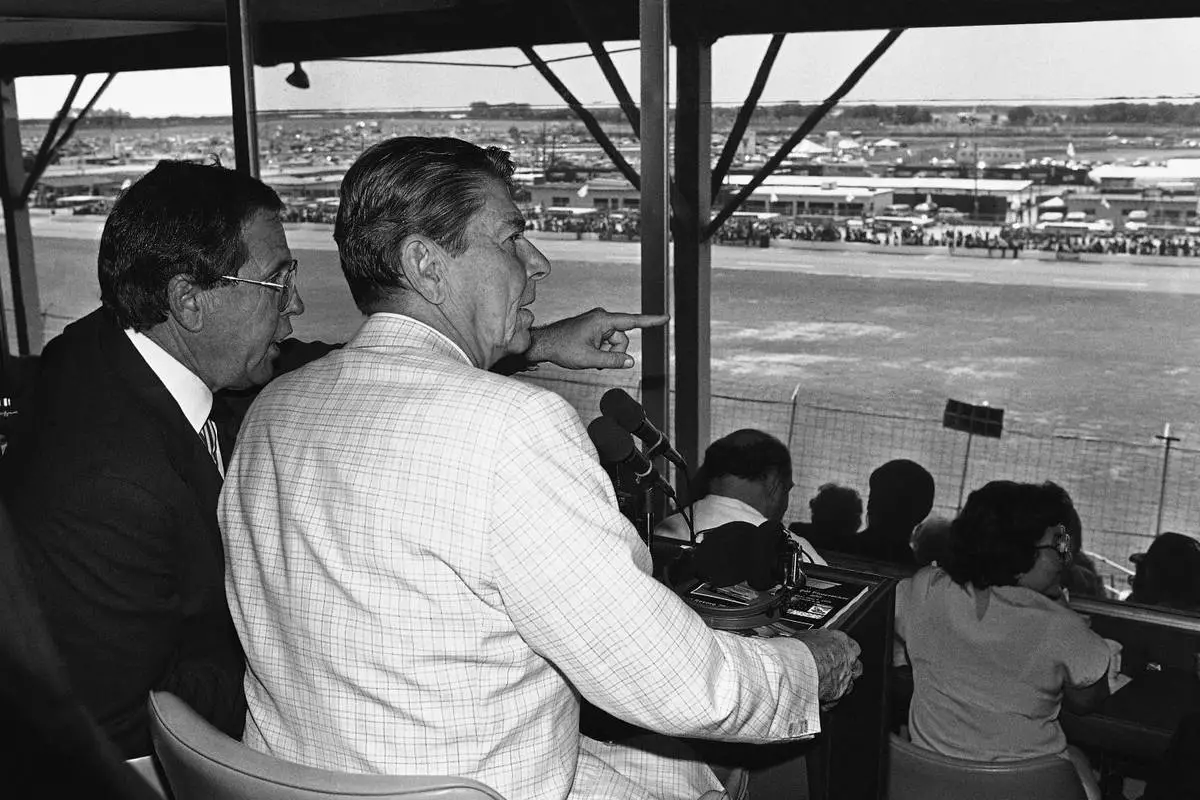
FILE - President Ronald Reagan, front right, sits with William France Jr., president of NASCAR and part owner of the Daytona Speedway, and watches the running of the Firecracker 400 stock car race July 4, 1984, in Daytona Beach, Fla. (AP Photo/Ira Schwarz, File)
FILE - President Ronald Reagan, front right, sits with William France Jr., president of NASCAR and part owner of the Daytona Speedway, and watches the running of the Firecracker 400 stock car race July 4, 1984, in Daytona Beach, Fla. (AP Photo/Ira Schwarz, File)

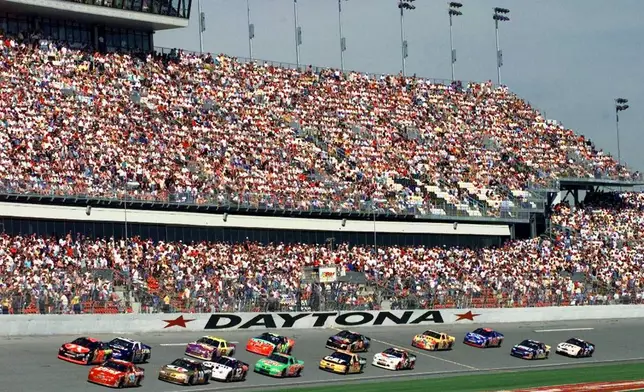
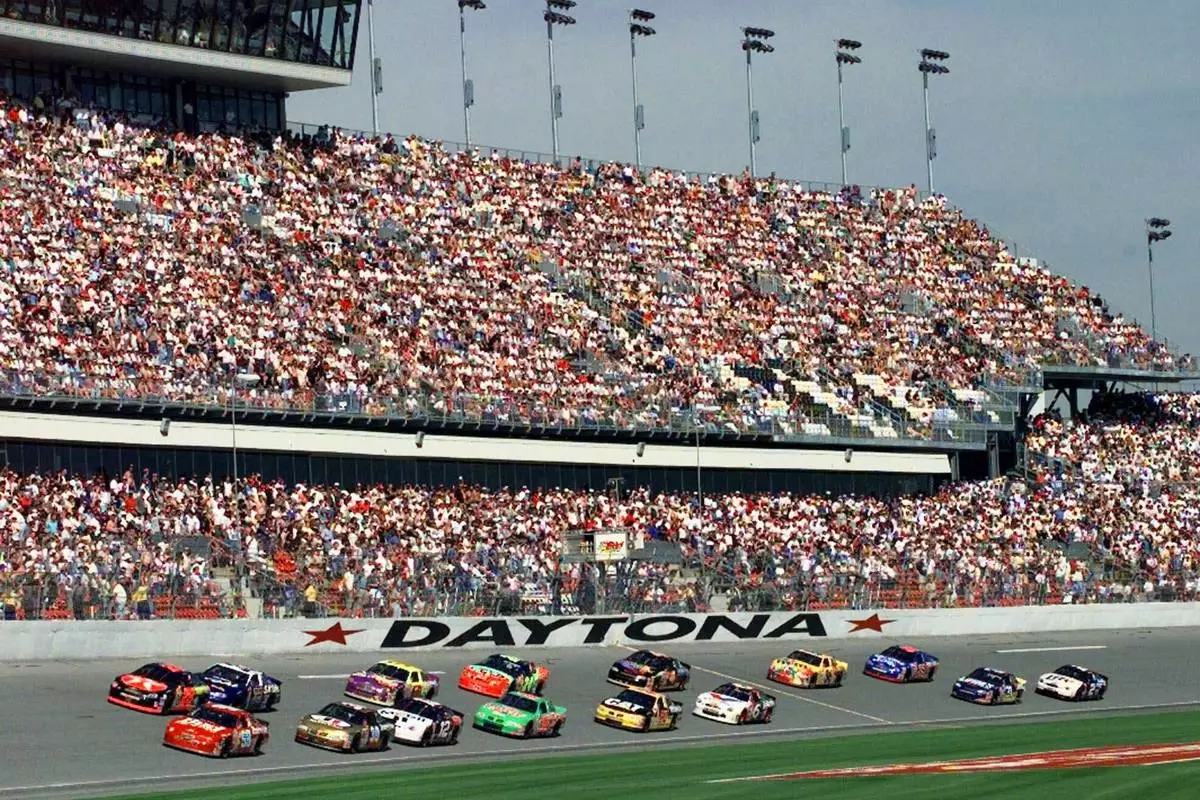
FILE - Drivers take the green flag to start the Bud Shootout race, Feb. 7, 1999, at the Daytona International Speedway in Daytona Beach, Fla. (AP Photo/Chris O'Meara, File)
FILE - Drivers take the green flag to start the Bud Shootout race, Feb. 7, 1999, at the Daytona International Speedway in Daytona Beach, Fla. (AP Photo/Chris O'Meara, File)

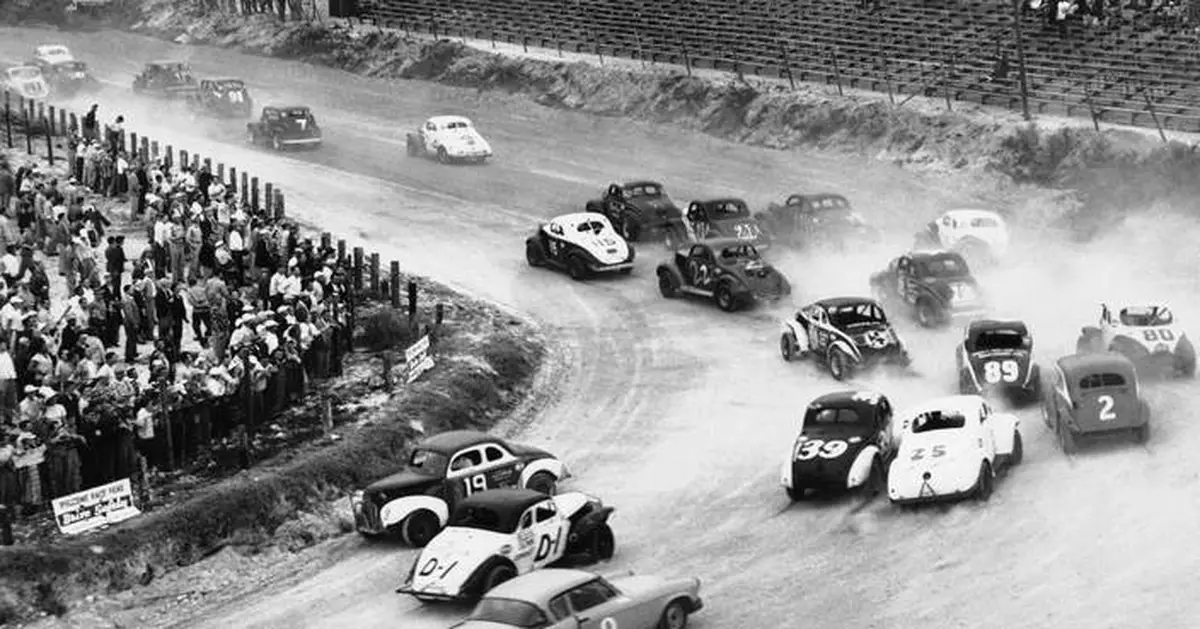
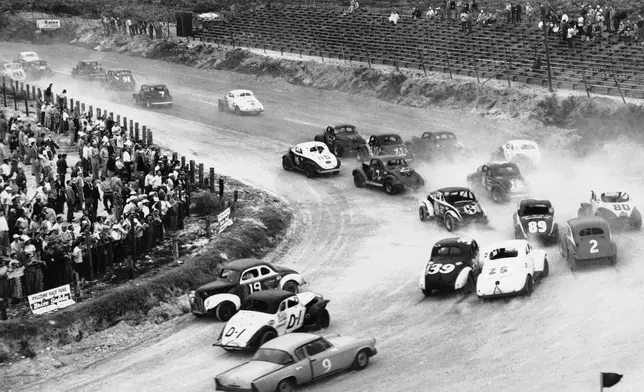
FILE - Cars take a turn during the first lap of a NASCAR Sportsman's stock car auto race inn Daytona Beach, Fla., Feb. 24, 1954. (AP Photo, File)

FILE - Cars take a turn during the first lap of a NASCAR Sportsman's stock car auto race inn Daytona Beach, Fla., Feb. 24, 1954. (AP Photo, File)

At 70-year-old Mario's Restaurant in nearby Ormond Beach, the hostess says with first-hand knowledge that the late Bill France Sr. ordered the grouper francaise whenever the family popped in.

NASCAR's founding family members are regulars at nearly every restaurant — dive or upscale — as well as the local shops and businesses that comprise the city's roughly 75,000 people living along 23 miles of central Florida's coastline.

“The Frances are wonderful people who come in for lunch,” said Annette Allan, owner of the Brickyard. “They treat the employees very well and are some of our favorite customers.”

Four generations have set roots in the city since France Sr. fled Washington, D.C., in the mid-1930s to escape the Great Depression. He was an aspiring racer and landed in Daytona Beach, where men like him were already running hot rods on the famed beach.

By 1940, he was considered the best stock-car driver in the country and was fed up with unsavory race promoters running chaotic events in which participants were shorted their share of the purse. He bandied a group together for a meeting at the Streamline Hotel, where they created the framework for what is now NASCAR.

The family never relinquished control and instead built NASCAR into a billion-dollar company that stands as the top motorsports series in the United States. The family also never left Daytona Beach.

“It is pretty remarkable that family, multiple generations, has chosen to stay here when they could literally live anywhere in the United States,” said Lori Campbell Baker, a resident since 1991 and executive director of the Daytona Beach Area Convention & Visitors Bureau.

“They have put Daytona Beach on the map for millions of people, and they invest in this community. That name recognition has given the city several Super Bowls without ever having to bid on them. Daytona Beach is known as a place to compete, and we could never have afforded, never had the budget, that the advertising the France family and the speedway gives us for free.”

France Sr. began construction in 1957 for Daytona International Speedway, where a 78th season of NASCAR begins Sunday with the Daytona 500, and the facility anchors the city. It already has held one world-class event this year, last month's Rolex 24 at Daytona, the most prestigious endurance race in North America.

The track is open nearly daily for various racing events, and the grounds are used for everything from 5K runs to “Welcome to Rockville,” a four-day music festival that recently signed a 10-year extension with the track.

But the speedway's impact is felt throughout the city, where the civic center has a robust calendar of conventions, expos and competitions. At the same time as the Rolex last month, thousands of cheerleaders flocked to the city for an annual competition. Gymnastics champions are crowned in Daytona, volleyball tournaments and archery competitions are won, and even the Florida Truck Driving Championship is held.

“Instead of saying, ‘We’re going to compete for the championship,' people say, ‘We’re going to Daytona Beach,'” Campbell Baker said. “We get so many ancillary events because people think, ‘If Daytona Beach is the big place, we need to compete there, too.’”

One of the most important France contributions to the city has been One Daytona, a 300,000-square-foot mixed-use lifestyle and entertainment center directly across from the speedway. It was the vision of Lesa France Kennedy, executive vice chair of NASCAR and France Sr.'s granddaughter.

Opened in late 2017 and developed by a France-owned company, it is a year-round dining, shopping and entertainment destination that complements the “World Center of Racing.”

Without the facility, Daytona Beach has no Costco, no Bass Pro Shops, no P.F. Chang's or the race-themed high-end hotel that is part of Marriott's Autograph Collection. Gallery500, an art gallery in the complex, is owned by France Kennedy and some of her own creations line the walls.

“My sister really has a developer mindset and a process to bringing people together. She has a lot of passion and vision, and she drives these projects and doesn't really get enough credit for that,” said Brian France, who spent 15 years as NASCAR chairman. “Our family isn't looking for credit, but they recognize that from a support standpoint, a municipality and a local government, in every market, has to come together to make events as successful as possible.”

France Kennedy hosted the Art of Speed, a luxury car show and art event that benefits the NASCAR Foundation, the night before the Rolex last month. As she walked The Associated Press around the grounds, people stopped her to say hello, told her how much they enjoyed the event and asked about her family.

She got a hug from a restaurant owner who told her she'd just missed her husband by mere minutes. France Kennedy then took the AP to the space next door to Tiano’s Cucina Italiana and explained how the owner was building it into a market as an extension of the eatery.

“We now have this fabulous entertainment facility directly across from the track that our fans can enjoy,” she told the AP. “Plus, I like fun things to do, too.”

Art of Speed last month set a record by raising more than $50,000 that goes to the NASCAR Foundation, a children's needs-focused nonprofit that has donated more than $50 million to various causes over the last 20 years.

The family also runs the Betty Jane France Humanitarian Award in honor of Bill France Jr.'s late wife, and that award gives annual grants to organizations across the country that support children's causes.

The Frances have a tower named for them at Halifax Health Center near the speedway and created Speediatrics, a pediatric emergency department that is NASCAR themed.

There's also a large commitment from the France family to arts and culture in Daytona Beach as a significant donor to the Museum of Arts and Sciences, where the CiCi and Hyatt Brown Museum hosts the largest collection of Florida-based art in the world.

France Kennedy also was instrumental in bringing the Boston Pops and other renowned artists to the Daytona Beach Peabody Auditorium.

For France Kennedy, it is simple: She grew up on the water and returning to Daytona Beach after graduating from Duke to join the family business was an idea planted in her by her late grandmother, Annie B.

She enjoys leaving her office across from the speedway, being home in 10 minutes, changing into comfy clothes and taking in her water view. Her son, Ben Kennedy, returned to Daytona Beach after graduating from Florida. Now 34 and married, he has chosen the city as his home as he climbs the ranks toward someday taking over NASCAR.

Jim France lives along the Halifax River, his three children remain local and the family quietly blends in with everyone from the longtime residents to the snowbirds. If you don't know them, you would have no idea you are seated next to a billionaire at Corleone's Famous New York Pizza and Gyros.

They remain committed to the area, and if possible, many in NASCAR's top leadership would get the Brickyard Lounge moved into One Daytona to retain access to their beloved cheeseburgers. They remain abreast of the ongoing renovations at Billy's Tap Room, another racing-themed area institution that has been shuttered for nearly two years, and do their best to bring Florida-based businesses into One Daytona.

“I think it's home. Why does Warren Buffett live in Omaha, Nebraska?” Brian France said. “Daytona Beach is our home and, of course, we happen to have the biggest event, the Daytona 500, in our hometown. It's a community that our family remains committed to and rather quite passionate about.”

AP auto racing: https://apnews.com/hub/auto-racing
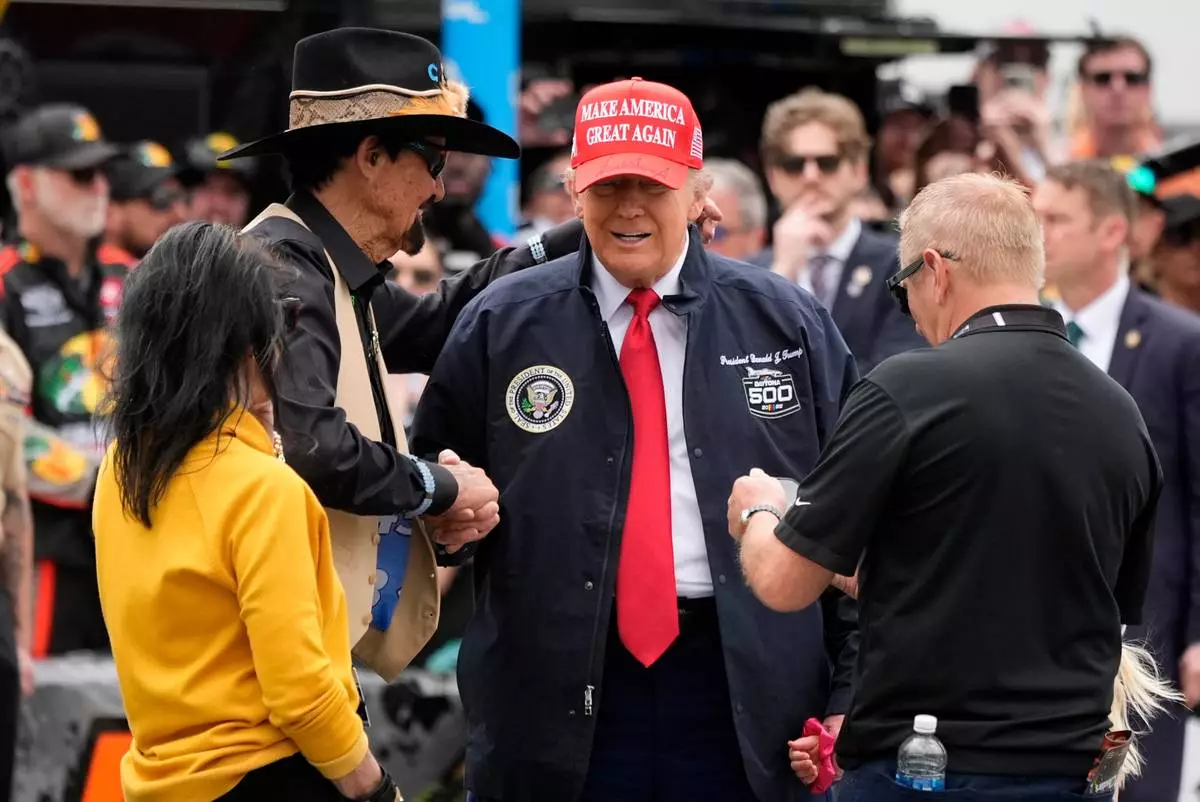
FILE - President Donald Trump, second right, shakes hands with NASCAR Hall of Fame driver Richard Petty at the NASCAR Daytona 500 auto race at Daytona International Speedway, Feb. 16, 2025, in Daytona Beach, Fla. (AP Photo/John Raoux, File)
FILE - President Donald Trump, second right, shakes hands with NASCAR Hall of Fame driver Richard Petty at the NASCAR Daytona 500 auto race at Daytona International Speedway, Feb. 16, 2025, in Daytona Beach, Fla. (AP Photo/John Raoux, File)

FILE - President Ronald Reagan, front right, sits with William France Jr., president of NASCAR and part owner of the Daytona Speedway, and watches the running of the Firecracker 400 stock car race July 4, 1984, in Daytona Beach, Fla. (AP Photo/Ira Schwarz, File)
FILE - President Ronald Reagan, front right, sits with William France Jr., president of NASCAR and part owner of the Daytona Speedway, and watches the running of the Firecracker 400 stock car race July 4, 1984, in Daytona Beach, Fla. (AP Photo/Ira Schwarz, File)

FILE - Drivers take the green flag to start the Bud Shootout race, Feb. 7, 1999, at the Daytona International Speedway in Daytona Beach, Fla. (AP Photo/Chris O'Meara, File)
FILE - Drivers take the green flag to start the Bud Shootout race, Feb. 7, 1999, at the Daytona International Speedway in Daytona Beach, Fla. (AP Photo/Chris O'Meara, File)

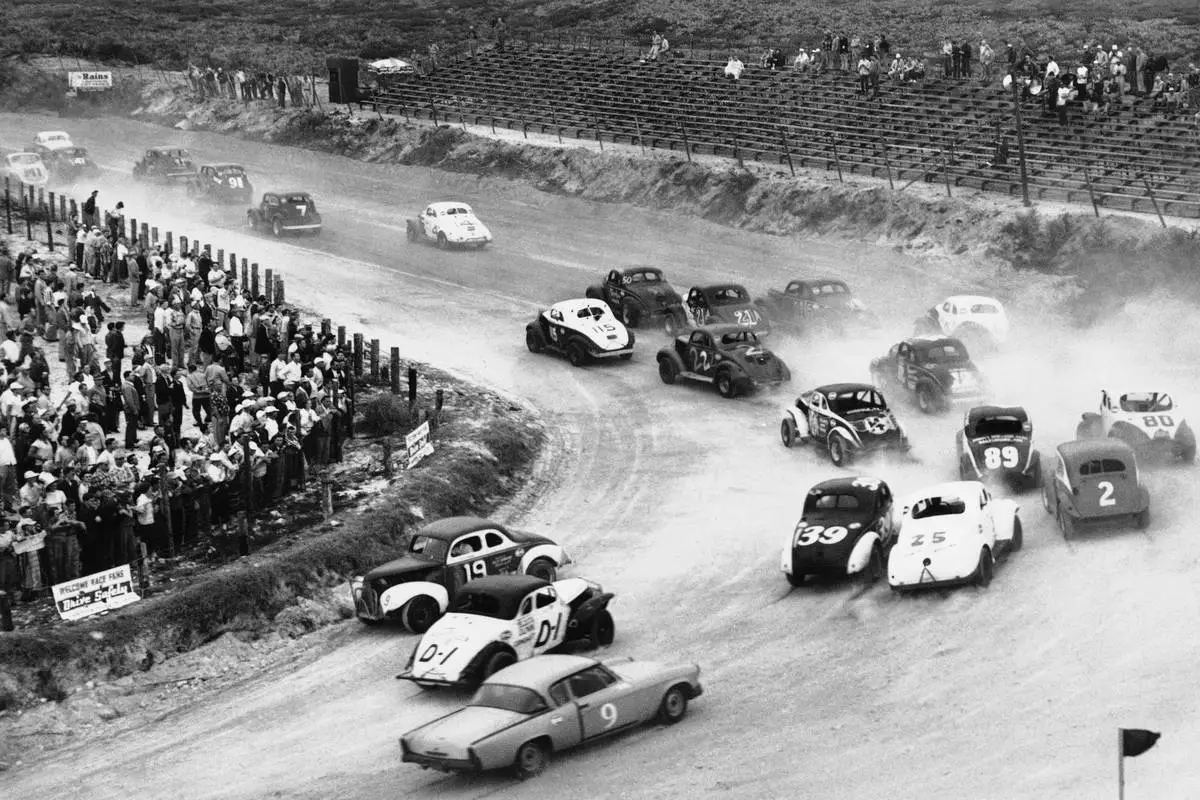
FILE - Cars take a turn during the first lap of a NASCAR Sportsman's stock car auto race inn Daytona Beach, Fla., Feb. 24, 1954. (AP Photo, File)
FILE - Cars take a turn during the first lap of a NASCAR Sportsman's stock car auto race inn Daytona Beach, Fla., Feb. 24, 1954. (AP Photo, File)
Thousands of Catholic devotees commemorated Good Friday across Latin America with processions and ceremonies re-enacting the crucifixion of Jesus.

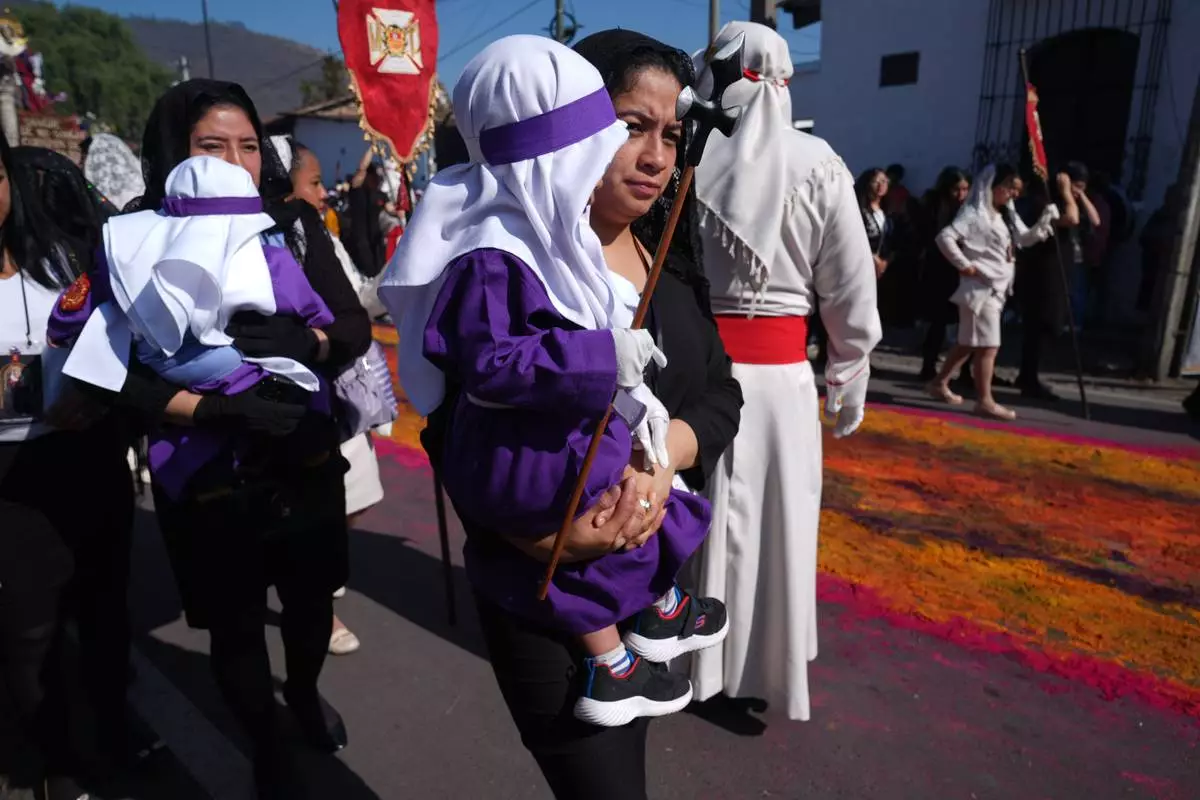
In Antigua, a colonial-era city in southern Guatemala, dozens dressed in purple and white robes and made their way under the early morning sun, many of them penitents known as “cucuruchos.” Others carried centuries-old images of Jesus through cobblestone streets.

The city hosts more than a dozen processions throughout Holy Week, set against a backdrop of volcanoes.

Marcos Bautista, 63, said he has attended the Good Friday observances since his father brought him along as a baby in his arms.

“To describe Holy Week in Antigua, there are no words that can capture what it feels like," Bautista said. “It’s a feeling that, just by speaking about what Jesus has done in our lives, moves me deeply.”

In Bolivia, President Rodrigo Paz traveled to the southern city of Tarija to participate in Good Friday ceremonies.

The country is a secular state under its constitution and its leaders refrained from engaging in any religious events between 2006 and 2025. But Paz — who took office last November — broke with precedent by attending Palm Sunday Mass carrying a palm frond.

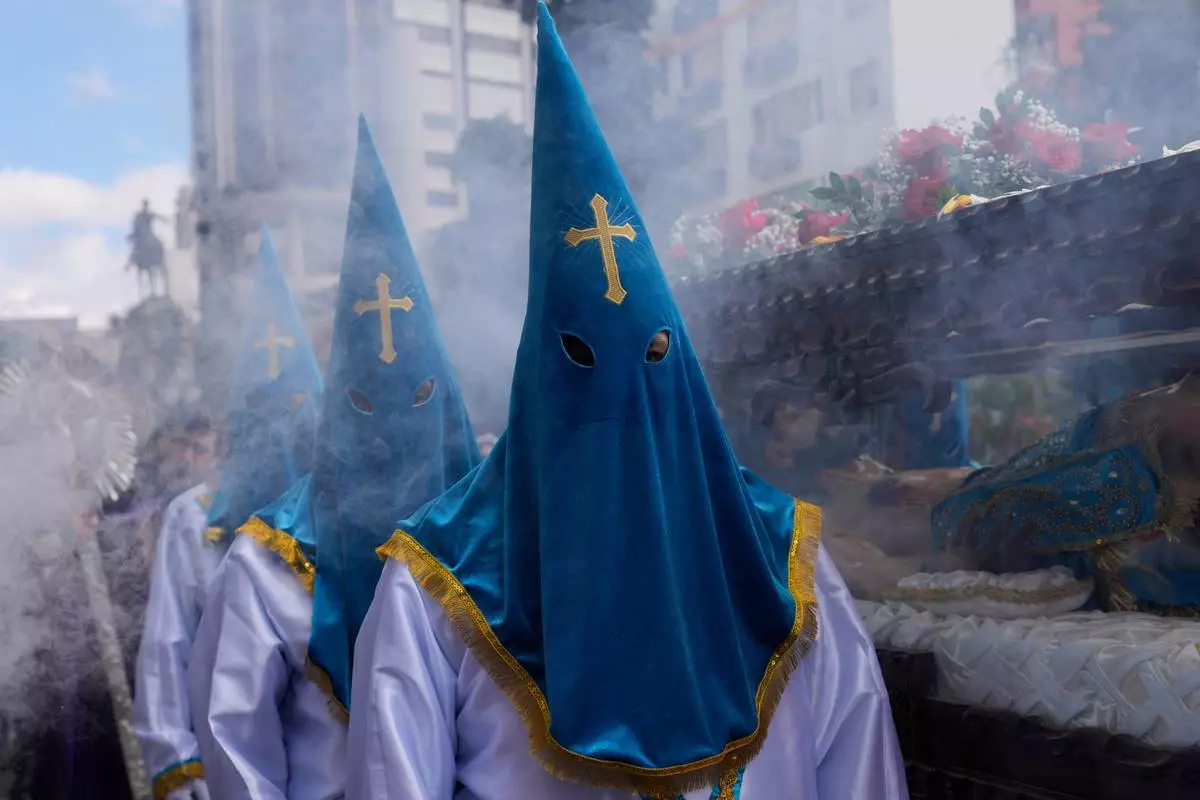
In the capital city of La Paz, local authorities and military bands accompanied Good Friday processions, in which hooded penitents carried the Holy Sepulcher through the streets.

Antonio Santamaría, who was holding an image of Jesus, said he welcomed the government’s presence. “I’m glad everyone is here now,” Santamaría said.

Bolivia remains a predominantly Catholic country, alongside strong Indigenous spiritual traditions. In some households, it is customary to eat only fish on Good Friday and prepare up to 12 dishes representing the apostles of Jesus, a tradition that has declined in recent years amid an economic crisis.

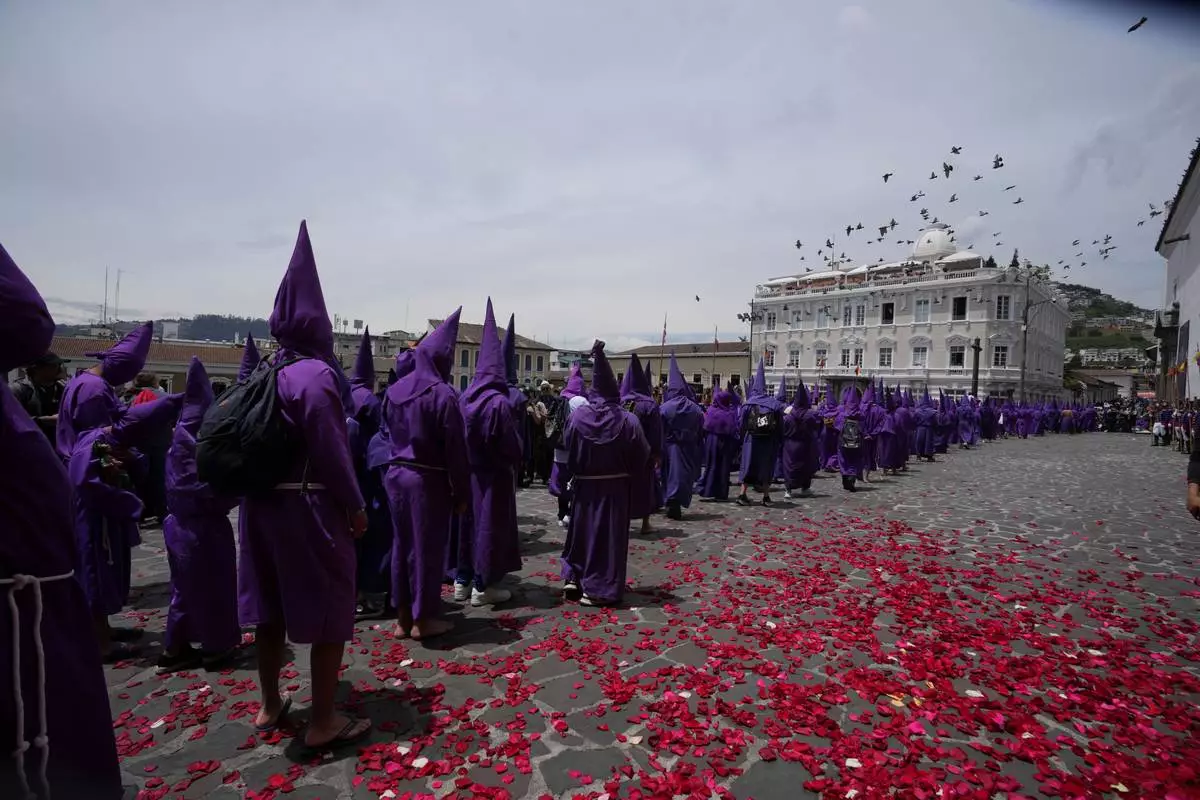
In Ecuador, where about 80% of the population identifies as Catholic, processions were held across major cities. In the capital, Quito, the “Jesús del Gran Poder” procession drew more than 150,000 faithful who filled the historic center’s streets with chants and prayers as they accompanied an image of Jesus carrying the cross.

Thousands more climbed the Monserrate Hill in neighboring Colombia. At more than 10,200 feet (3,100 meters) above sea level, they reached the summit in the capital city of Bogotá to attend Mass at the basilica. Similar observances, including reenactments of the Stations of the Cross, were held in other parts of the country.

Mexicans, too, celebrated Good Friday in a country that’s home to nearly 100 million Catholics.

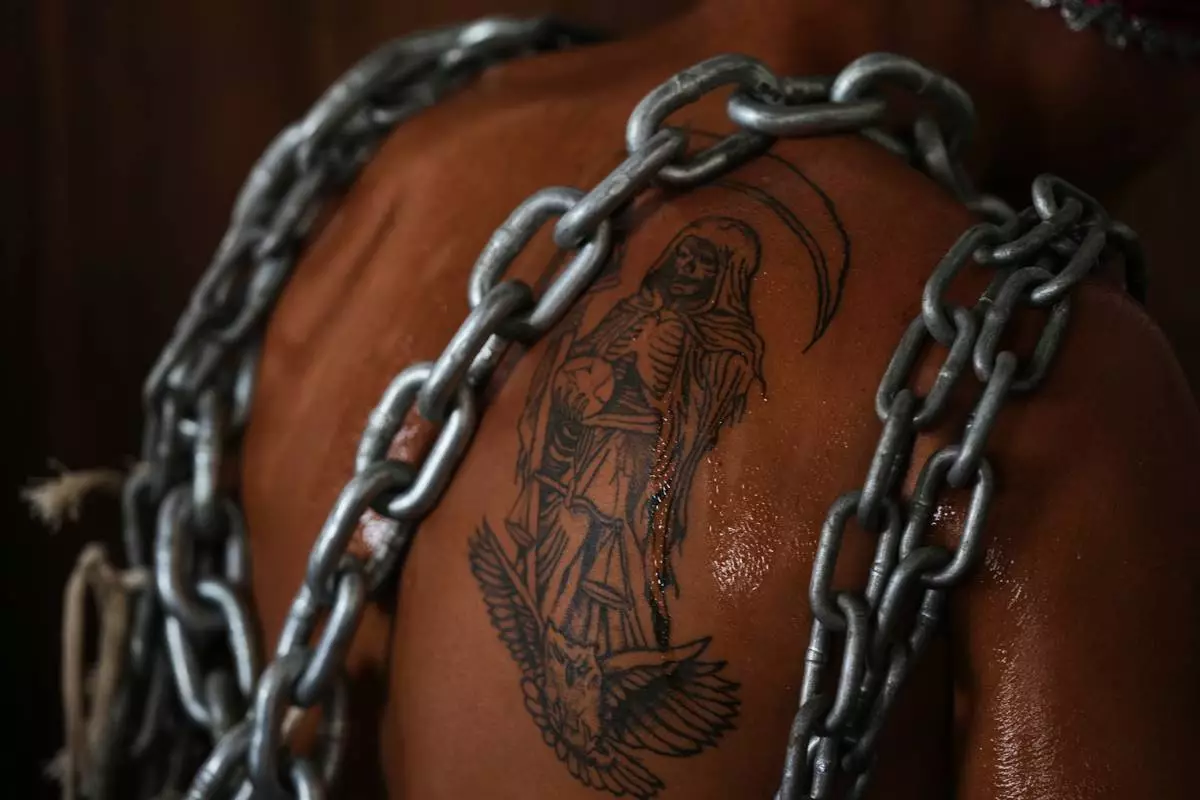
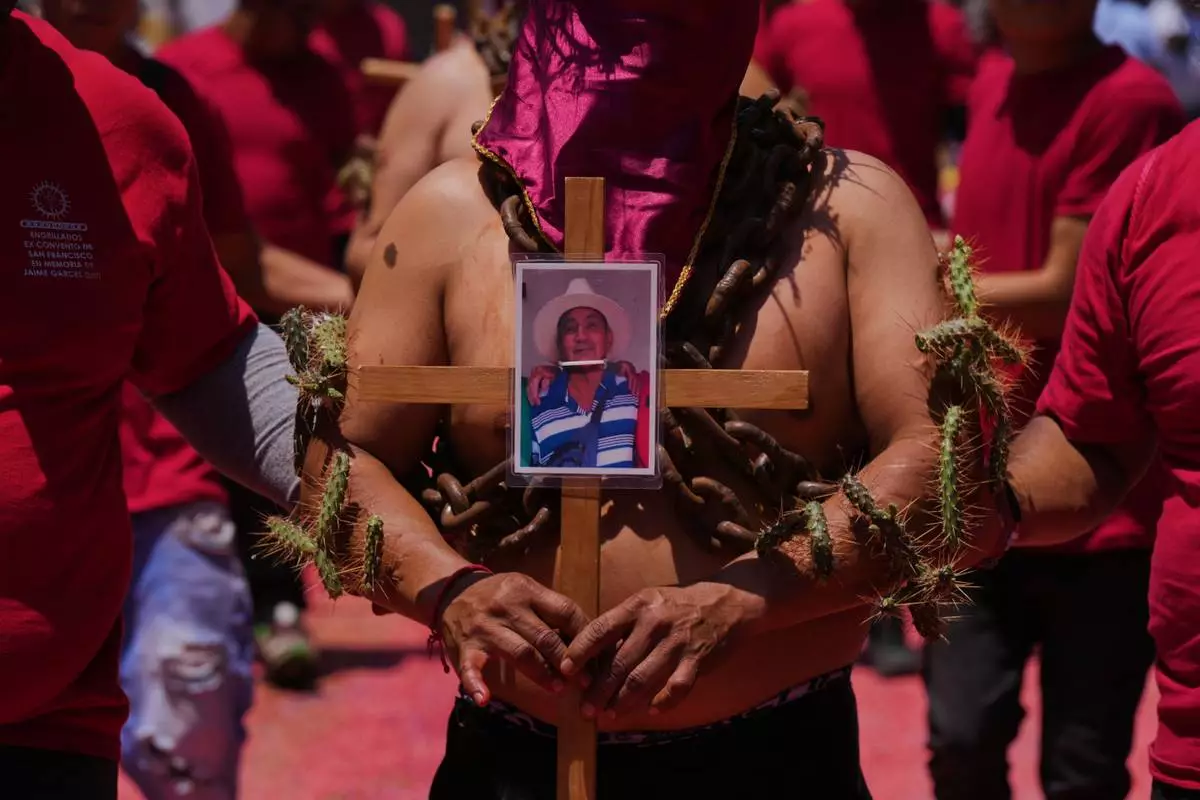
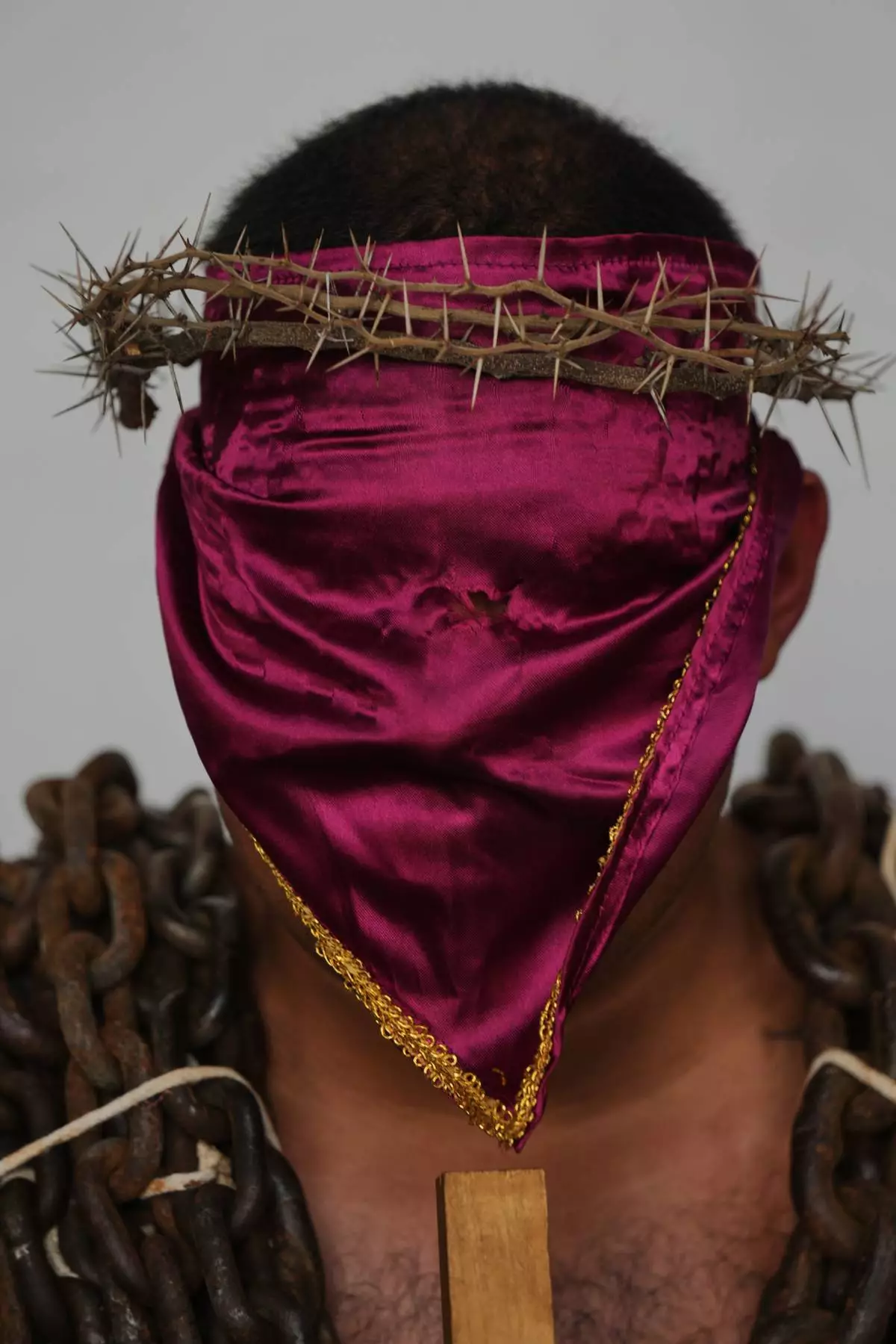
Masked penitents, in chains and with pieces of cactus stuck to their skin, walked through the town of Atlixco, in the central state of Puebla. Known as the “Procession of the Chained," it’s part of a tradition in which some participants pay penance for their sins and others thank God for miracles.

“It’s very beautiful, very sad,” said Marcela Ramírez, a homemaker who attended the procession. “It’s a kind of reverence, and you have to come and accompany them.”

While the share of Catholics in Latin America has declined over the past decade, the faith remains the region’s largest religion.

In several countries, including Peru and Argentina, more than 60% of adults still identify as Catholic, according to 2024 surveys by the Pew Research Center and Latinobarómetro.

AP journalists Moisés Castillo in Antigua, Guatemala; Carlos Valdez and Juan Karita in La Paz, Bolivia; Gonzalo Solano and Gabriela Molina, in Quito, Ecuador; and Martín Silva in Atlixco, Mexico, contributed to this report.

Associated Press religion coverage receives support through the AP’s collaboration with The Conversation US, with funding from Lilly Endowment Inc. The AP is solely responsible for this content.

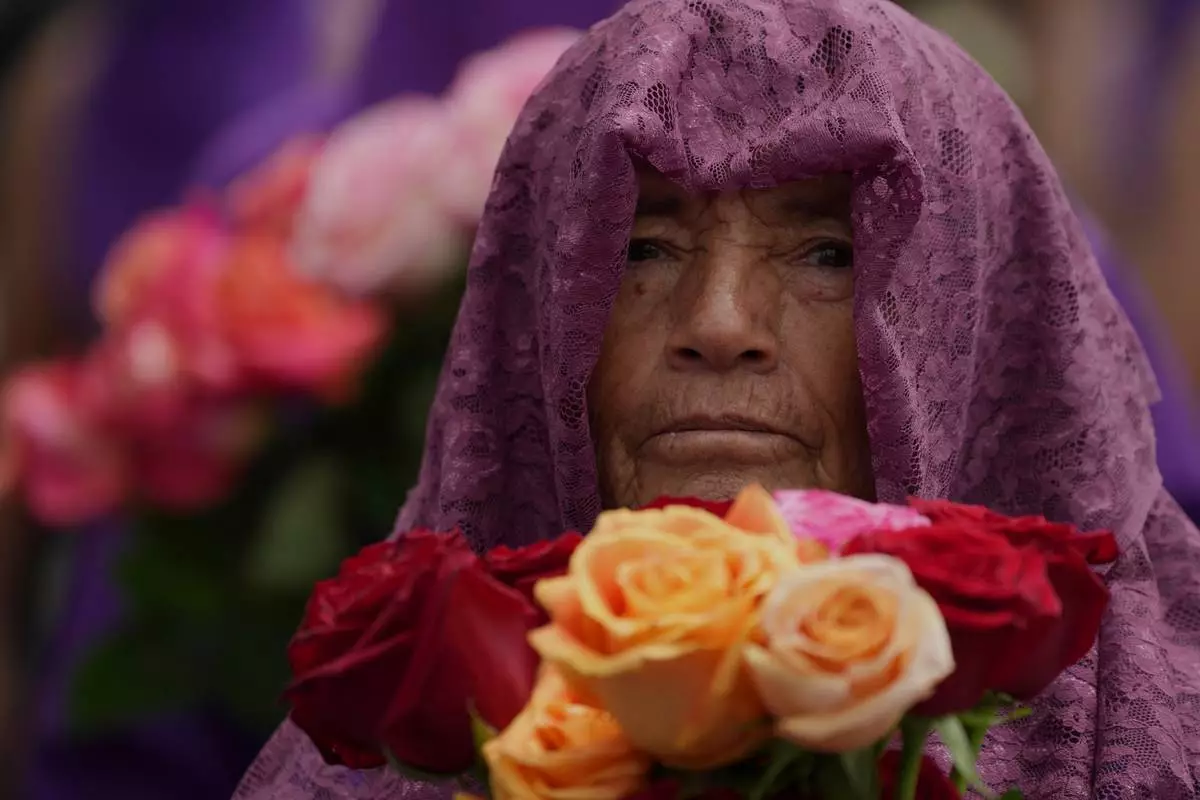
A penitents known as a "Veronica" takes part in the Jesus del Gran Poder procession in Quito, Ecuador, Friday, April 3, 2026. (AP Photo/Dolores Ochoa).

A penitents known as a "Veronica" takes part in the Jesus del Gran Poder procession in Quito, Ecuador, Friday, April 3, 2026. (AP Photo/Dolores Ochoa).

Hooded penitents known as "Cucuruchos" take part in the Jesus del Gran Poder procession in Quito, Ecuador, Friday, April 3, 2026. (AP Photo/Dolores Ochoa).

Hooded penitents known as "Cucuruchos" take part in the Jesus del Gran Poder procession in Quito, Ecuador, Friday, April 3, 2026. (AP Photo/Dolores Ochoa).

A blindfolded penitent wears a crown of thorns before a Good Friday procession during Holy Week celebrations in Atlixco, Mexico, Friday, April 3, 2026. (AP Photo/Fernando Llano)

A blindfolded penitent wears a crown of thorns before a Good Friday procession during Holy Week celebrations in Atlixco, Mexico, Friday, April 3, 2026. (AP Photo/Fernando Llano)

Chains drape over the Santa Muerte tattoo of a penitent before a Good Friday procession during Holy Week in Atlixco, Mexico, Friday, April 3, 2026. (AP Photo/Fernando Llano)

Chains drape over the Santa Muerte tattoo of a penitent before a Good Friday procession during Holy Week in Atlixco, Mexico, Friday, April 3, 2026. (AP Photo/Fernando Llano)

A penitent wearing chains and prickly cactus holds a photo on a cross at a Good Friday procession during Holy Week in Atlixco, Mexico, Friday, April 3, 2026. (AP Photo/Fernando Llano)

A penitent wearing chains and prickly cactus holds a photo on a cross at a Good Friday procession during Holy Week in Atlixco, Mexico, Friday, April 3, 2026. (AP Photo/Fernando Llano)

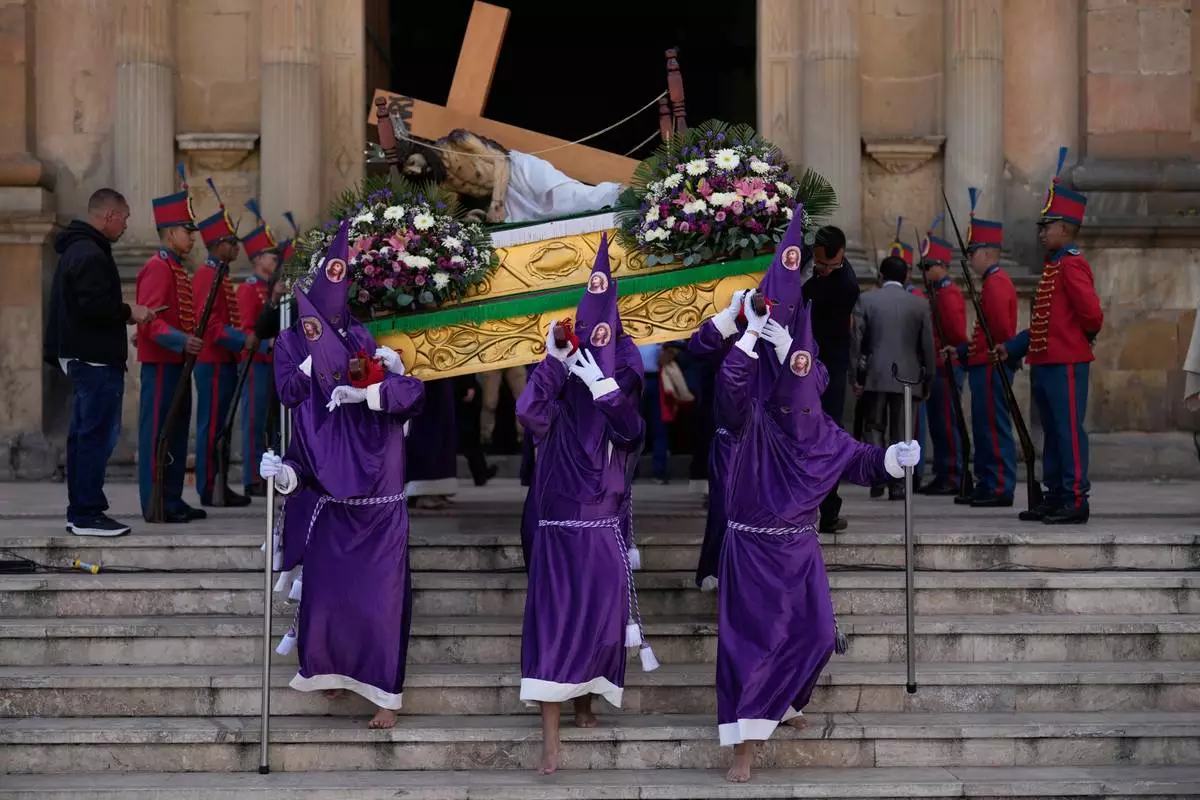
Penitents from the Nazareno brotherhood carry a statue of Jesus down the steps of the Cathedral Basilica of St. James the Apostle for a Good Friday procession during Holy Week in Tunja, Colombia, Friday, April 3, 2026. (AP Photo/Fernando Vergara)

Penitents from the Nazareno brotherhood carry a statue of Jesus down the steps of the Cathedral Basilica of St. James the Apostle for a Good Friday procession during Holy Week in Tunja, Colombia, Friday, April 3, 2026. (AP Photo/Fernando Vergara)

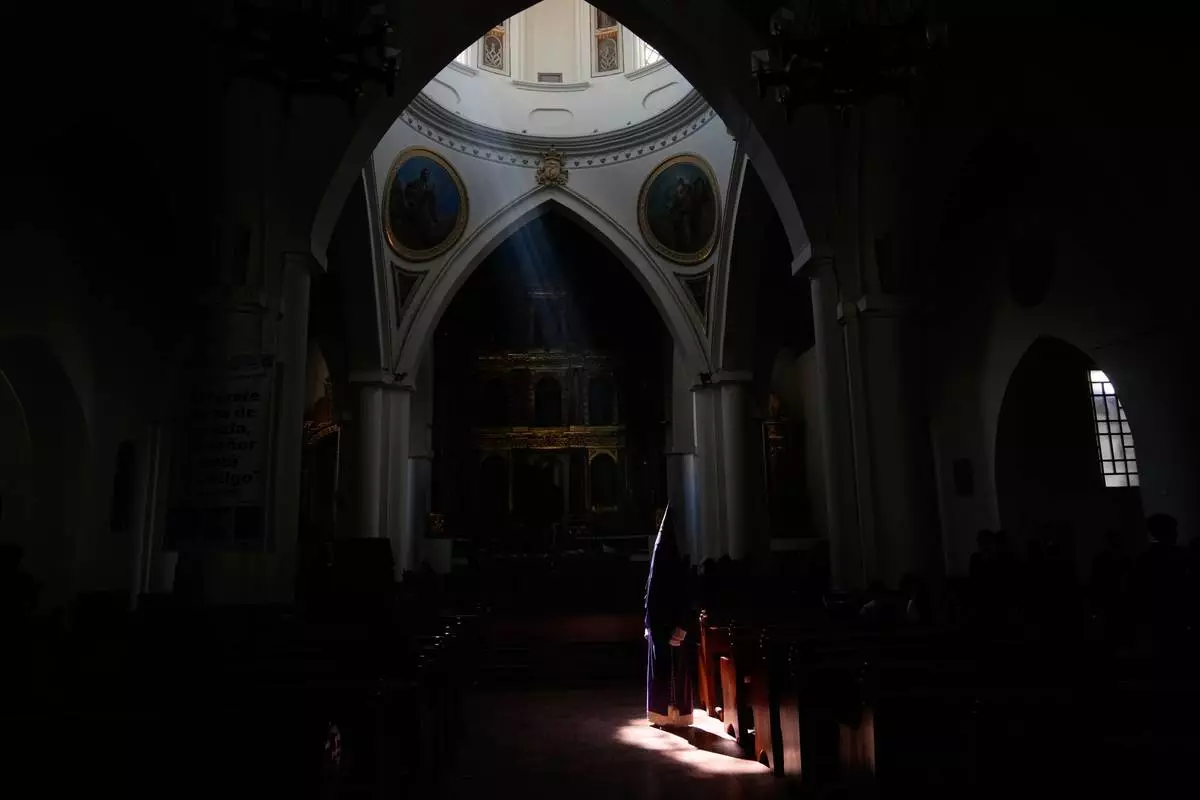
A hooded penitent from the Nazareno brotherhood waits for the Good Friday procession inside the Cathedral Basilica of St. James the Apostle during Holy Week in Tunja, Colombia, Friday, April 3, 2026. (AP Photo/Fernando Vergara)

A hooded penitent from the Nazareno brotherhood waits for the Good Friday procession inside the Cathedral Basilica of St. James the Apostle during Holy Week in Tunja, Colombia, Friday, April 3, 2026. (AP Photo/Fernando Vergara)

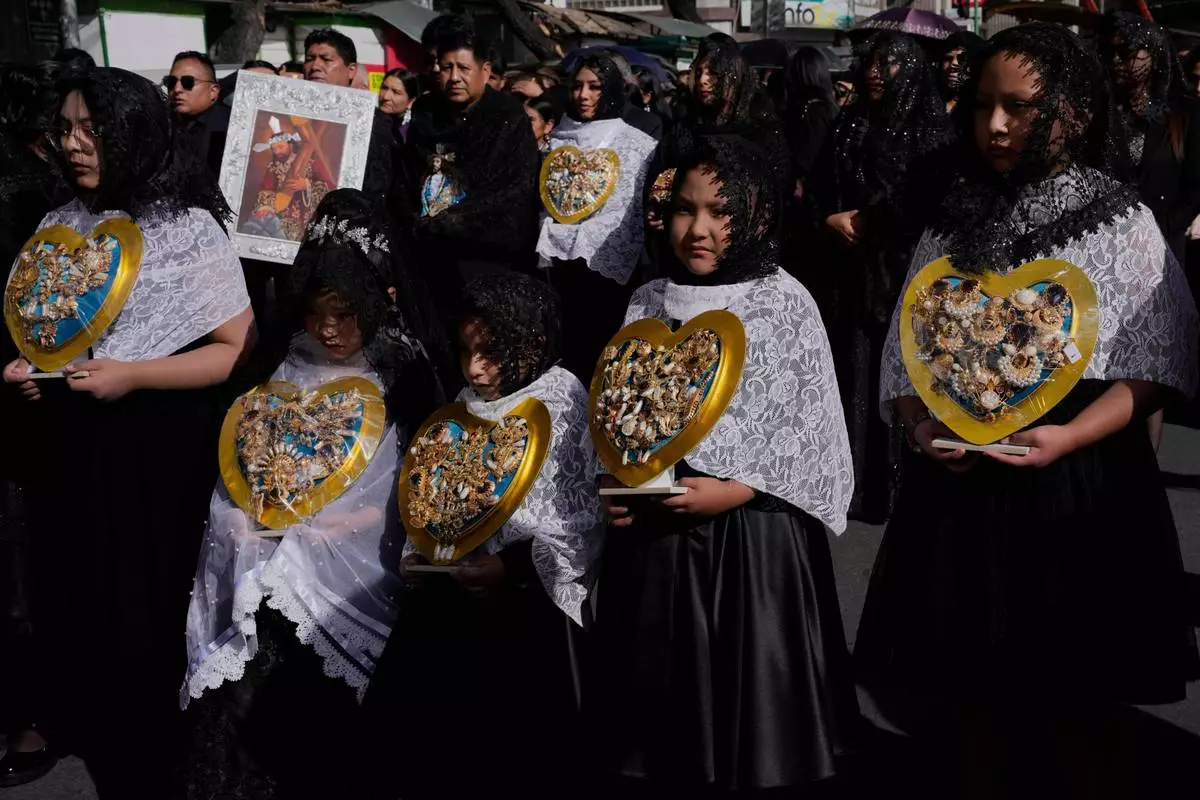
Young women and girls carry jeweled hearts representing the Virgin Mary at a Good Friday procession during Holy Week in La Paz, Bolivia, Friday, April 3, 2026. (AP Photo/Juan Karita)

Young women and girls carry jeweled hearts representing the Virgin Mary at a Good Friday procession during Holy Week in La Paz, Bolivia, Friday, April 3, 2026. (AP Photo/Juan Karita)

Hooded penitents participate in a Good Friday procession during Holy Week in La Paz, Bolivia, Friday, April 3, 2026. (AP Photo/Juan Karita)

Hooded penitents participate in a Good Friday procession during Holy Week in La Paz, Bolivia, Friday, April 3, 2026. (AP Photo/Juan Karita)

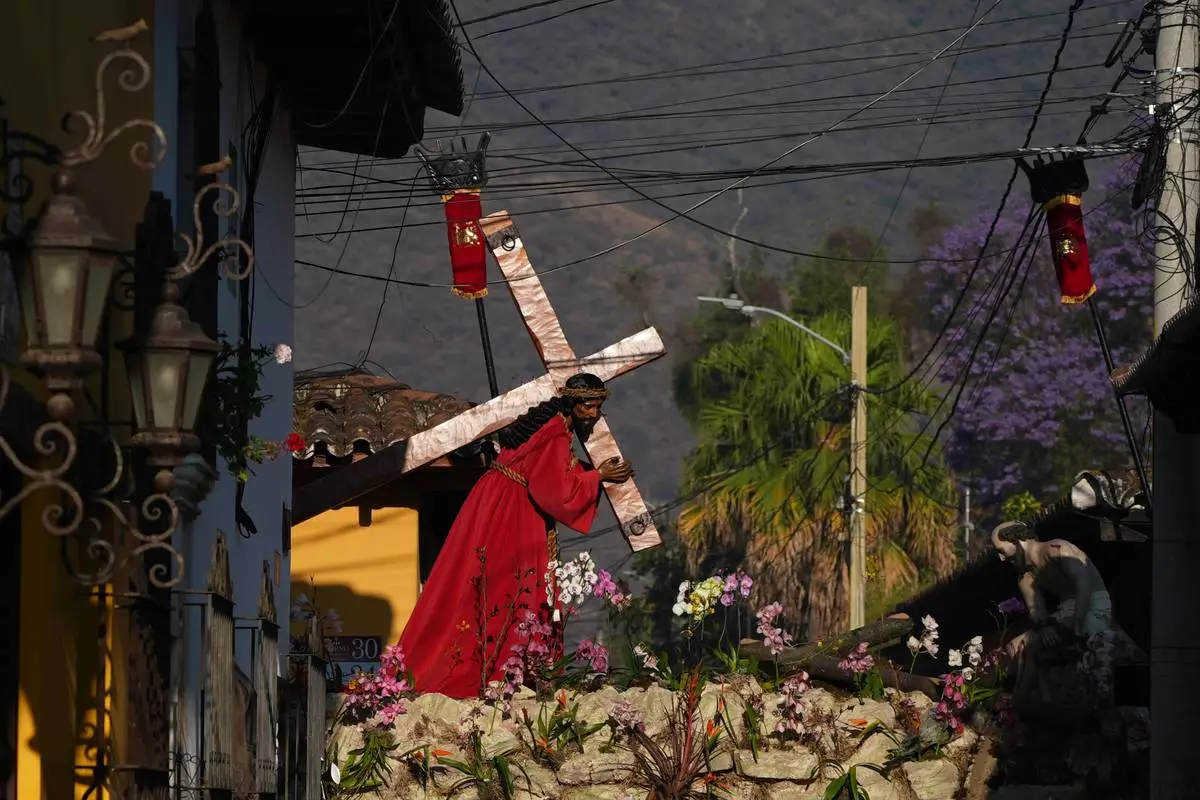
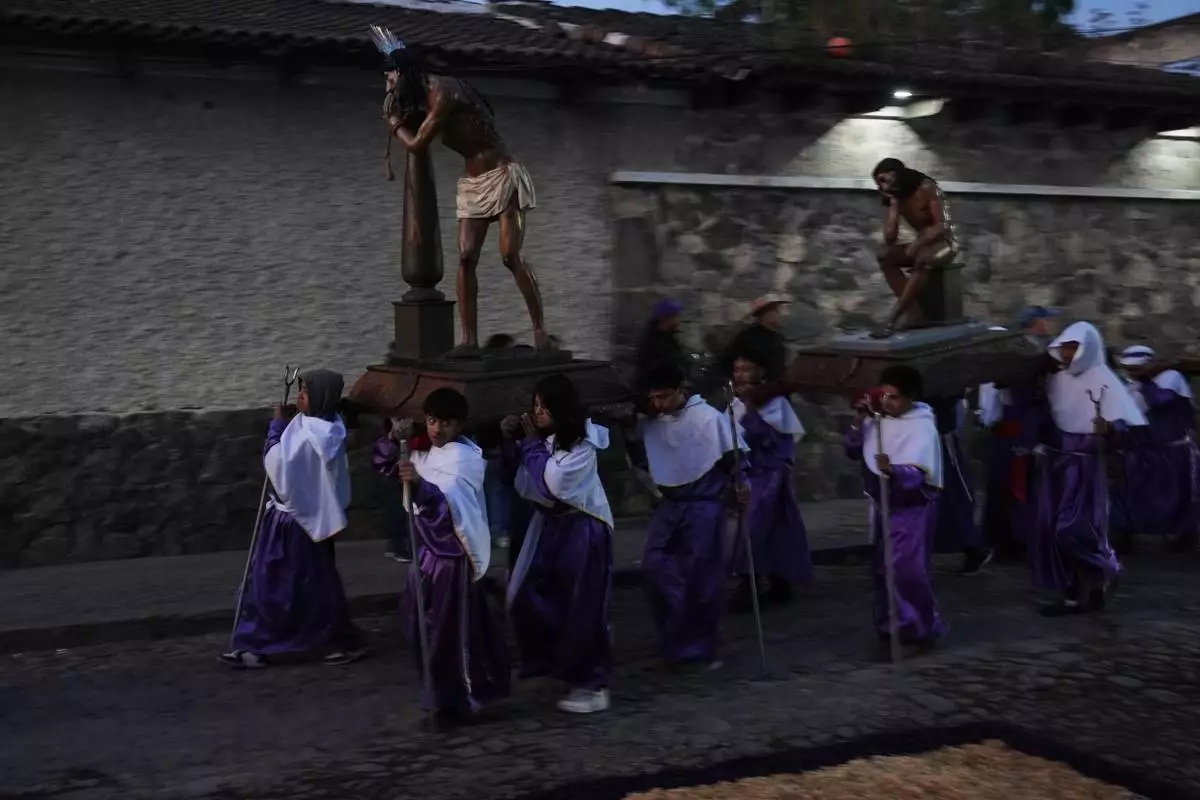
A statue of Jesus Christ with a cross makes its way past electric cables at La Merced church's Good Friday procession during Holy Week in Antigua, Guatemala, Friday, April 3, 2026. (AP Photo/Moises Castillo)

A statue of Jesus Christ with a cross makes its way past electric cables at La Merced church's Good Friday procession during Holy Week in Antigua, Guatemala, Friday, April 3, 2026. (AP Photo/Moises Castillo)

Women carry children dressed as penitents knows as "cucuruchos" on the sidelines of La Merced church's Good Friday procession during Holy Week in Antigua, Guatemala, Friday, April 3, 2026. (AP Photo/Moises Castillo)

Women carry children dressed as penitents knows as "cucuruchos" on the sidelines of La Merced church's Good Friday procession during Holy Week in Antigua, Guatemala, Friday, April 3, 2026. (AP Photo/Moises Castillo)

Penitents carry statues of Jesus Christ representing the Stations of the Cross at a Good Friday procession by La Merced church during Holy Week in Antigua, Guatemala, just before sunrise Friday, April 3, 2026. (AP Photo/Moises Castillo)

Penitents carry statues of Jesus Christ representing the Stations of the Cross at a Good Friday procession by La Merced church during Holy Week in Antigua, Guatemala, just before sunrise Friday, April 3, 2026. (AP Photo/Moises Castillo)

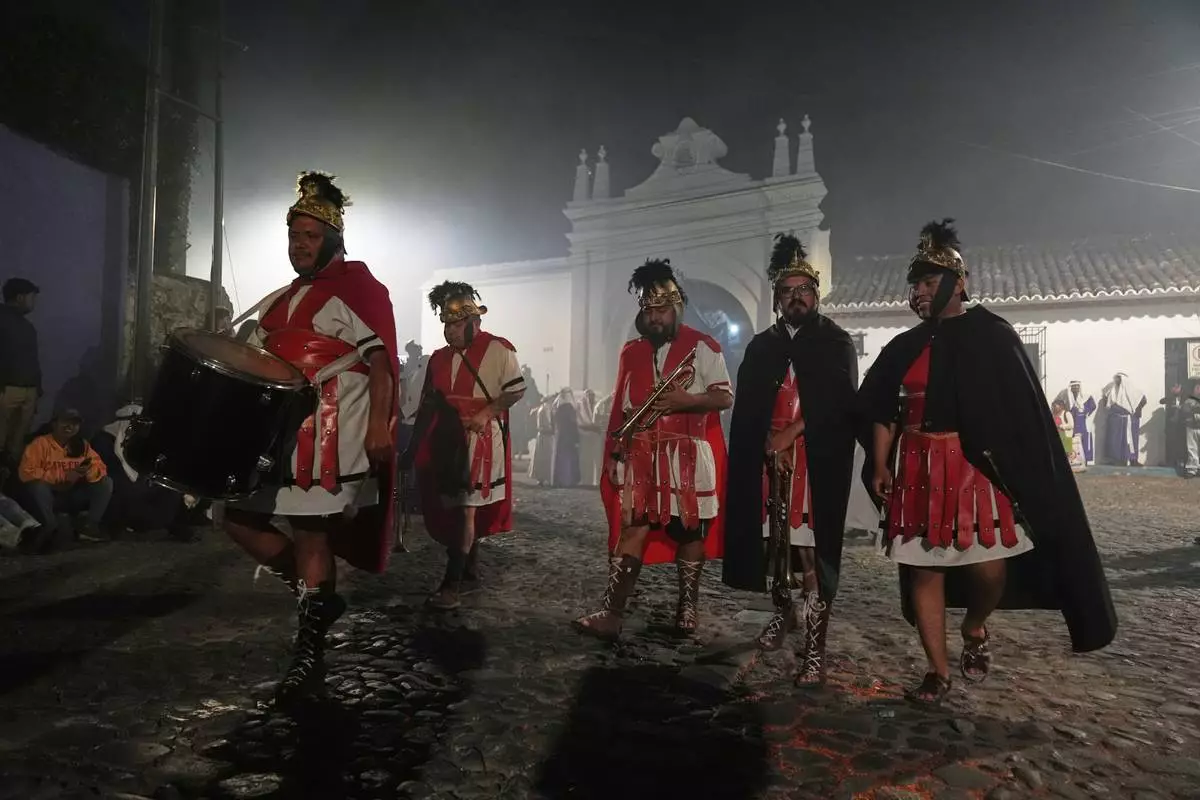
Musicians dressed as Roman soldiers take part in La Merced church's Good Friday procession during Holy Week in Antigua, Guatemala, Friday, April 3, 2026. (AP Photo/Moises Castillo)

Musicians dressed as Roman soldiers take part in La Merced church's Good Friday procession during Holy Week in Antigua, Guatemala, Friday, April 3, 2026. (AP Photo/Moises Castillo)

Recommended Articles