Skip to Content Facebook Feature Image

Teachers describe immigration enforcement's impact on classrooms in challenge of Trump policy

News

Teachers describe immigration enforcement's impact on classrooms in challenge of Trump policy
News

News

Teachers describe immigration enforcement's impact on classrooms in challenge of Trump policy

2026-02-14 00:19 Last Updated At:00:31

In one testimonial after another, teachers detailed all the ways President Donald Trump's immigration crackdown has shaped their work and the lives of their students.

In a court filing Thursday, educators around the country described rumors of immigration raids that scared away students, immigrant parents who stopped sending their children to school altogether, and stories of parents and students — including one middle schooler — being picked up by Immigration and Customs Enforcement at school bus stops.

The stories were shared as part of a lawsuit challenging a Trump administration policy that opened up schools, houses of worship and medical facilities to immigration enforcement. The lawsuit was filed last year by an Oregon farmworkers union and a group of churches that argued the policy change was “arbitrary and capricious.” The American Federation of Teachers, the National Education Association and three preschool employees joined the suit in September.

As the impacts of immigration enforcement on schools and healthcare facilities grew, the plaintiffs filed a petition asking a judge to halt the Trump administration policy as the lawsuit proceeds.

“In recent months — and escalating in the past several weeks — immigration enforcement agents have made startling incursions into cities and towns around the country, including unprecedented and unrestrained surges in and around vital community institutions such as schools and healthcare facilities,” attorneys wrote.

The Department of Homeland Security did not immediately respond to a message seeking comment.

Administration officials have defended the policy in the past, saying that making schools, churches and other spaces off-limits to immigration enforcement could make them refuges for criminals.

Officials have said Immigrations and Customs Enforcement does not target schools for enforcement operations, but there have been several instances in recent months where immigration authorities have pursued or detained people on or near school property.

The government for more than three decades had barred immigration authorities from making arrests in schools and houses of worship. That policy was updated over the years to include other “protected areas,” such as hospitals and homeless shelters, to prevent enforcement actions that would restrict access to essential services and activities.

Shortly after Trump took office, his administration rescinded that policy, instead issuing a four-paragraph memo that advised officers to use “a healthy dose of common sense” when deciding whether to make arrests near “protected areas.”

As Trump has ramped up his efforts to deport millions of people, some of the arrests have been made near schools during pick-up and drop-off hours. The plaintiffs in the lawsuit include a trio of educators from an Oregon preschool, where ICE agents attempted to arrest a man in the parking lot after he dropped off his infant son.

In Chelsea, Massachusetts, teachers union president Kathryn Anderson said immigration enforcement has been more disruptive to learning than the COVID pandemic, which moved school online for months. The school system lost a significant number of students this year and absenteeism is higher than usual.

“Right now, kids of all backgrounds are being prevented from going to school because of the extremely real fear that either they or their family members will be separated,” said Anderson, who is not part of the lawsuit. “As an educator ... having to help kids move through and exist in that fear (has) been a near impossible task.”

During a Chicago operation in October, agents released tear gas that engulfed a school playground. They later arrested a teacher inside of her preschool during morning drop-off. DHS said agents had attempted to pull over the car she was riding in before she got to school and said she barricaded herself inside, forcing agents to enter. The woman, who has work authorization, was eventually released.

In Minneapolis, agents scuffled with bystanders after pursuing a man onto a high school campus as school was ending for the day.

The court filing included testimony from 60 teachers and health care workers from 18 states who described how immigration enforcement near their schools and medical facilities has challenged their work. All submitted their testimony anonymously.

One middle school teacher said half of students stayed home amidst a rumor about immigration enforcement nearby. The following month, a student at the school was detained while at a bus stop.

Elsewhere, a speech pathologist described tearful meetings with immigrant parents fearful that signing documents to get their child special education services would draw the attention of immigration enforcement.

A high school teacher said many students, including immigrants still learning English, switched to virtual learning after a parent was arrested by ICE at a school bus stop. But the virtual option is only offered in English, and the teacher said they feared the students are falling behind.

A teacher at a another school said a student was detained by ICE at a school bus stop and never returned to class after being released. Now, when students ask whether they can be arrested at school, "I can no longer reassure them that campus is safe from ICE.”

The Associated Press’ education coverage receives financial support from multiple private foundations. AP is solely responsible for all content. Find AP’s standards for working with philanthropies, a list of supporters and funded coverage areas at AP.org.
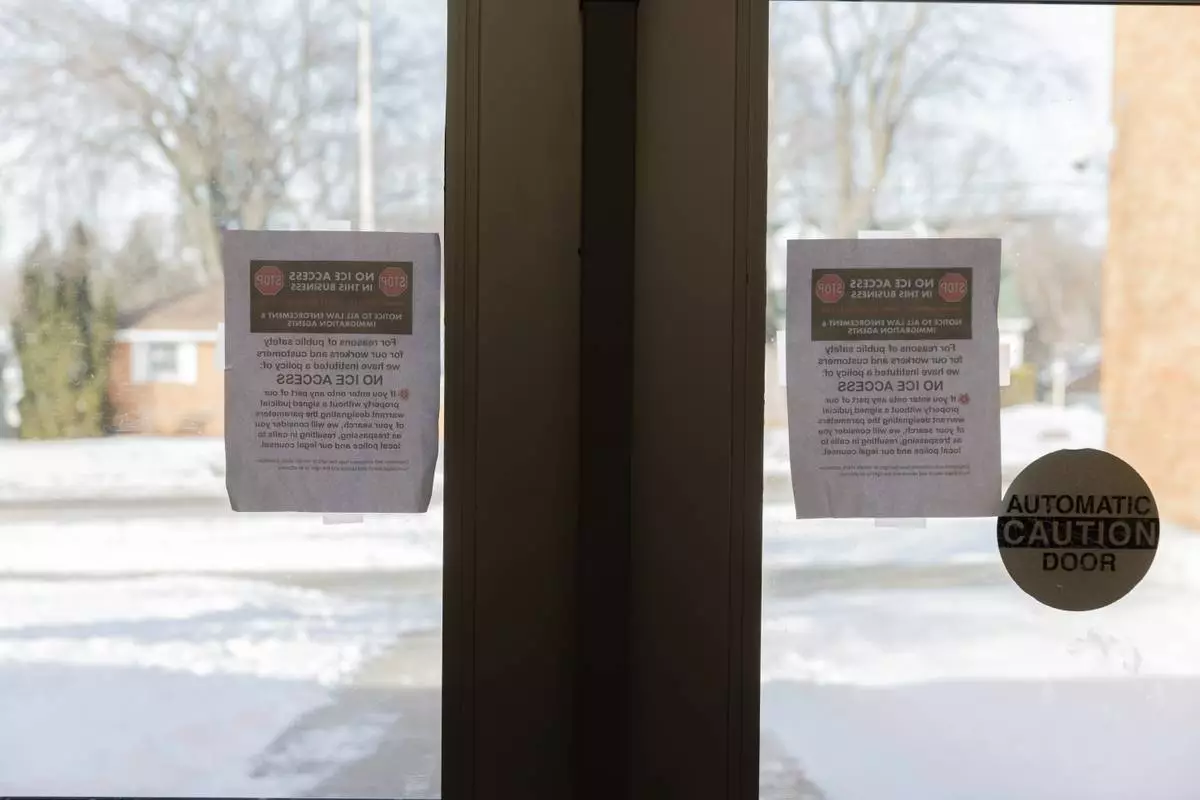
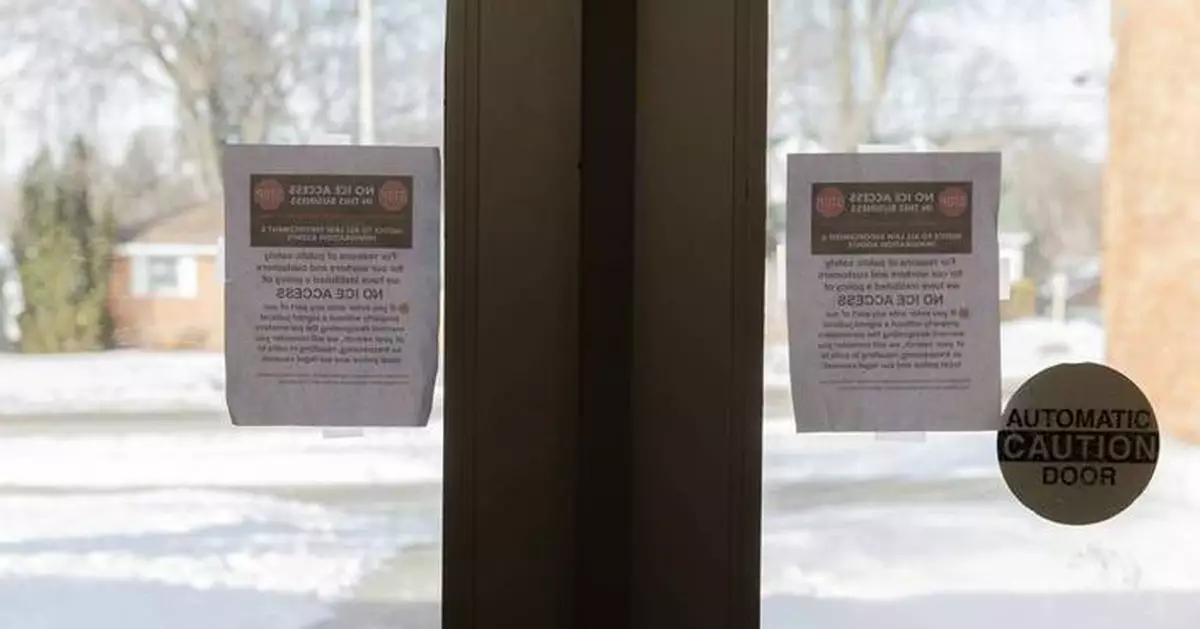
Signs reading "NO ICE ACCESS" taped to the front doors of Valley View Elementary School, Tuesday, Feb. 3, 2026, in Columbia Heights, Minn. (AP Photo/Liam James Doyle)

Signs reading "NO ICE ACCESS" taped to the front doors of Valley View Elementary School, Tuesday, Feb. 3, 2026, in Columbia Heights, Minn. (AP Photo/Liam James Doyle)
NEW YORK (AP) — Kamala Harris “wrote off rural America" during the 2024 presidential campaign and failed to attack Donald Trump with sufficient “negative firepower," according to a long-awaited post-election autopsy released on Thursday by the Democratic National Committee.

The committee's chair, Ken Martin, shared the 192-page report only after facing intense internal pressure from frustrated Democratic operatives concerned with his leadership. Martin had originally promised to release the autopsy, only to keep it under wraps for months because he was concerned it would be a distraction ahead of the midterms as Democrats mobilize to take back control of Congress.

On Tuesday, Martin apologized for his handling of the situation and conceded that the report was withheld because it “was not ready for primetime."

Although the autopsy criticizes Democrats' focus on “identity politics,” it sidesteps some of the most controversial elements of the 2024 campaign. The report does not address former President Joe Biden’s decision to seek reelection, the rushed selection of Harris to replace him on the ticket or the party's acrimonious divide over the war in Gaza.

“I am not proud of this product; it does not meet my standards, and it won’t meet your standards,” Martin wrote in an essay on Substack on Thursday. “I don’t endorse what’s in this report, or what’s left out of it. I could not in good faith put the DNC’s stamp of approval on it. But transparency is paramount.”

A spokesperson for Harris did not immediately respond to a request for comment.

The initial reaction from Democratic operatives was a mix of bafflement and anger over Martin's handling of the situation.

“Why not say this in 2024, or bring in more people to finish it, instead of turning this into the dumbest media cycle for 7-8 months?” Democratic strategist Steve Schale wrote on social media.

The postelection report, which was authored by Democratic consultant Paul Rivera, calls for “a renewed focus on the voters of Middle America and the South, who have come to believe they are not included in the Democratic vision of a stronger and more dynamic America for everyone.”

“Millions of Americans are suffering from poor access to healthcare, manufacturing and job losses, and a failing infrastructure, yet continue to be persuaded to vote against their best interests because they do not see themselves reflected in the America of the Democratic Party,” the report says.

The autopsy points to a reduction in support and training for Democratic state parties, voter registration shifts and “a persistent inability or unwillingness to listen to all voters.”

Thursday's release comes as Martin confronts a crisis of confidence among party officials who are increasingly concerned about the health of their political machine barely a year into his term. Some Democratic operatives have had informal discussions about recruiting a new chair, even though most believe that Martin’s job wasn't in serious jeopardy ahead of the midterm elections.

The report found that Harris and her allies failed to focus enough on Trump's negatives, especially his felony convictions. This was part of a broader criticism that Democrats' messaging is too focused on reason and winning arguments, “even in cycles when the electorate is defined by rage.”

“There was a decision in the 2024 Democratic leadership not to engage in negative advertising at the scale required,” the report states. “The Trump campaign and supportive Super PACs went full throttle against Vice President Harris, but there was not sufficient or similar negative firepower directed at Trump by Democrats.”

The report continues: “It was essential to prosecute a more effective case as to why Trump should have been disqualified from ever again taking office. The grounds were there, but the messaging did not make the case.”

Trump's attack on Harris' transgender policies were cited as a key contrast.

Specifically, the report suggested the Democratic nominee was “boxed” in by the Trump campaign's “very effective” ad that highlighted Harris' previous statement of support for taxpayer-funded gender-affirming surgeries for prison inmates.

Democratic pollsters believed that “if the Vice President would not change her position – and she did not – then there was nothing which would have worked as a response," the report said.

The report criticized Harris' outreach to key segments of America while condemning the party's focus on “identity politics.”

“Harris wrote off rural America, assuming urban/suburban margins would compensate. The math doesn’t work,” the report says. “You can’t lose rural areas by overwhelming margins and make it up elsewhere when rural voters are a significant share of the electorate. If Democrats are to reclaim leadership in the Heartland or the South, candidates must perform well in rural turf. Show up, listen, and then do it again.”

The report also references Democrats' underperformance with male voters of color.

“Male voters require direct engagement. The gender gap can be narrowed. Deploy male messengers, address economic concerns, and don’t assume identity politics will hold male voters of color,” it says.

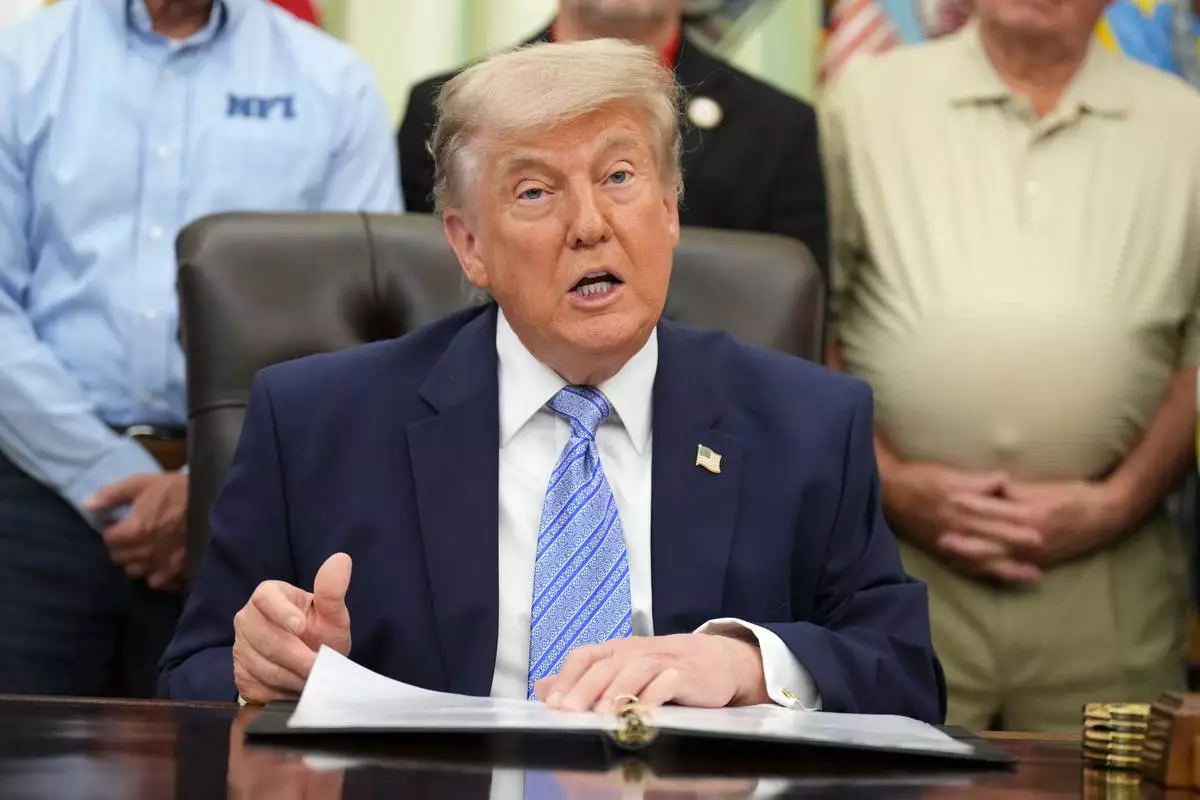
President Donald Trump speaks during an event about loosening a federal refrigerant rule, in the Oval Office at the White House, Thursday, May 21, 2026, in Washington. (AP Photo/Jacquelyn Martin)

President Donald Trump speaks during an event about loosening a federal refrigerant rule, in the Oval Office at the White House, Thursday, May 21, 2026, in Washington. (AP Photo/Jacquelyn Martin)

Former Vice President Kamala Harris speaks during a fireside chat on Thursday, May 7, 2026, in Las Vegas. (AP Photo/Ty ONeil)

Former Vice President Kamala Harris speaks during a fireside chat on Thursday, May 7, 2026, in Las Vegas. (AP Photo/Ty ONeil)

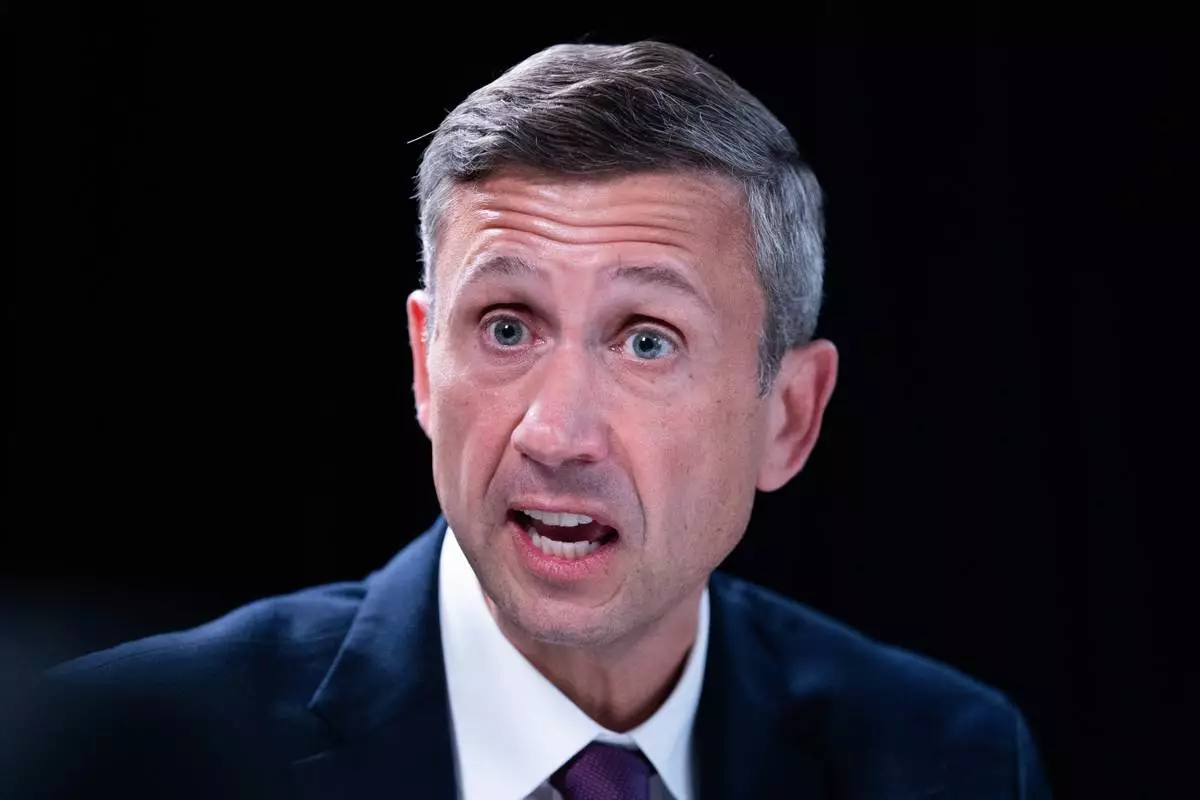
FILE - Democratic National Committee chair Ken Martin speaks during an interview with The Associated Press at DNC headquarters, Jan. 12, 2026, in Washington. (AP Photo/Allison Robbert, File)

FILE - Democratic National Committee chair Ken Martin speaks during an interview with The Associated Press at DNC headquarters, Jan. 12, 2026, in Washington. (AP Photo/Allison Robbert, File)

Recommended Articles