Iran and the United States must have realistic expectations and mutual trust in order to advance their upcoming second round of nuclear talks toward a final deal, a Tehran-based political analyst said on Monday.
Sasan Karimi, assistant professor from the Faculty of World Studies at the University of Tehran, shared his insights with the China Global Television Network (CGTN) into the current obstacles that could derail the negotiations between Iran and the United States as officials from both countries are scheduled to meet for their high-stakes indirect talks in Geneva, Switzerland later on Tuesday.
The Iranian delegation, headed by Foreign Minister Seyed Abbas Araghchi, has arrived in Geneva for talks with the U.S. side, led by President Donald Trump's special envoy Steve Witkoff and Trump's son-in-law Jared Kushner. Oman will serve as the mediator.
It follows the first round of indirect Iran-U.S. talks in Muscat, Oman, on Feb. 6.
Karimi said both sides need to set a low bar this time to fully understand where each other stand.
"I think the second or third or fourth or whatever number of rounds of the negotiation between Iran and the United States matter, because of the content, not because of the numbers. Iran is not in a hurry. I think the United States better not to be a hurry, either. If the United States wants to have a not premature deal, it is better not to be over-demanding in the beginning because both sides know the positions of the other party and it is not the time to be over-demanding or not realistic. Both sides, and also other players, need to put their feet on the ground and then go forward," Karimi said.
The analyst said choosing the Omanis as the mediator and Geneva as the venue for the talks matters, due to the political neutrality and geographical accessibility.
"It matters. Sometimes, the mediator matters. Omanis are very good in mediation, but geographically, they are not in the middle. Geneva is a good place because it is a place for European base of the United Nations. So, this is some sort of neutrality. Geographically, Europe is in the middle, so it is not that much difficult for also Americans to come every week," Karimi explained.
He believes that both Iran and the United States must overcome mutual mistrust, which is partly a result of the U.S. withdrawal from the 2015 Joint Comprehensive Plan of Action (JCPOA) signed between Iran and world powers.
That landmark agreement began to unravel in 2018 when then-President Trump's administration unilaterally pulled out and re-imposed sweeping sanctions on Tehran. Iran responded by gradually scaling back its commitments, while pledging the relevant measures were "reversible."
According to Karimi, both sides need to accommodate each other and refrain from acting in an over-demanding manner for this round of diplomacy to really work.
"The main obstacle is mistrust, the mutual mistrust. We know we cannot forget that Iran witnessed a kind of illegal withdrawal from the United States of Donald Trump in his first term, from the JCPOA which was the most optimum deal. Donald Trump wanted a deal to be a 'T deal', a 'Trump deal' -- not the JCPOA -- with better terms for the United States, etc. From Iranian point of view, it is not a valid and reliable party to be able to talk with in a constructive or trustful way. From the United States also, they have their own considerations. [A] technical obstacle is being over-demanding. I think that in order to reach a deal, even a political agreement, both sides need to come to the earth. Iran should not stick to the exact terms of JCPOA, and the United States should not also stick to its primary positions," he said.
After Trump returned to office in 2025 and revived a "maximum pressure" policy on Iran, five additional rounds of indirect talks between Washington and Tehran that year failed to bridge core differences.
Diplomacy collapsed entirely following Israel's surprise strikes on Iran last June and the ensuing "12-Day War," during which the United States targeted key Iranian nuclear facilities.
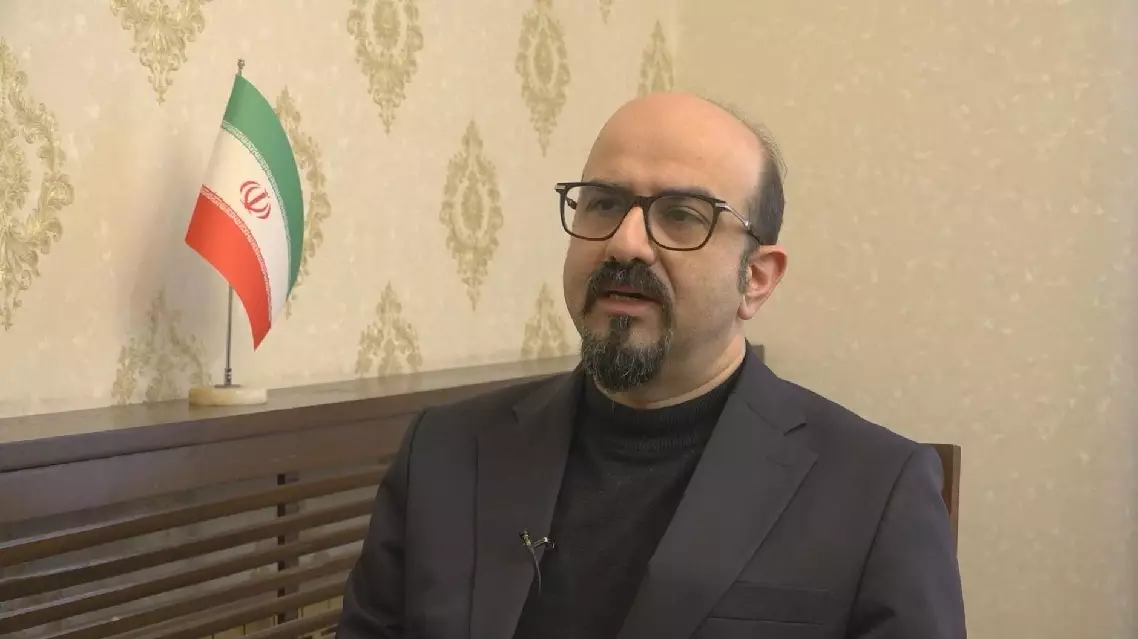
Realism, mutual trust key to advancing Iran-US talks: expert