China's robot market has seen a surge during the nine-day Spring Festival holiday, with demand boosted by performances at the 2026 China Media Group (CMG) Spring Festival Gala, according to industry observers.
The Spring Festival, China's most important holiday marked by family reunions, festive foods and New Year wishes, fell on Tuesday this year.
In Wuxi City, east China's Jiangsu Province, visitors are flocking to a smart robot experience center, where robots joyfully played drums and performed lively dances to welcome the influx of tourists.
"I watched the robot performances at the Spring Festival Gala, and it was truly fascinating! I stumbled upon this experience center and decided to interact with the robots. It was incredibly fun!" said Zhang Chengyu, a young visitor.
"This has attracted many adults and children. In the past two days, our visitor numbers have increased by three to four times compared to normal days, and inquiries for rentals or purchases have almost doubled," said Ge Zifan, the head of the robot experience center.
Another robot experience center in Suzhou New District, Jiangsu, is also thriving, where robots perform drum routines and lion dances. Visitors can even challenge robot masters in competitions. Additionally, various robotics companies are showcasing real-world applications, demonstrating the diverse capabilities of robots across different job roles.
According to data from Qingtian Rent, a robot rental service platform, orders during this year's Spring Festival surged nearly 70 percent compared to the previous month, covering all 31 provincial-level administrative regions across the country. The breakdown of orders includes 34 percent for entertainment performances, 31 percent for commercial marketing, 19 percent for educational and cultural tourism purposes, and 16 percent for life events and emotional consumption.
Meanwhile, orders related to festive scenarios, such as Spring Festival greetings, temple fairs, and mall events, accounted for over 54 percent, with a year-on-year growth of more than 76 percent.
"The bustling activity in the robotics industry during the Spring Festival not only highlights the resilience and tremendous potential of the sector but also provides a significant opportunity for technology to transition from labs to everyday life, moving from mere demonstrations to practical applications. The sudden surge in demand for entertainment, commercial services, cultural interactions, and family companionship is driving the robotics industry’s transformation from 'single product sales' to 'scene-based services,'" said Zhong Xinlong, associate researcher of future industry research at the China Center for Information Industry Development.
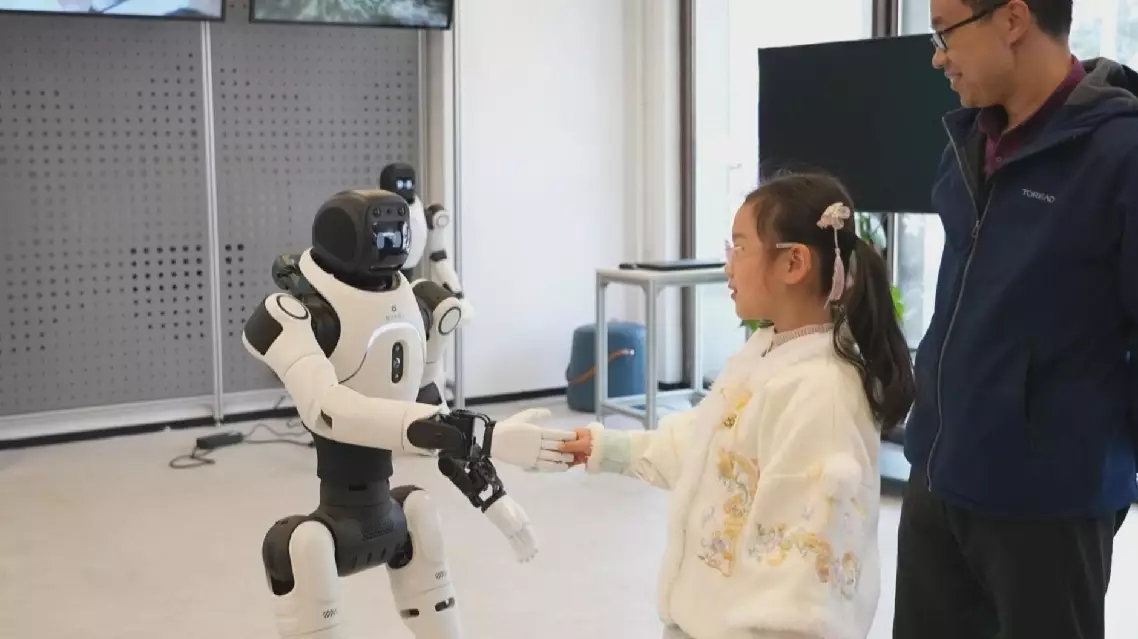
China's robot market soars during Spring Festival holiday
China's newly approved Inner Mongolia Pilot Free Trade Zone (FTZ) is expected to help turn the northern border areas into a new frontier of opening-up.
China on Thursday released a plan for the establishment of the China (Inner Mongolia) Pilot Free Trade Zone, bringing the total number of pilot free trade zones nationwide to 23. Leveraging its unique location linking Russia, Mongolia and wider Eurasia, the zone is designed to advance the country's high-level opening-up through policy support, industrial upgrading and improved connectivity.
The pilot FTZ covers 119.74 square kilometers and comprises three subzones in Hohhot, capital of the autonomous region, Manzhouli, a northern border city, and Erenhot, a land port on the China-Mongolia border, each tasked with differentiated functions and the development of industries tailored to local conditions.
Specifically, the Hohhot subzone will serve as a central hub, focusing on developing specialty industries and innovation clusters. The Manzhouli subzone will build on China-Russia-Mongolia cooperation to become an important gateway to Northeast Asia and Europe. The Erenhot subzone will tap into the China-Mongolia-Russia Economic Corridor and serve as a model for cooperation with neighboring countries.
At the Hohhot Comprehensive Bonded Zone, a gold and silver refining project due to start operations will have an annual processing capacity of 100 tonnes of gold and 1,000 tonnes of silver.
The Manzhouli subzone will prioritize industries including the processing of imported resources, cross-border tourism, cross-border financial services and port services.
"Following the approval of the free trade zone, companies like ours are more confident in expanding our cross-border business further and broadening its scope. Specifically, we aim to achieve full coverage across the entire industrial chain," said Cui Rongzheng, head of Manzhouli Xincheng Supply Chain Limited Company.
Notably, in the first quarter of this year, the Erenhot Railway Port, a key hub on the "middle corridor" of the China-Europe Railway Express, handled a record-high 1,145 freight train trips, a 22.3 percent increase from last year, underscoring its role in stabilizing global supply chains and supporting foreign trade growth.
"The establishment of the Inner Mongolia Pilot Free Trade Zone will strengthen links between border provinces and China's inland regions, and enhance cooperation between land ports, coastal ports and inland ports. It is expected to play a key role in improving the wellbeing of ethnic minority populations in the border areas and turning China's northern border areas into a new frontier of opening-up," said Wang Xuekun, head of the Chinese Academy of International Trade and Economic Cooperation under the Ministry of Commerce.
Inner Mongolia FTZ subzones to drive coordinated opening-up