China's government-backed consumer goods trade-in programs unleashed demand for smart products during the Chinese New Year holiday from Feb. 15 to 23.
Consumers in Harbin City of northeast China's Heilongjiang Province poured into shopping malls to choose from intelligent products, including AI-assisted TVs and other home appliances.
"I'm interested in the TV's sci-tech features and smart functions, and it is covered by government subsidies, so the price is quite good to me," said a consumer named Liu Pingping.
Subsidies of up to 1,500 yuan (around 218 U.S. dollars) directly drove up the sales of six types of green and smart home appliances, including refrigerators, washing machines and TVs.
"During the Spring Festival holiday, customized versions of smart home appliances hit the market, and some new products with AI control functions became the top choices for Chinese New Year gifts for many families. With this year's government subsidies, our daily sales volume has increased by 170 percent year on year," said Sun Hongchao, manager of a Suning appliance store in Harbin.
"The price of this smartphone can be reduced by around 500 yuan with government subsidy, and by another 200 yuan by the shop, that's 700 yuan in total, which is quite a good deal, so I'm planning to buy one," said a resident in Xi'an City of northwest China's Shaanxi Province.
As of Feb 23, the consumer goods trade-in programs had benefited over 31 million purchases in 2026, boosting product sales worth over 207 billion yuan, according to data from the Ministry of Commerce.
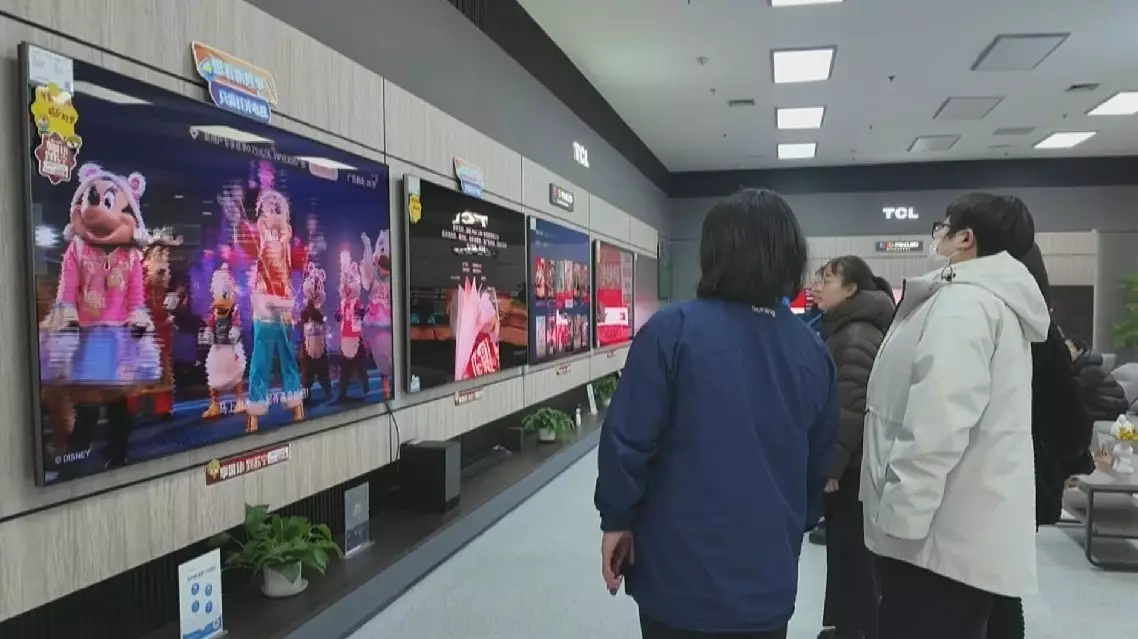
Trade-in programs unleash demand for smart products
A 20-story vertical super-plant factory in Chengdu, southwest China's Sichuan Province, is exploring ways to support the country's modernized agriculture, focusing on intelligent and industrialized crop cultivation.
It is the world's first ultra-high-rise smart vertical plant factory production system, developed by the Institute of Urban Agriculture under the Chinese Academy of Agricultural Sciences.
Wang Sen, chief executive of the institute, said that with automated equipment, plants can be provided with an environment even better than nature, resulting in improvements in both quality and yield.
"As the name suggests, the plant factory grows crops using industrial methods. Light, temperature, water and nutrients are fully automated to create optimal conditions. Land-use efficiency is also extremely high. This 20-story facility can deliver up to 120 times the yield of traditional open-field farming," Wang said.
By minimizing dependence on land and climate conditions, the facility incorporates technological safeguards that allow production to continue even in extreme scenarios. It is also speeding up seed development, a critical pillar of long-term food security.
"This is a wheat breeding accelerator. Traditionally, developing such a new variety takes eight to 12 years. Here, it can be done in just one to one and a half years. In the future, we will expand from staple crops to fruits and vegetables," Wang said.
In Wenjiang District of Chengdu, a base run under the plant factory is in full operation, cultivating strawberries.
"Planted outdoors, a strawberry plant produces about 300 grams a year. In our plant factory, it can reach 1,500 grams. Our technology is globally competitive. More and more countries, such as Uzbekistan, are showing strong interest in our technology. Our future direction of agricultural development is towards an infrastructure-based and intelligent system," said Peng Jie, chairwoman of FutureFarms, an agricultural technology company in Sichuan.
As China looks ahead to the next Five-Year Plan period (2026-2030), experts said smarter, facility-based farming in the plant factories is expected to move beyond pilot demonstrations and play a bigger role in the country's long-term food strategy.
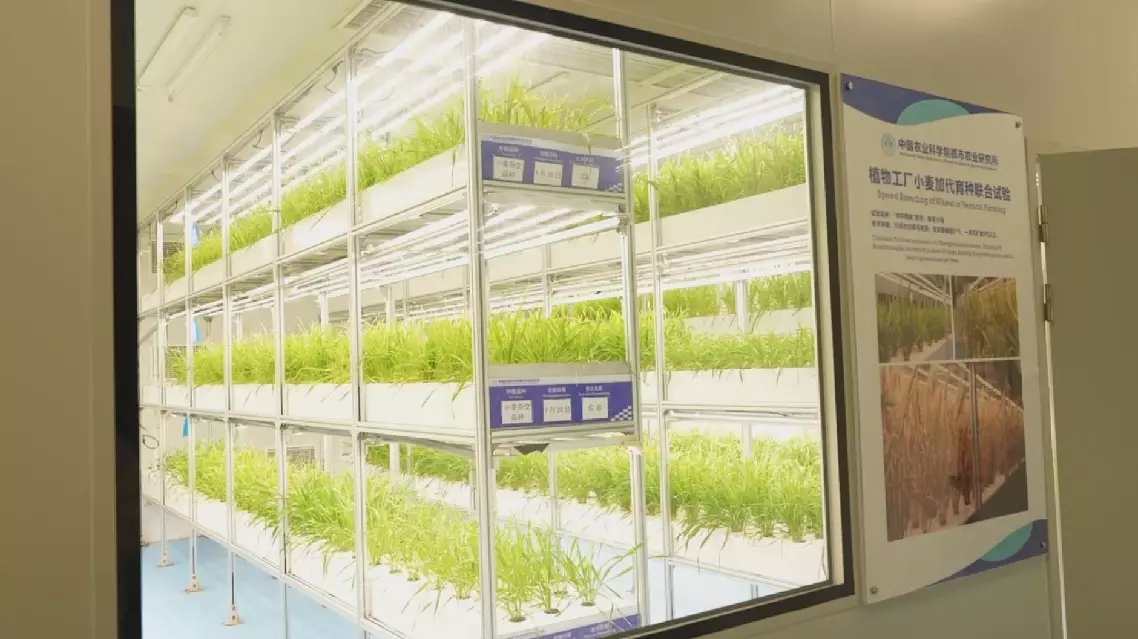
20-story plant factory in Sichuan explores ways to modern agriculture