Skip to Content Facebook Feature Image

China sees record-high tourist numbers, spending during Spring Festival holiday

China

China

China

China sees record-high tourist numbers, spending during Spring Festival holiday

2026-02-25 15:07 Last Updated At:19:27

China's tourism sector showed strong momentum during the Spring Festival holiday, with both visitor numbers and tourism spending hitting record highs.

The Ministry of Culture and Tourism on Tuesday reported that during the nine-day holiday, which began on Feb 15 and came to an end on Monday, China recorded 596 million domestic trips, an increase of 95 million compared to the eight-day Spring Festival holiday in 2025.

Domestic tourism spending neared 803.5 billion yuan (about 116.7 billion U.S. dollars), which was up 126.5 billion yuan from last year.

The statistics indicated that as ice-and-snow tourism and winter sun getaways continued to attract strong interest, tourists traveled farther distances and stayed for longer trips this holiday, according to the ministry. And among international tourists, the popularity of seeking Spring Festival celebrations in China is on the rise, the ministry said.

"During the Spring Festival holiday, tourists not only experienced our enduring cultural heritage but also witnessed a vibrant future supported by science and technology. We enjoyed a prosperous, orderly, safe, and high-quality holiday," said Dai Bin, president of the China Tourism Academy.

From intangible cultural heritage celebrations to immersive experiences featuring modern and traditional Chinese styles, cultural activities across the nation drew large crowds during the holiday.

In Changde City, Hunan Province, visitors engaged in various intangible cultural heritage experiences, tasting the grinding tea, known as "Lei Cha" in Chinese, enjoying local string music, trying their hand at embroidery, and participating in ancient Cuju matches, the earliest known recorded game of football, to immerse themselves in the festive atmosphere.

In the ancient city of Pingyao, Shanxi Province, daily performances including Shehuo (community fire) parades, dragon and lion dances, attracted over 600,000 visits during the holiday period.

Leveraging sci-tech innovation, a new wave of integrated culture and tourism scenarios offered visitors fresh ways to celebrate the Chinese New Year.

In Shaoxing City, Zhejiang Province, the performance "In Search of Lu You [a famous poet in China's Song Dynasty (960-1279)]" combined multiple experiences, including garden tours, museum visits, and water stage shows, creating an interactive cultural tourism landscape that visitors could both see and feel.

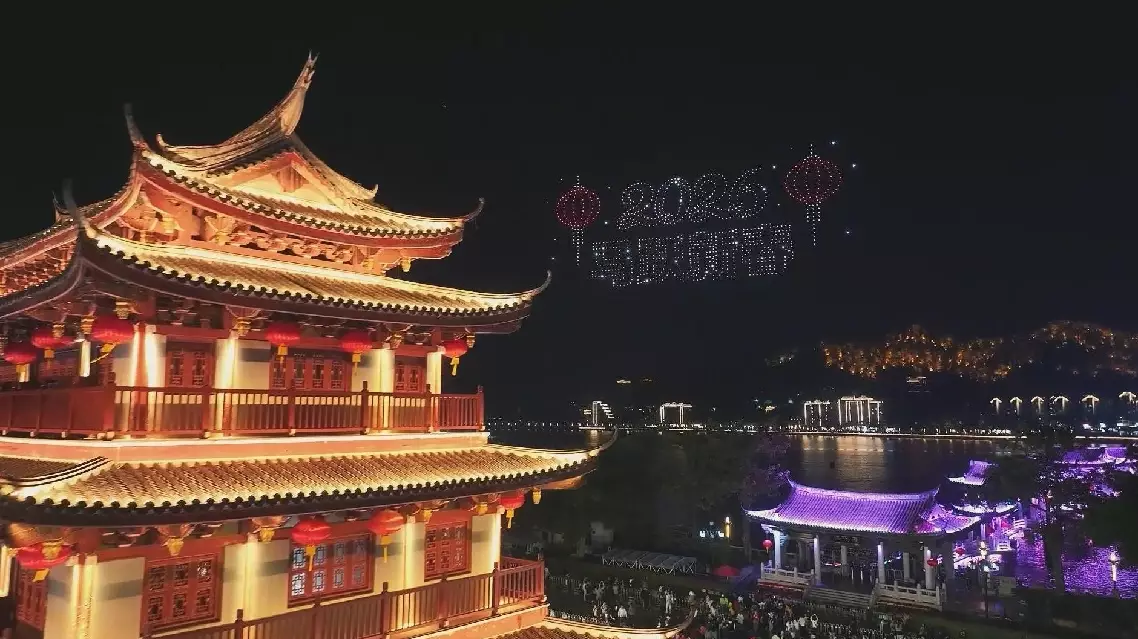
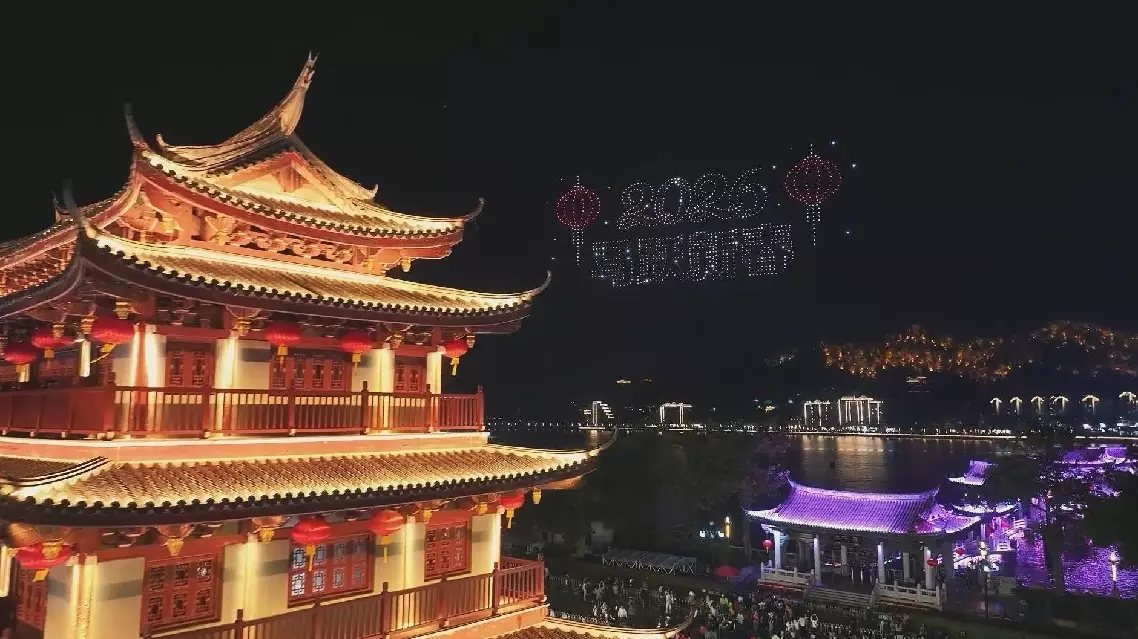
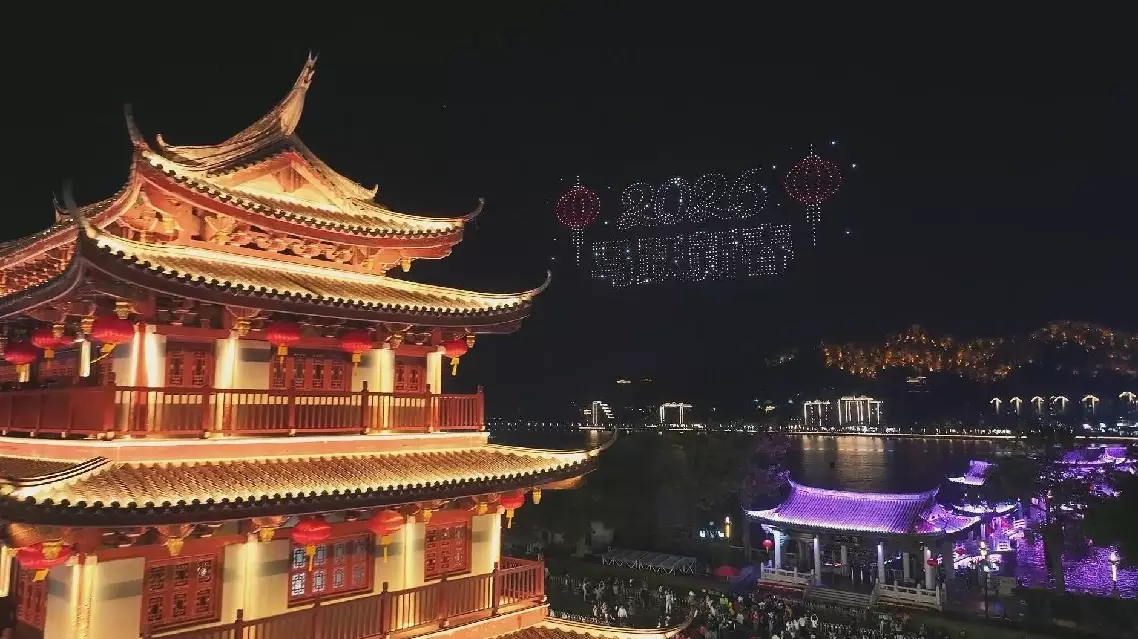
In the town of Nishan, Qufu City, in Shandong Province, drone displays and fireworks shows integrated the zodiac culture of the Year of the Horse with dazzling light effects, presenting a visually stunning spectacle.

"It was not only visually stunning but also showcased traditional culture in a different form. I experienced a unique flavor of the Chinese New Year," said Li Fuhan, a tourist.

Inbound tourism also remained exceptionally strong this Spring Festival, with a growing number of international visitors choosing to spend the holiday in China to experience the charm of its culture.

During the first Spring Festival holiday since the Hainan Free Trade Port officially began island-wide special customs operations, the island province received a total of 12.32 million visits, generating tourism revenue of nearly 18.37 billion yuan (about 2.67 billion U.S. dollars). Compared to the previous Spring Festival holiday, this represents a year-on-year increase of 28.9 percent and 30.7 percent, respectively.
China sees record-high tourist numbers, spending during Spring Festival holiday
China sees record-high tourist numbers, spending during Spring Festival holiday
China sees record-high tourist numbers, spending during Spring Festival holiday
China sees record-high tourist numbers, spending during Spring Festival holiday
China sees record-high tourist numbers, spending during Spring Festival holiday
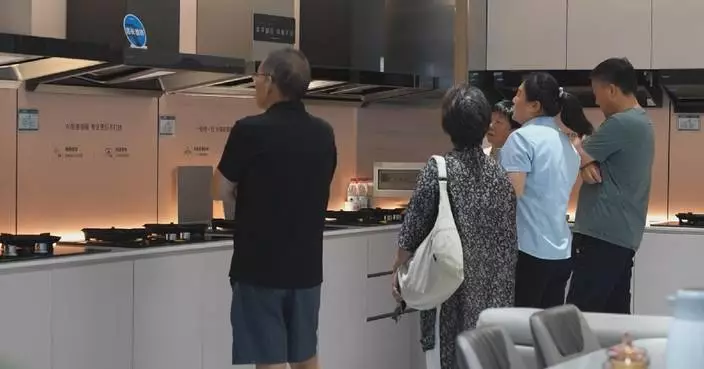
China sees record-high tourist numbers, spending during Spring Festival holiday
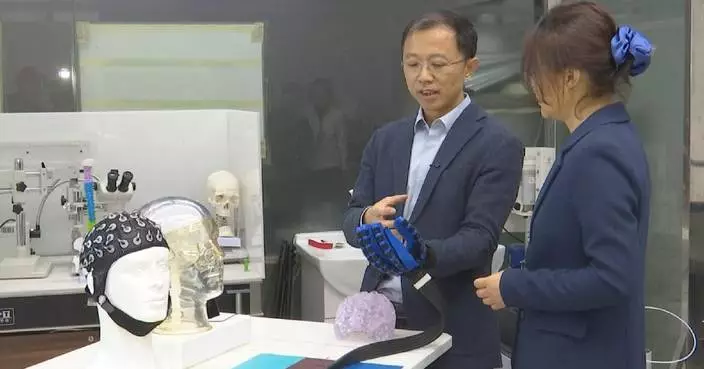
China's benchmark Shanghai Composite Index closed almost flat on Monday amid a wide sell-off of artificial intelligence-related stocks triggered by calls from top executives of major U.S. AI developers to slow the pace of AI development, according to Timothy Pope, an analyst for China Global Television Network (CGTN).

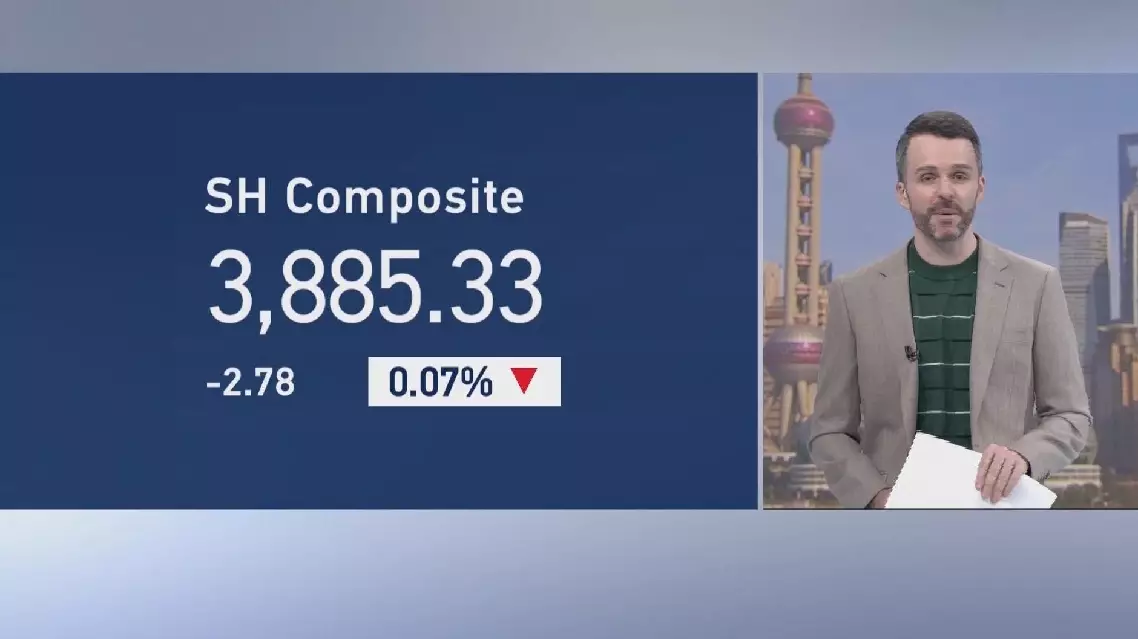
The Shanghai Composite Index dropped 0.07 percent to 3,885.33 points on Monday, while the Shenzhen Component Index closed 0.64 percent lower at 13,384.57 points.

The ChiNext Index, tracking China's Nasdaq-style board of growth enterprises, lost 1.10 percent to close at 3,285.58 points Monday. The STAR Composite Index, which reflects the performance of stocks on China's sci-tech innovation board, closed 0.35 percent lower at 1,811.23 points.

Pope noted that despite the overall resilience of major indexes, AI hardware stocks were among the biggest losers on the day.

"The Chinese mainland markets proved pretty resilient today actually as global AI stocks wobbled. We saw oil prices jump and interest-rate hike bets rising as well. The Shanghai Composite Index ended the session pretty much flat, while the Shenzhen Component [Index] lost a little more than half of 1 percent. AI stocks around the world sank today after the Anthropic CEO Dario Amodei published an essay calling for a slowdown in the development of frontier AI models. That was also backed up by OpenAI boss Sam Altman and some other industry leaders as well. But critically for Chinese companies, Amodei also called for tighter restrictions on exports of advanced AI chips and semiconductor equipment to China. We saw AI shares on the A-share have been caught in a bit of a rotation cycle already lately, with investors switching in and out pretty aggressively from these AI hardware stocks. So that added some extra momentum to today's move out of that sector. They were falling and were one of the weaker sectors today," said Pope.

The analyst said stocks of listed big state-own banks saw an injection of capitals from investors amid AI sell-off.

"Investors took some shelter in financial stocks. The big state-owned banks were once again helping to support the Shanghai index and investors were also waiting for the latest bank-lending data, although that wasn't released before the close of the markets today. There was also a small rebalance in the STAR 50 today. A handful of new companies joined the high-tech index, but that didn't fundamentally change things for the pressured tech sector," he said.

Pope highlighted that Chinese investors will witness a slew of data release in the rest of the week, helping them to have a more comprehensive grasp of the status of the country's domestic demand.

"For the week ahead in China, it's going to be very data-heavy. Tomorrow we have a big data dump including fixed-asset investment, property data, retail sales and industrial production and that's really going to give the market some clues about the state of domestic demand after those very strong trade figures that we saw last week," he said.

Chinese stocks resilient as calls for AI slowdown trigger sell-off: analyst

Chinese stocks resilient as calls for AI slowdown trigger sell-off: analyst

Recommended Articles