MCLOUD, Okla. (AP) — Tribal citizens whose Black ancestors were enslaved by citizens of several tribal nations in Oklahoma are starting to see more inclusive access to Native American health care, education and other social services, but barriers remain.
Federal and tribal agencies have worked in recent years to clarify eligibility requirements and train on-the-ground staff. But a report released by the Government Accountability Office ahead of Black History Month shows there is more work to be done when it comes to the treatment of Freedmen descendants.
The COVID-19 pandemic helped to lift the veil on what longtime activist Marilyn Vann called disparate treatment of the descendants. She pointed to high-profile cases in which people were denied vaccines and financial aid while the virus was surging.
“Certainly there are more doors open now, but that doesn’t undo the harm,” Vann said, adding that a “chilling effect” prevents many Freedmen descendants from seeking out services they're entitled to.
The Cherokee, Seminole, Muscogee, Chickasaw and Choctaw nations are among those whose citizens enslaved people in the 19th century. Following the Civil War, each signed treaties with the United States that abolished slavery and guaranteed tribal citizenship to Freedmen and their descendants.
Today, only the Cherokee Nation extends full citizenship to Freedmen descendants equal to “by blood” citizens under tribal law. The Seminole Nation allows descendants to vote and sit on the general council but certain benefits of tribal citizenship are restricted. Freedmen descendants of the Muscogee, Chickasaw and Choctaw nations currently are denied tribal citizenship altogether.
The GAO report found that enrolled Cherokee and Seminole Freedmen descendants are sometimes asked for proof of “Indian blood” when seeking aid, and that the Seminole Nation has prevented the descendants from receiving federally funded housing, education and elder assistance.
“It's important to shine a bright light on this 21st century racism,” Vann said.
John Beecham, a Freedman descendant and Cherokee Nation citizen, knew he was eligible for a low-cost education at Haskell Indian Nations University. In 2020, he decided to apply when the school shifted to remote learning.
A few weeks later, he received a letter from the federally run tribal college in Kansas asking for documents proving his degree of “Indian blood.”
“It felt wrong, like I was being treated unfairly,” said Beecham, who had provided his enrollment card as proof of tribal citizenship.
Cherokee Nation Principal Chief Chuck Hoskin stepped in to verify Beecham’s citizenship and urged Haskell to consider his application. After months of delay, the school reversed course and said Beecham should reapply.
“I thought, ‘If this is how they treat me during the application process, I might have a hard time going to school there,’” said Beecham, who chose not to reapply.
The U.S. Bureau of Indian Education, which oversees Haskell and another tribal college, and dozens of K-12 tribal schools, issued a letter in 2024 clarifying that “eligible Indian students” include all citizens of federally recognized tribes and that tribal enrollment cards are enough to prove eligibility.
A Bureau of Indian Education spokesperson said the agency can't confirm whether any Freedmen descendants have enrolled in its schools in recent years because it does not differentiate such descendants from other tribal citizens in its records.
Beecham, who now works for a rail technology company in California, has “made peace” with the incident but said he would likely be making a higher salary if Haskell had admitted him to a bachelor's program. He hasn't sought any other services for tribal citizens since.
Other descendants have been persistent.
Mark McClain, a Cherokee Nation citizen and Freedmen descendant, conducted an informal audit of Indian Health Service clinics around Oklahoma. Between 2018 and 2020, he said, six clinics asked for proof of “Indian blood” before establishing him as a patient. When he pushed back, McClain said he was sometimes met with hostility from IHS staff.
In 2021, after a review of its own policies, the agency clarified that Freedmen descendants need only prove their citizenship in a federally recognized tribe to receive IHS care. The agency also provided training to staff in its Oklahoma City service area on how to properly assess eligibility.
As a result, McClain is served by the federally funded Kickapoo Tribal Health Center that once turned him away.
The GAO review found that the Seminole Nation excludes Freedmen descendants from federally funded programs administered by the tribe on technicalities. For example, elder assistance, college scholarships and burial stipends are available through a fund accessible only to tribal citizens who have a Certificate of Degree of Indian Blood and are descended from the Seminole Nation as it existed in 1823 — before so-called “Black Seminoles” were recognized as citizens.
The Seminole Nation distributes federal housing assistance using a points system that, according to the GAO, prioritizes “by blood” citizens of all tribes and awards Seminole Freedmen descendants zero points for priority consideration.
Freedmen descendants already are disenfranchised by the legacy of slavery and Jim Crow segregation in Oklahoma, said LeEtta Osborne-Sampson, who represents one of two Seminole Freedmen bands on the tribe's general council.
“Our hope is that our own tribe can have a heart and recognize that we’re not going anywhere,” Osborne-Sampson said, adding that many in her community live in poverty and struggle to afford safe housing while their tribe effectively locks them out of assistance.
The Seminole Nation did not respond to emailed questions about eligibility for its federally funded social programs.
Freedmen descendants in the Choctaw and the Chickasaw nations currently are not recognized as tribal members and do not have access to tribal services like health care, education or housing.
Last year, the Muscogee Nation Supreme Court struck down a constitutional requirement adopted in the 1970s that required citizens to be Muscogee “by blood,” paving the way for Freedmen descendants to enroll in the tribe.
The ruling, however, hasn't been enforced.
In a status report provided to the court in December, Principal Chief David Hill said the tribe's national council will need to adopt new laws and consider amending the constitution before citizenship can be extended to Freedmen descendants. The Muscogee Nation did not respond to emailed questions about the timeline for the changes.
Hoskin of the Cherokee Nation has called slavery a “moral stain” on his tribe’s history. He expressed optimism that other tribes eventually will recognize their Freedmen descendants.
“(Freedmen descendants) want to be seen and they want their story to be understood after it’s been suppressed for many generations” Hoskin said. “That’s going to take time.”
This story has been updated to correct the first name of Osborne-Sampson. It is LeEtta, not Loretta.
Peters reported from Edgewood, New Mexico.
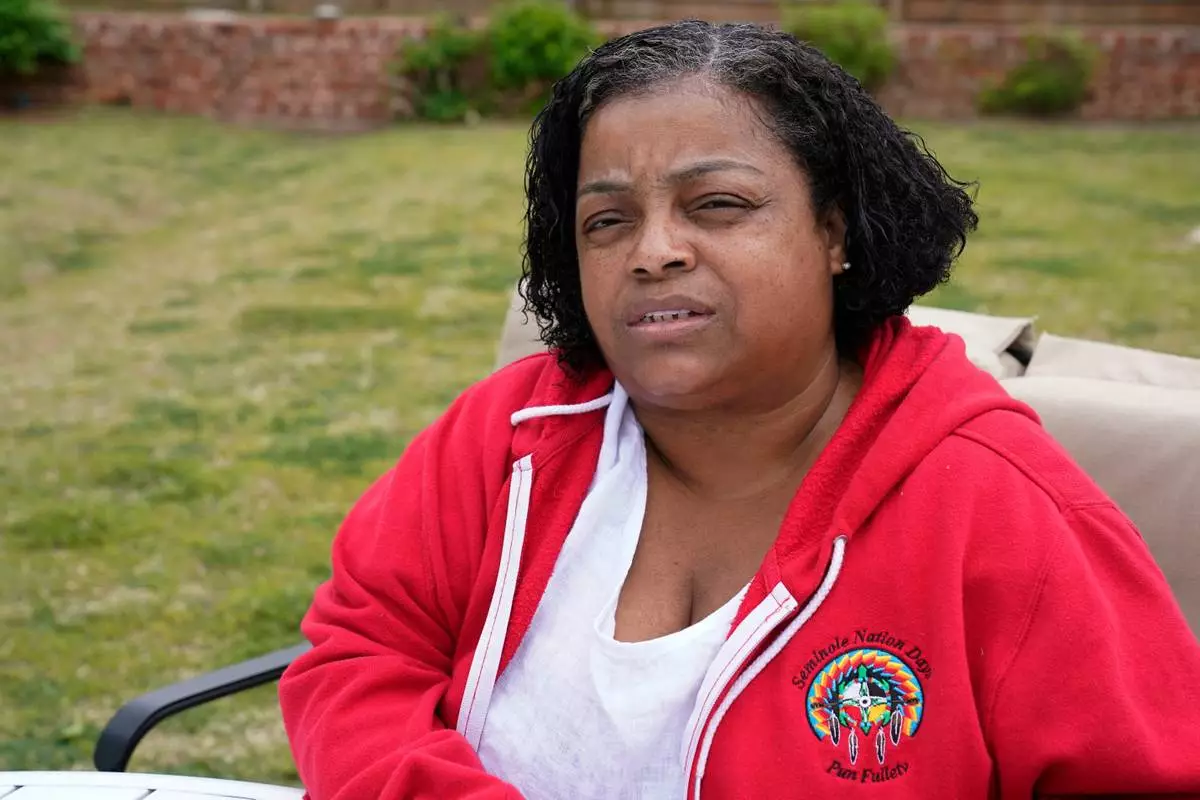
FILE - LeEtta Osborne-Sampson is pictured outside her home Monday, April 26, 2021, in Oklahoma City.. (AP Photo/Sue Ogrocki, File)
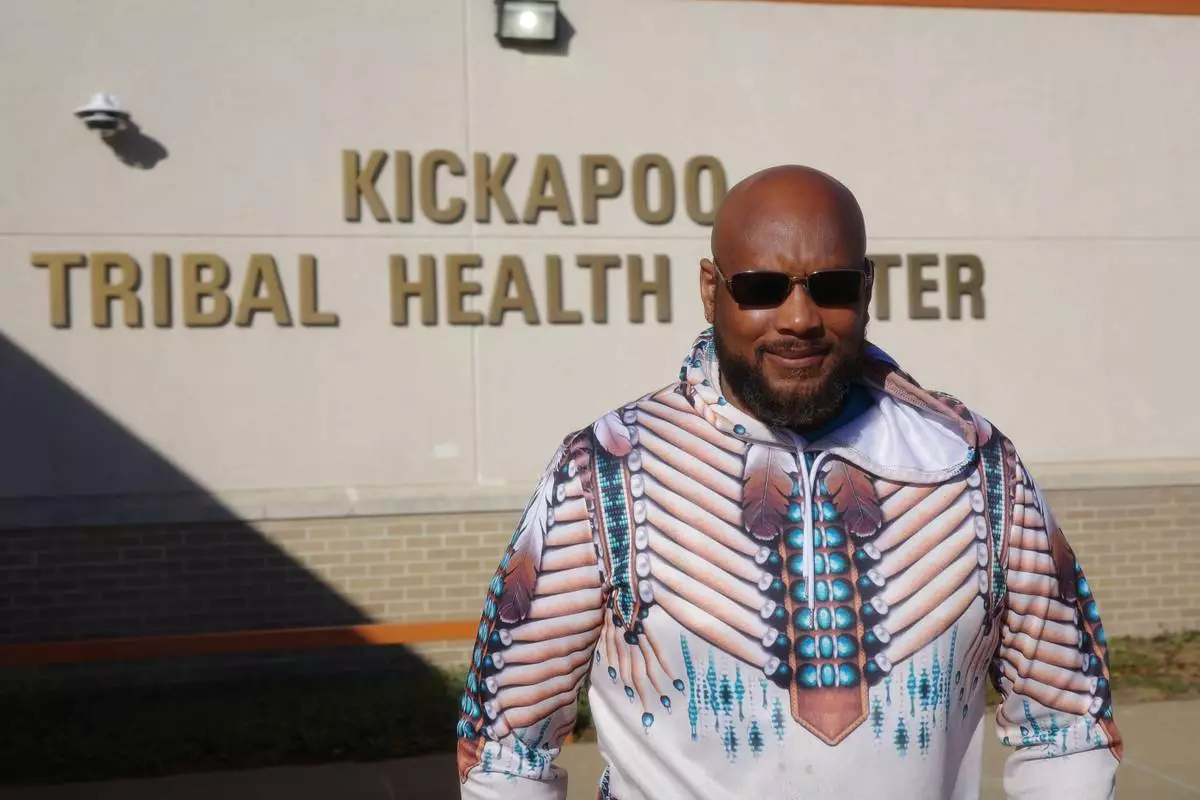
Mark McClain, a citizen of the Cherokee Nation and a Freedmen descendant, stands in front of a health clinic operated by the Kickapoo Tribe of Oklahoma, Monday, Feb. 23, 2026, McLoud, Okla. (AP Photo/Graham Lee Brewer)
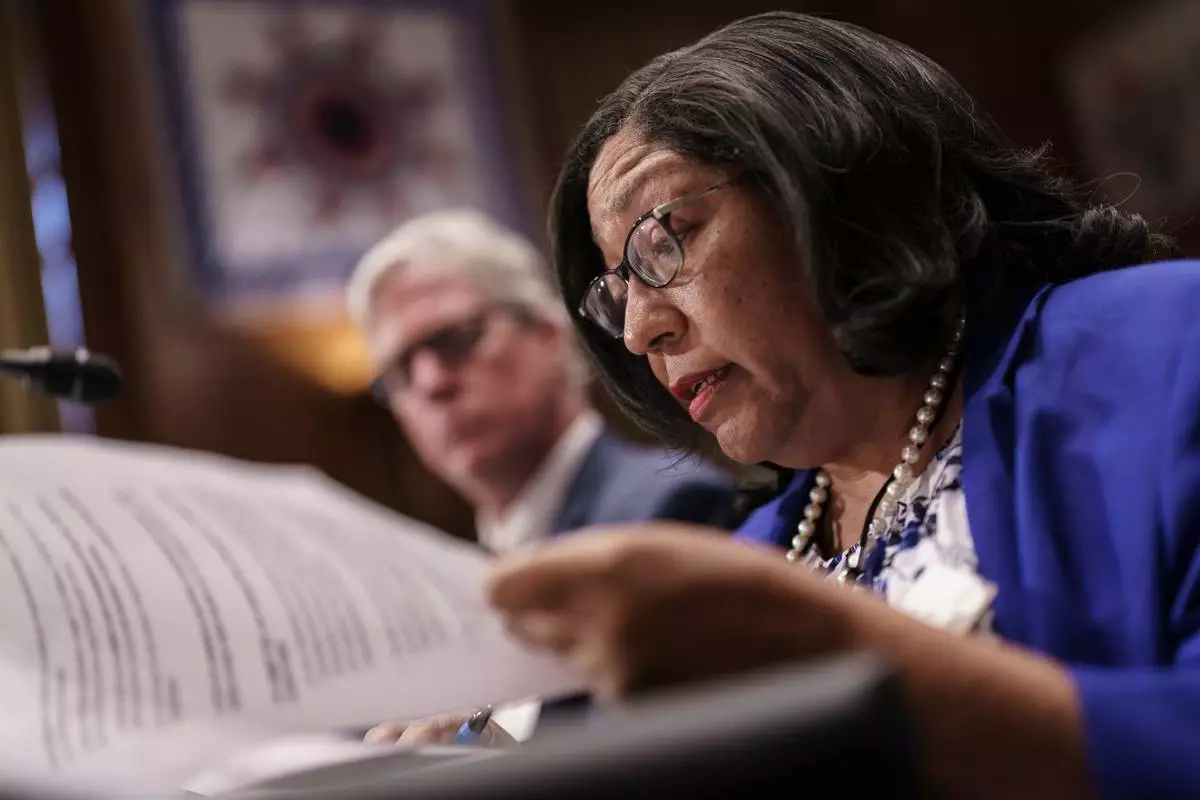
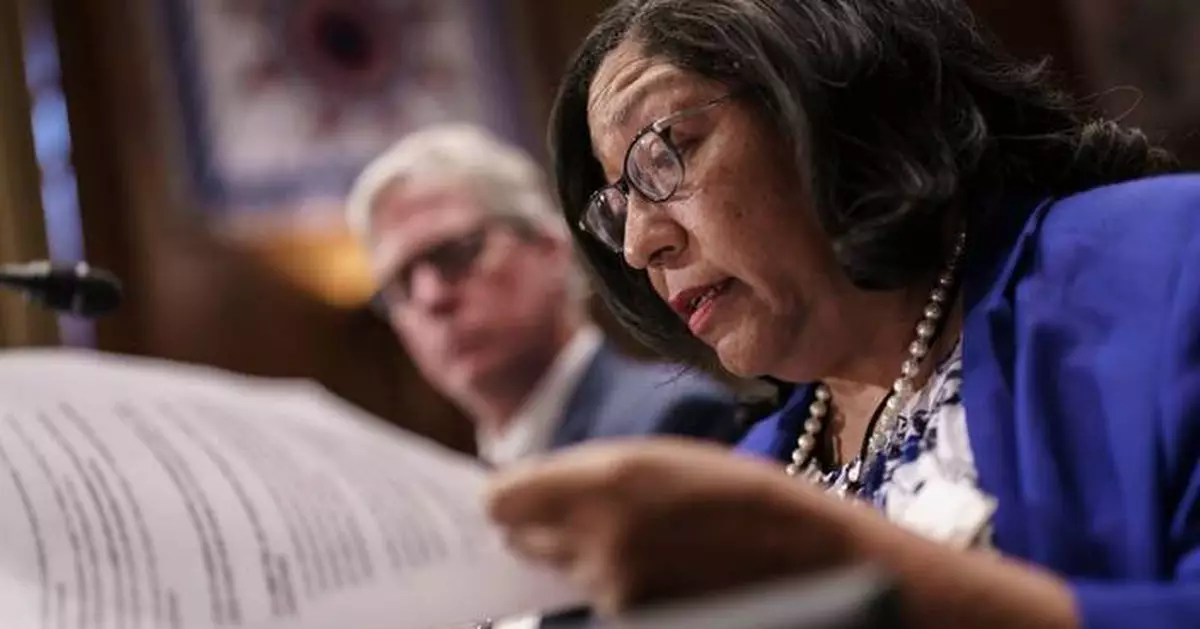
FILE - Marilyn Vann, president of the Descendants of Freedmen of the Five Tribes Association of Oklahoma City, testifies before the Senate Indian Affairs Committee about the status of the descendants of enslaved people formerly held by the Muscogee (Creek), Chickasaw, Choctaw, Seminole and Cherokee Nations, at the Capitol in Washington, Wednesday, July 27, 2022. (AP Photo/J. Scott Applewhite, File)
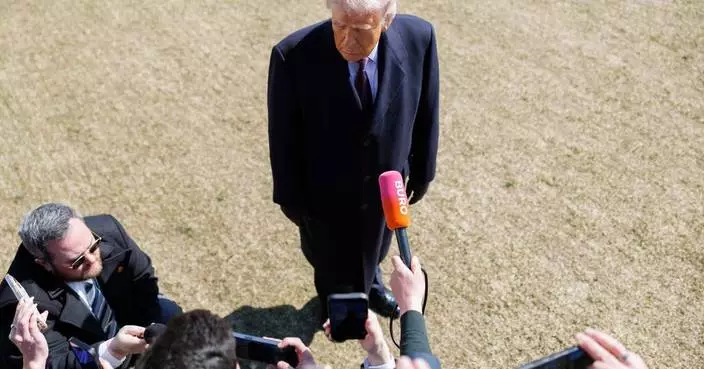
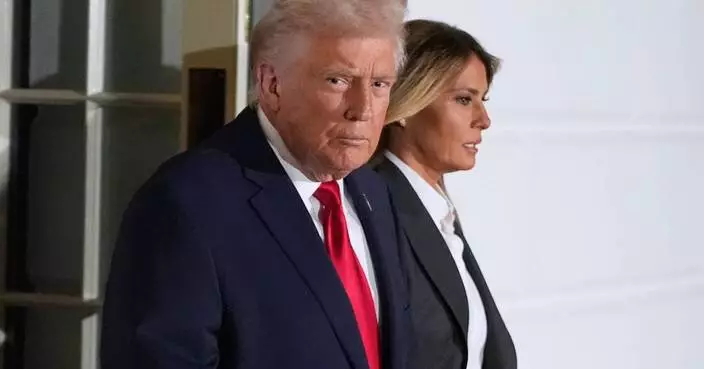
WASHINGTON (AP) — President Donald Trump said Friday he was ordering all federal agencies to phase out the use of Anthropic technology after the company’s unusually public dispute with the Pentagon over artificial intelligence safety.
Trump’s comments came just over an hour before the Pentagon’s deadline for Anthropic to allow unrestricted military use of its AI technology or face consequences — and nearly 24 hours after CEO Dario Amodei said his company “cannot in good conscience accede” to the Defense Department's demands.
Trump said most agencies must immediately cease using Anthropic technology, but gave the Pentagon a 6-month period to phase out the technology that is already embedded in military platforms.
“We don’t need it, we don’t want it, and will not do business with them again!” Trump wrote.
Anthropic didn’t immediately reply to a request for comment on Trump's remarks.
At issue in the defense contract was a clash over AI’s role in national security and concerns about how increasingly capable machines could be used in high-stakes situations involving lethal force, sensitive information or government surveillance.
The move is likely to benefit Elon Musk’s competing chatbot, Grok, which the Pentagon plans to give access to classified military networks, and could serve as a warning to two other competitors, Google and OpenAI, that also have contracts to supply their AI tools to the military.
Anthropic, maker of the chatbot Claude, could afford to lose the contract. But the ultimatum this week from Defense Secretary Pete Hegseth posed broader risks at the peak of the company's meteoric rise from a little-known computer science research lab in San Francisco to one of the world’s most valuable startups.
If Amodei does not budge, military officials said they would not just pull Anthropic's contract but also “deem them a supply chain risk,” a designation typically stamped on foreign adversaries that could derail the company's critical partnerships with other businesses. Trump didn't make such a designation in his announcement Friday, but said Anthropic could face “major civil and criminal consequences” if it's not helpful in the phase-out period.
And if Amodei were to cave, he could have lost trust in the booming AI industry, particularly from top talent drawn to the company for its promises of responsibly building better-than-human AI that, without safeguards, could pose catastrophic dangers.
Anthropic had said it sought narrow assurances from the Pentagon that Claude won’t be used for mass surveillance of Americans or in fully autonomous weapons. But after months of private talks exploded into public debate, it said in a Thursday statement that new contract language “framed as compromise was paired with legalese that would allow those safeguards to be disregarded at will.”
That was after Sean Parnell, the Pentagon’s top spokesman, posted on social media that the military “has no interest in using AI to conduct mass surveillance of Americans (which is illegal) nor do we want to use AI to develop autonomous weapons that operate without human involvement.” He emphasized that the Pentagon wants to “use Anthropic’s model for all lawful purposes,” but he and other officials haven’t detailed how they want to use the technology.
Emil Michael, the defense undersecretary for research and engineering, later lashed out at Amodei, alleging on X that he “has a God-complex” and “wants nothing more than to try to personally control the US Military and is ok putting our nation’s safety at risk.”
That message hasn't resonated in much of Silicon Valley, where a growing number of tech workers from Anthropic's top rivals, OpenAI and Google, voiced support for Amodei's stand late Thursday in an open letter.
OpenAI and Google, along with Elon Musk’s xAI, also have contracts to supply their AI models to the military.
Musk sided with Trump's Republican administration on Friday, saying on his social media platform X that “Anthropic hates Western Civilization” after Michael drew attention to a previous version of Claude's guiding principles that encouraged “consideration of non-Western perspectives.” All of the leading AI models, including Musk's Grok and OpenAI's ChatGPT, are programmed with a set of instructions that guide a chatbot's values and behavior. Anthropic calls that guidance a constitution.
While some Trump-allied tech leaders have joined the fray — including Musk and Palmer Luckey, co-founder of defense contractor Anduril — the polarizing debate over “woke AI” has put others in a difficult position.
“The Pentagon is negotiating with Google and OpenAI to try to get them to agree to what Anthropic has refused,” the open letter from some OpenAI and Google employees says. “They’re trying to divide each company with fear that the other will give in.”
But in a surprise move from one of Amodei's fiercest rivals, OpenAI CEO Sam Altman on Friday sided with Anthropic and questioned the Pentagon's “threatening” move in a CNBC interview, suggesting that OpenAI and most of the AI field share the same red lines. Amodei once worked for OpenAI before he and other OpenAI leaders quit to form Anthropic in 2021.
“For all the differences I have with Anthropic, I mostly trust them as a company, and I think they really do care about safety,” Altman told CNBC. “I’ve been happy that they’ve been supporting our warfighters. I’m not sure where this is going to go.”
Also raising concerns about the Pentagon's approach were Republican and Democratic lawmakers and a former leader of the Defense Department's AI initiatives.
“Painting a bullseye on Anthropic garners spicy headlines, but everyone loses in the end,” wrote retired Air Force Gen. Jack Shanahan in a social media post.
Shanahan faced a different wave of tech worker opposition during the first Trump administration when he led Maven, a project to use AI technology to analyze drone footage and target weapons. So many Google employees protested its participation in Project Maven at the time that the tech giant declined to renew the contract and then pledged not to use AI in weaponry.
“Since I was square in the middle of Project Maven & Google, it’s reasonable to assume I would take the Pentagon’s side here,” Shanahan wrote Thursday on social media. “Yet I’m sympathetic to Anthropic’s position. More so than I was to Google’s in 2018.”
He said Claude is already being widely used across the government, including in classified settings, and Anthropic's red lines are “reasonable.” He said the AI large language models that power chatbots like Claude are also “not ready for prime time in national security settings,” particularly not for fully autonomous weapons.
“They’re not trying to play cute here,” he wrote.
Parnell asserted Thursday that opening up use of the technology would prevent the company from “jeopardizing critical military operations.”
“We will not let ANY company dictate the terms regarding how we make operational decisions,” Parnell wrote. Anthropic has “until 5:01 p.m. ET on Friday to decide” if it would meet the demands or face consequences.
When Hegseth and Amodei met on Tuesday, military officials warned that they could designate Anthropic as a supply chain risk, cancel its contract or invoke a Cold War-era law called the Defense Production Act to give the military more sweeping authority to use its products, even if the company doesn’t approve.
Amodei said Thursday that “those latter two threats are inherently contradictory: one labels us a security risk; the other labels Claude as essential to national security.” He said he hopes the Pentagon will reconsider given Claude's value to the military, but, if not, Anthropic “will work to enable a smooth transition to another provider.”
O'Brien reported from Providence, R.I.
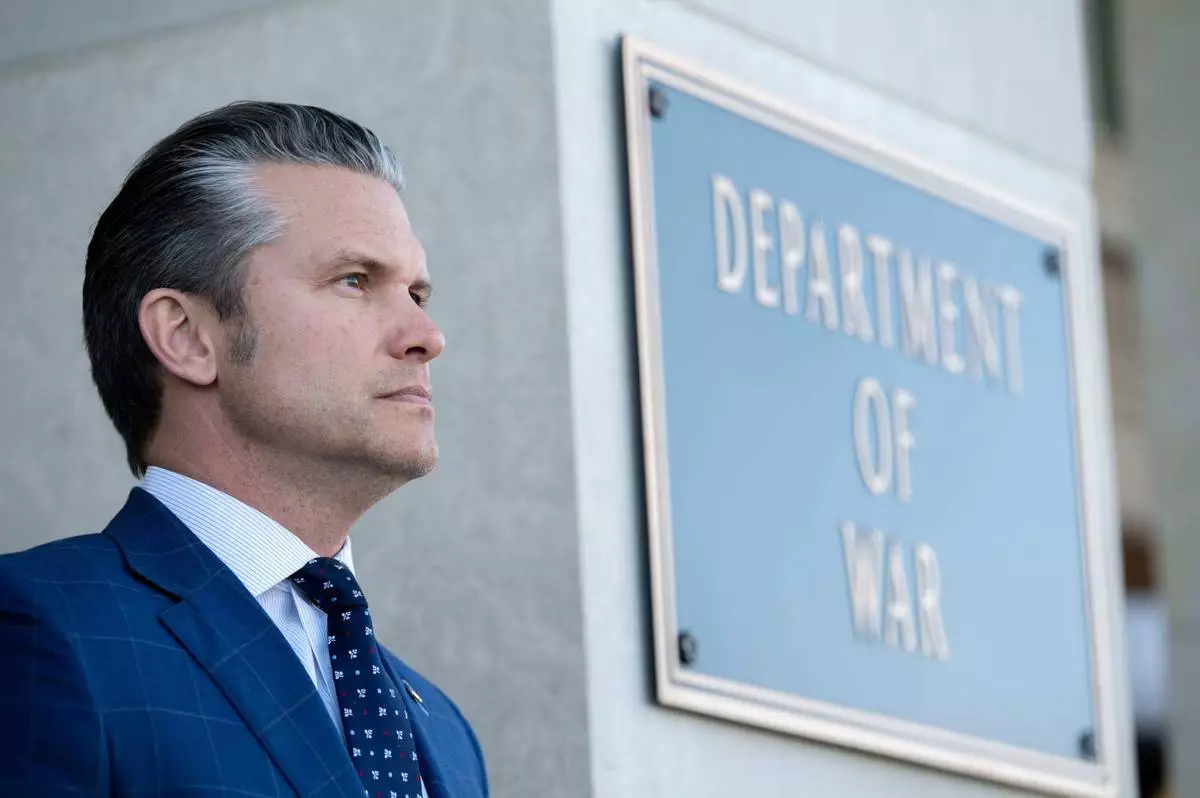
FILE - Defense Secretary Pete Hegseth stands outside the Pentagon during a welcome ceremony for the Japanese defense minister at the Pentagon in Washington, Jan. 15, 2026. (AP Photo/Kevin Wolf, File)
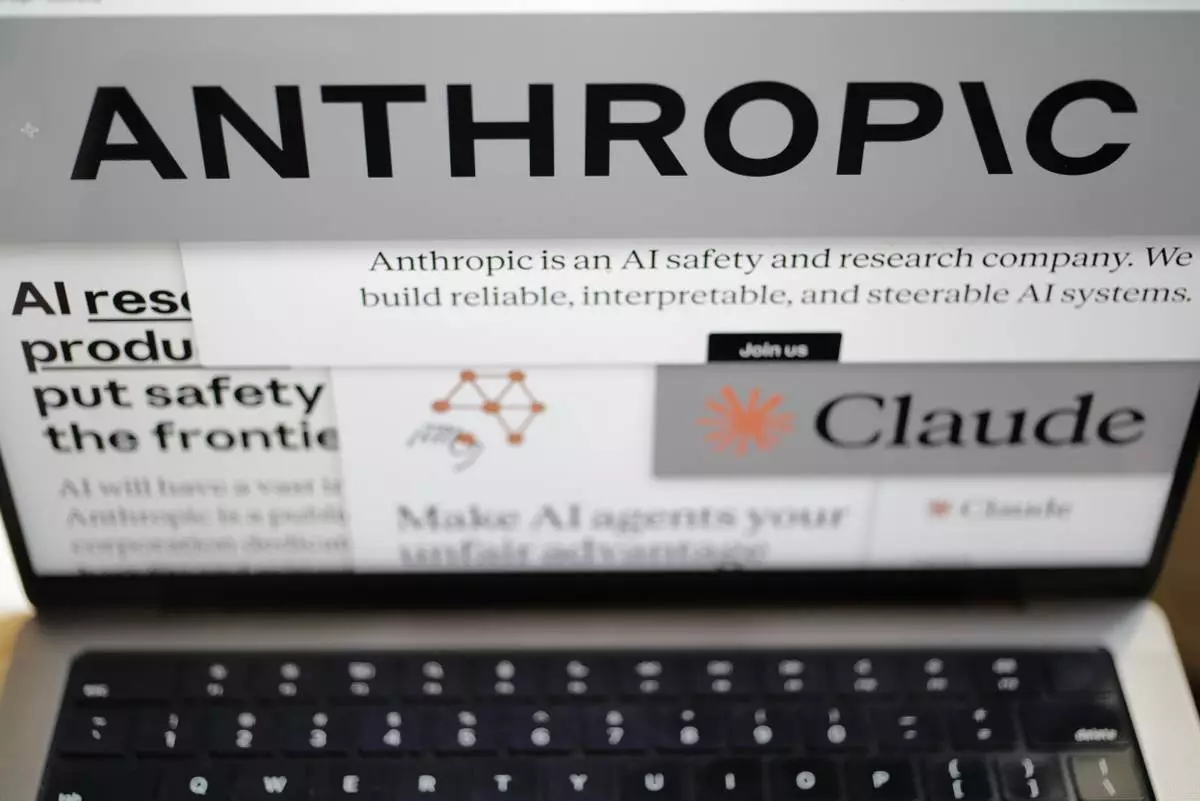
Pages from the Anthropic website and the company's logos are displayed on a computer screen in New York on Thursday, Feb. 26, 2026. (AP Photo/Patrick Sison)