Skip to Content Facebook Feature Image

Trump raises the possibility of a ‘friendly takeover of Cuba’ coming out of talks with Havana

News

Trump raises the possibility of a ‘friendly takeover of Cuba’ coming out of talks with Havana
News

News

Trump raises the possibility of a ‘friendly takeover of Cuba’ coming out of talks with Havana

2026-02-28 05:19 Last Updated At:05:30

WASHINGTON (AP) — President Donald Trump said Friday that the U.S. is in talks with Havana and raised the possibility of a “friendly takeover of Cuba” without offering any details on what he meant.

Speaking to reporters outside the White House as he left for a trip to Texas, Trump said Secretary of State Marco Rubio was in discussions with Cuban leaders “at a very high level.”

“The Cuban government is talking with us,” the president said. “They have no money. They have no anything right now. But they’re talking to us, and maybe we’ll have a friendly takeover of Cuba.”

He added: “We could very well end up having a friendly takeover of Cuba.”

Trump didn't clarify his comments but seemed to indicate that the situation with Cuba, a communist-run island that has been among Washington’s bitterest adversaries for decades, was coming to a critical point. The White House did not respond to requests for more information Friday.

The president also said that Cuba “is, to put it mildly, a failed nation” and "they want our help.”

His remarks came two days after the Cuban government reported that a Florida-registered speedboat carrying 10 armed Cubans from the U.S. opened fire on soldiers off the island’s north coast. Four of the armed Cubans were killed, and six were injured in responding gunfire, according to Cuba’s government. One Cuban official also was injured.

Cuba has been on Trump's mind since at least early January, after U.S. forces ousted one of Havana’s closest allies, Venezuela’s socialist President Nicolás Maduro. Trump suggested in the aftermath of that raid that military action in Cuba might not be necessary because the island's economy was weak enough — particularly in the absence of oil shipments from Venezuela that stopped after Maduro was taken into custody — to soon collapse on its own.

“We’ve had a lot of years of dealing with Cuba. I’ve been hearing about Cuba since I’m a little boy. But they’re in big trouble,” he said Friday.

Then, noting the exile community from the island living in the U.S., Trump said there could be something coming that “I think (is) very positive for the people that were expelled, or worse, from Cuba and live here.” He did not elaborate.

The U.S. has maintained a strict trade embargo on Cuba since 1962, the year after a failed, CIA-sponsored invasion of the island at the Bay of Pigs. Trump nonetheless indicated earlier this month that talks with Cuban officials were underway.

Cuba's government confirmed earlier this week that it was communicating with U.S. officials following the shooting of the American boat. Rubio has said the U.S. Department of Homeland Security and Coast Guard are investigating what happened.

An executive order that Trump signed in late January pledged to impose tariffs on countries providing oil to Cuba, threatening to further cripple a country already plagued by a deepening energy crisis, though U.S. authorities have since indicated that oil from Venezuela can be sold to Cuban interests in some cases.

Carlos Fernández de Cossío, Cuba's deputy foreign minister, posted, then later deleted on Friday that “the US maintains its fuel embargo against Cuba in full force, and its impact as a form of collective punishment is unwavering.”

“Nothing announced in recent days changes this reality,” he wrote on X before the post was removed. “The possibility of conditional sales to the private sector already existed and does not alleviate the impact on the Cuban population.”

Meanwhile, 40-plus U.S. civil society organizations sent a letter to Congress on Friday asking that it “press the Trump administration to reverse its aggressive policy towards Cuba” and saying that efforts to cut oil shipments to the Caribbean island would spark a humanitarian collapse.

Signees included the Alliance of Baptists, ActionAid USA and the Presbyterian Church.

“Policies that deliberately impose hunger and mass hardship on millions of civilians constitute a form of collective punishment, and as such are a grave violation of international humanitarian law,” the letter reads.

Associated Press writer Dánica Coto contributed from San José, Costa Rica.
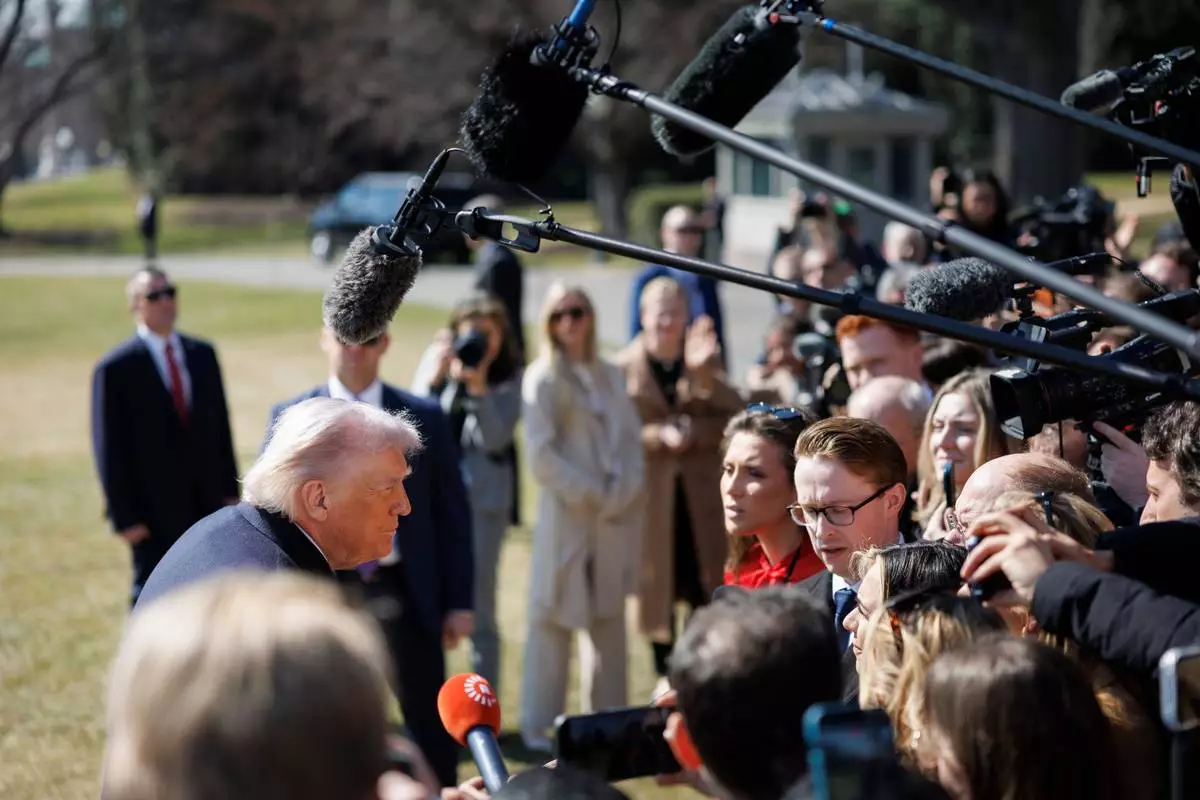
President Donald Trump speaks to reporters before departing on Marine One from the South Lawn of the White House, Friday, Feb. 27, 2026, in Washington. (AP Photo/Tom Brenner)
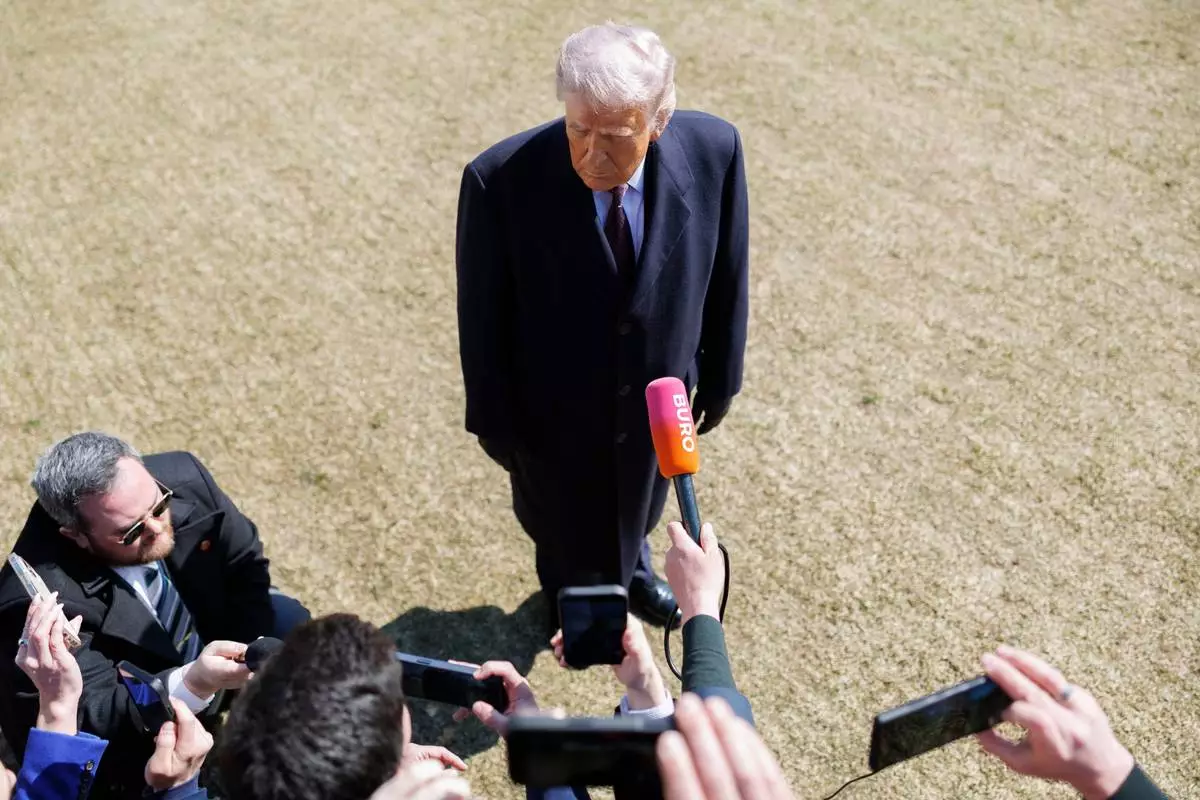
President Donald Trump speaks to reporters before departing on Marine One from the South Lawn of the White House, Friday, Feb. 27, 2026, in Washington. (AP Photo/Tom Brenner)
President Donald Trump speaks to reporters before departing on Marine One from the South Lawn of the White House, Friday, Feb. 27, 2026, in Washington. (AP Photo/Tom Brenner)
President Donald Trump speaks to reporters before departing on Marine One from the South Lawn of the White House, Friday, Feb. 27, 2026, in Washington. (AP Photo/Tom Brenner)
Attorney General Pam Bondi announced charges Friday against 30 more people who are accused of civil rights violations in a January protest inside a Minnesota church where a pastor works for Immigration and Customs Enforcement.

Bondi said on social media that 25 people were in custody and more arrests would follow. The new indictment comes a month after independent journalists Don Lemon and Georgia Fort and prominent local activist Nekima Levy Armstrong were charged for their alleged roles in the protest at Cities Church in St. Paul.

Bondi accused the group of attacking a house of worship.

"If you do so, you cannot hide from us — we will find you, arrest you, and prosecute you,” she wrote on social media.

In total, 39 people now face charges of conspiracy against religious freedom and interfering with the right of religious freedom.

A livestreamed video posted on Facebook shows people interrupting services at Cities Church on Jan. 18 by chanting “ICE out” and “Justice for Renee Good," a reference to the woman who was fatally shot by an ICE officer in Minneapolis on Jan. 7.

The new defendants will have an initial court appearance and a magistrate judge will set conditions for their likely release. Lemon and Fort said they were at the church as journalists covering news. Levy Armstrong was the subject of a doctored photo posted by the White House showing her crying during her arrest. The three have pleaded not guilty.

Protesters descended on Cities Church after learning that one of the church’s pastors also serves as an ICE official. The protest drew swift condemnation from Trump administration officials and conservative leaders for disrupting a Sunday service.

The indictment says the “agitators” entered the church in a “coordinated takeover-style attack” and engaged in acts of intimidation and obstruction.

“Young children were left to wonder, as one child put it, if their parents were going to die,” the indictment says.

A lawyer for the church praised the Justice Department for charging more people.

“The First Amendment does not give anyone — regardless of profession, prominence, or politics — license to storm a church and intimidate, threaten, and terrorize families and children worshipping inside,” Doug Wardlow said in a statement.

The revised indictment adds new allegations when compared to the original filed in January.

It says two people “conducted reconnaissance” outside the church a day before the protest and recorded their visit on video, with one saying, “My thoughts are to be able to close up this whole alleyway right here.”

The court filing quotes one protester as chanting in the church, “This ain't God's house. This is the house of the devil.”

Levy Armstrong defended the protest shortly after it occurred. She said critics needed to “check their hearts” if they were more concerned about a disruption than the “atrocities that we are experiencing in our community."

The protest came at a tense time in Minnesota, where the Trump administration sent thousands of federal officers for Operation Metro Surge after a series of public fraud cases where the majority of defendants had Somali roots. Officers frequently deployed tear gas for crowd control in neighborhood clashes with residents, often detaining them along with immigrants.

Good, 37, was shot in Minneapolis. In another fatal shooting a week after the church protest, a federal officer killed 37-year-old nurse Alex Pretti.

Nationwide demonstrations erupted in response, followed by a change in Operation Metro Surge’s leadership and the eventual wind-down of the immigration enforcement operation. Roughly 400 ICE officers and Homeland Security agents were expected to remain in Minneapolis by early March, down from roughly 3,000 at the peak, according to a court filing.

Since then, the Twin Cities have grappled with the impact to communities and the local economy. Minneapolis said it suffered an impact of $203 million due to the operation, with tens of thousands of residents in need of urgent relief assistance.

Separately, a woman who was at the church service has filed a lawsuit against some people who were charged, alleging emotional trauma and an inability to exercise her religion that day.

Associated Press writer Ed White in Detroit contributed to this report.

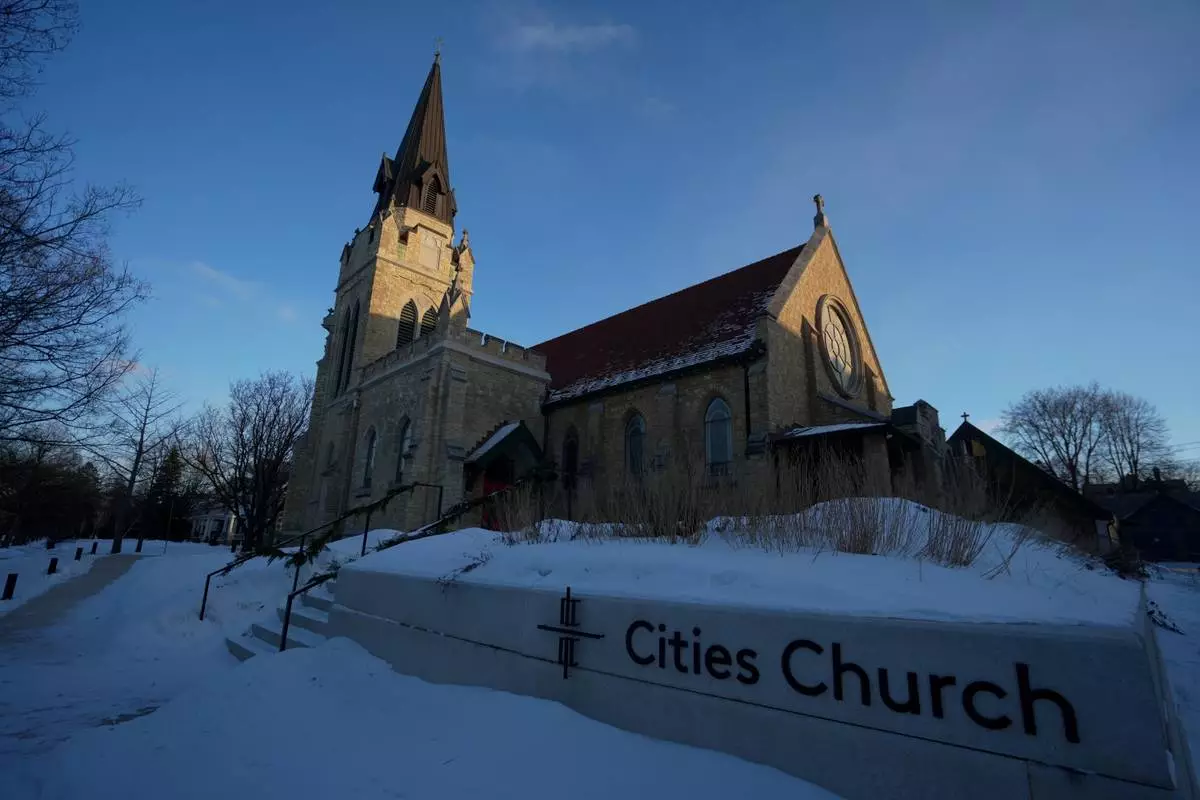
FILE - Cities Church is seen in St. Paul, Minn. where activists shut down a service claiming the pastor was also working as an ICE agent, Monday, Jan. 19, 2026 in St. Paul, Minn. (AP Photo/Angelina Katsanis, File)

FILE - Cities Church is seen in St. Paul, Minn. where activists shut down a service claiming the pastor was also working as an ICE agent, Monday, Jan. 19, 2026 in St. Paul, Minn. (AP Photo/Angelina Katsanis, File)

Recommended Articles