WASHINGTON (AP) — Two hotly contested U.S. Senate primaries in Texas will help officially kick off the 2026 midterm election cycle Tuesday, when voters in three states will pick nominees to compete in the November general election.
Republicans hold a 53-47 majority in the Senate. Democrats face a tough path to retaking the chamber in 2026, but they hope the right combination of primary outcomes in Texas will help put the state in play in a midterm year when the president’s party typically loses seats in Congress.
Voters in the Lone Star State will also choose nominees for a full slate of state offices, from governor to state Legislature. Arkansas and North Carolina also hold primaries on Tuesday.
Republican incumbent Sen. John Cornyn cruised to renomination in his four previous U.S. Senate campaigns but this year has drawn a tough challenge from state Attorney General Ken Paxton, U.S. Rep. Wesley Hunt and five others. Only two incumbent U.S. senators from Texas have lost a primary in the last 100 years.
U.S. Rep. Jasmine Crockett and state Rep. James Talarico are in a competitive race for the Democratic nomination. A third Democratic contender, Ahmad Hassan, is a frequent candidate in both Texas and Minnesota.
In the race for governor, incumbent Greg Abbott faces 10 Republican challengers in his run for a fourth term. The Democratic field includes former U.S. Rep. Chris Bell, state Rep. Gina Hinojosa and six other active candidates.
Further down the ballot, U.S. House candidates compete in new congressional districts that state Republicans redrew at President Donald Trump’s urging as part of an effort to maintain control of the chamber.
There’s no guarantee the new map will have the effect its designers intended, but the impact on some Democrats is immediate. U.S. Reps. Christian Menefee and Al Green will face each other and two others in the redrawn 18th Congressional District. In the new 33rd Congressional District, Democratic U.S. Rep. Julie Johnson faces former U.S. Rep. Colin Allred and two others in the primary.
Vulnerable Republican incumbents include Reps. Dan Crenshaw and Tony Gonzales, who face strong primary challenges in the 2nd and 23rd congressional districts, respectively. Gonzales has faced calls to resign from fellow Republicans over allegations of an affair with a former staffer who killed herself.
Texas primary winners must receive a majority of the vote to avoid a May 26 runoff.
Texas Democrats typically face an uphill climb in the general election. Democrats have not won statewide office in Texas, from governor to railroad commissioner, since 1994. No Texas Democrat has won a U.S. Senate race since 1988. The last Democrat to hold Cornyn’s seat was Lyndon Johnson.
Harris County, home to Houston, is by far the state’s most populous and plays a major role in both Republican and Democratic primaries. Dallas and Travis counties, while still influential in Republican primaries, tend to contribute a larger share of the total vote in Democratic contests. Tarrant County, home to Fort Worth, tends to play a bigger role in Republican primaries.
In the Republican Senate primary, since much of the campaign has focused on Cornyn’s conservative bona fides in the Trump era, the counties where the president has the most support could play a decisive role. Although many of the counties Trump won in 2024 with 80% or more of the vote are rural and sparsely populated, collectively they made up about a fifth of the vote in past state GOP primaries. Both Cornyn and Paxton received overwhelming majorities in these top Trump counties in their last primaries, but Cornyn performed worse there than he did in the rest of the state, while Paxton performed better.
In the Democratic primary, key areas to watch include counties with large Hispanic populations along the border, especially El Paso and Hidalgo counties, and those with large African American populations, including those in East Texas, which are a part of a region across the South often called the Black Belt.
The Associated Press does not make projections and will declare a winner only when it’s determined there is no scenario that would allow a trailing candidate to close the gap. If a race has not been called, the AP will continue to cover any newsworthy developments, such as candidate concessions or declarations of victory. In doing so, the AP will make clear that it has not yet declared a winner and explain why.
Texas requires an automatic recount only in cases of a tie vote. Losing candidates may request and pay for a recount if the margin is less than 10% of the leading candidate’s vote. The AP may declare a winner in a race that is subject to a recount if it can determine the lead is too large for a recount or legal challenge to change the outcome.
Here are some of the key facts about the election and data points the AP Decision Team will monitor as the votes are tallied:
Polls close statewide at 7 p.m. local time, but the state is split into two times zones. Polls in most of Texas close at 8 p.m. ET, while polls in the westernmost part of the state close at 9 p.m. ET. Although a significant amount of vote results from most of the state will be released between 8 p.m. and 9 p.m. ET, the AP will not make any race calls in statewide contests until the last polls close at 9 p.m. ET.
The AP will provide vote results and declare winners in contested primaries for U.S. Senate, U.S. House, governor, lieutenant governor, attorney general, comptroller, land commissioner, agriculture commissioner, railroad commissioner, state Supreme Court and Court of Appeals, state Board of Education and both chambers of the state Legislature.
Any eligible voter may participate in any party’s primary. Voters in Texas do not register by party, but voting in a party’s primary affiliates a voter with that party, which is then used to determine eligibility to vote in the May runoff election.
As of the November 2025 general election, there were about 18.5 million registered voters in Texas.
Just shy of 2 million voters participated in the 2022 Republican gubernatorial primary and nearly 1.1 million in the Democratic primary. About 53% of Republican primary votes and about 58% of Democratic primary votes were cast before primary day.
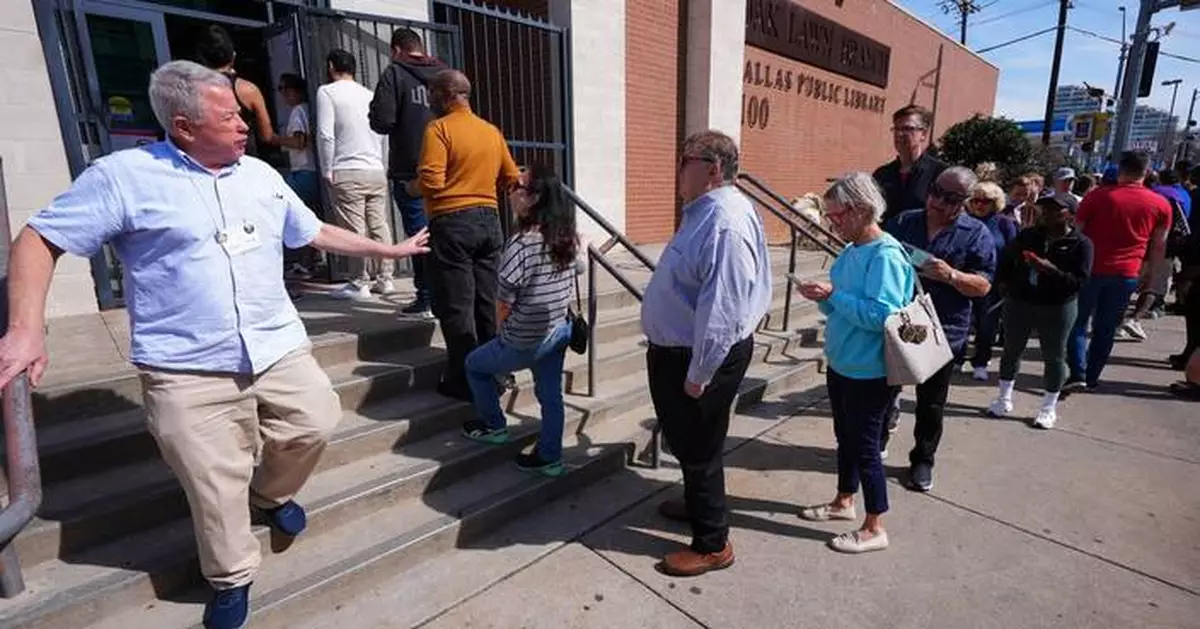
In this year’s contest, nearly 1,177,000 Democratic primary ballots and more than 1,009,000 Republican primary ballots had already been cast as of Thursday.
In the 2024 U.S. Senate primaries, the AP first reported results at 8:09 p.m. ET, or nine minutes after polls closed in most of the state. The last vote update of the night in the Democratic primary was at 4:41 a.m. ET with about 96% of total votes counted and at 5:46 a.m. ET in the Republican primary with about 98% of total votes counted.
In previous elections, counties tended to release all or nearly all results from early and absentee voting in the first vote update of the night, before any in-person Election Day results were released.
As of Tuesday, there will be 84 days until the primary runoff election, if needed, and 245 days until the 2026 midterm elections.
Follow the AP’s coverage of the 2026 election at https://apnews.com/hub/elections.
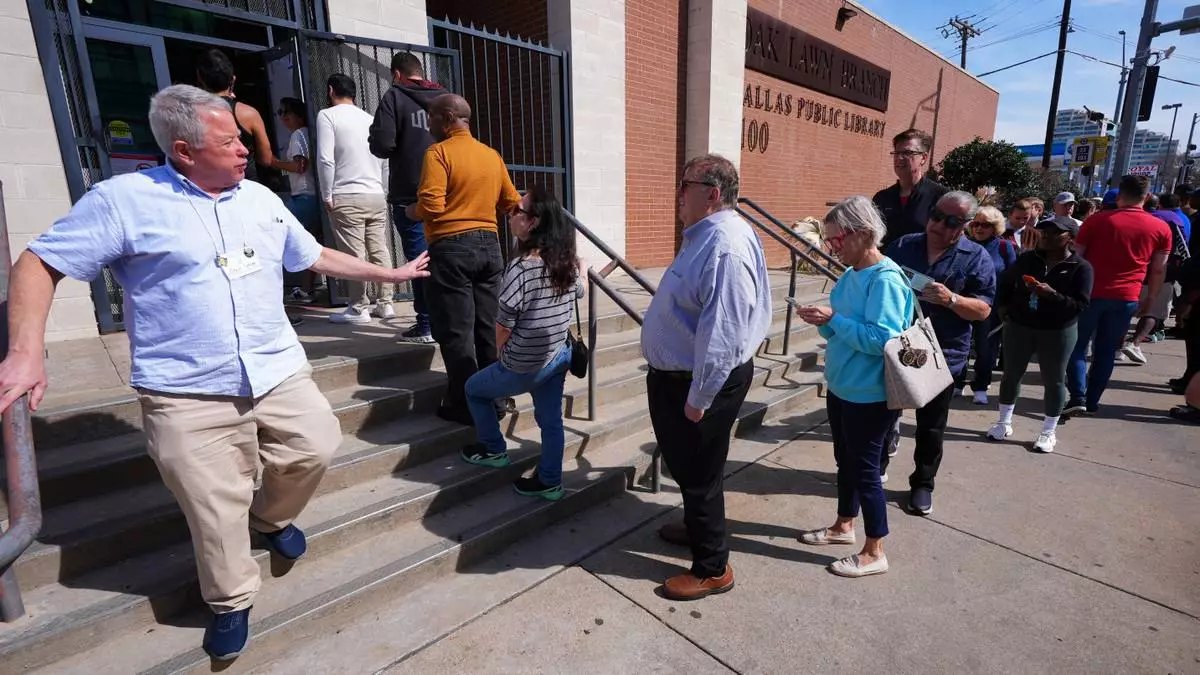
Voters stand in line to vote early for the primary election, in Dallas, Tuesday, Feb. 17, 2026. (AP Photo/LM Otero)
DUBAI, United Arab Emirates (AP) — The war in the Middle East spiraled further Monday as Israel and the U.S. pounded Iran. Tehran and its allies hit back against Israel, neighboring Gulf states, and targets critical to the world’s production of oil and natural gas.
The intensity of the attacks, the killing of Iranian Supreme Leader Ayatollah Ali Khamenei, and the lack of any apparent exit plan indicated the conflict would not end anytime soon. It was already having far-reaching consequences: Safe havens in the Mideast like Dubai have seen incoming fire; hundreds of thousands of airline passengers are stranded around the globe; oil prices shot up; and U.S. allies pledged to help stop Iranian missiles and drones.
Iran has long threatened, if attacked, to drag the region into total war, including targeting Israel, the Gulf Arab states and the flow of crude oil crucial for global energy markets. All of these came under attack on Monday.
The chaos of the conflict became apparent when the U.S. military said Kuwait had “mistakenly shot down” three American F-15E Strike Eagles while attacks from Iranian aircraft, ballistic missiles, and drones were underway. U.S. Central Command said all six pilots ejected safely and are in stable condition.
Israel and the U.S. bombed Iranian missile sites and targeted its navy, claiming to have destroyed its headquarters and multiple warships. As several airstrikes hit Iran’s capital of Tehran, the top security official Ali Larijani vowed on X: “We will not negotiate with the United States.”
The death toll grew on all sides. The Iranian Red Crescent Society said that the U.S.-Israeli operation has killed at least 555 people. In Israel, where several locations were hit by Iranian missiles, 11 people were killed. The Iranian-backed Hezbollah militant group also targeted Israel, which responded with strikes on Lebanon, killing more than two dozen people. Meanwhile, four American troops have been killed, and three people were reported killed in the United Arab Emirates and one each in Kuwait and Bahrain.
In Kuwait City, fire and smoke rose from inside the U.S. Embassy compound, shortly after the U.S. issued a warning to Americans to take cover and stay away from the complex. There were no immediate reports on damage or casualties.
Iran targeted the lifeblood of the area’s economy.
With world markets already rattled by the fighting, QatarEnergy said it would stop its production of liquefied natural gas, taking one of the world’s top suppliers off the market. It offered no timeline for restoring its production. European natural gas prices surged by 40% in response.
Meanwhile, Saudi Arabia’s Ras Tanura oil refinery came under attack from drones, with defenses downing the incoming aircraft, a military spokesman told the state-run Saudi Press Agency. The refinery has a capacity of over half a million barrels of crude oil a day.
A drone also targeted an oil tanker in the Gulf of Oman, killing one mariner, the sultanate said, while debris fell on an oil refinery in Kuwait.
Several ships have been attacked in the Strait of Hormuz, the narrow mouth of the Persian Gulf through which a fifth of all oil trade passes and where Iran has threatened attacks.
“The attack on Saudi Arabia’s Ras Tanura refinery marks a significant escalation, with Gulf energy infrastructure now squarely in Iran’s sights,” said Torbjorn Soltvedt, an analyst at the risk intelligence company Verisk Maplecroft. “An extended period of uncertainty lies ahead.”
The region is also a hub for air travel, and passengers have been stranded around the world as carriers based in the Gulf grounded flights. But long-haul carriers Etihad and Emirates restarted limited flights Monday.
Reza Najafi, Iran’s ambassador to the International Atomic Energy Agency, told reporters that airstrikes targeted the Natanz nuclear enrichment site on Sunday.
“Their justification that Iran wants to develop nuclear weapons is simply a big lie,” he said.
Israel and the U.S. have not acknowledged strikes at the site, which the U.S. bombed in the 12-day war between Iran and Israel in June. Israel has said that it is targeting the “leadership and nuclear infrastructure.”
Iran has said it has not enriched uranium since June, though it has maintained its right to do so while saying its nuclear program is entirely peaceful.
Hezbollah said it fired missiles on Israel early Monday in response to Khamenei’s killing and “repeated Israeli aggressions.” It was the first time in more than a year that the militant group has claimed an attack.
There were no reports of injuries or damage.
Lebanon’s government said Hezbollah’s overnight attacks against Israel were “illegal” and demanded the group hand over its weapons.
Rescue services in Israel said several locations have been hit by Iranian missiles, including Jerusalem and a synagogue in Beit Shemesh. In all, 11 people have been killed.
Israel retaliated with strikes on Lebanon, killing at least 31 people and wounding 149 others, according to Lebanon’s Health Ministry. Associated Press journalists in Beirut were jolted awake by loud explosions that shook buildings and shattered windows.
Iran’s proxies were a chief concern for American and Israeli officials before they moved ahead with strikes over the weekend.
The Iraqi Shiite militia Saraya Awliya al-Dam claimed a drone attack Monday targeting U.S. troops at the airport in the Iraqi capital, Baghdad. It claimed another drone attack on Sunday against a U.S. air base in Iraq’s north.
The U.S. military said B-2 stealth bombers struck Iran’s ballistic missile facilities with 2,000-pound bombs. President Donald Trump said on social media that nine Iranian warships had been sunk and that the Iranian navy’s headquarters had been “largely destroyed.”
“Combat operations continue at this time in full force, and they will continue until all of our objectives are achieved,” Trump said in a video message Sunday.
Defense Secretary Pete Hegseth said Monday that the U.S. is not engaged in a nation-building effort in Iran, and there is a clear mission. “This is not Iraq. This is not endless,” Hegseth said.
He didn’t give specifics when asked about the ultimate goals of the operation, how long it might last or what success would look like, saying doing so would disadvantage U.S. forces.
It’s not completely clear what the U.S. objectives are. In announcing the initial strikes, Trump referred to the threat posed by Iran’s nuclear and missile programs. But he also listed various grievances dating back to Iran’s Islamic Revolution in 1979 and urged Iranians to “take over” their government. There have been no signs yet of any such uprising.
The American leader, however, has also signaled he would be open to dialogue with Iran's new leadership — which could be chosen soon.
In an indication that the conflict could draw in other nations, Britain, France and Germany said Sunday they were ready to work with the U.S. to help stop Iran’s attacks.
Early Monday, Cyprus said a drone “caused limited damage” when it hit a British air base there.
Tehran’s streets have been largely deserted with people sheltering during airstrikes. The paramilitary Basij force, which has played a central role in crushing recent nationwide protests, set up checkpoints across the city, according to witnesses.
In the northern Iranian city of Babol, a student, speaking anonymously over concerns of retribution, told the AP that armed riot police were on the streets Saturday night and into the early hours of Sunday after the death of Khamenei.
“We don’t know whether to be happy about the elimination of the criminals who oppress us or to remain silent in the face of the U.S. and Israel’s war against the country and its interests and the terror that is taking place,” he said.
Lidman reported from Tel Aviv, Israel, and Magdy from Cairo. Associated Press writers Bassem Mroue and Sally Abou AlJoud in Beirut contributed to this report.
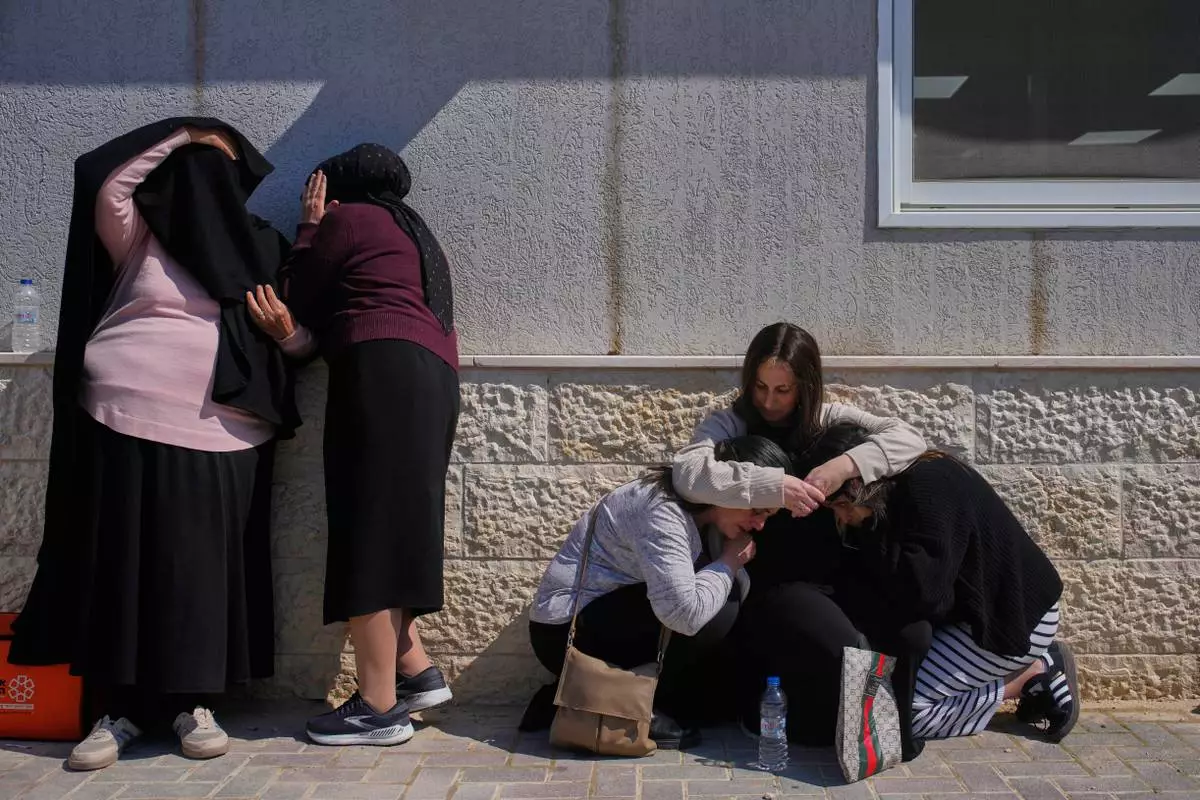
Mourners take cover while air-raid sirens warn of incoming missiles launched by Iran toward Israel during the funeral of Sarah Elimelech and her daughter Ronit who were killed in an Iranian missile attack, in Beit Shemesh, Israel, Monday, March 2, 2026. (AP Photo/Ohad Zwigenberg)
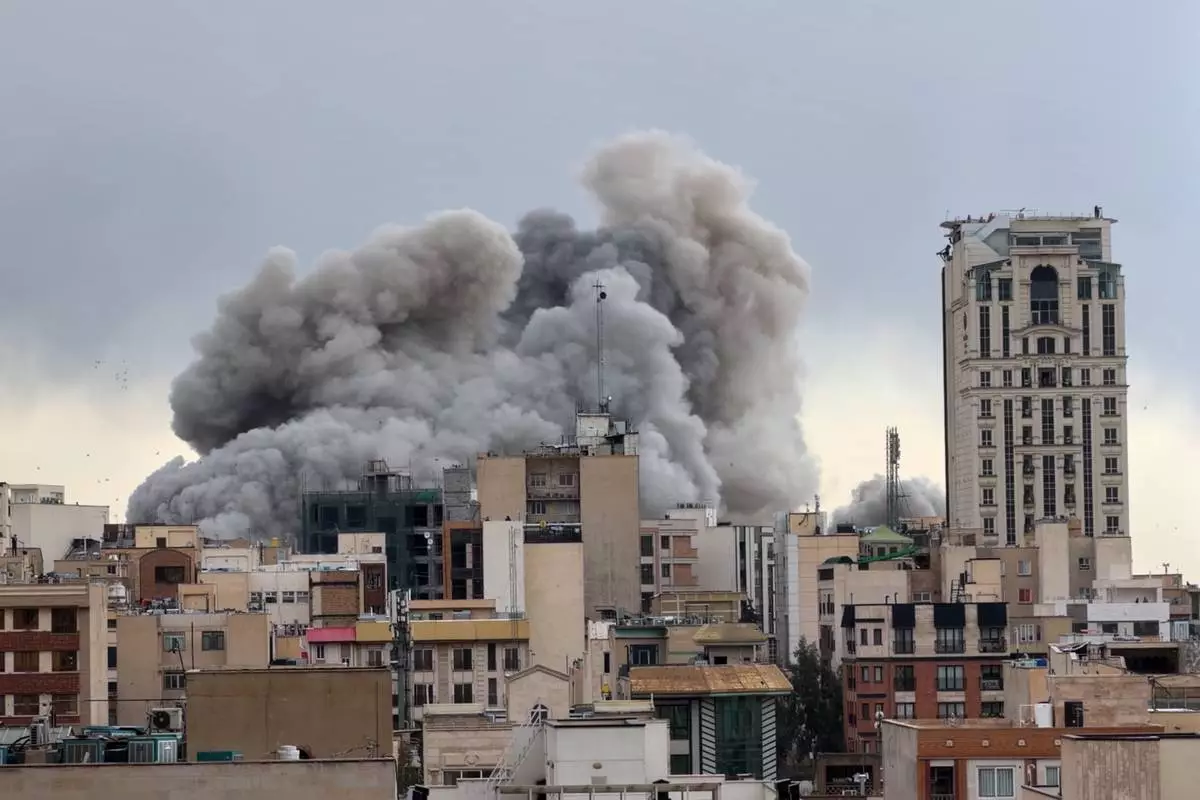
A plume of smoke rises after a strike in Tehran, Iran, Monday, March 2, 2026. (AP Photo/Mohsen Ganji)
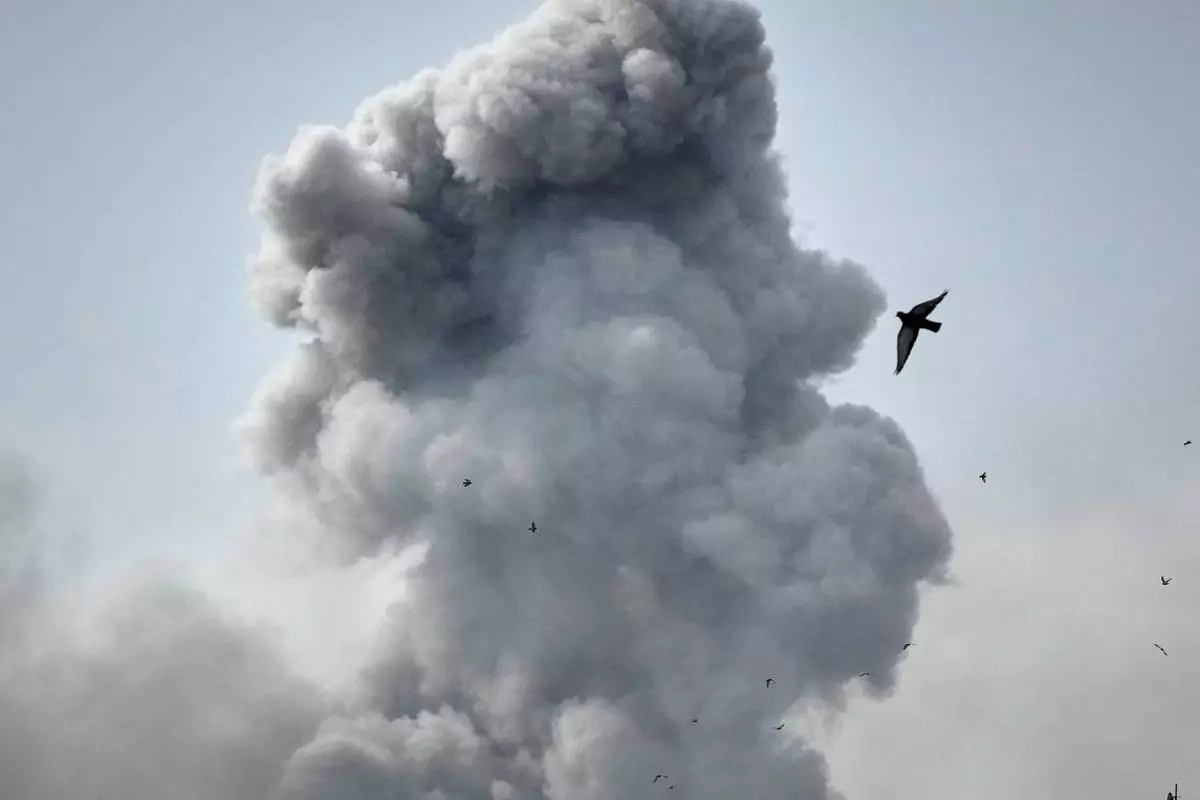
A bird flies by a plume of smoke rising after a strike in Tehran, Iran, Monday, March 2, 2026. (AP Photo/Vahid Salemi)
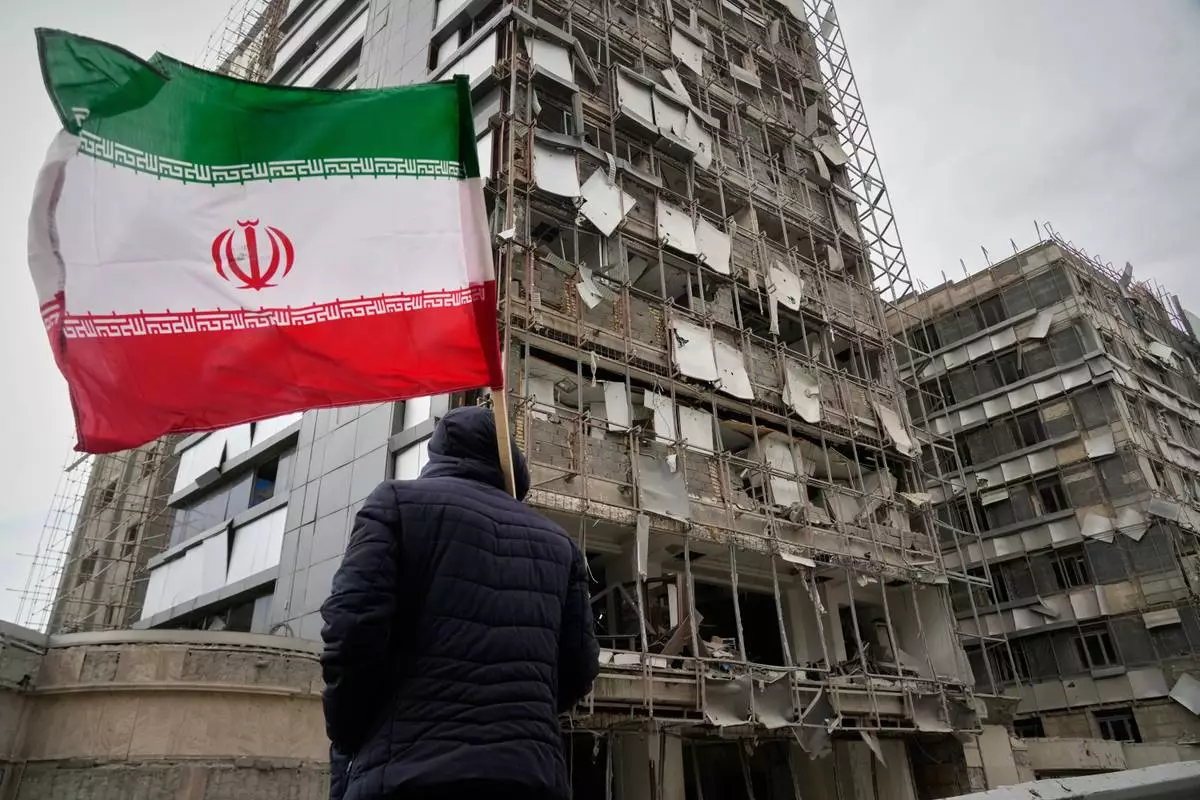
A man holds an Iranian flag as he looks at the damaged façade of Gandhi Hospital, which was hit Sunday when a strike also struck a state TV communications tower and nearby buildings across the street during the ongoing joint U.S.–Israeli military campaign in Tehran, Iran, Tuesday, March 2, 2026. (AP Photo/Vahid Salemi)
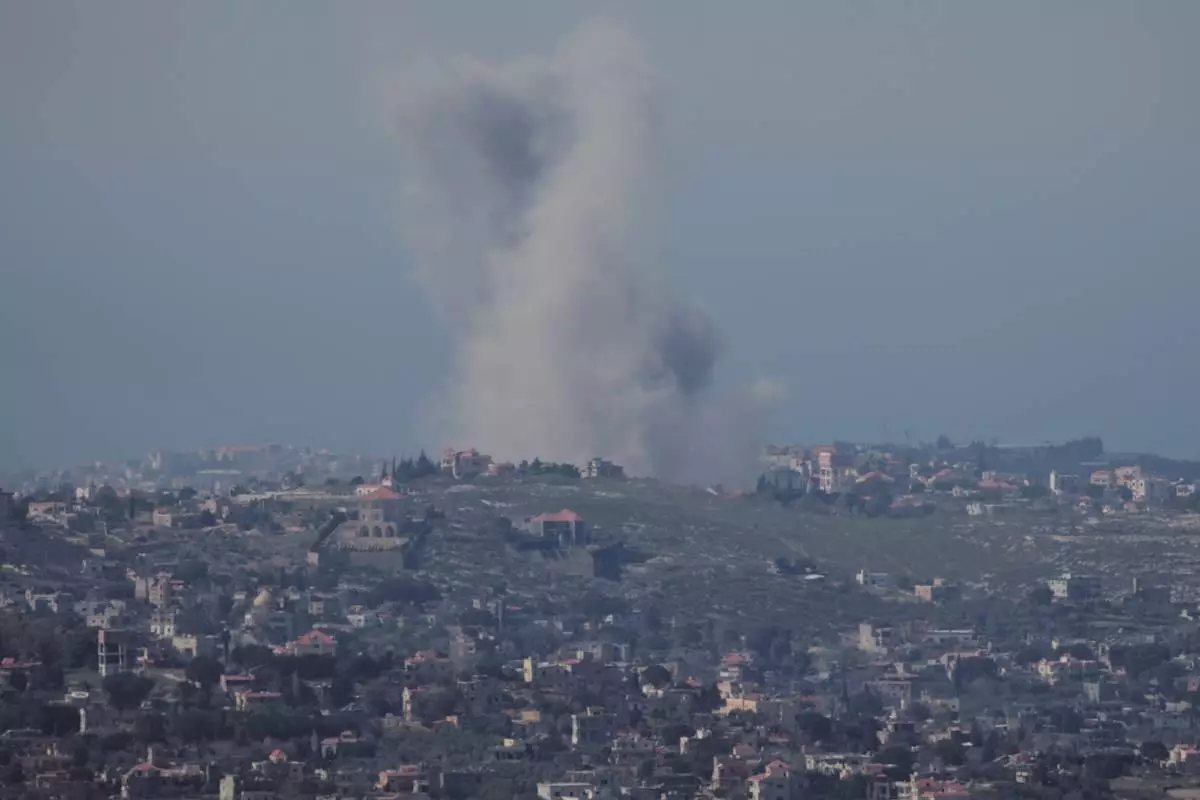
Smoke rises following Israeli bombardment in southern Lebanon as seen from northern Israel Monday, March 2, 2026. (AP Photo/Ariel Schalit)
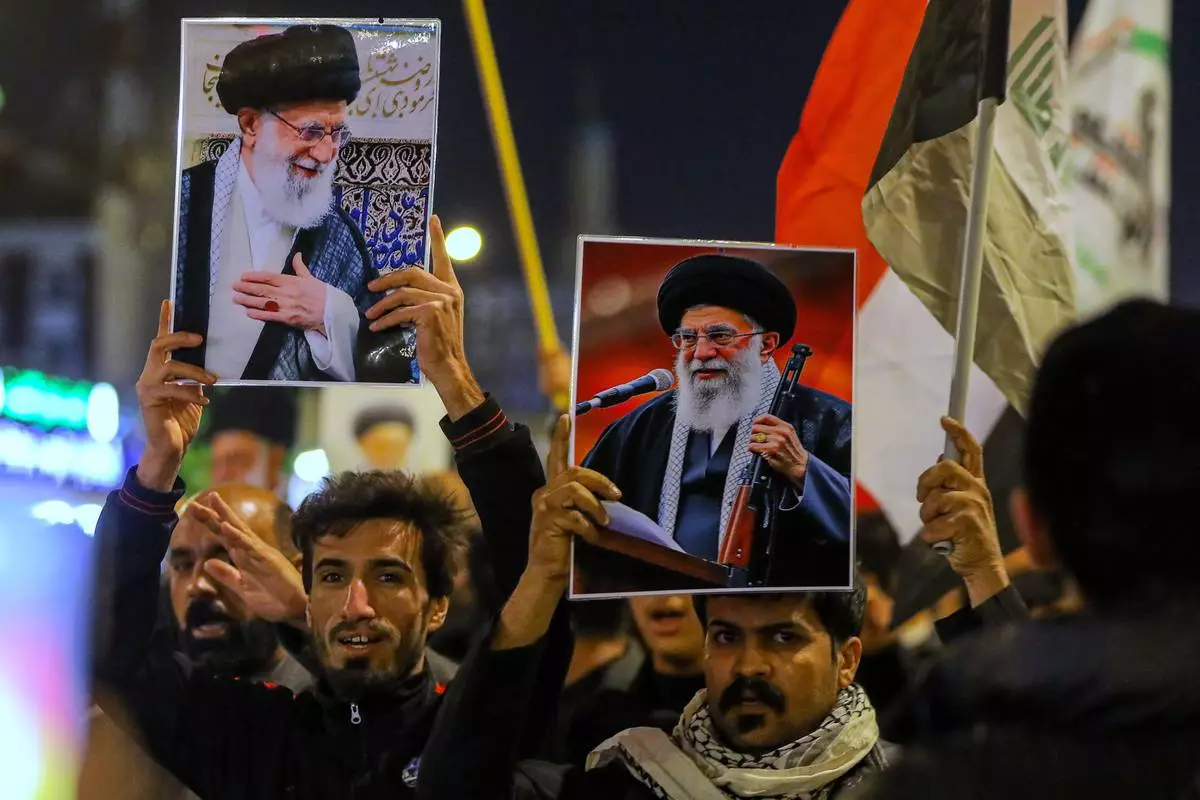
Iraqi Shiites hold pictures of Iranian Supreme Leader Ayatollah Ali Khamenei, who was killed by a U.S. airstrike in Tehran, during a symbolic funeral, in Najaf, Iraq, Sunday, March 1, 2026. (AP Photo/Anmar Khalil)
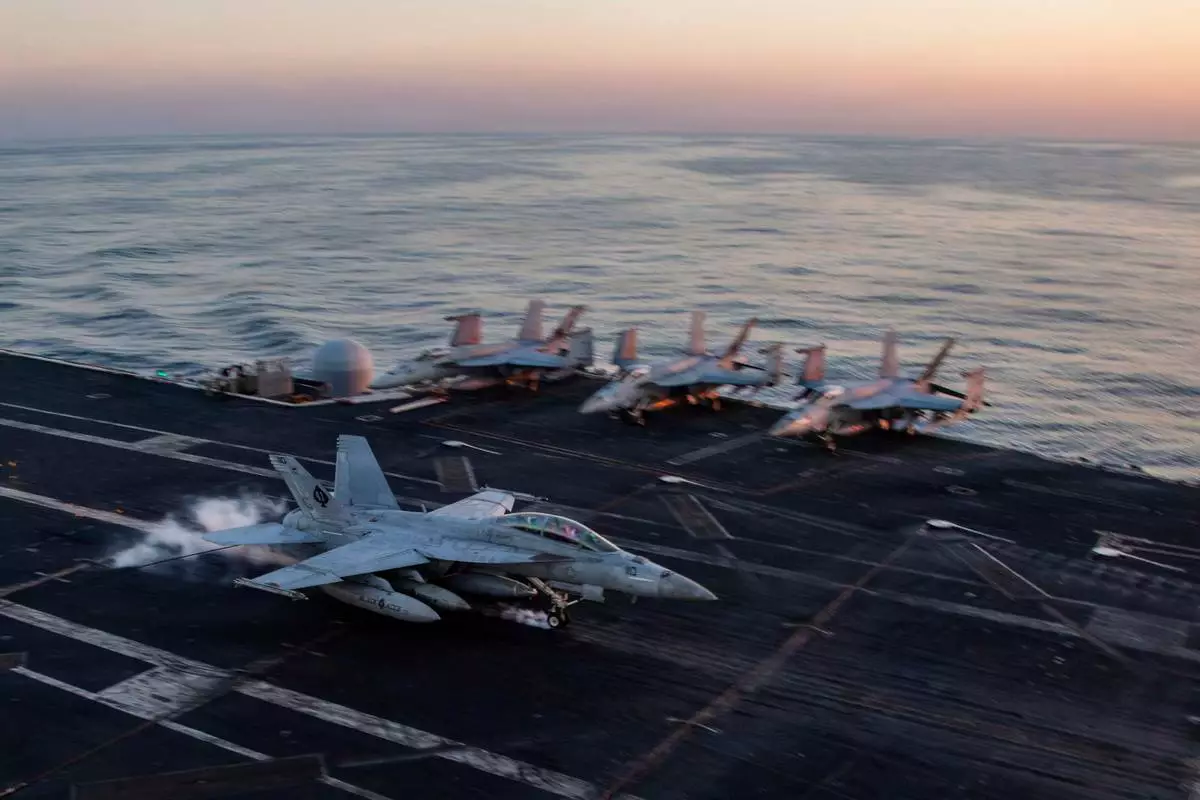
This image provided by U.S. Central Command shows a F/A-18F Super Hornet preparing to make an arrested landing on the USS Abraham Lincoln (CVN 72)) in support of Operation Epic Fury, on Saturday, Feb. 28, 2026. (U.S. Navy via AP)
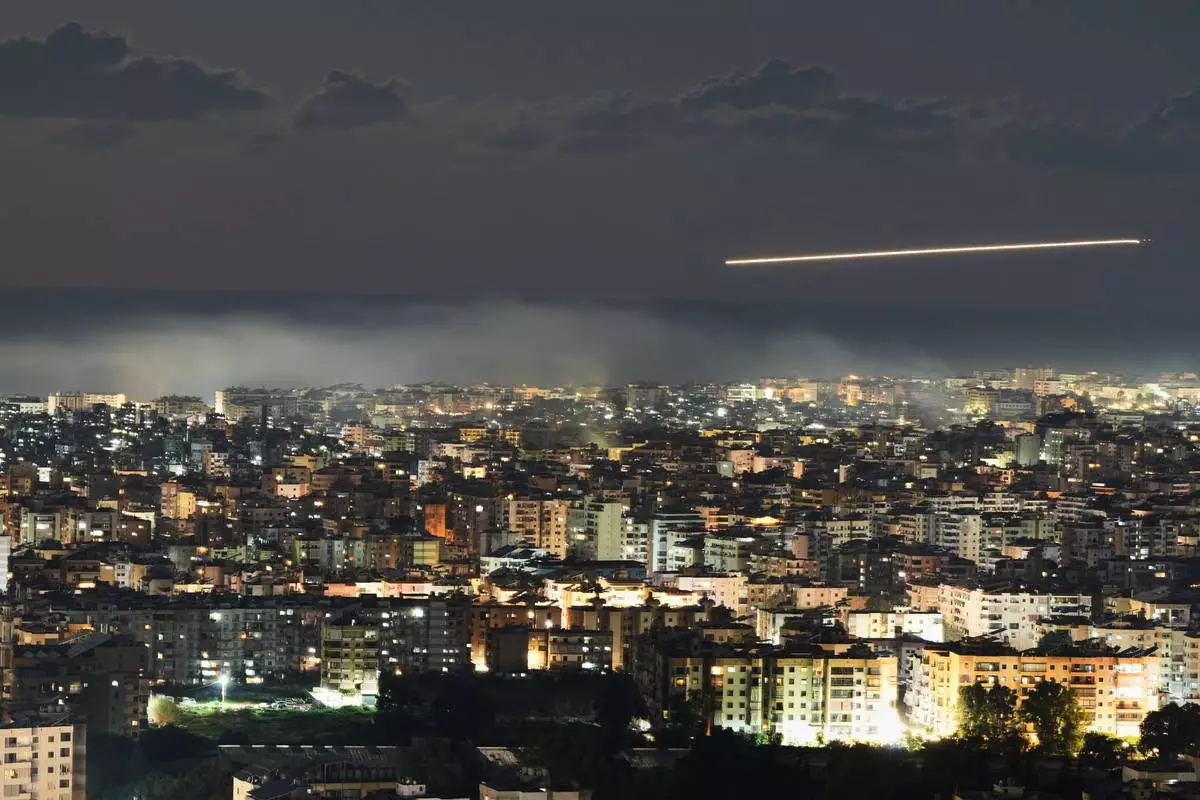
In this photo taken with a slow shutter speed, a Middle East Airlines plane flies over Beirut as smoke rises from Israeli airstrikes on Dahiyeh in Beirut's southern suburbs, early Monday, March 2, 2026. (AP Photo/Hassan Ammar)
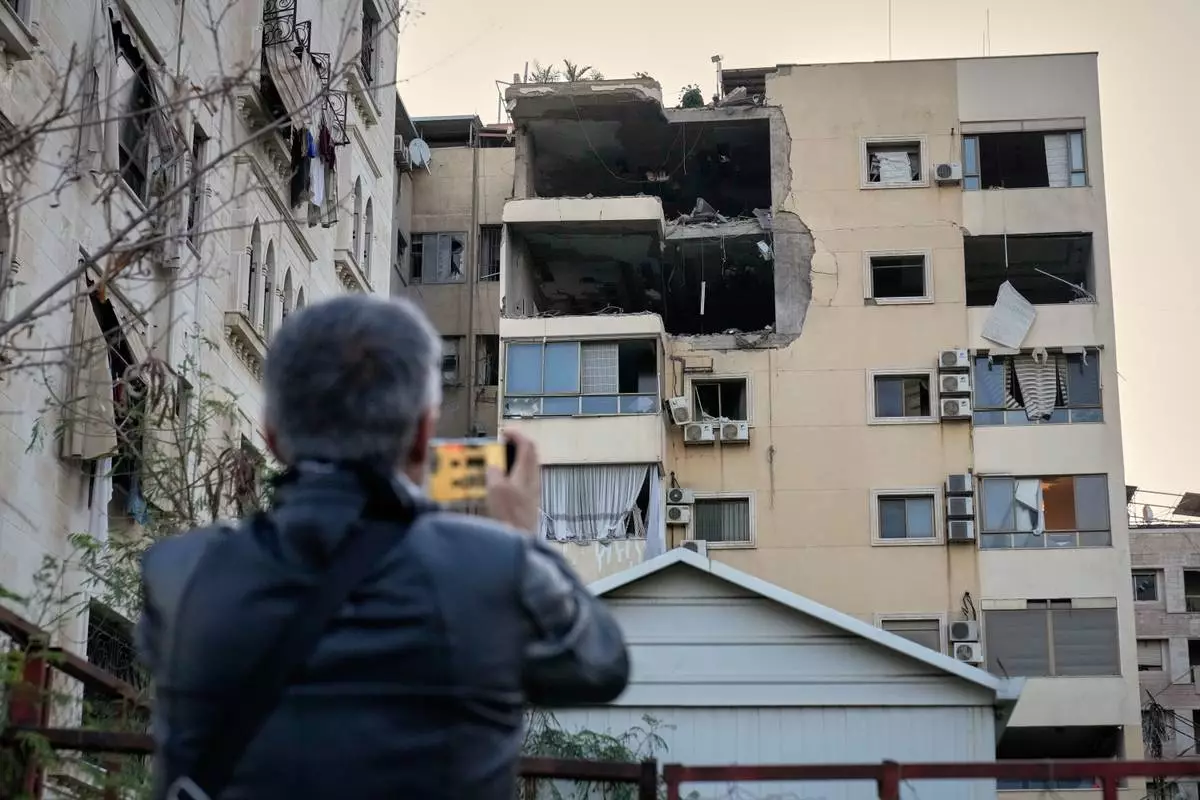
A man takes pictures of the damage in an apartment building after it was hit by an Israeli airstrike in Dahiyeh, Beirut's southern suburb, Lebanon, Monday, March 2, 2026. (AP Photo/Hussein Malla)
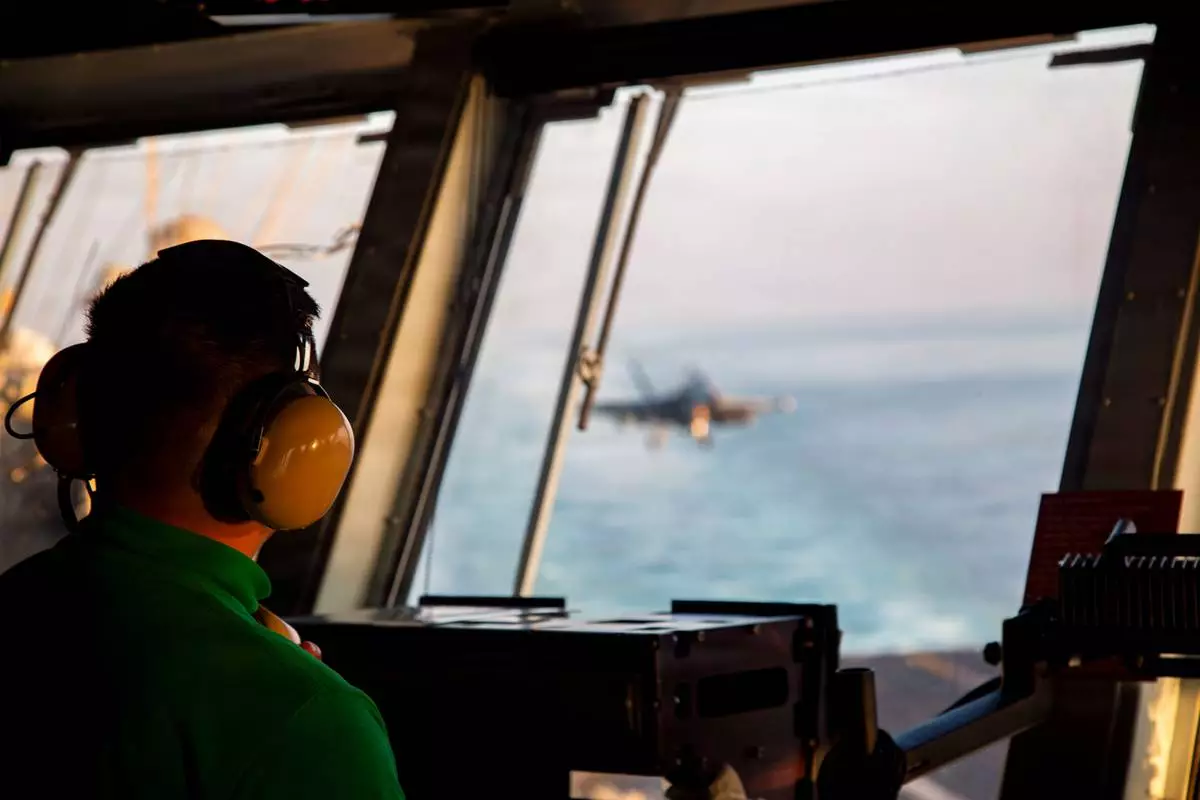
This image provided by U.S. Central Command shows a Navy sailor observing flight operations aboard the USS Abraham Lincoln (CVN 72)) in support of Operation Epic Fury, on Saturday, Feb. 28, 2026. (U.S. Navy via AP)
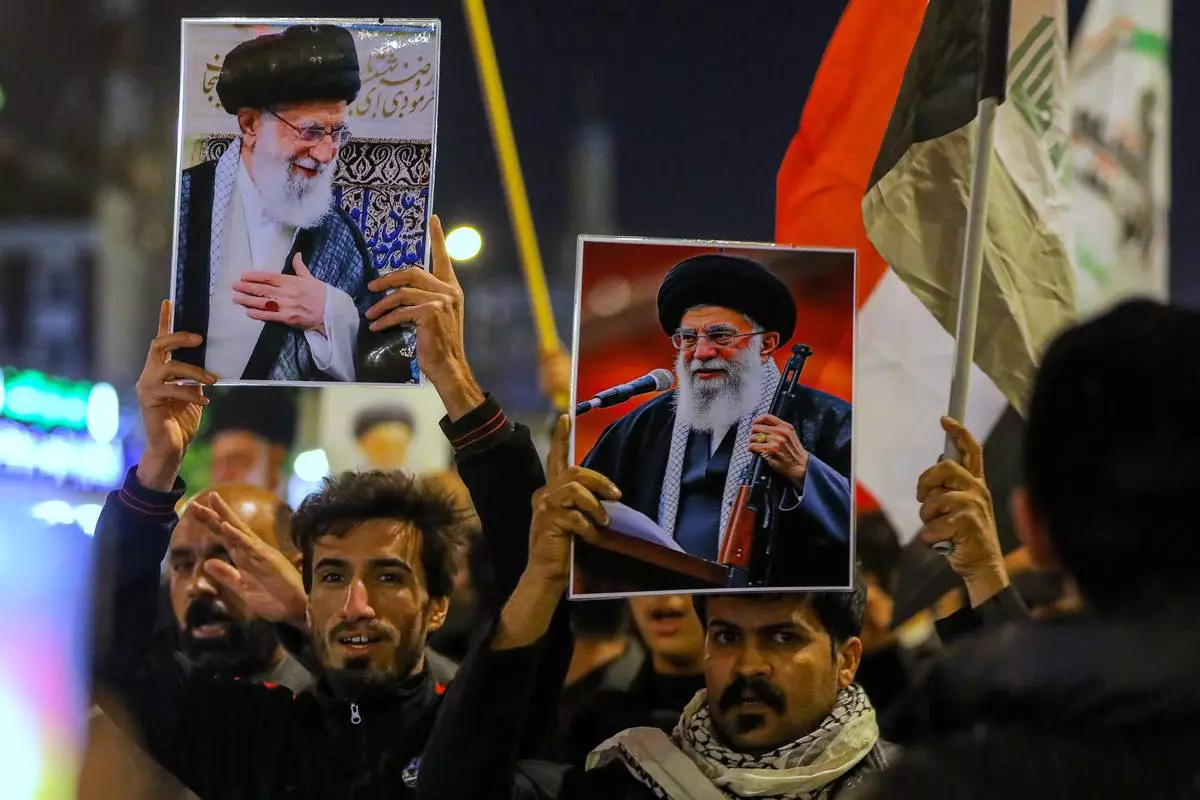
Iraqi Shiites hold pictures of Iranian Supreme Leader Ayatollah Ali Khamenei, who was killed by a U.S. airstrike in Tehran, during a symbolic funeral, in Najaf, Iraq, Sunday, March 1, 2026. (AP Photo/Anmar Khalil)