Skip to Content Facebook Feature Image

Trump says deal on data centers will lower electricity prices as tech companies vow to cover costs

News

Trump says deal on data centers will lower electricity prices as tech companies vow to cover costs
News

News

Trump says deal on data centers will lower electricity prices as tech companies vow to cover costs

2026-03-05 07:31 Last Updated At:07:40

WASHINGTON (AP) — President Donald Trump invited technology companies to the White House on Wednesday to commit to developing their own power generation as he tries to ease tensions over the cost of electricity used by data centers to develop artificial intelligence.

“They need some PR help because people think that if a data center goes in there, electricity prices are going to go up,” Trump said. “It’s not going to happen.”

More Images
Meta President Dina Powell, left, speaks during an event about the Ratepayer Protection Pledge, in the Indian Treaty Room of the Eisenhower Executive Office Building on the White House complex, Wednesday, March 4, 2026, in Washington. (AP Photo/Jacquelyn Martin)
Meta President Dina Powell, left, speaks during an event about the Ratepayer Protection Pledge, in the Indian Treaty Room of the Eisenhower Executive Office Building on the White House complex, Wednesday, March 4, 2026, in Washington. (AP Photo/Jacquelyn Martin)
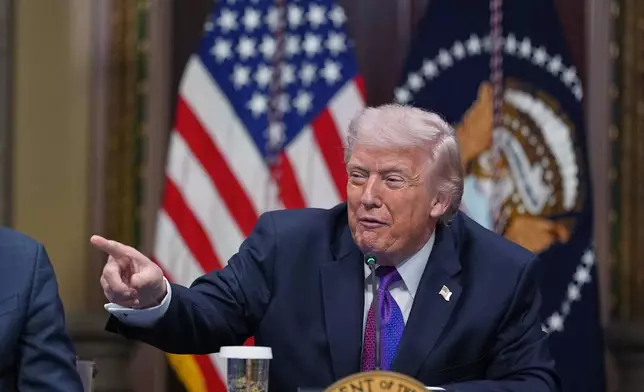
President Donald Trump speaks during an event about the Ratepayer Protection Pledge, in the Indian Treaty Room of the Eisenhower Executive Office Building on the White House complex, Wednesday, March 4, 2026, in Washington. (AP Photo/Jacquelyn Martin)
President Donald Trump speaks during an event about the Ratepayer Protection Pledge, in the Indian Treaty Room of the Eisenhower Executive Office Building on the White House complex, Wednesday, March 4, 2026, in Washington. (AP Photo/Jacquelyn Martin)
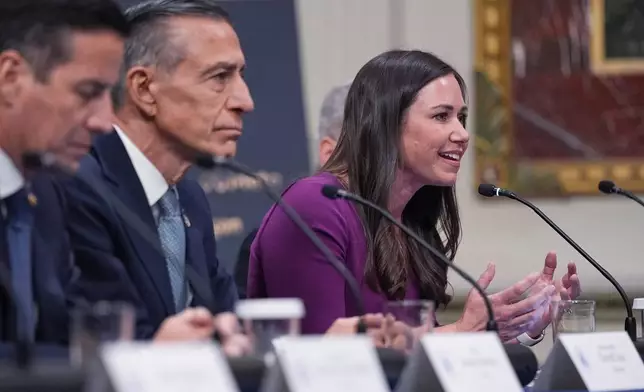
Sen. Katie Britt, R-Ala., addresses President Donald Trump during an event about the Ratepayer Protection Pledge, in the Indian Treaty Room of the Eisenhower Executive Office Building on the White House complex, Wednesday, March 4, 2026, in Washington. (AP Photo/Jacquelyn Martin)

Sen. Katie Britt, R-Ala., addresses President Donald Trump during an event about the Ratepayer Protection Pledge, in the Indian Treaty Room of the Eisenhower Executive Office Building on the White House complex, Wednesday, March 4, 2026, in Washington. (AP Photo/Jacquelyn Martin)

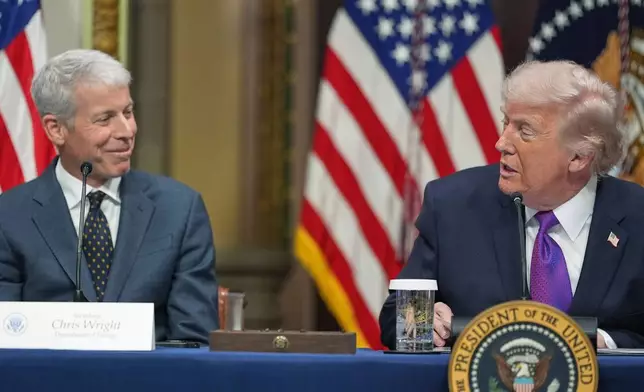
President Donald Trump looks at Energy Secretary Chris Wright as he speaks during an event about the Ratepayer Protection Pledge, in the Indian Treaty Room of the Eisenhower Executive Office Building on the White House complex, Wednesday, March 4, 2026, in Washington. (AP Photo/Jacquelyn Martin)

President Donald Trump looks at Energy Secretary Chris Wright as he speaks during an event about the Ratepayer Protection Pledge, in the Indian Treaty Room of the Eisenhower Executive Office Building on the White House complex, Wednesday, March 4, 2026, in Washington. (AP Photo/Jacquelyn Martin)

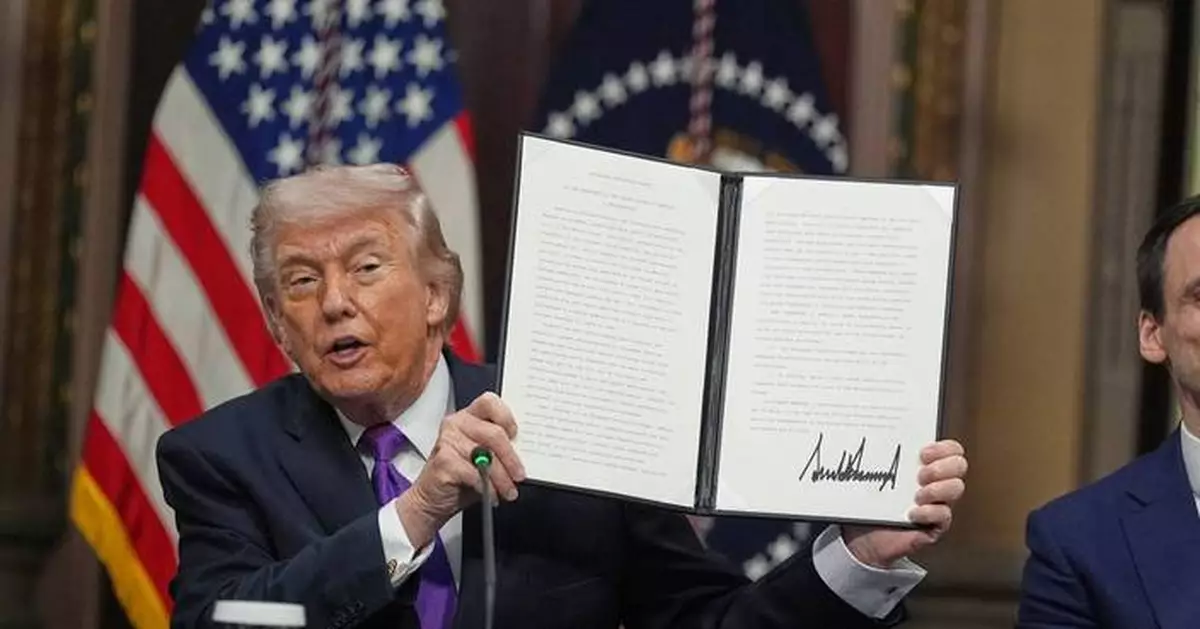
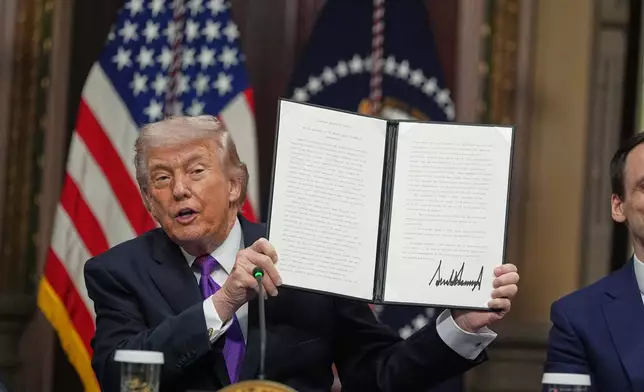
President Donald Trump holds up the Ratepayer Protection Pledge after signing it in the Indian Treaty Room of the Eisenhower Executive Office Building on the White House complex, Wednesday, March 4, 2026, in Washington. (AP Photo/Jacquelyn Martin)

President Donald Trump holds up the Ratepayer Protection Pledge after signing it in the Indian Treaty Room of the Eisenhower Executive Office Building on the White House complex, Wednesday, March 4, 2026, in Washington. (AP Photo/Jacquelyn Martin)

The “ratepayer protection” pledge touted by the president comes as affordability has become a top concern for an American public wary of the possibility that the AI build out could lead to higher utility bills. Trump first announced the pledge during his State of the Union address last month, but provided few details

Communities across the nation have seen a backlash against data centers over fears about rising electricity prices and concerns about pollution and water consumption. Opposition to rising power prices was also a key factor in Democratic wins last year in elections in states including Georgia, Virginia and New Jersey.

Trump has sought to deflect public concerns about AI, seeing the fast-evolving technology as crucial for the U.S. to attract foreign investment and maintain its economic and military prowess. But it's unclear whether the commitments will meaningfully shield Americans from higher electricity prices that have climbed 6.3% over the past year, according to the Labor Department's Consumer Price Index.

The president stressed that he understands that demand for energy will triple by 2035 largely because of AI, meaning that the U.S. needs to dramatically increase its construction of power plants. Construction spending on power generation jumped in 2022, but it has drifted slightly downward after peaking in October 2023, according to the Census Bureau. Trump has also sought to cancel wind power projects while elevating coal — which contributes to climate change — as a source of energy.

The companies committing to the pledge included Google, Microsoft, Meta, Oracle, xAI, OpenAI and Amazon.

Under the terms of the pledge, the companies agree to build or buy new sources of power generation for their data centers and cover the expense of infrastructure upgrades. The companies could also sell excess power generation to utilities for public consumption, in addition to negotiating separate rate structures with public utilities and states, ensuring expenses are not passed on to consumers.

They also commit to making backup generation available to prevent blackouts in times of emergency, and to hire locally for their data center build out.

Energy experts have expressed doubt that promises by the tech companies can slow down fast-rising electricity prices. While Trump said the pledge would force tech companies to produce their own electricity, the deal is likely not enforceable at the federal level, experts said. Electricity supplies are mostly regulated at the state level and managed across regions, using market structures that vary across the country.

The voluntary agreement has no enforcement mechanisms and ratepayers have no way to verify whether tech companies keep their promises, said Lena Moffitt, executive director of Evergreen Action, an environmental group.

“Now that energy prices have skyrocketed due to his corporate polluter-first policies, Trump is trying to cover up his mistakes with a photo op,” she said.

But the Edison Electric Institute, a top lobbying group for the power industry, said the ratepayer pledge would help ensure data centers pay their fair share even as they use enormous amounts of electricity.

“We appreciate President Trump’s focus on ensuring that our nation can drive innovation while also protecting Americans who need affordable, reliable energy,” said Drew Maloney, the group’s president and CEO.

Still, the pledge speaks to Trump's style of striking deals rather than crafting policies.

Jill Tauber, vice president of litigation for climate and energy at Earthjustice, said that actual laws and regulations needed to be in place rather than a signed pledge of unclear legal value.

“Data centers are increasing costs and pollution for communities across the country,” Tauber said in a statement. “More than a pledge, we urgently need strong policies and protections to ensure that data centers pay their way, disclose and mitigate their impacts, and are powered by clean energy.”
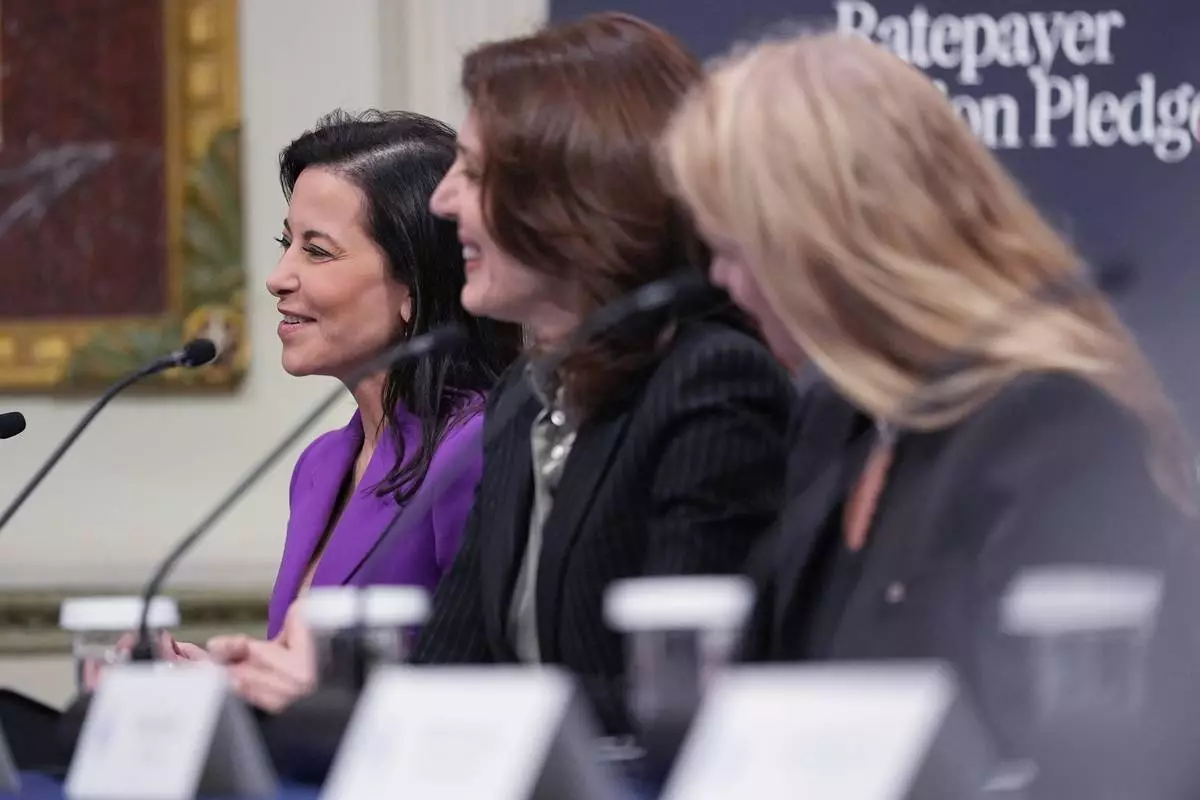
Meta President Dina Powell, left, speaks during an event about the Ratepayer Protection Pledge, in the Indian Treaty Room of the Eisenhower Executive Office Building on the White House complex, Wednesday, March 4, 2026, in Washington. (AP Photo/Jacquelyn Martin)

Meta President Dina Powell, left, speaks during an event about the Ratepayer Protection Pledge, in the Indian Treaty Room of the Eisenhower Executive Office Building on the White House complex, Wednesday, March 4, 2026, in Washington. (AP Photo/Jacquelyn Martin)
President Donald Trump speaks during an event about the Ratepayer Protection Pledge, in the Indian Treaty Room of the Eisenhower Executive Office Building on the White House complex, Wednesday, March 4, 2026, in Washington. (AP Photo/Jacquelyn Martin)
President Donald Trump speaks during an event about the Ratepayer Protection Pledge, in the Indian Treaty Room of the Eisenhower Executive Office Building on the White House complex, Wednesday, March 4, 2026, in Washington. (AP Photo/Jacquelyn Martin)
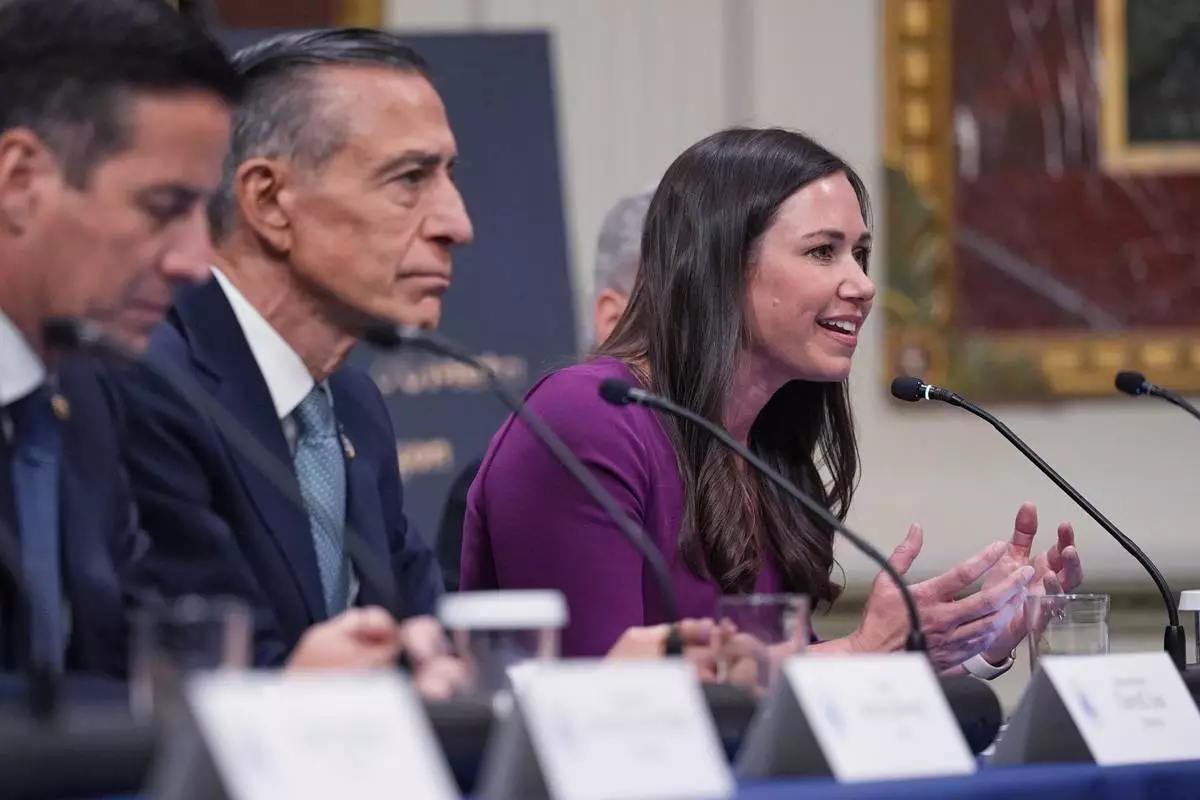
Sen. Katie Britt, R-Ala., addresses President Donald Trump during an event about the Ratepayer Protection Pledge, in the Indian Treaty Room of the Eisenhower Executive Office Building on the White House complex, Wednesday, March 4, 2026, in Washington. (AP Photo/Jacquelyn Martin)
Sen. Katie Britt, R-Ala., addresses President Donald Trump during an event about the Ratepayer Protection Pledge, in the Indian Treaty Room of the Eisenhower Executive Office Building on the White House complex, Wednesday, March 4, 2026, in Washington. (AP Photo/Jacquelyn Martin)
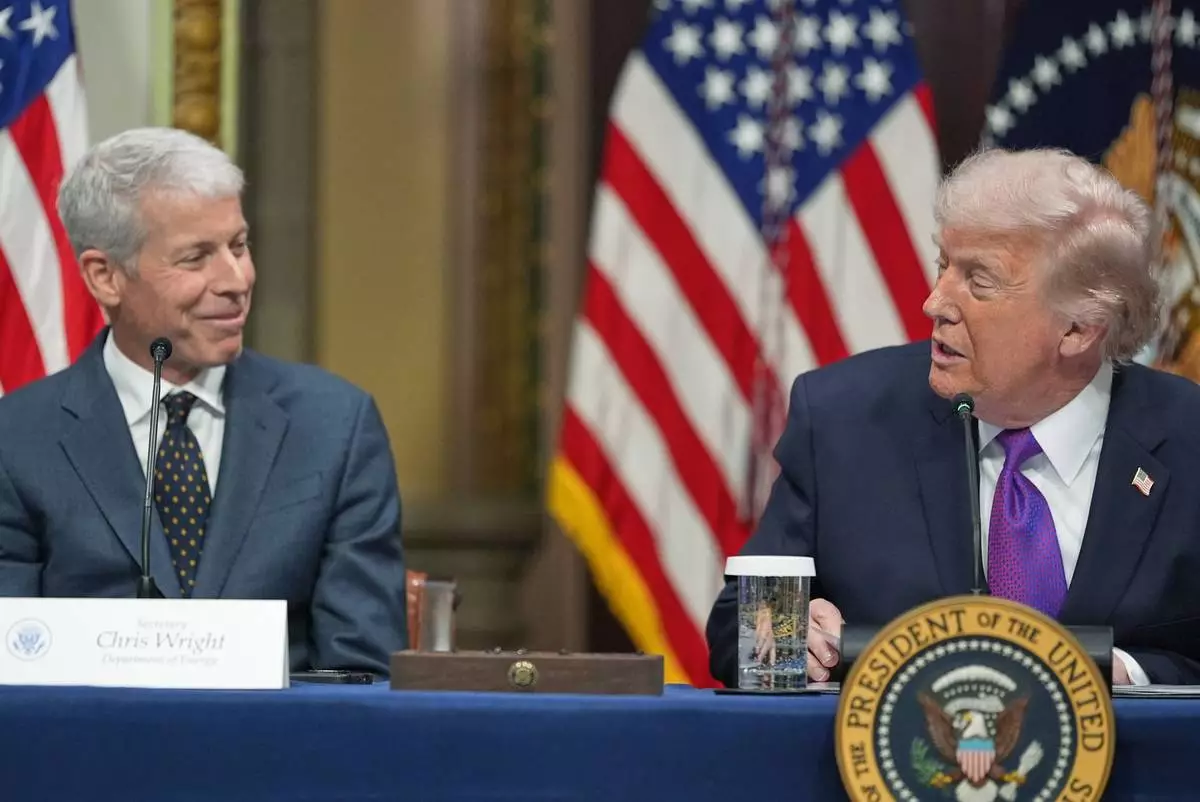
President Donald Trump looks at Energy Secretary Chris Wright as he speaks during an event about the Ratepayer Protection Pledge, in the Indian Treaty Room of the Eisenhower Executive Office Building on the White House complex, Wednesday, March 4, 2026, in Washington. (AP Photo/Jacquelyn Martin)
President Donald Trump looks at Energy Secretary Chris Wright as he speaks during an event about the Ratepayer Protection Pledge, in the Indian Treaty Room of the Eisenhower Executive Office Building on the White House complex, Wednesday, March 4, 2026, in Washington. (AP Photo/Jacquelyn Martin)

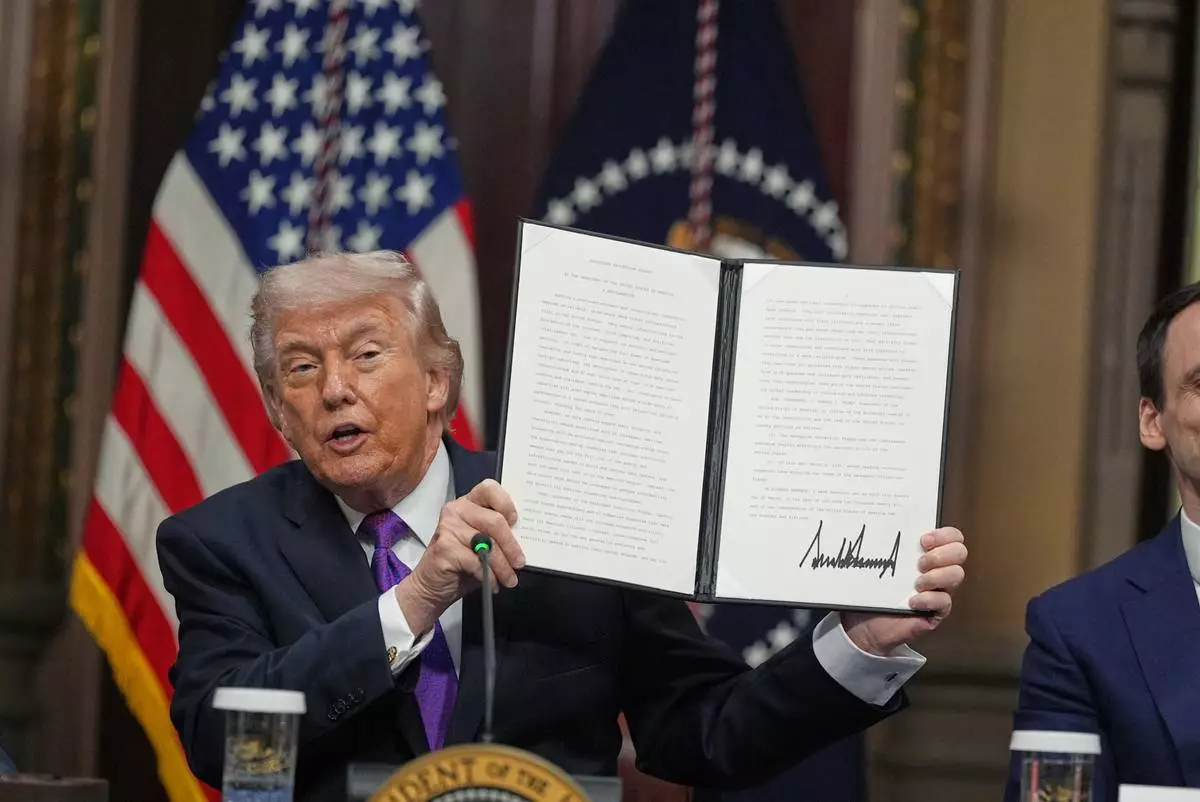
President Donald Trump holds up the Ratepayer Protection Pledge after signing it in the Indian Treaty Room of the Eisenhower Executive Office Building on the White House complex, Wednesday, March 4, 2026, in Washington. (AP Photo/Jacquelyn Martin)
President Donald Trump holds up the Ratepayer Protection Pledge after signing it in the Indian Treaty Room of the Eisenhower Executive Office Building on the White House complex, Wednesday, March 4, 2026, in Washington. (AP Photo/Jacquelyn Martin)
HAVANA (AP) — A blackout hit the western half of Cuba on Wednesday, leaving millions of people in Havana and beyond without power in the latest outage to affect an island struggling with dwindling oil reserves and a crumbling electric grid.

Government radio station Radio Rebelde quoted an energy official as saying that it could take at least 72 hours to restore operations at one of Cuba's largest thermoelectric power plants, which shut down earlier and sparked the outage.

The government’s electric utility said on social platform X that the outage affected people from the western town of Pinar del Rio to the central town of Camaguey.

The U.S. Embassy in Cuba issued a security alert and warned people to “prepare for significant disruptions” and conserve fuel, water, food and mobile phone batteries.

“Cuba’s national power grid is increasingly unreliable, and scheduled and unscheduled power outages are prolonged and a daily occurrence across the country, including Havana,” it said on X.

By late Thursday afternoon, the government said crews had restored power to 2.5% of Havana, or some 21,100 customers, noting that efforts were gradual and tied to what the system's conditions would allow.

“We trust in the experience and effort of the electrical workers to overcome this situation in the shortest possible time,” Prime Minister Manuel Marrero Cruz wrote on X.

Meanwhile, Energy and Mines Minister Vicente de la O Levy said earlier that one power plant affected by the outage was up and running. “We are working to restore the National Electric System amid a complex energy situation,” he wrote on X.

State media reported that the outage was caused by a shutdown of the Antonio Guiteras thermoelectric power plant east of Havana following a leak in its boiler.

Radio Rebelde quoted the plant's technical director Román Pérez Castañeda as saying that crews must first locate the fault, determine the repair method, repair it and then start up and synchronize the unit.

Pérez Castañeda said that a pipe burst in the boiler, causing a water leak and subsequent fire that firefighters extinguished without major damage, according to Radio Rebelde.

The outage caught 63-year-old Odalis Sánchez out on the street with her grandson. She was unable to walk because of a recent operation, so she called someone for a ride home.

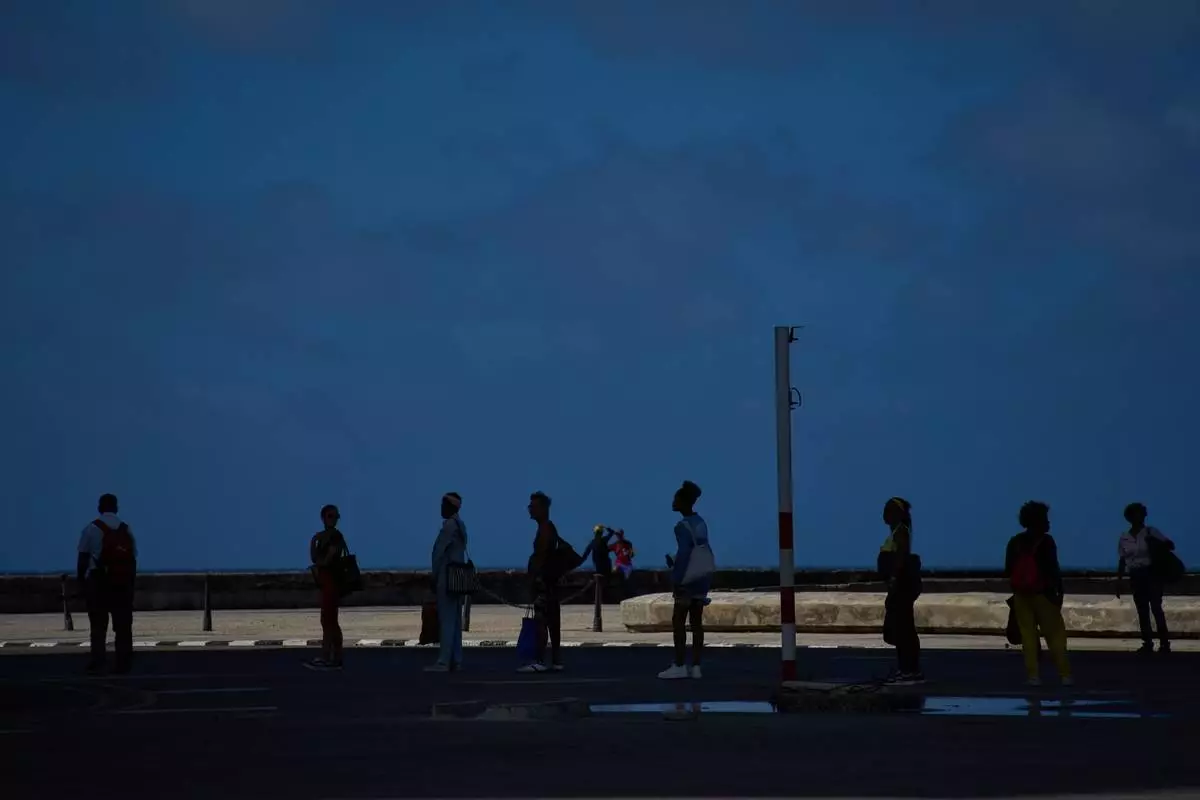
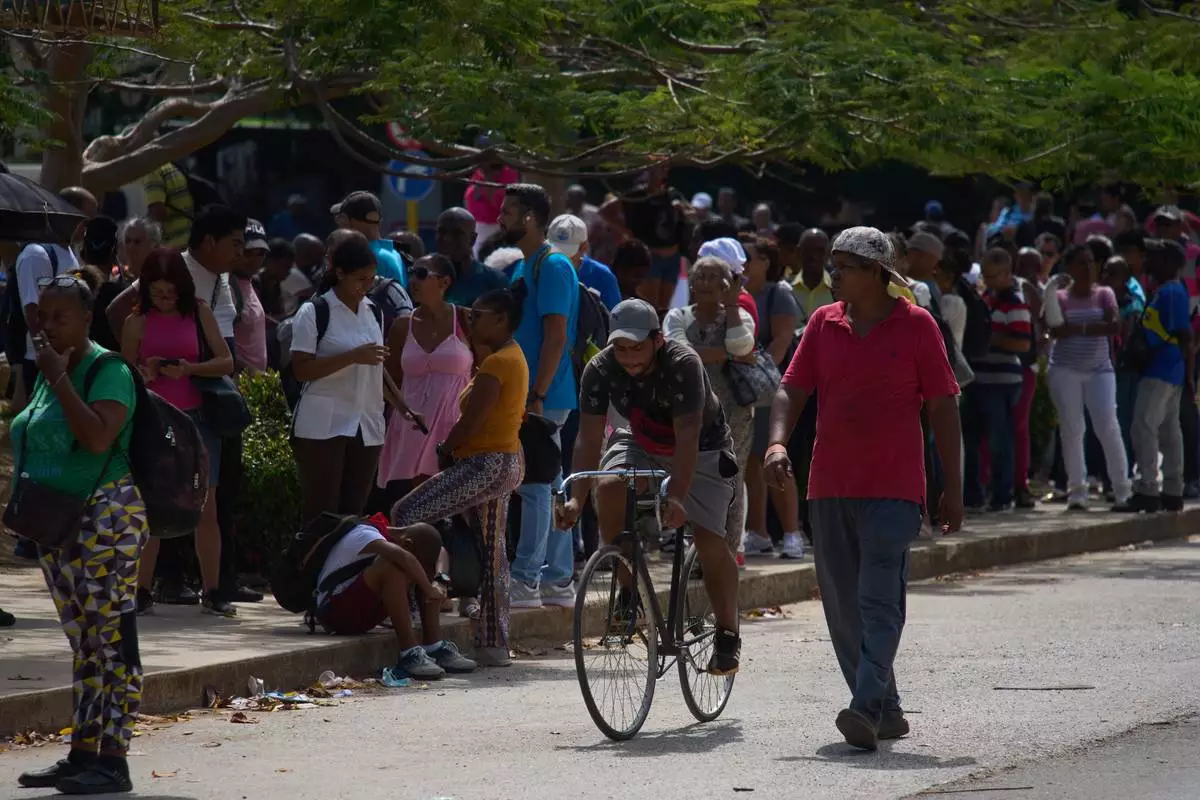
Some 200 people waited at a bus stop near her, but buses were not running given a lack of fuel, so they tried to get a ride via any means available, including hitchhiking.

“I need to be able to get home to see what I can do,” Sánchez said. “Without power, you can’t do anything. My grandson also is studying and I have to make him food. Public transportation isn’t helping.”

It is the second such outage to affect Cuba’s western region in the past three months.

In early December, an outage that hit the island's western region lasted nearly 12 hours. Officials said a fault in a transmission line linking two power plants caused an overload and led to the collapse of the energy system's western sector.

Authorities have noted that some thermoelectric plants have been operating for over 30 years and receive little maintenance given the high cost. U.S. sanctions also have prevented the government from buying new equipment and specialized parts, officials say.

Cuba also is struggling with dwindling oil reserves after the U.S. attacked Venezuela in early January, a move that halted critical petroleum shipments from the South America country. Later that month, U.S. President Donald Trump threatened to impose tariffs on any country that would sell or supply Cuba with oil.

Ernesto Couto Martínez, 76, was trying to find a ride home and said he would confront the latest outage “with the spirit that all Cubans have.”

“We must keep fighting. There’s no other way,” he said. “We have to move forward, blockade or no blockade.”

Last month, Cuba’s government implemented austere fuel-saving measures and warned that jet fuel wouldn’t be available at nine airports across the island until mid-March.

Prior to the attack on Venezuela, the island already was struggling with a crumbling electric grid, generation deficits and interruptions in fuel supplies.

Coto reported from San José, Costa Rica.

Follow AP’s Latin America coverage at https://apnews.com/hub/latin-america

People wait to take public transportation during a blackout in Havana, Wednesday, March 4, 2026. (AP Photo/Ramon Espinosa)

People wait to take public transportation during a blackout in Havana, Wednesday, March 4, 2026. (AP Photo/Ramon Espinosa)

People wait to take public transportation during a blackout in Havana, Wednesday, March 4, 2026. (AP Photo/Ramon Espinosa)

People wait to take public transportation during a blackout in Havana, Wednesday, March 4, 2026. (AP Photo/Ramon Espinosa)

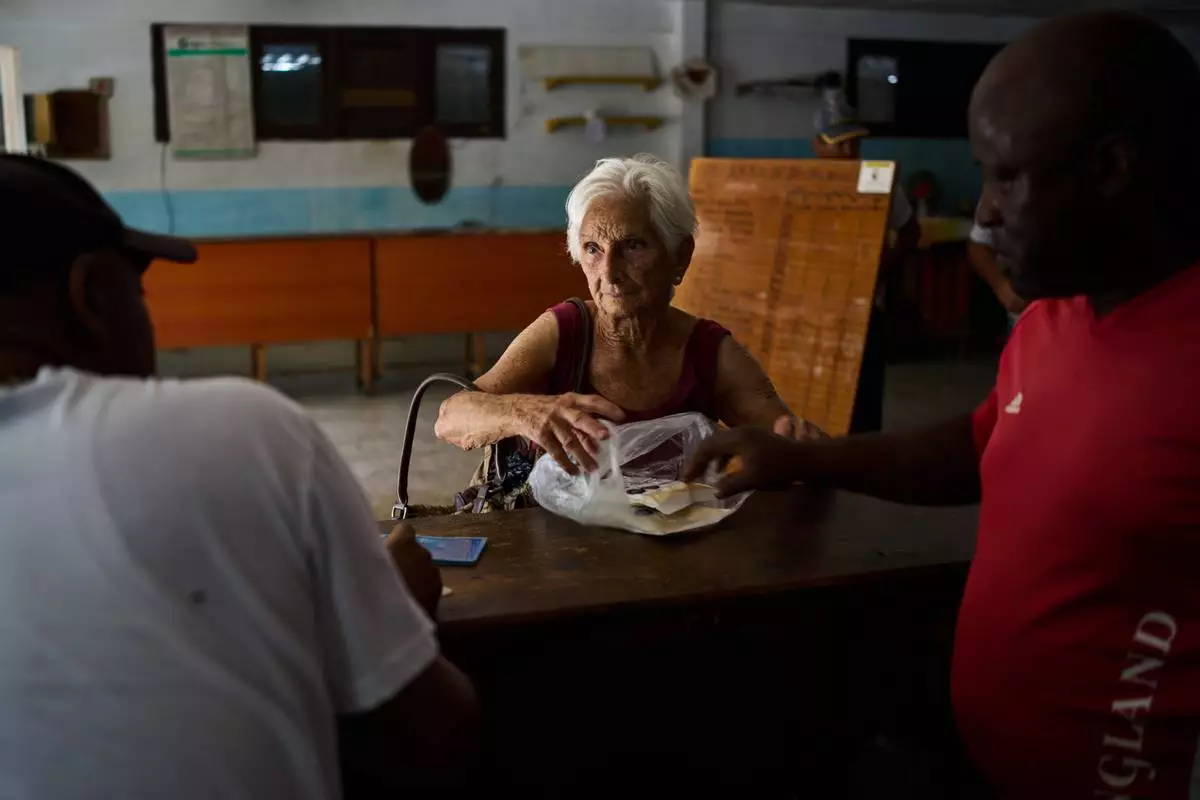
A woman receives a donation from Mexico at a state-run bodega during a blackout in Havana, Wednesday, March 4, 2026. (AP Photo/Ramon Espinosa)

A woman receives a donation from Mexico at a state-run bodega during a blackout in Havana, Wednesday, March 4, 2026. (AP Photo/Ramon Espinosa)

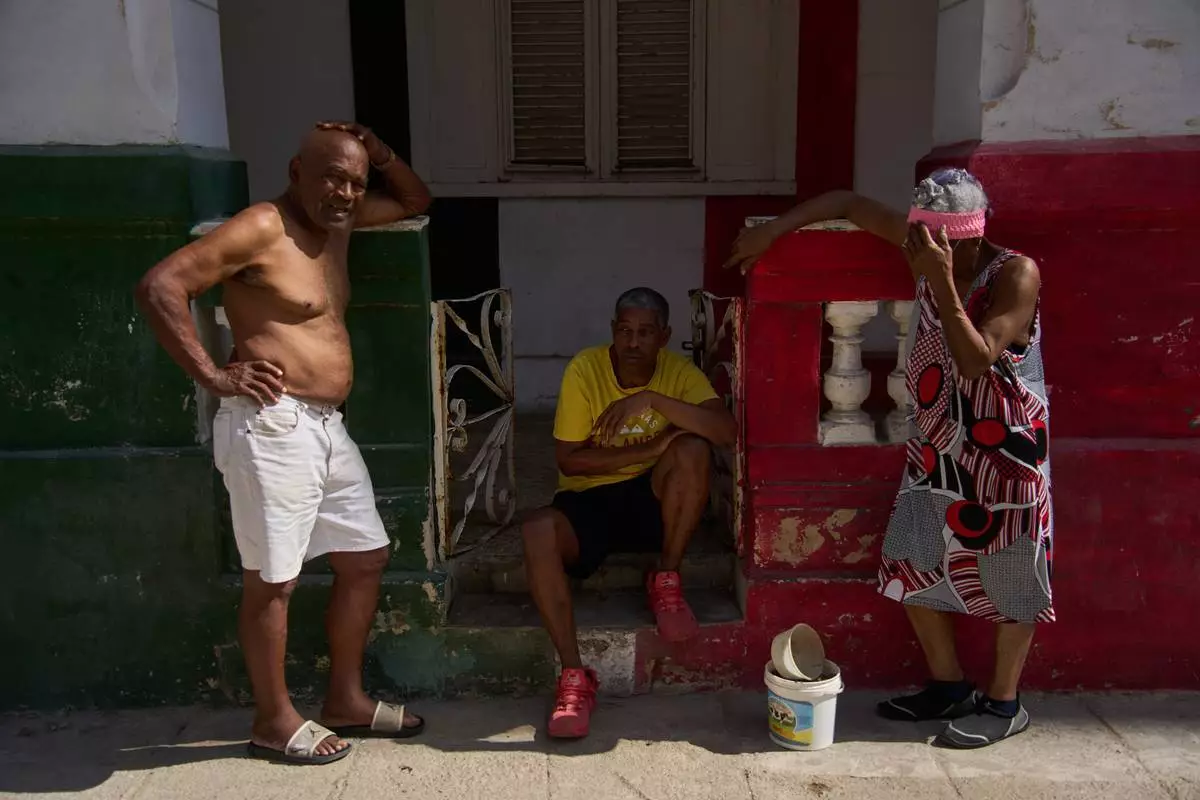
People lounge on a porch during a blackout in Havana, Wednesday, March 4, 2026. (AP Photo/Ramon Espinosa)

People lounge on a porch during a blackout in Havana, Wednesday, March 4, 2026. (AP Photo/Ramon Espinosa)

A man rides a scooter past a wrecked car and garbage during a blackout in Havana, Wednesday, March 4, 2026. (AP Photo/Ramon Espinosa)

A man rides a scooter past a wrecked car and garbage during a blackout in Havana, Wednesday, March 4, 2026. (AP Photo/Ramon Espinosa)

Recommended Articles