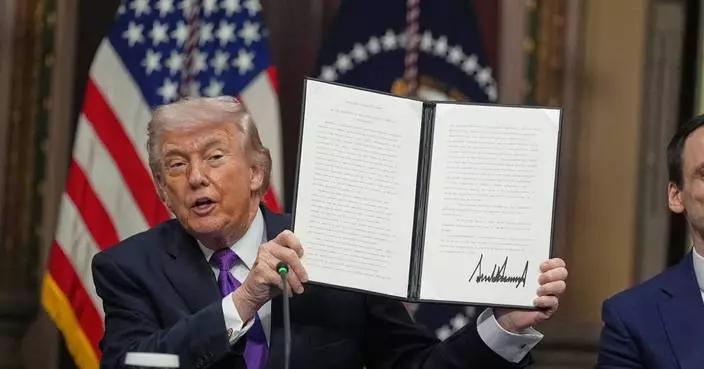
WASHINGTON (AP) — In a defeat for the Trump administration, a federal judge in New York ruled Wednesday that companies that paid tariffs struck down last month by Supreme Court are due refunds.
Judge Richard Eaton of the U.S. Court of International Trade wrote that “all importers of record’’ were “entitled to benefit’’ from the Supreme Court ruling that struck down sweeping double-digit import taxes President Donald Trump imposed last year under the 1977 International Emergency Economic Powers Act (IEEPA).
The Supreme Court found those tariffs to be unconstitutional under the emergency powers law, including the sweeping “reciprocal” tariffs he levied on nearly every other country. The majority ruled that the president could not unilaterally set and change tariffs because taxation power clearly belongs to Congress.
In his ruling, Eaton wrote that he alone “will hear cases pertaining to the refund of IEEPA duties.’’ The ruling offers some clarity about the tariff refund process, something the Supreme Court did not even mention in its Feb. 20 decision. Trade lawyer Ryan Majerus, a partner at King & Spalding and a former U.S. trade official, said he expects the government to appeal or “seek a stay to buy more time for U.S. Customs to comply.″
The federal government collected more than $130 billion in the now-defunct tariffs through mid-December and could ultimately be on the hook for refunds worth $175 billion, according to calculations by the Penn Wharton Budget Model.
Eaton was ruling specifically on a case brought by Atmus Filtration, a Nashville, Tennessee, company that makes filters and other filtration products, claiming a right to a tariff refund.
All goods that go through U.S. Customs and Border Protections enter a process called “liquidation,” when the agency issues its final accounting of what is owed. Once liquidated, importers have 180 days to formally contest the duties. After that window closes, the liquidation is legally final.
The judge ordered customs to stop collecting the IEEPA tariffs the Supreme Court struck down last month on goods going through the liquidation process. And if the goods were past that part of the process, the agency would have to recalculate them without the tariffs.
“This is a great decision for importers and consumers who paid,” said Barry Appleton, a law professor and co-director New York Law School’s Center for International Law. “It will make customs brokers busy. It should make things easier for the courts — and get a process underway for those importers who paid within the last 180 days.”
On Monday, another federal court rejected the Trump administration’s attempt to slow the refund process. The U.S. Court of Appeals for the Federal Circuit started the next phase in the refund process by sending it to New York trade court to sort out.
Now the U.S. Customs and Border Protection agency must come up with a way to process the refunds. Customs routinely refunds tariffs when there’s been some kind of error, but its system was “not designed for a mass refund,″ said trade lawyer Alexis Early, a partner at Bryan Cave Leighton Paisner. “The devil will be in the details of the administrative process.″
Anderson reported from New York.
AP Writer Lindsay Whitehurst contributed to this story.

Containers are stored in a cargo terminal in Frankfurt, Germany, Monday, Feb. 23, 2026. (AP Photo/Michael Probst)
RICHMOND, Va. (AP) — For the second time, Virginia’s Supreme Court ruled Wednesday that voters can cast ballots on a Democrat-led congressional redistricting plan that could help the party win four more U.S. House seats, as the justices review legal challenges to the effort.
The court ruled that a statewide referendum can be held on April 21 on whether to authorize mid-decade redistricting, upending a temporary restraining order put in place by a Tazewell County judge last month. It comes after the top court made a similar ruling last month in a related case.
The court still has not ruled on whether the mid-decade redistricting amendment and referendum are legal, indicating that the scheduled April vote could be all for nothing if the top court upholds a lower court ruling blocking the effort. Early voting on the referendum is supposed to begin Friday.
“It is the process, not the outcome, of this effort that we may ultimately have to address,” the ruling said. “Issuing an injunction to keep Virginians from the polls is not the proper way to make this decision.”
Since late February, officials in Tazewell County have refrained from preparing for the referendum in light of the restraining order. On Wednesday, Tazewell Director of Elections Brian Earls said he would work hard to ensure early voting would start in his county come Friday.
“I believe we will be ready,” he said in an email. “If not, it will not be for lack of effort.”
The National Republican Congressional Committee, which filed the initial request for a restraining order, did not immediately respond to a request for comment on the case.
President Donald Trump launched an unusual mid-decade redistricting battle last year by pushing Republican officials in Texas to redraw districts to help his party win more seats. The goal was for the GOP to hold on to a narrow House majority in the face of political headwinds that typically favor the party out of power in midterms.
Instead, it created a burst of redistricting efforts nationwide. So far, Republicans believe they can win nine more House seats in Texas, Missouri, North Carolina and Ohio. Democrats think they can win six more seats in California and Utah, and are hoping to fully or partially make up the remaining three-seat margin in Virginia.
In February, Virginia Democrats released a new congressional map that aims to give their party four more seats. Since then, the Democratic-led Legislature passed the proposed map and Gov. Abigail Spanberger signed the document into law.
Still, the map only goes into effect if it’s backed by voters and the amendment process is approved by the top court.
Virginia Democratic House Speaker Don Scott said Wednesday that the top court's decision gives voters an opportunity to decide whether the map gets used.
“The Supreme Court of Virginia’s decision ensures that this referendum will move forward and that Virginians will have the opportunity to make their voices heard,” he said.
Democratic lawmakers in Virginia have sought to portray their redistricting push as a response to Trump’s overreach. Republicans have sounded aghast at the proposed district map, describing it as a way for liberals in northern Virginia to commandeer the rest of the state.
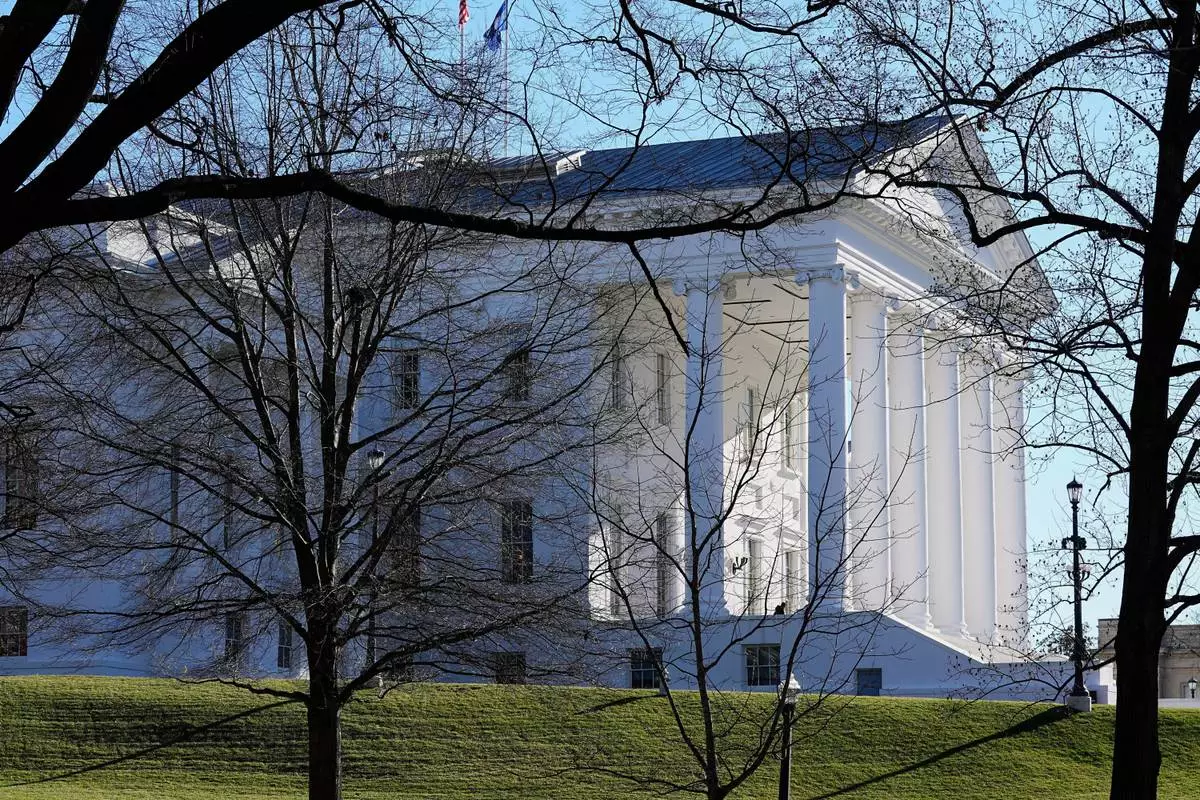
FILE - The state and U.S. flags fly over the Virginia State Capitol at the start of the 2024 session of the Virginia General Assembly in Richmond, Va., on Jan. 10, 2024. (AP Photo/Steve Helber, File)