MIAMI (AP) — Florida’s attorney general said Wednesday that a state-level criminal investigation into former Cuban leader Raul Castro’s role in the 1996 shootdown of four planes operated by anti-communist exiles will be reopened.
Attorney General James Uthmeier said during a news conference in Miami on Wednesday that an investigation into possible crimes against Raul Castro that began several years ago was shut down by the Biden administration.
“When this came to my attention, we reactivated the files,” Uthmeier said. “So yes, that investigation will be ongoing.”
In recent weeks, as the 30th anniversary of the February 1996 shootdown of two Brothers to the Rescue planes approached, several Miami Republicans, as well as Florida Sen. Rick Scott, have called on the Trump administration to reopen its criminal investigation to focus on Castro’s alleged role in the incident.
The renewed interest in the case is taking place against the backdrop of Trump’s increasingly aggressive stance against Cuba’s communist leadership in the wake of the U.S. capture of its close ally, Venezuelan President Nicolas Maduro.
In a letter to Trump on Feb. 13, lawmakers including Reps. Maria Elvira Salazar and Carlos Gimenez highlighted decades-old news reports indicating that Castro — the head of Cuba’s military at the time — gave the order to shoot down the unarmed Cessna aircraft.
“We believe unequivocally that Raul Castro is responsible for this heinous crime,” lawmakers wrote. “It is time for him to be brought to justice.”
On Wednesday, Uthmeier agreed that accountability is needed if crimes against Florida citizens were committed.
“I can’t really say too much more at this point, but we are going to continue this investigation,” he said during the news conference. “I know a lot of members of the state legislature and other people here in Florida would like to see some resolution and ideally accountability.”
His office did not immediately respond to a request for additional comment about the investigation
Cuban government officials also did not immediately respond to a request for comment on Wednesday.
To date, the U.S. has convicted only a single person of conspiracy to commit murder in connection to the shootdown. Gerardo Hernández, the leader of a Cuban espionage ring dismantled by the FBI in the 1990s, was sentenced to life in prison but was released by President Barack Obama during a prisoner swap in December 2014 after serving 16 years.
Two fighter jet pilots and their commanding officer have also been indicted but outside the reach of U.S. law enforcement while living in Cuba.
Frisaro reported from Fort Lauderdale, Florida.
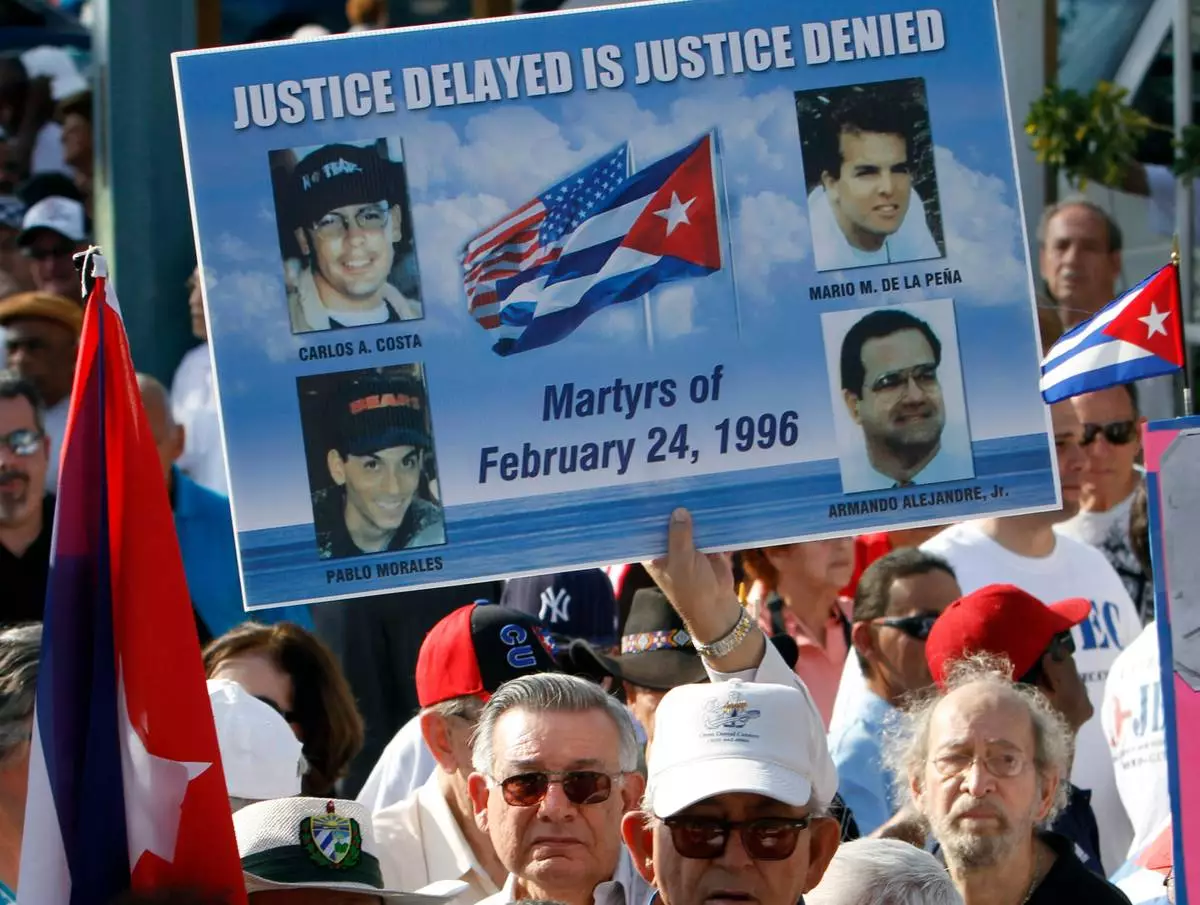
FILE - Mario de la Pena carries a poster with the photos of the four pilots shot down by Cuban Migs, his son Mario de la Pena, top right, was among the pilots, during a freedom for Cuba march in Miami, Feb. 24, 2011. (AP Photo/Alan Diaz, File)
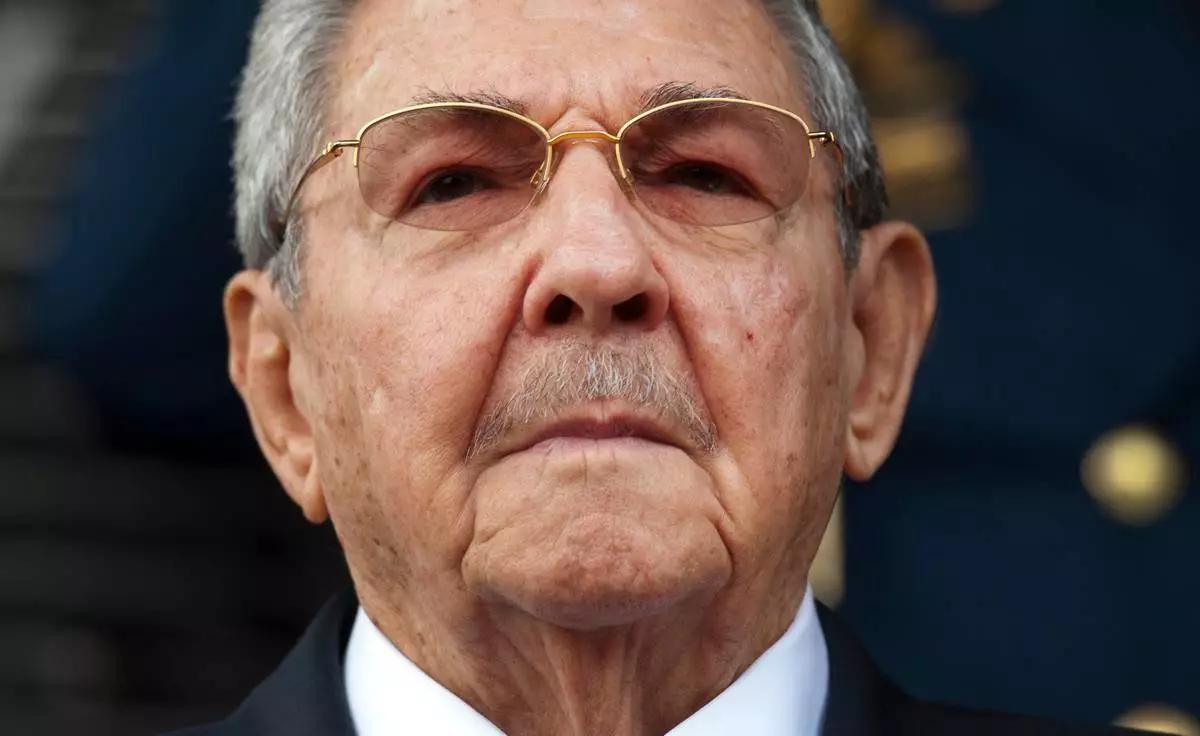
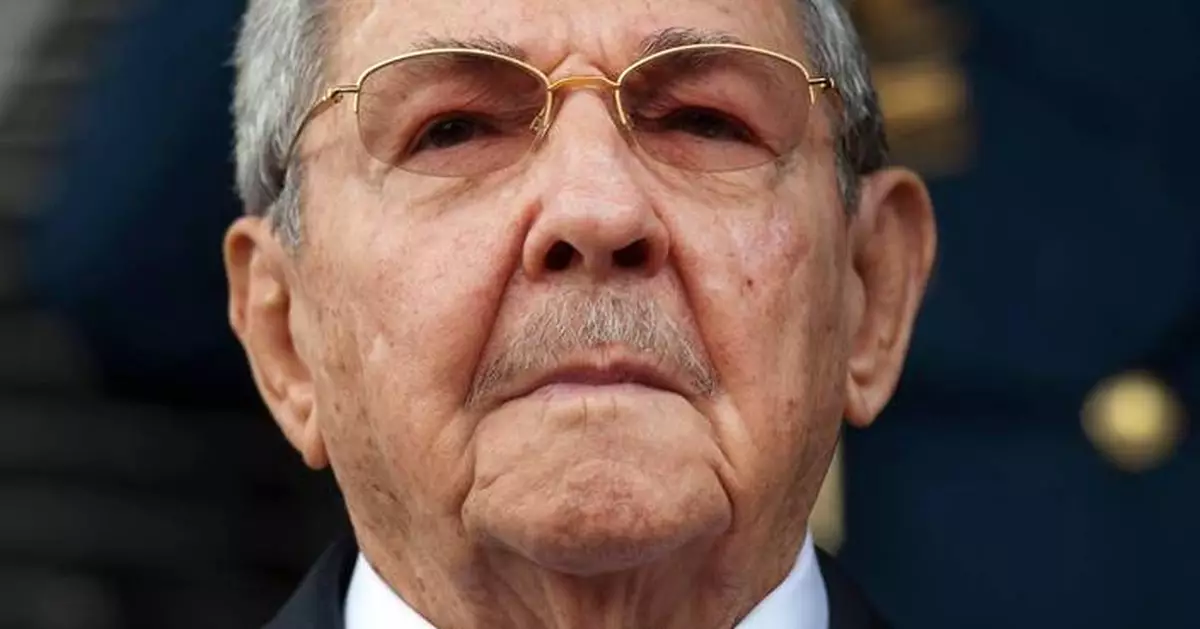
FILE - Cuba's President Raul Castro listens to the Cuban and Venezuelan national anthems during his welcome ceremony at the Miraflores presidential palace, March 17, 2015, in Caracas, Venezuela. (AP Photo/Ariana Cubillos, File)
QUITO, Ecuador (AP) — Ecuador declared Cuba’s ambassador, Basilio Antonio Gutiérrez, and his diplomatic staff “persona non grata” on Wednesday and gave them 48 hours to leave the South American country.
Ecuador’s Ministry of Foreign Affairs said in a statement that the measure was adopted within the framework of international diplomatic law, but didn't say why they were forcing the diplomats to leave. The Vienna Convention allows countries to declare diplomatic personnel a persona non grata without explanation.
Cuba's government strongly rejected the move in a statement on Wednesday night, calling it an “unfriendly and unprecedented act that significantly damages the historic relations of friendship and cooperation between both countries."
“This action also demonstrates the contempt of the current government of Ecuador for the diplomatic practices and courtesies observed by the international community,” wrote Cuba's Foreign Ministry.
The decision follows an executive order signed Tuesday by Ecuadorian President Daniel Noboa in which he canceled Ecuadorian ambassador to Cuba José María Borja's diplomatic duties, also without explanation.
The same day, the United States and Ecuador announced they have begun joint military operations against organized crime groups in the Andean nation. Noboa has sought to position himself as a tough-on-crime leader in the wake of a surge of armed group violence in recent years.
The measure comes amid mounting pressure by U.S. President Donald Trump on Cuba, which intensified after a U.S. military operation deposed former Venezuelan leader Nicolás Maduro.
Since, Trump has placed restrictions of oil sales to Cuba and said the government was “ready to fall.” Ecuador is one of the Trump administration’s allies and collaborators in the fight against drug trafficking and organized crime in the region.
Cuban authorities said Wednesday that it was “no coincidence” that Ecuador expelled its diplomatic staff at the same time the U.S. was asserting pressure on Cuba and other governments in the region, and ahead of a meeting of mostly right-wing Latin American leaders in Miami next week, which Noboa is slated to attend.
Ecuador and Cuba have maintained bilateral relations since 1960, which have ebbed and flowed with shifts in Ecuadorian politics.
The Wednesday decision has an “ideological component,” said Andrea Endara, coordinator of Political Science and International Relations at Casa Grande University. She said that Noboa “has aligned himself with the interests of the United States.”
The effective expulsion of the Cuban officials follows a number of diplomatic dramas between Ecuador and other Latin American nations in recent years. In 2024, Ecuadorian officials raided the Mexican embassy to arrest the former vice president taking shelter there. Experts said this was a blatant violation of international law, causing Mexico to cut off relations.
More recently, a trade war has broken out between Ecuador and neighboring Colombia, which Noboa’s government accused of not doing enough to crack down on crime on their shared border.
Follow AP’s Latin America coverage at https://apnews.com/hub/latin-america
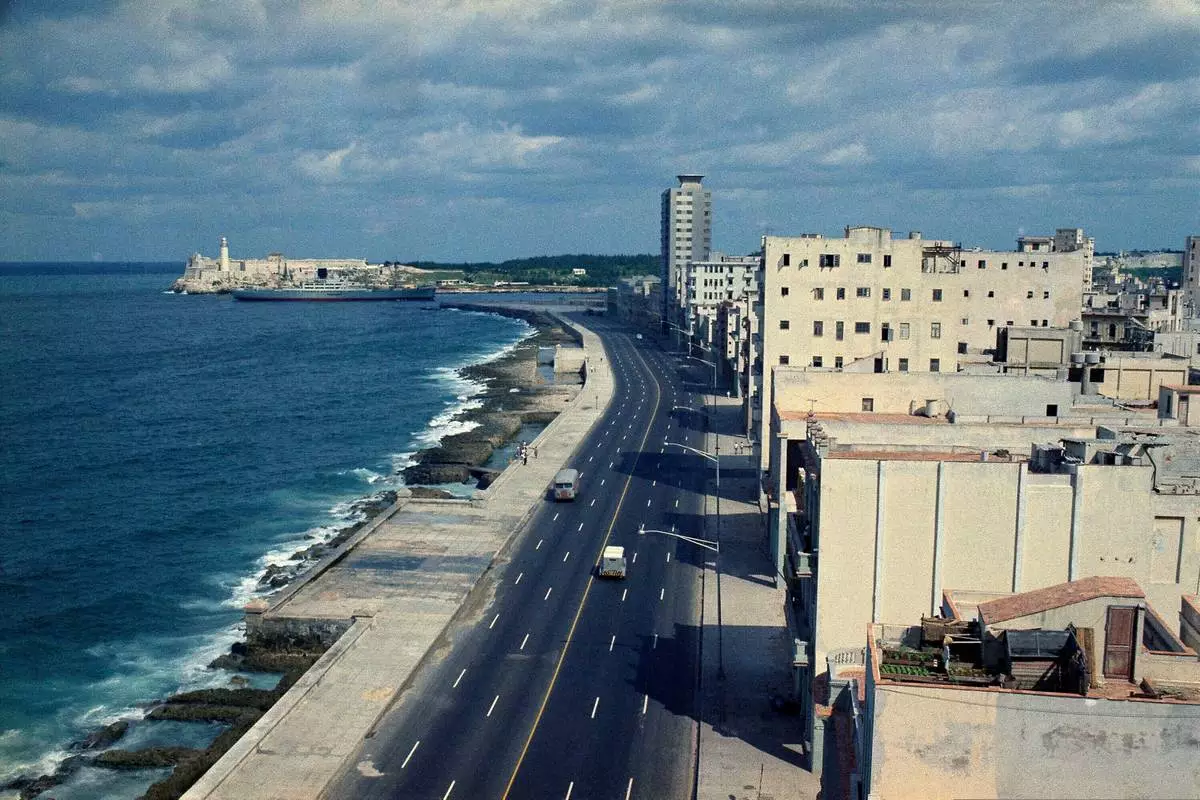
FILE - This is a general view of El Malecon in Havana, Cuba, seen Nov. 1971. (AP Photo/Beverley Reed, File)