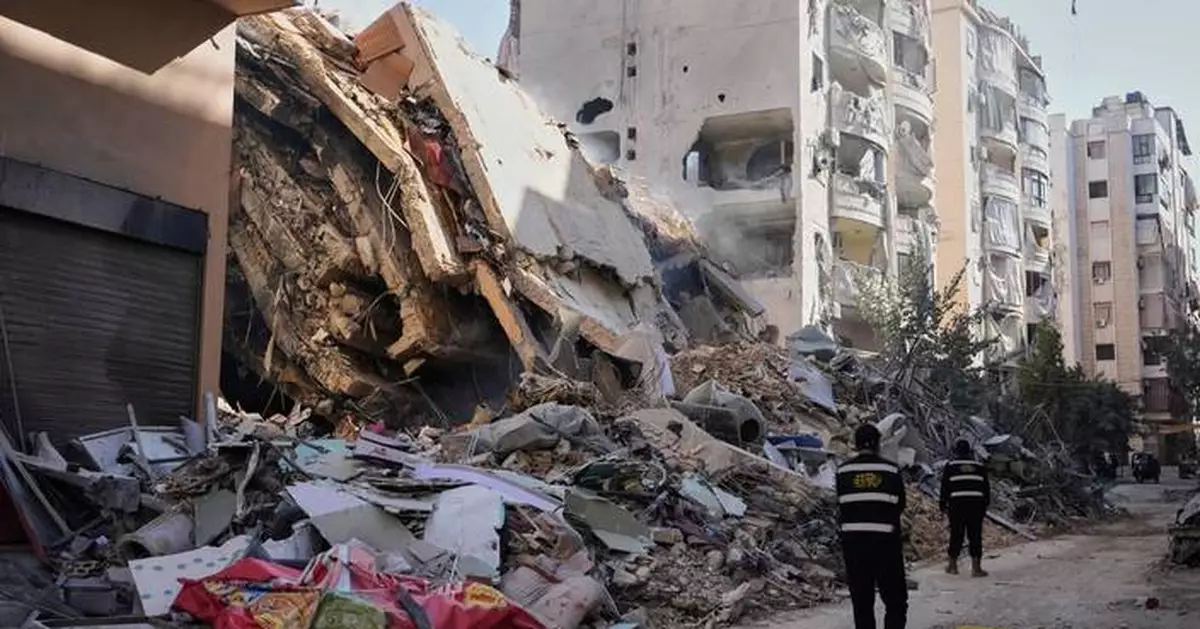
BEIRUT (AP) — Israel launched a series of strikes on the southern suburbs of Beirut Thursday after ordering all residents of the densely populated area to evacuate.
Traffic was gridlocked in Lebanon 's capital on Thursday as panicked residents tried to flee after Israel's military issued an evacuation notice telling residents to “save your lives and evacuate your homes immediately,” and specified which routes they should take to escape.
Click to Gallery
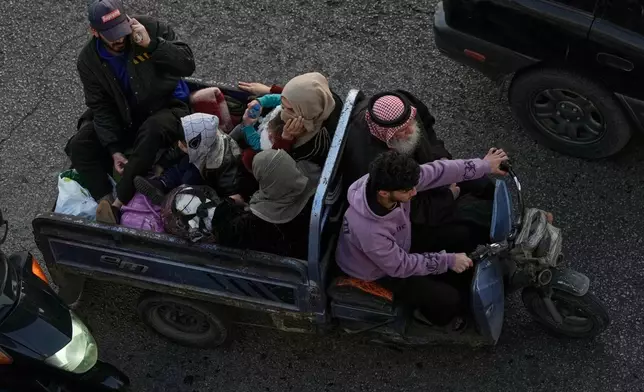
A family flees Israeli airstrikes in Dahiyeh, Beirut's southern suburbs, riding a three-wheeled motorized vehicle known as a "tok-tok," on a highway in Beirut, Lebanon, Thursday, March 5, 2026. (AP Photo/Bilal Hussein)
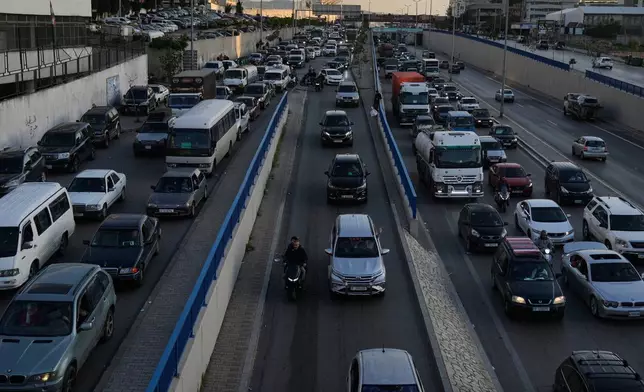
Cars sit in traffic on a highway as residents flee Israeli airstrikes in Dahiyeh, Beirut's southern suburbs, Lebanon, Thursday, March 5, 2026. (AP Photo/Bilal Hussein)
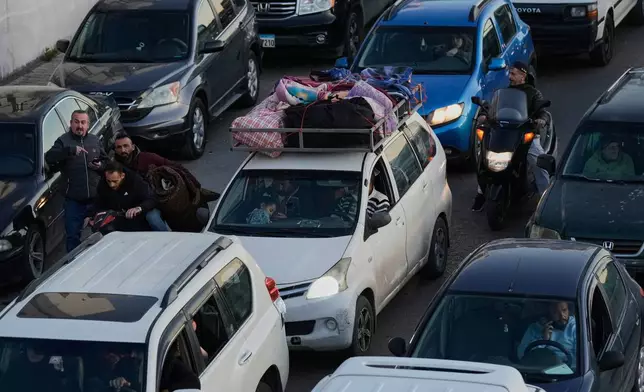
Displaced people fleeing Israeli airstrikes in Dahiyeh, Beirut's southern suburbs, sit in traffic on a highway in Beirut, Lebanon, Thursday, March 5, 2026. (AP Photo/Bilal Hussein)
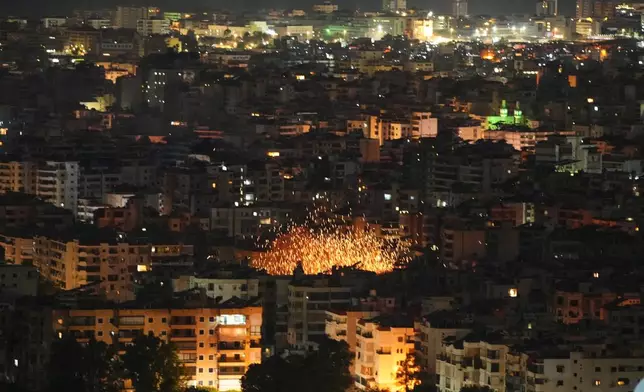
Flames rise following an Israeli airstrike in Dahiyeh, Beirut's southern suburbs, Lebanon, Thursday, March 5, 2026. (AP Photo/Hassan Ammar)
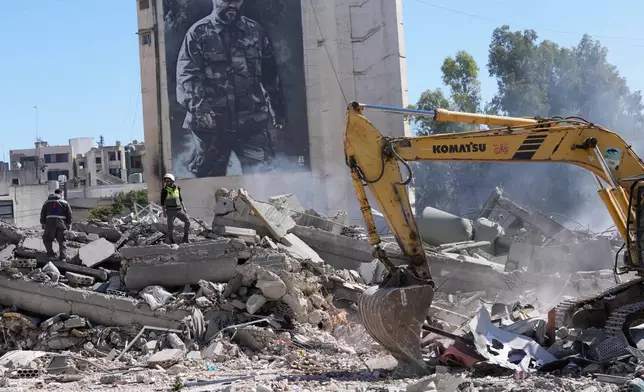
A giant poster shows the late Hezbollah military commander Imad Mughniyeh, while workers check a destroyed building that was hit by an Israeli airstrike in Nabatiyeh town, south Lebanon, Thursday, March 5, 2026. (AP Photo/Mohammed Zaatari)

A man removes clothes from his damaged shop at a commercial street that was hit by an Israeli airstrike in Nabatiyeh town, south Lebanon, Thursday, March 5, 2026. (AP Photo/Mohammed Zaatari)
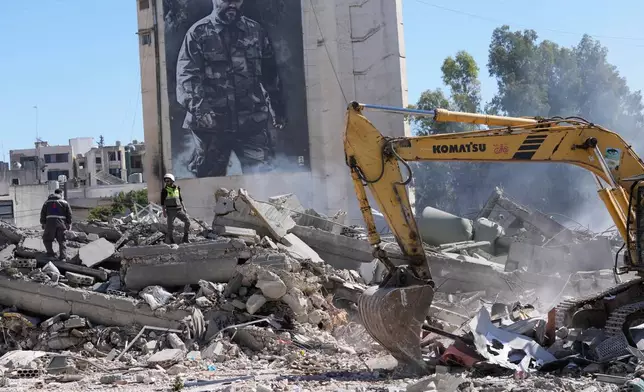
A giant poster shows the late Hezbollah military commander Imad Mughniyeh, while workers check a destroyed building that was hit by an Israeli airstrike in Nabatiyeh town, south Lebanon, Thursday, March 5, 2026. (AP Photo/Mohammed Zaatari)
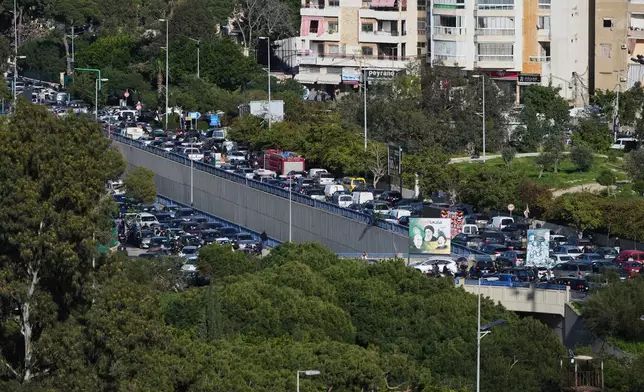
Cars sit in traffic as residents flee Israeli airstrikes in Dahiyeh, Beirut's southern suburbs, Lebanon, Thursday, March 5, 2026. (AP Photo/Hassan Ammar)
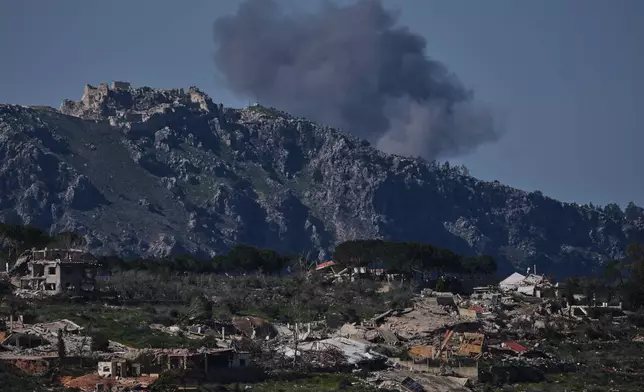
Smoke rises following Israeli bombardment in southern Lebanon as seen from northern Israel, Thursday, March 5, 2026. (AP Photo/Ariel Schalit)
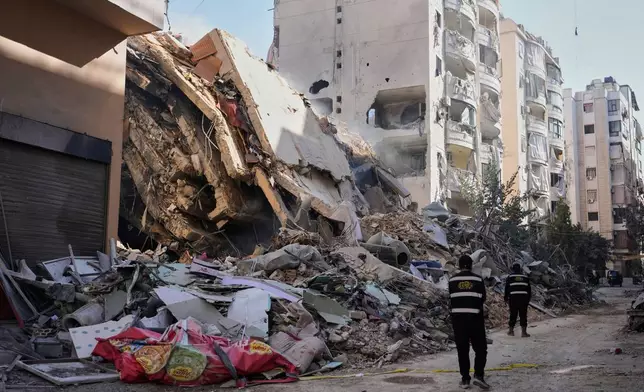
Hezbollah members walk past a building destroyed by an Israeli airstrike in Dahiyeh, Beirut's southern suburbs, Lebanon, Thursday, March 5, 2026. (AP Photo/Hassan Ammar)
Hours later, strikes began to hit the Beirut suburbs.
Since the resurgence of hostilities between Israel and the Hezbollah militant group, Israel has struck sites in Beirut’s suburbs and issued a blanket warning for residents south of the Litani River — an area in southern Lebanon stretching to the border with Israel — to evacuate their homes, but had not previously issued a blanket evacuation order for Beirut’s southern suburbs.
After the attacks by the United States and Israel on Iran triggered a new war in the Middle East, Hezbollah launched missiles and drones into Israel on Monday for the first time in over a year, and Israel has retaliated with bombardment of southern Lebanon and Beirut’s southern suburbs.
The conflict had claimed 123 lives and forced the displacement of more than 83,000 people in Lebanon before Thursday's evacuation order.
Israel’s far-right finance minister Bezalel Smotrich warned Thursday that the southern suburbs of Beirut where Hezbollah has a strong presence will look like Khan Younis, a city in Gaza that Israel has decimated during the war triggered by the Oct. 7, 2023 Hamas-led attack in southern Israel.
“You wanted to bring hell on us, we are bringing hell on you,” Smotrich said as he toured towns on Israel’s border with Lebanon. “Dahiyeh will look like Khan Younis, and our citizens of the north will live in peace and quiet.”
The evacuation order rattled Lebanese authorities, with President Joseph Aoun calling his French counterpart Emmanuel Macron in an urgent bid to halt the anticipated widespread strikes, according to a statement from his office.
Macron issued a statement calling for an end to the conflict and announcing that Paris will send aid to Lebanon, in the first apparent diplomatic endeavor to end the boiling conflict.
“Hezbollah must immediately cease its fire toward Israel. Israel must refrain from any ground intervention or large-scale operation on Lebanese territory,” the French president said in a post on X, adding that he has communicated with U.S. President Donald Trump, Israeli Prime Minister Benjamin Netanyahu and Lebanon's top political leadership.
He called on the militant group to disarm and said he supports Beirut's endeavors to deploy the military to assert full control over the country's territory.
Hadi Kaakour, a resident of Beirut’s southern suburbs who was fleeing said he is not sure that even after leaving he will be safe.
“We don’t put anything past them (Israel), they will strike us no matter where we go,” he said.
Others expressed frustration at Lebanon being pulled into the larger war in the Middle East.
“We got sucked into a mess that we have nothing to do with,” said Yousef Nabulsi, another fleeing resident. “People have been displaced and are now staying on the streets, and this is wrong.”
U.N. peacekeepers in southern Lebanon have seen and heard clashes in the area as more Israeli forces have moved across the border, a spokesperson for the peacekeeping mission known as UNIFIL said Thursday. It was the first confirmation of combat taking place.
“Ground combat was observed west of Kfar Kila,” a village near the border with Israel, overnight, which included “firing of shots,” UNIFIL spokesperson Tilak Pokharel said. In Khiyam, a town about 5 kilometers (3 miles) from the border with Israel, he said peacekeepers saw “air attacks and flares and heard explosions.”
On Tuesday, Israel said it sent additional troops into southern Lebanon. Israeli forces had already been occupying several border points in Lebanon since a U.S.-brokered November 2024 ceasefire halted the previous Israel-Hezbollah war.
The Lebanese army has pulled back from the border as the Israeli troops moved in, while Hezbollah has issued a series of statements announcing attacks on Israeli troops attempting to advance. The Iran-backed militant group also published a video showing a tank being struck by a missile.
The Israeli army on Wednesday said two of its soldiers were wounded by anti-tank fire in Lebanon and on Thursday said two more were evacuated after being wounded in a battle in southern Lebanon.
—
Associated Press writer Kareem Chehayeb in Beirut contributed to this report.
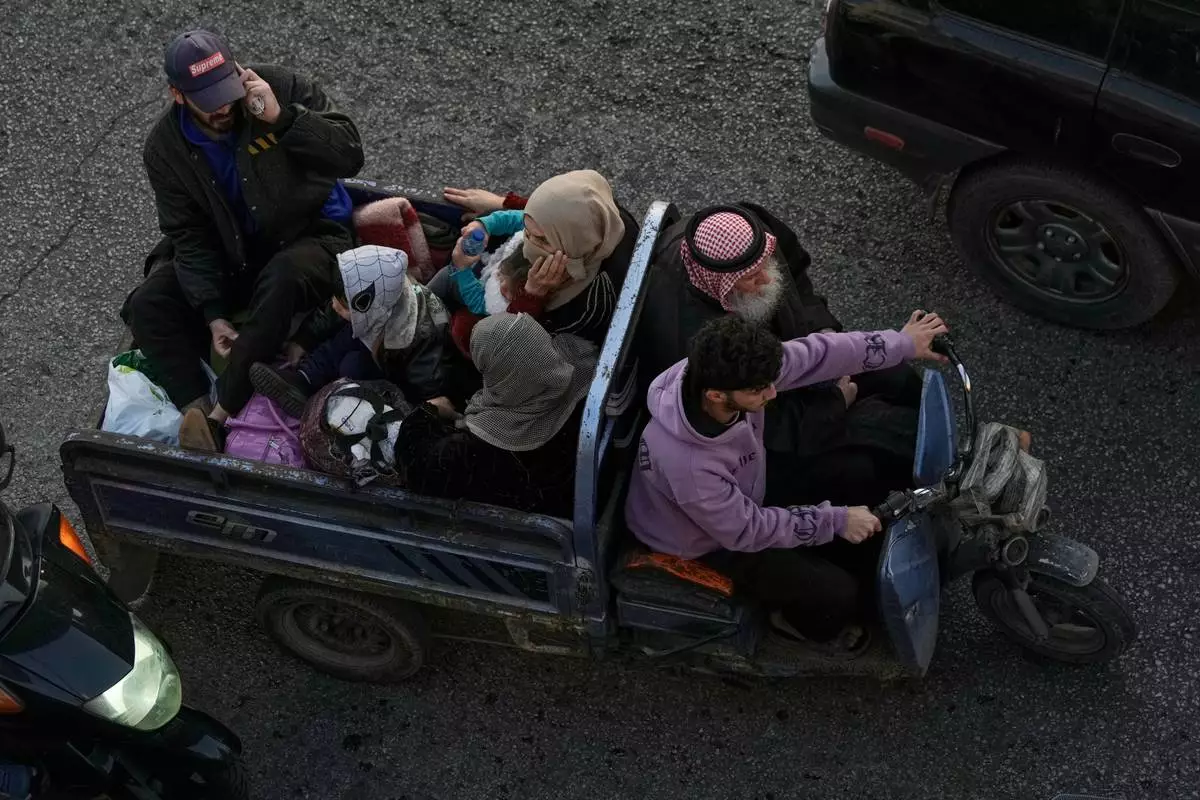
A family flees Israeli airstrikes in Dahiyeh, Beirut's southern suburbs, riding a three-wheeled motorized vehicle known as a "tok-tok," on a highway in Beirut, Lebanon, Thursday, March 5, 2026. (AP Photo/Bilal Hussein)
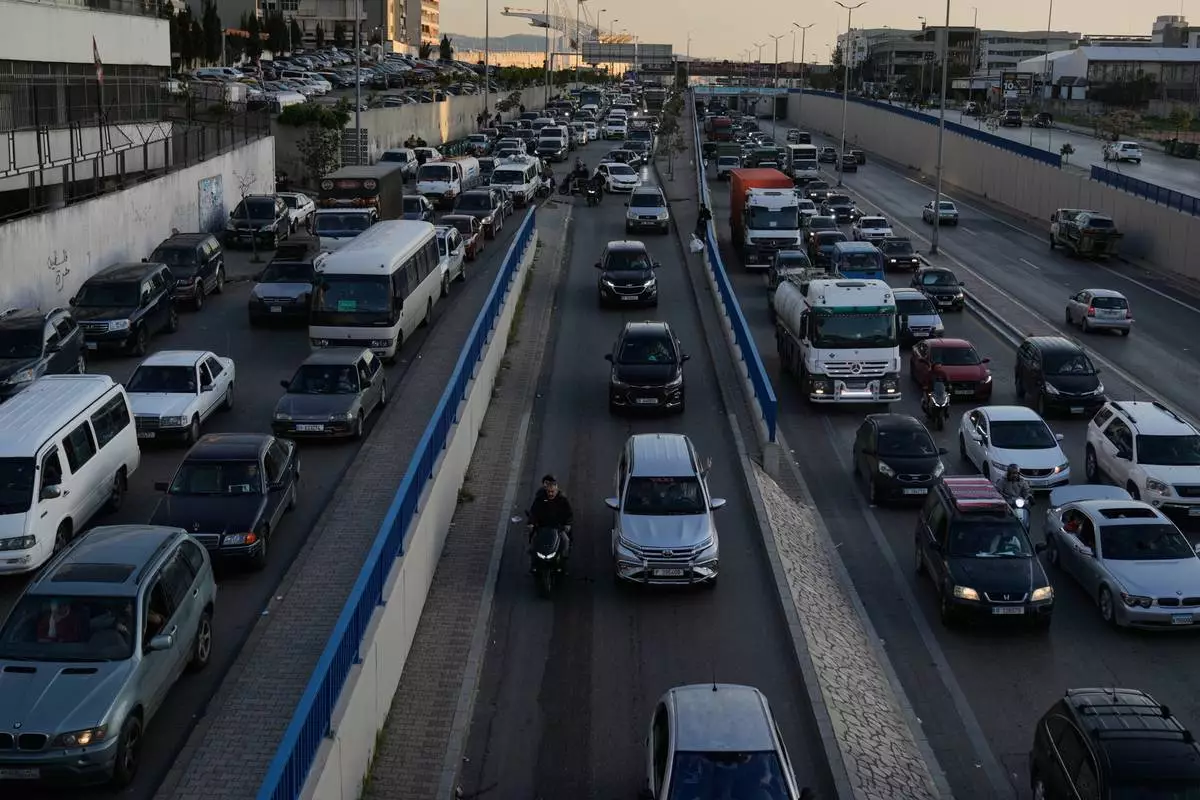
Cars sit in traffic on a highway as residents flee Israeli airstrikes in Dahiyeh, Beirut's southern suburbs, Lebanon, Thursday, March 5, 2026. (AP Photo/Bilal Hussein)
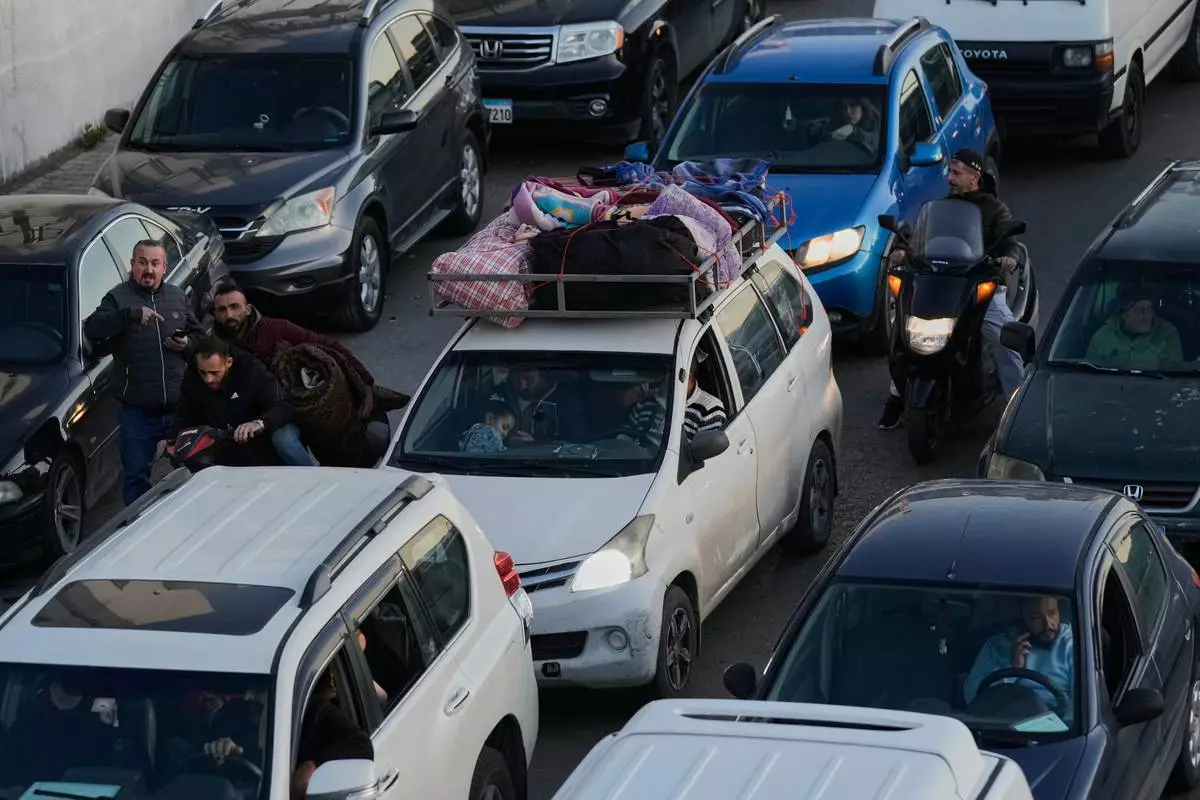
Displaced people fleeing Israeli airstrikes in Dahiyeh, Beirut's southern suburbs, sit in traffic on a highway in Beirut, Lebanon, Thursday, March 5, 2026. (AP Photo/Bilal Hussein)
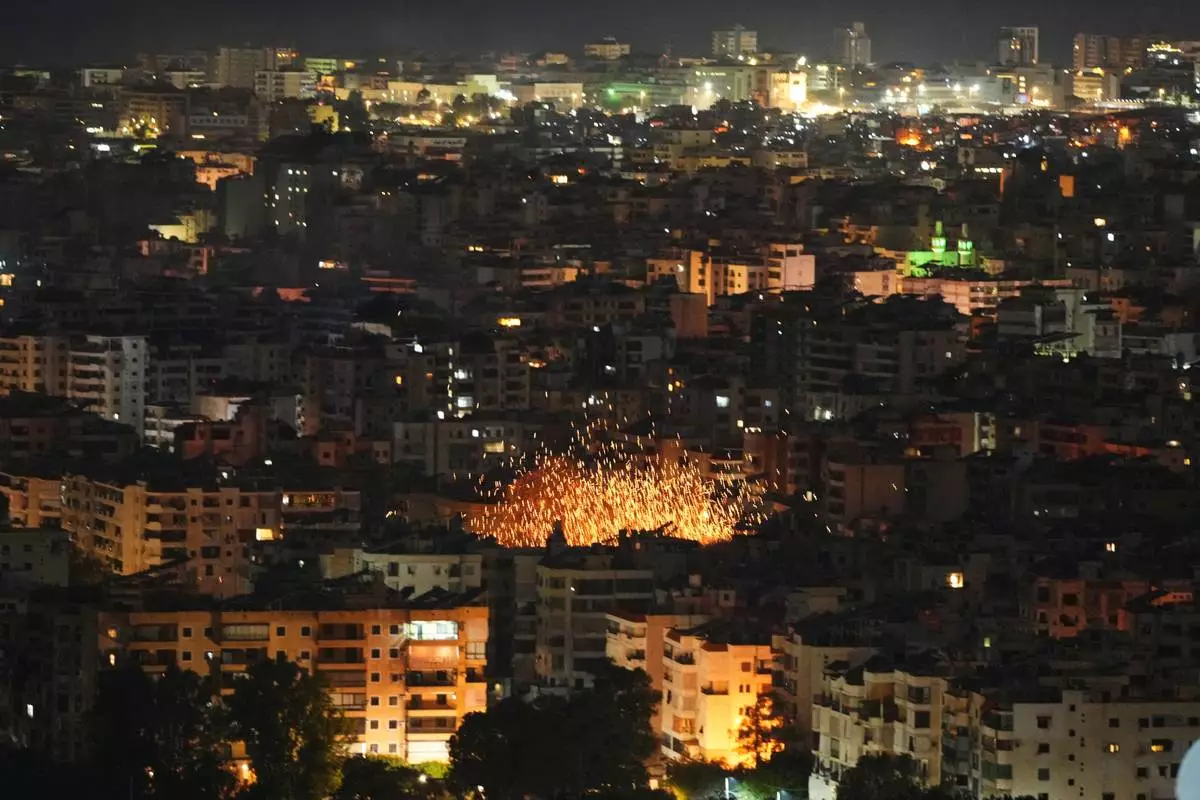
Flames rise following an Israeli airstrike in Dahiyeh, Beirut's southern suburbs, Lebanon, Thursday, March 5, 2026. (AP Photo/Hassan Ammar)
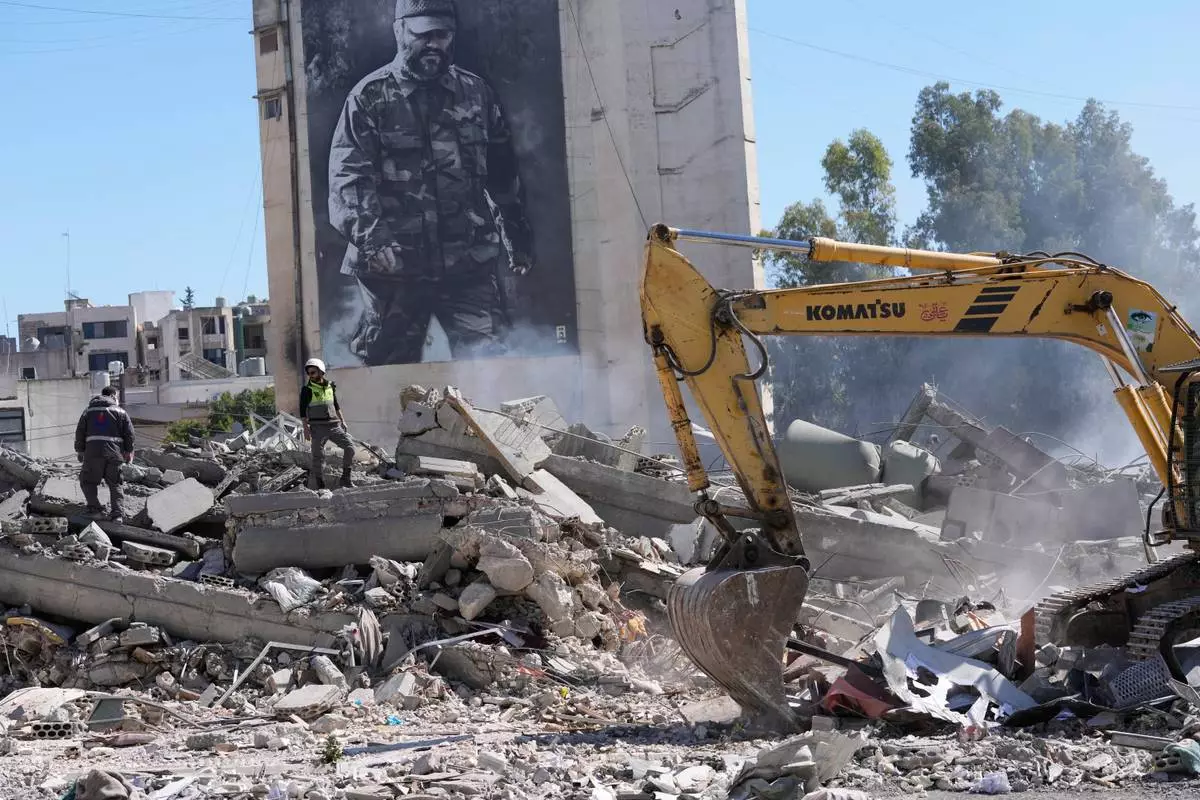
A giant poster shows the late Hezbollah military commander Imad Mughniyeh, while workers check a destroyed building that was hit by an Israeli airstrike in Nabatiyeh town, south Lebanon, Thursday, March 5, 2026. (AP Photo/Mohammed Zaatari)
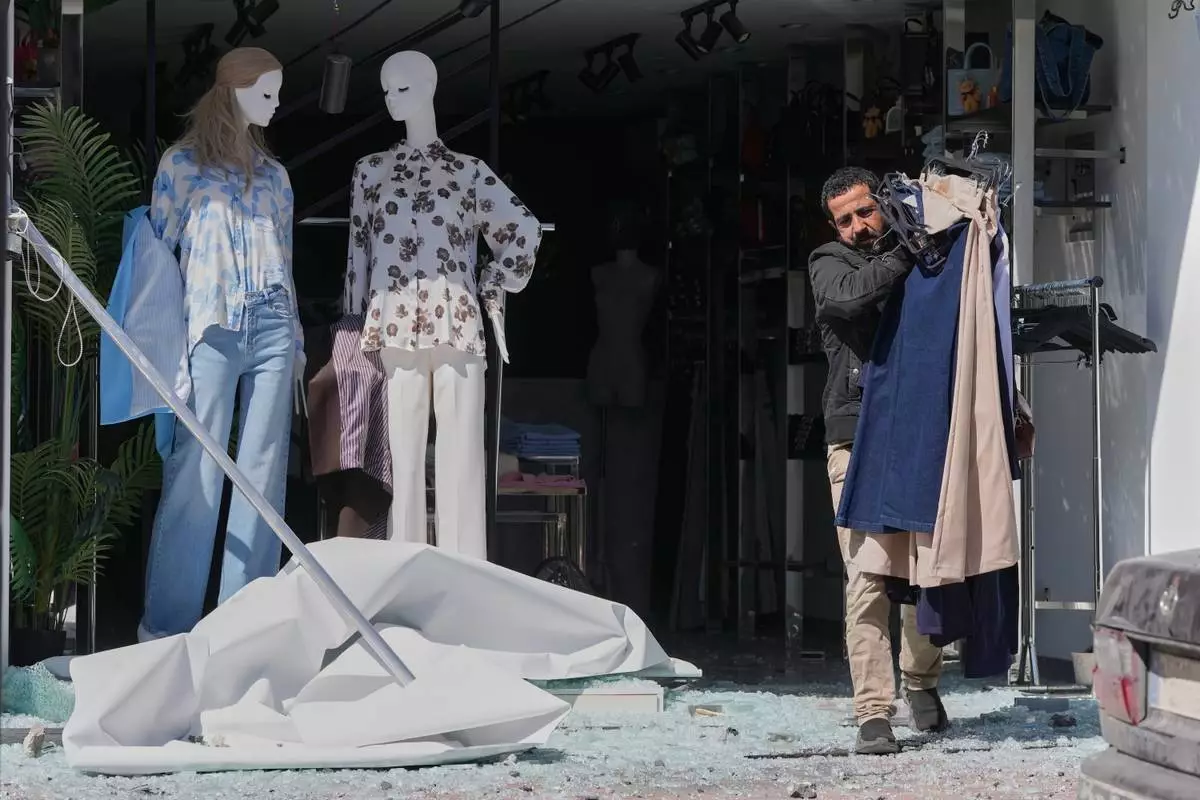
A man removes clothes from his damaged shop at a commercial street that was hit by an Israeli airstrike in Nabatiyeh town, south Lebanon, Thursday, March 5, 2026. (AP Photo/Mohammed Zaatari)
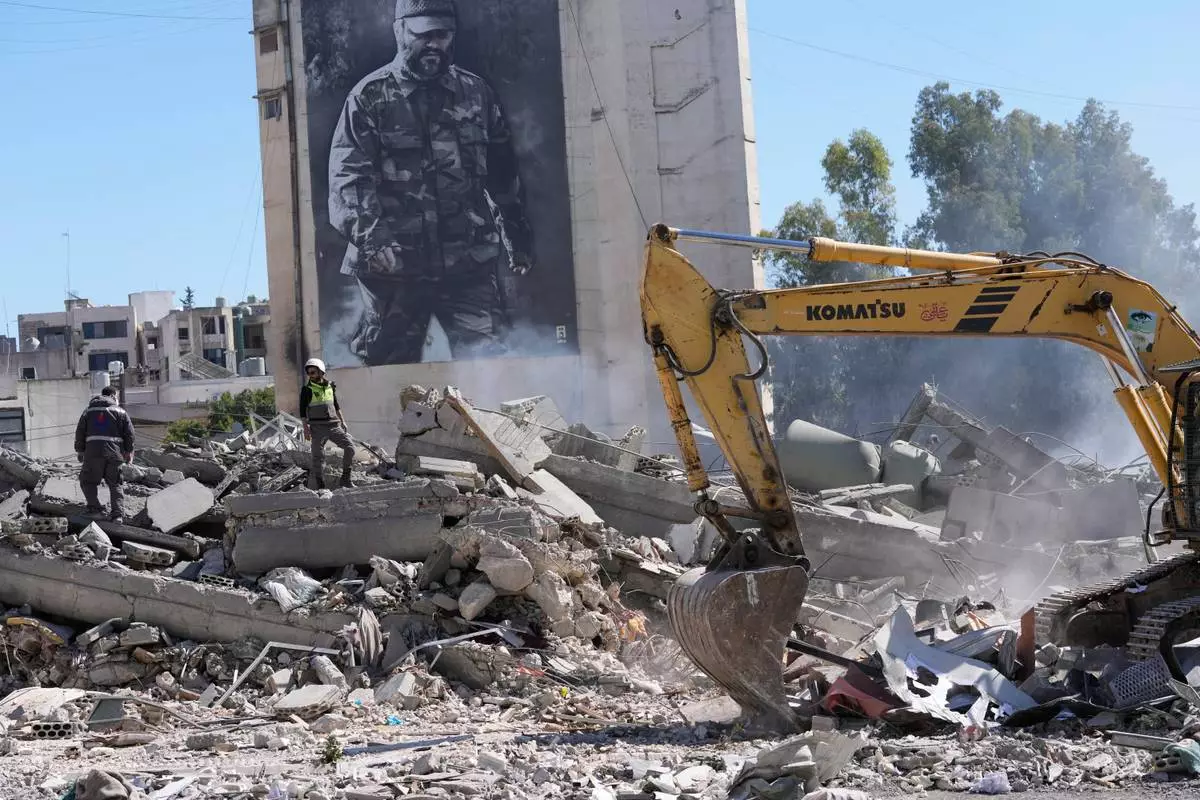
A giant poster shows the late Hezbollah military commander Imad Mughniyeh, while workers check a destroyed building that was hit by an Israeli airstrike in Nabatiyeh town, south Lebanon, Thursday, March 5, 2026. (AP Photo/Mohammed Zaatari)
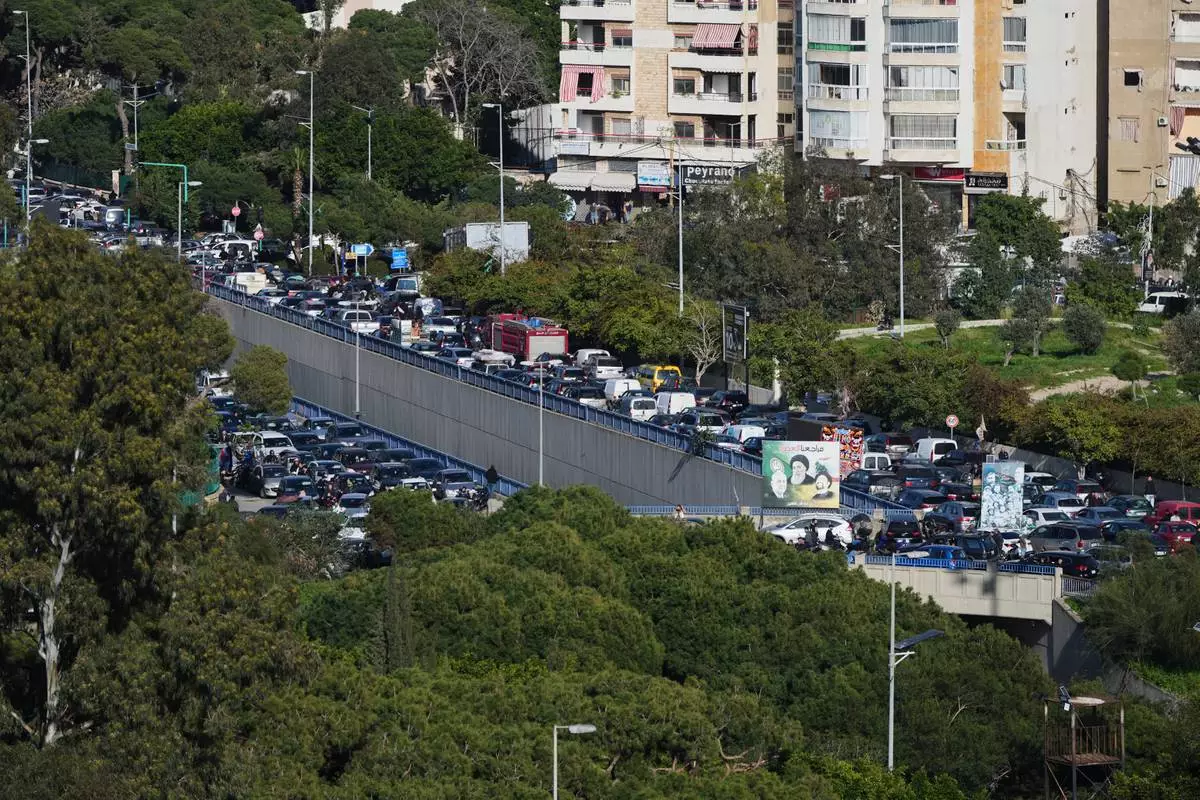
Cars sit in traffic as residents flee Israeli airstrikes in Dahiyeh, Beirut's southern suburbs, Lebanon, Thursday, March 5, 2026. (AP Photo/Hassan Ammar)
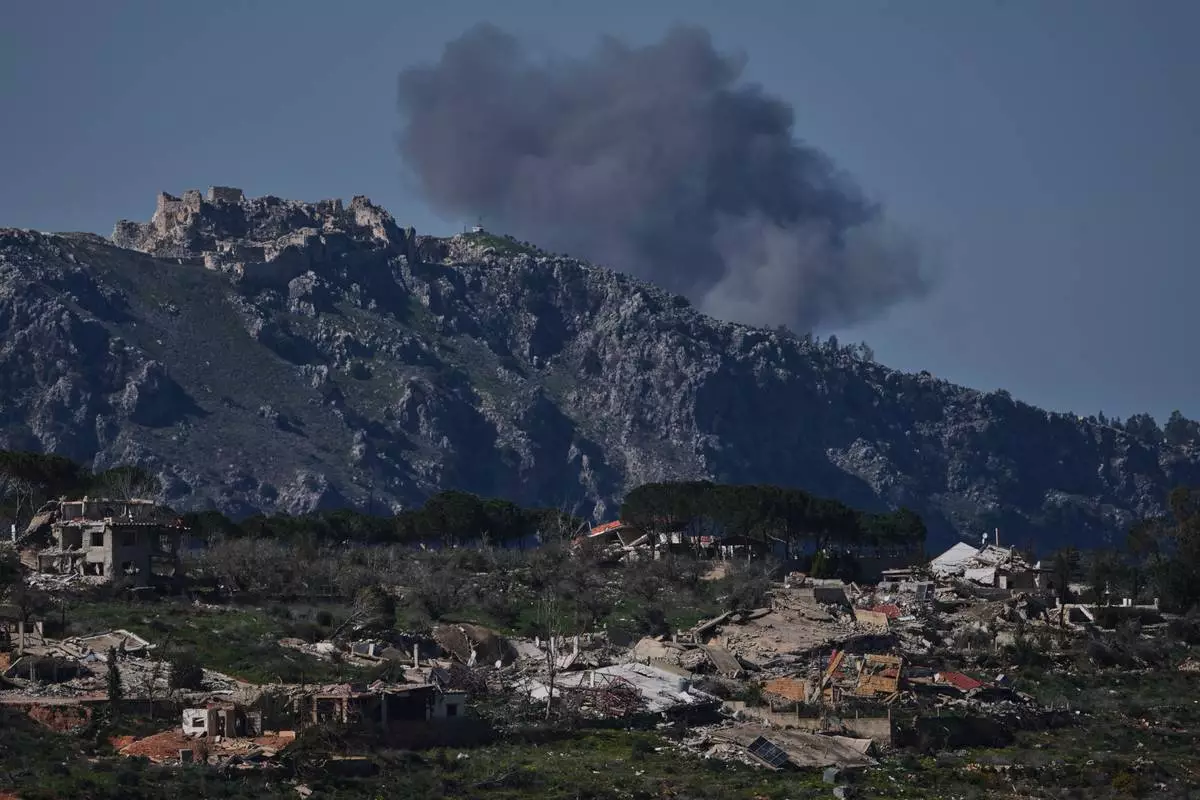
Smoke rises following Israeli bombardment in southern Lebanon as seen from northern Israel, Thursday, March 5, 2026. (AP Photo/Ariel Schalit)
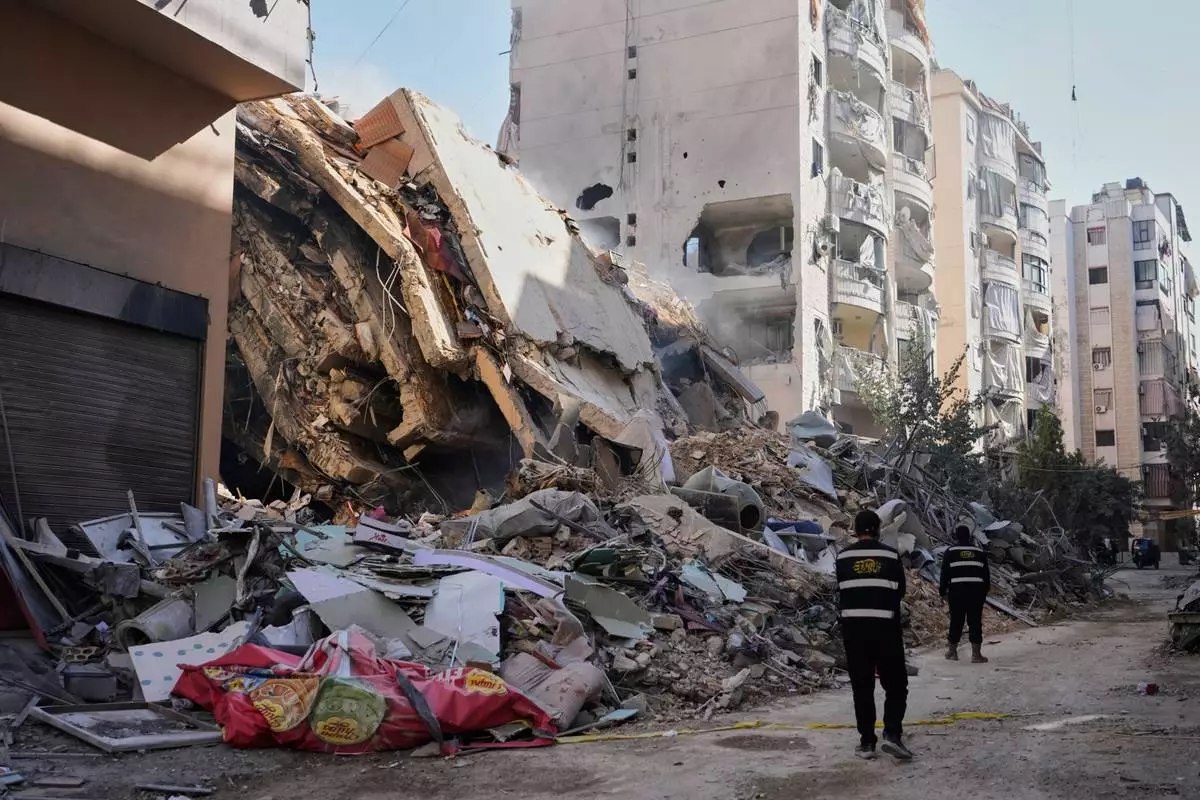
Hezbollah members walk past a building destroyed by an Israeli airstrike in Dahiyeh, Beirut's southern suburbs, Lebanon, Thursday, March 5, 2026. (AP Photo/Hassan Ammar)