Israel carried out a dozen strikes on the southern suburbs of Beirut, Lebanon's capital, from Thursday night till Friday morning, triggering panic and forcing hundreds of thousands of people to flee.
The Israel Defense Forces (IDF) said that it had launched multiple rounds of airstrikes on Beirut's southern suburbs on Friday, targeting several Hezbollah strongholds and Iran's Islamic Revolutionary Guard Corps (IRGC) headquarters in Beirut. Israeli attacks have killed at least 217 people and injured 798 others across Lebanon from Monday to Friday, according to Lebanon's Ministry of Public Health.
In response, Hezbollah announced on Friday that it launched missile strikes on a new Israeli base in the town of Markaba in southern Lebanon. Later that day, Hezbollah said it used drones to attack the new Hamams base near the border town of Khiyam and fired guided missiles at a newly constructed IDF defensive position in southern Lebanon, claiming all targets were hit.
Lebanese President Michel Aoun continued diplomatic engagements with regional and international leaders, seeking assistance from friendly nations and allies to halt Israel's ongoing attacks on Lebanon. According to a statement released by the Presidential Palace, Israeli strikes have targeted multiple locations across Lebanon, resulting in significant casualties and displacing thousands of residents.

Israel launches airstrikes on Lebanon

Israel launches airstrikes on Lebanon
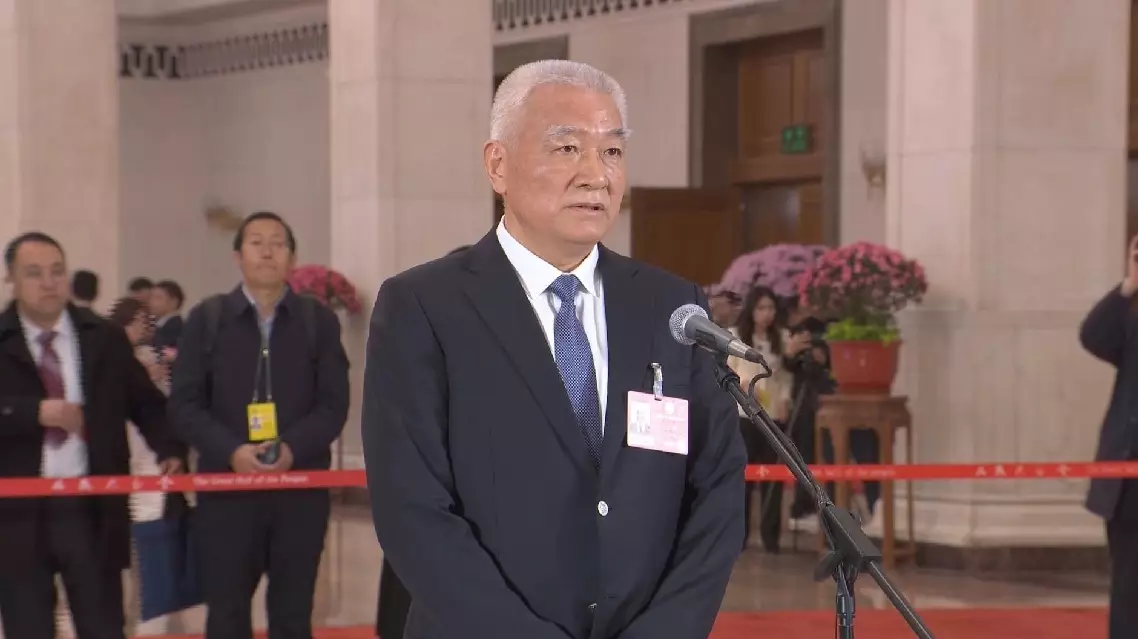
China saw fruitful scientific and technological innovation achievements during the 14th Five-Year Plan period (2020-2025) for national socioeconomic development, effectively supporting the country's high-quality development, said Wang Zhenzhang, former Chinese Minister of Science and Technology, on Saturday.
Wang, also a member of the 14th National Committee of the Chinese People's Political Consultative Conference (CPPCC), China's top political advisory body, made the statement at a group interview on the sidelines of the ongoing 4th annual session of the 14th CPPCC National Committee in Beijing, where he elaborated on China's sci-tech innovation achievements in the 2021-2025 period.
"During the 14th Five-Year Plan period, China's sci-tech innovation yielded a large number of outstanding achievements. For example, in that period of time, China's high-speed train met the target of running at a maximum speed of 450 kilometers per hour, making people's travel faster and more convenient. Additionally, in the field of artificial intelligence (AI), embodied intelligence and multimodal AI assistants, there have been many highlights," Wang said.
In the field of quantum technology, China has achieved a series of new breakthroughs in quantum communication, quantum computing, and quantum measurement, while previous sci-tech innovations in the sector of new energy have been transformed into emerging and leading industries, he said.
During 2021-2025 period, the number of researchers in China kept expanding, with improving professional capabilities. In addition to effectively addressing scientific questions and overcoming technical challenges, they also succeeding in precisely grasping the direction and priorities of the sci-tech frontiers, he said.
He specifically outlined the role that China's sci-tech enterprises played in this course.
"During the 14th Five-Year Plan period, China's sci-tech enterprises strengthened their capabilities in technological innovation and results application. In that period of time, they also emerged as a powerful new force in basic research," Wang said.
In those five years, China also made significant progress in R&D investment and improvement of the research ecosystem. This includes substantial advancements in policies and laws related to this sector, as well social consensus on building sci-tech strength, he said.
"In the 15th Five-Year Plan period (2026-2030), or in a future period of time, achieving greater self-reliance and strength in science and technology remains a top priority in our efforts for realizing [Chinese] modernization. At the same time, we need to enhance opening up and cooperation in science and technology, seeking high-quality development through science and technology, generate new quality productive forces through science and technology, and pursue sustainable development and competitiveness through technological achievements," Wang said.
The 4th annual session of the 14th CPPCC National Committee opened in Beijing on Wednesday and will run through March 11.
China sees fruitful sci-tech innovation achievements in 2021-2025: CPPCC member