LONDON (AP) — One of Britain’s most notorious child killers died Saturday, days after he was attacked by a fellow inmate in the workshop of a maximum-security prison.
Ian Huntley, a 52-year-old former school caretaker convicted in 2003 for the murder of two 10-year-old girls, had been on life support after being hit repeatedly over the head with a metal bar at Frankland prison in northeast England on Feb. 26.
The murders of Holly Wells and Jessica Chapman had transfixed Britain for two weeks after the best friends vanished from the village of Soham in eastern England on Aug. 4, 2002 after leaving a barbecue to buy candy.
For 13 days, police searched for the pair, holding out hope they might be alive. A photo of the girls wearing matching red Manchester United soccer shirts, taken just before they disappeared, became a fixture of front pages and news broadcasts as detectives mounted a huge hunt.
Thousands visited Soham in an enormous outpouring of concern, leaving hundreds of bouquets outside the local church.
The search ended when a group of hikers discovered the girls’ remains beside a dirt path in a wooded area a few miles from the village.
“The murders of remains one of the most shocking and devastating cases in our nation’s history, and our thoughts are with their families,” the U.K. Ministry of Justice said in a statement.
Huntley denied murdering the two 10-year-olds, but was convicted after a trial at London’s Central Criminal Court in 2003. His life sentence recommended he serve at least 40 years.
While in prison, Huntley survived repeated attempts on his life, and he was kept under close protection along with other notorious killers. In one incident in 2010, his throat was slashed by another inmate.
At the time of the murders, Huntley lived with Maxine Carr, a teaching assistant at Holly and Jessica’s grade school. Carr gave Huntley a false alibi and was subsequently jailed for 21 months for perverting the course of justice. She is now living under a new identity.
Huntley and Carr often spoke to reporters during the search for the girls. Huntley had told them he thought he was one of the last people to see them alive, while Carr said she would always keep a card Holly had drawn for her.
British media have reported that murderer and rapist Anthony Russell, 43, was responsible for the attack that ultimately led to Huntley's death.
Durham Constabulary are investigating the circumstances of the incident that led to Huntley's death and a file is being prepared for the Crown Prosecution Service for consideration for charges.

FILE - Ian Huntley look on in this Aug. 10, 2002, in Soham, England. (Toby Melville/PA via AP, File)
DUBAI, United Arab Emirates (AP) — Intense Iranian fire targeted the Gulf Arab states early Saturday as Israel and the United States kept up their airstrikes targeting the Islamic Republic.
There was no foreseeable end to the fighting. U.S. President Donald Trump's administration approved a new $151 million arms sale to Israel after Trump said he would not negotiate with Iran without its “unconditional surrender” and U.S. officials warned of a forthcoming bombing campaign they said would be the most intense yet in the weeklong conflict.
Iran's U.N. ambassador said the country would “take all necessary measures” to defend itself.
Associated Press video showed explosions flashing and smoke rising over western Tehran as Israel said it had begun a broad wave of strikes. Also early Saturday, loud booms sounded in Jerusalem and incoming missiles from Iran had people heading to bomb shelters across Israel.
There were no immediate reports of casualties by Israel’s emergency services.
In a sign of the widening nature of the conflict, sirens sounded early Saturday in Bahrain as Iranian attacks targeted the island kingdom. And Saudi Arabia said it destroyed drones headed toward its vast Shaybah oil field and shot down a ballistic missile launched toward Prince Sultan Air Base, which hosts U.S. forces.
The U.S. and Israel have battered Iran with strikes, targeting its military capabilities, leadership and nuclear program. The stated goals and timelines for the war have repeatedly shifted, as the U.S. has at times suggested it seeks to topple Iran’s government or elevate new leadership from within.
Qatar’s energy minister, Saad al-Kaabi, warned in an interview with the Financial Times that the war could “bring down the economies of the world,” predicting a widespread shutdown of Gulf energy exports that could send oil to $150 a barrel.
The price for a barrel of benchmark U.S. crude rose above $90 on Friday for the first time in more than two years.
Russia has provided Iran with information that could help Tehran strike American warships, aircraft and other assets in the region, according to two officials familiar with U.S. intelligence on the matter.
The people, who were not authorized to comment publicly and spoke on the condition of anonymity, cautioned that the U.S. intelligence has not uncovered that Russia is directing Iran on what to do with the information.
Still, it’s the first indication that Moscow has sought to get involved in the war.
In a social media post Friday, Trump said “There will be no deal with Iran except UNCONDITIONAL SURRENDER!" After a surrender, “and the selection of a GREAT & ACCEPTABLE Leader(s),” he wrote, the U.S. and its allies will help rebuild Iran, making it “economically bigger, better, and stronger than ever before.”
Those comments were likely to raise further questions about the endgame of the war. The fighting has killed at least 1,230 people in Iran, more than 200 in Lebanon and around a dozen in Israel, according to officials in those countries. Six U.S. troops have been killed.
Iranian President Masoud Pezeshkian wrote on social media that “some countries” had begun mediation efforts, without elaborating.
Iranian state television reported Friday that a leadership council had started discussing how to convene the country’s Assembly of Experts, which will select the new supreme leader.
U.S. Treasury Secretary Scott Bessent said in a television interview on Friday that the “biggest bombing campaign” of the war was still to come.
Israel has said that over the past week it has heavily bombed an extensive underground bunker that Iranian leaders had planned to use during the hostilities.
New information surfaced suggesting that a deadly Feb. 28 explosion at a school in the Iranian city of Minab, some 1,100 kilometers (680 miles) southeast of Tehran, was likely caused by U.S. airstrikes. The information included satellite images, expert analysis, a U.S. official and public information released by U.S. and Israeli military forces.
Iranian state media has said more than 165 people were killed in the blast, most of them of children.
Iran has blamed Israel and the U.S. for the explosion. Neither country has accepted responsibility, though Defense Secretary Pete Hegseth has said the U.S. is investigating.
The Iranian-backed militant group Hezbollah said its fighters clashed with an Israeli force that landed late Friday in the mountains of eastern Lebanon. The Lebanese Health Ministry said at least three people were killed.
Israel did not acknowledge the fighting, and its military did not immediately respond to requests for comment.
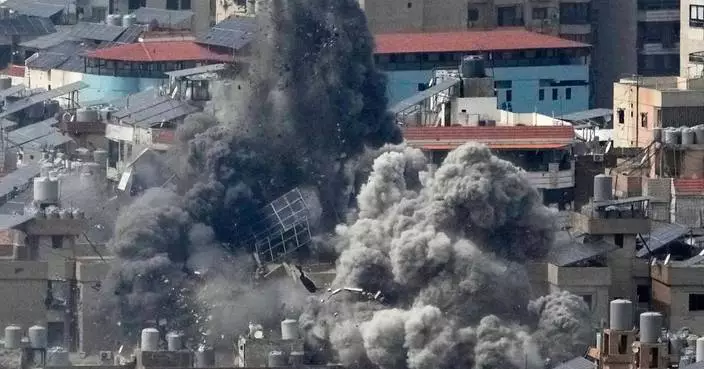
Israel has carried out waves of airstrikes on the southern suburbs of Beirut, where Hezbollah has a large presence but which is also home to hundreds of thousands of civilians.
Lebanon's Health Ministry said at least 217 people have been killed by Israeli strikes since Monday and 798 wounded.
Roads in the Lebanese capital were choked with evacuating traffic as smoke rose over the city’s southern districts. Two hospitals evacuated patients and staff.
“What can we do? We prayed here under the tree. During the night, we slept in the car because there is no place to stay,” Jihan Shehadeh, one of the tens of thousands of displaced, said.
Metz reported from Ramallah, West Bank, Rising from Bangkok and Abou AlJoud from Beirut. Associated Press journalists around the world contributed.
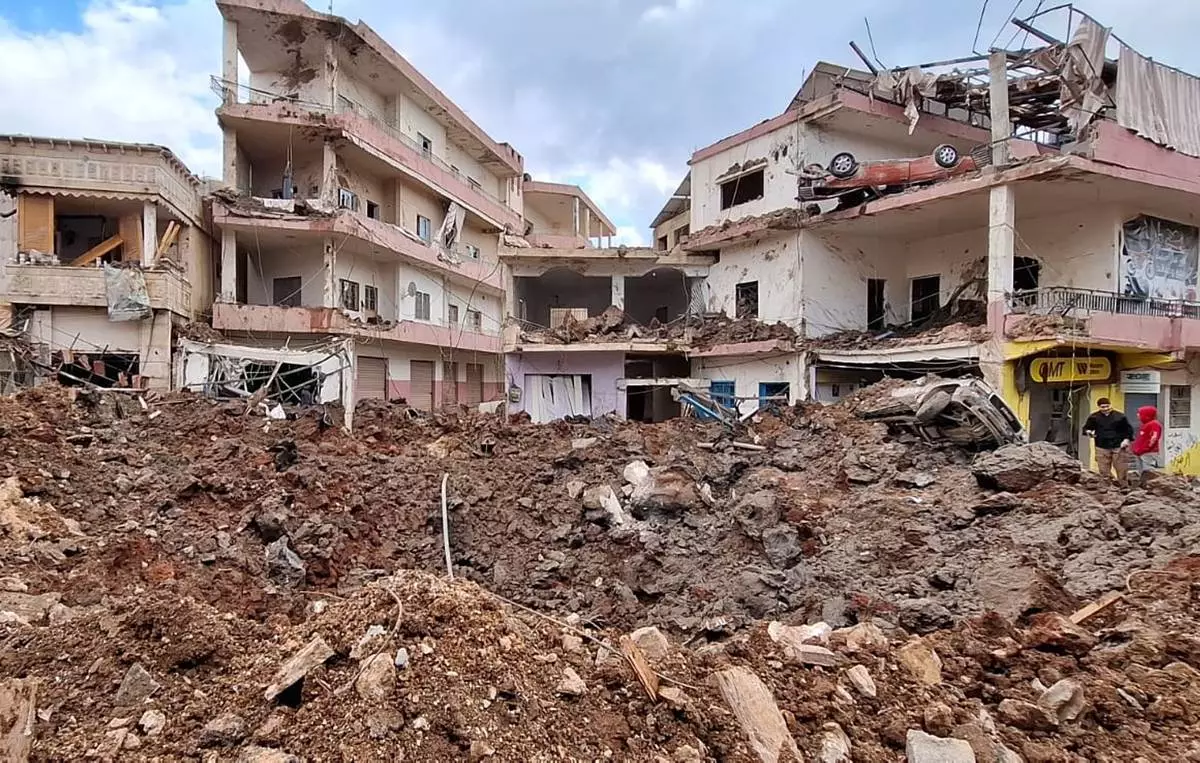
People check the damage left by Israeli airstrikes, Saturday, March 7, 2026, in the village of Nabi Chit, eastern Lebanon late Friday, where Israeli forces landed overnight and dug a grave in a cemetery searching for Israeli co-pilot Ron Arad who was captured and then went missing after his fighter jet crashed over south Lebanon in 1986. (AP Photo/Ali Salem)
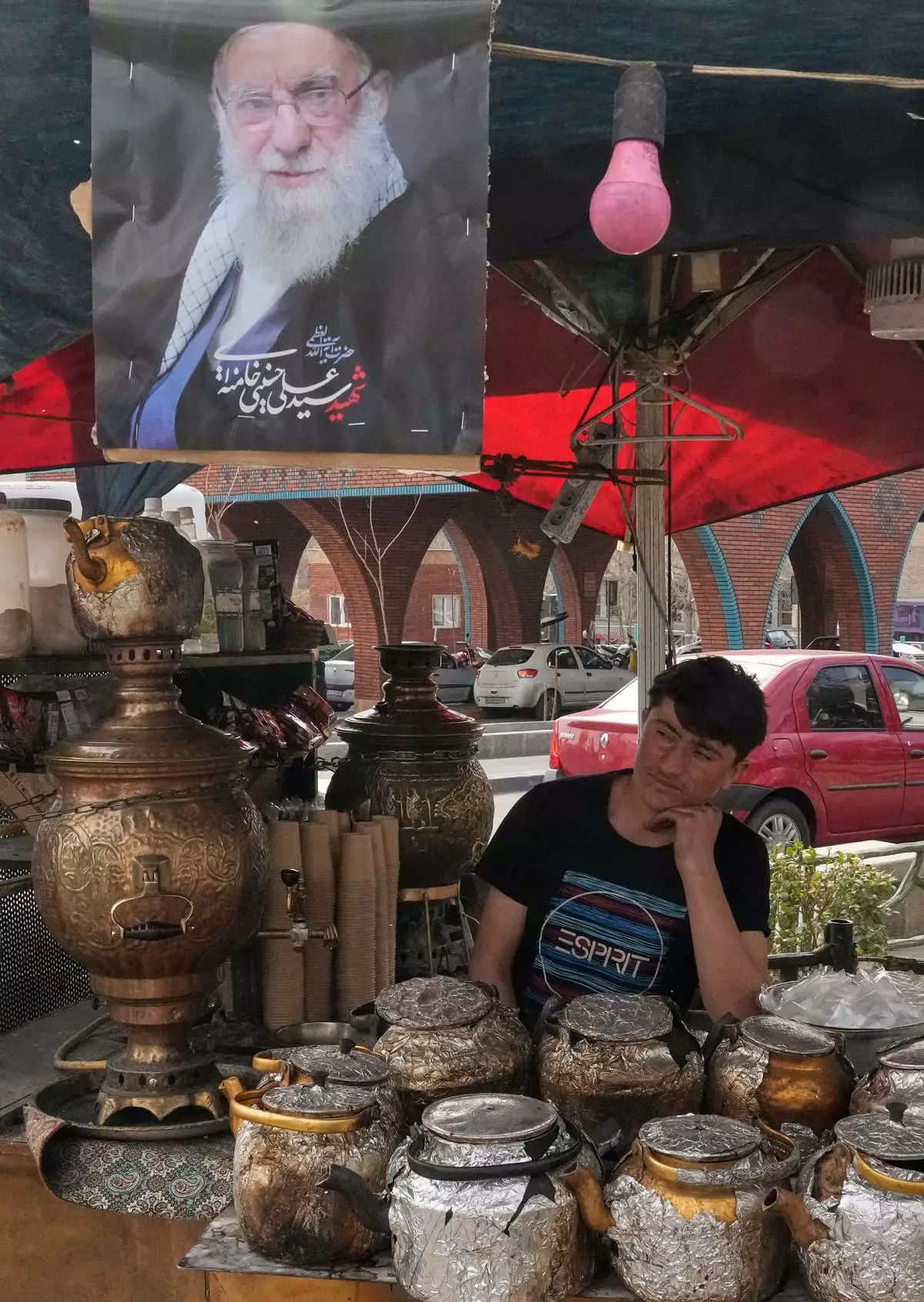
A vendor sits at his stall under a portrait of the late Iranian Supreme Leader Ayatollah Ali Khamenei at Tajrish square in northern Tehran, Iran, Saturday, March 7, 2026. (AP Photo/Vahid Salemi)
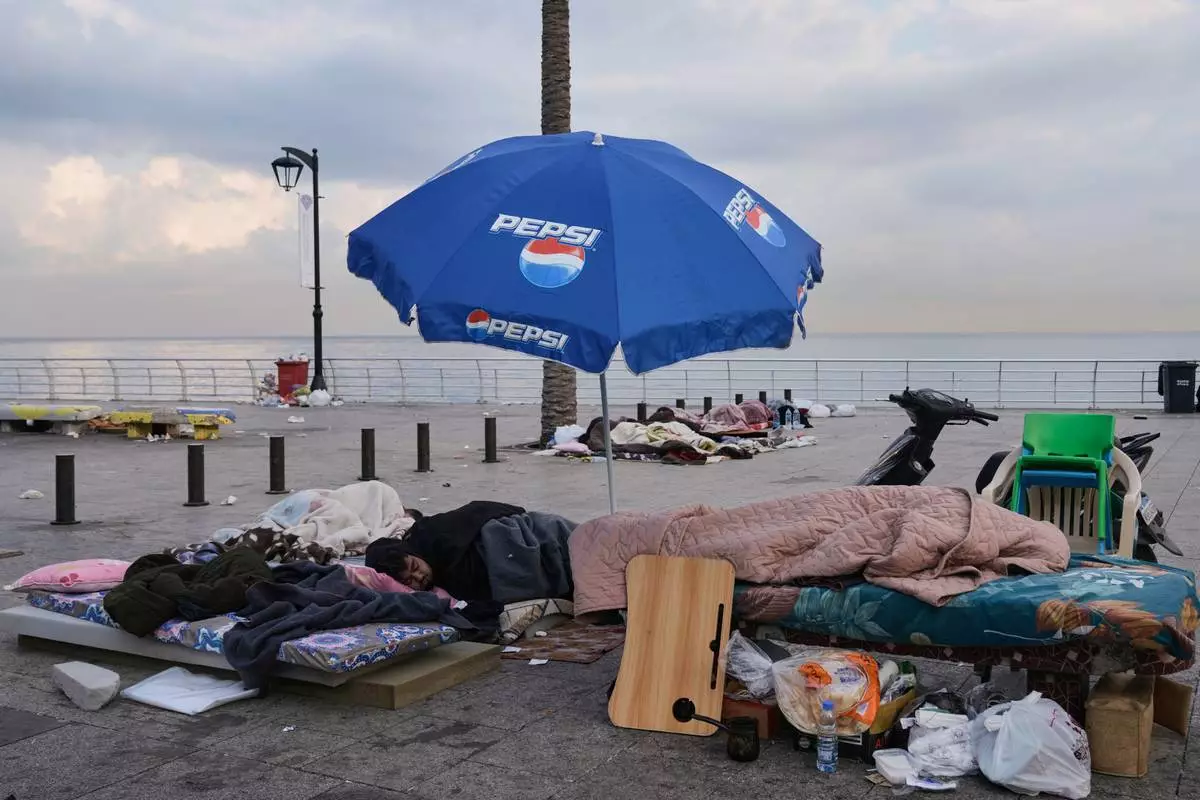
Displaced people fleeing Israeli airstrikes in Dahiyeh, Beirut's southern suburbs, sleep along the Mediterranean Sea in Beirut, Lebanon, Saturday, March 7, 2026. (AP Photo/Bilal Hussein)
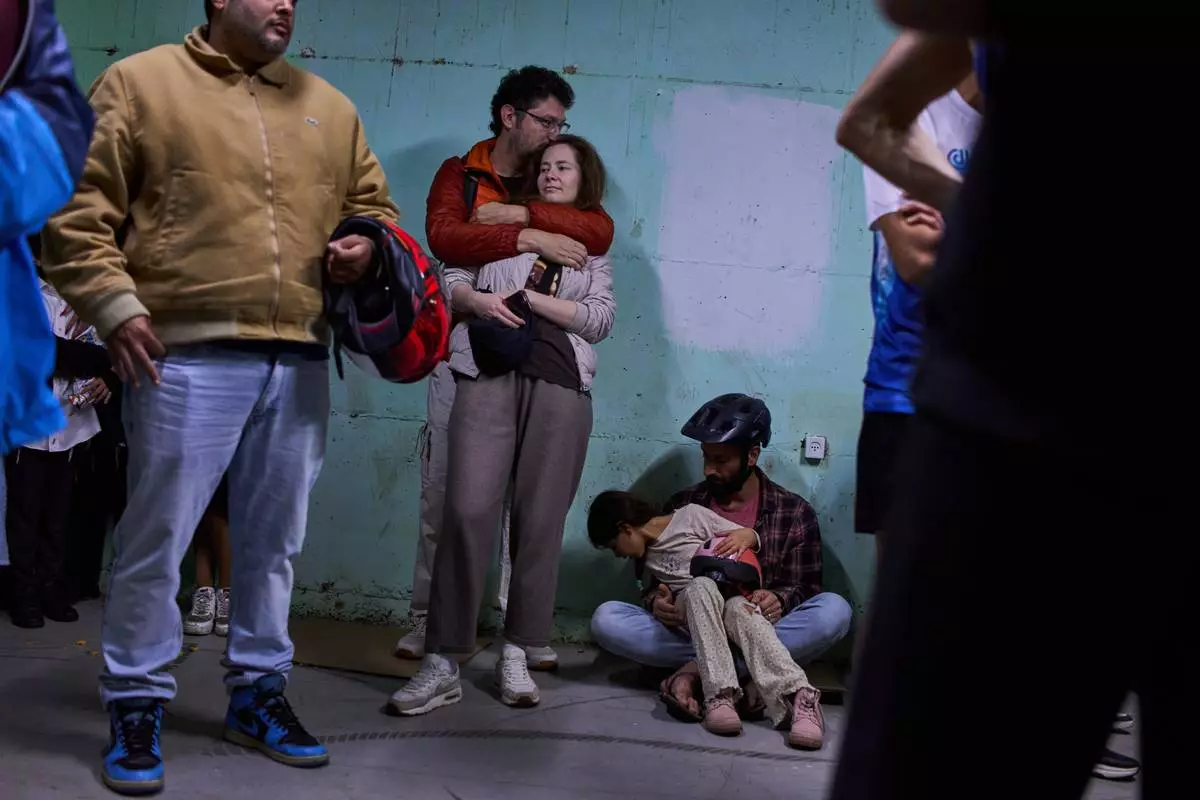
People take shelter as air raid sirens warning of incoming Iranian missiles in Tel Aviv, Israel, Saturday, March 7, 2026. (AP Photo/Oded Balilty)
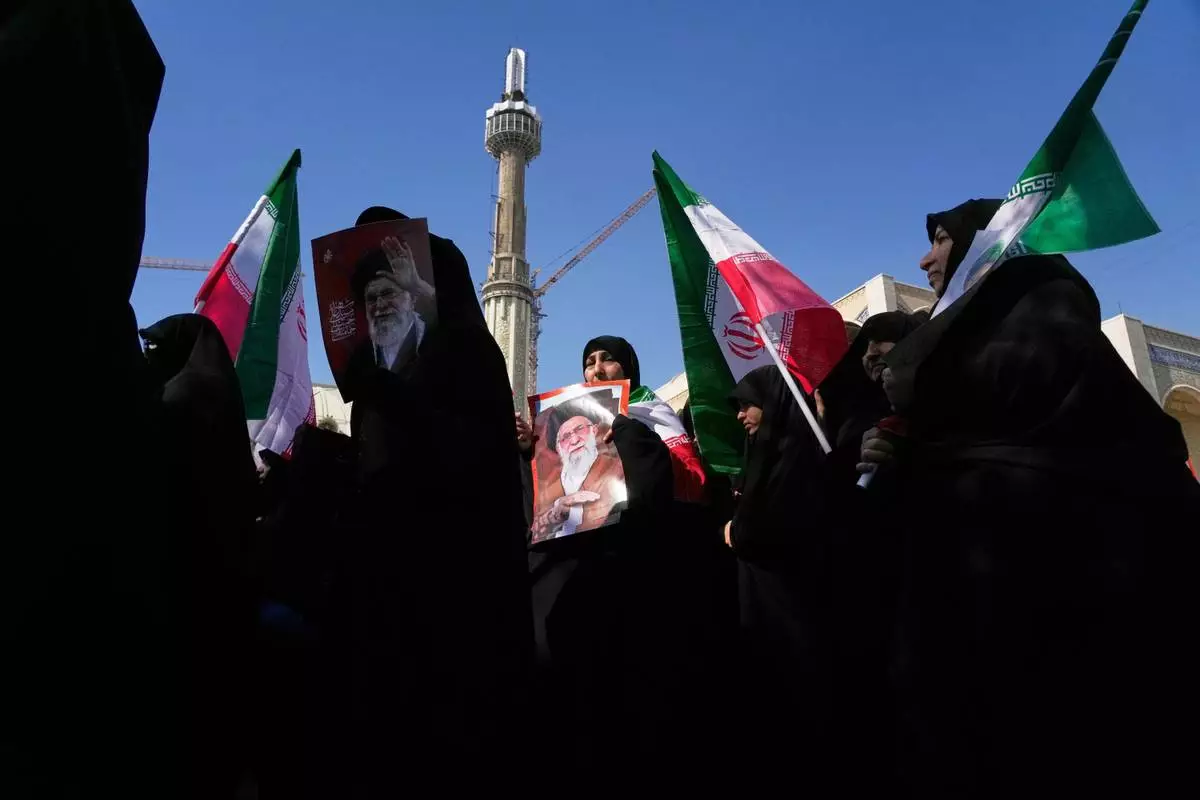
Women hold Iranian flags and pictures of the late Iranian Supreme Leader Ali Khamenei as government supporters march against the ongoing U.S.-Israeli military campaign after Friday prayers at the Imam Khomeini Grand mosque in Tehran, Iran, Friday, March 6, 2026. (AP Photo/Vahid Salemi)
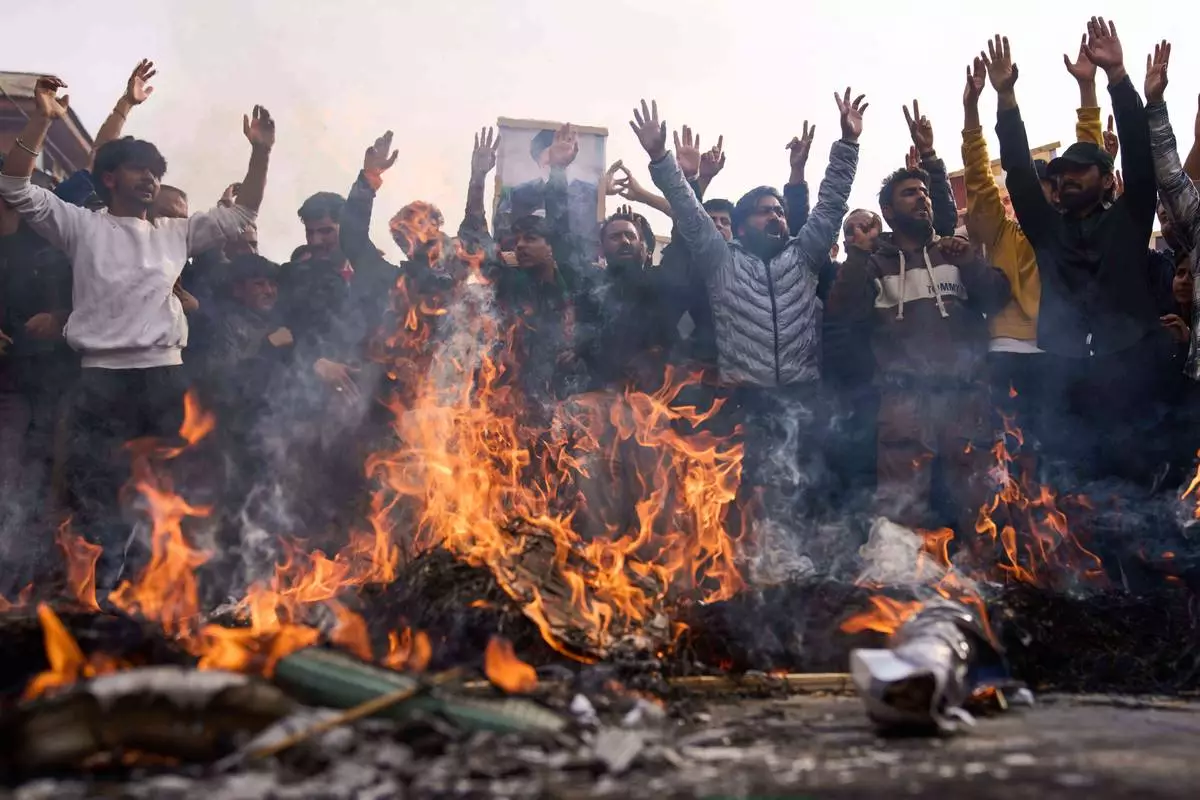
Shiite Muslims shout slogans as they burn effigies of President Donald Trump and Israeli Prime Minister Benjamin Netanyahu during a protest against the killing of Iran's Supreme Leader Ayatollah Ali Khamenei, in Budgam, northeast of Srinagar, Indian controlled Kashmir, Friday, March 6, 2026. (AP Photo/Dar Yasin)
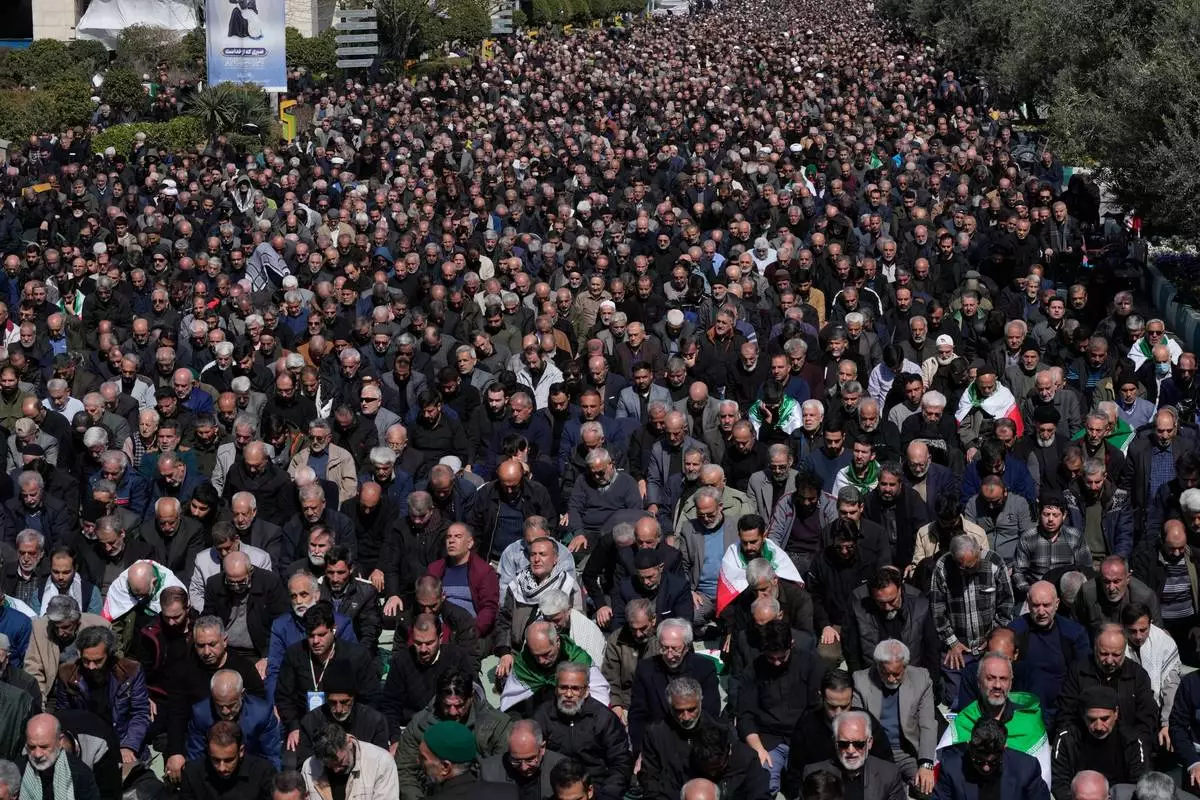
Iranians attend Friday prayers in the courtyard of the Imam Khomeini Grand mosque in Tehran, Iran, Friday, March 6, 2026. (AP Photo/Vahid Salemi)
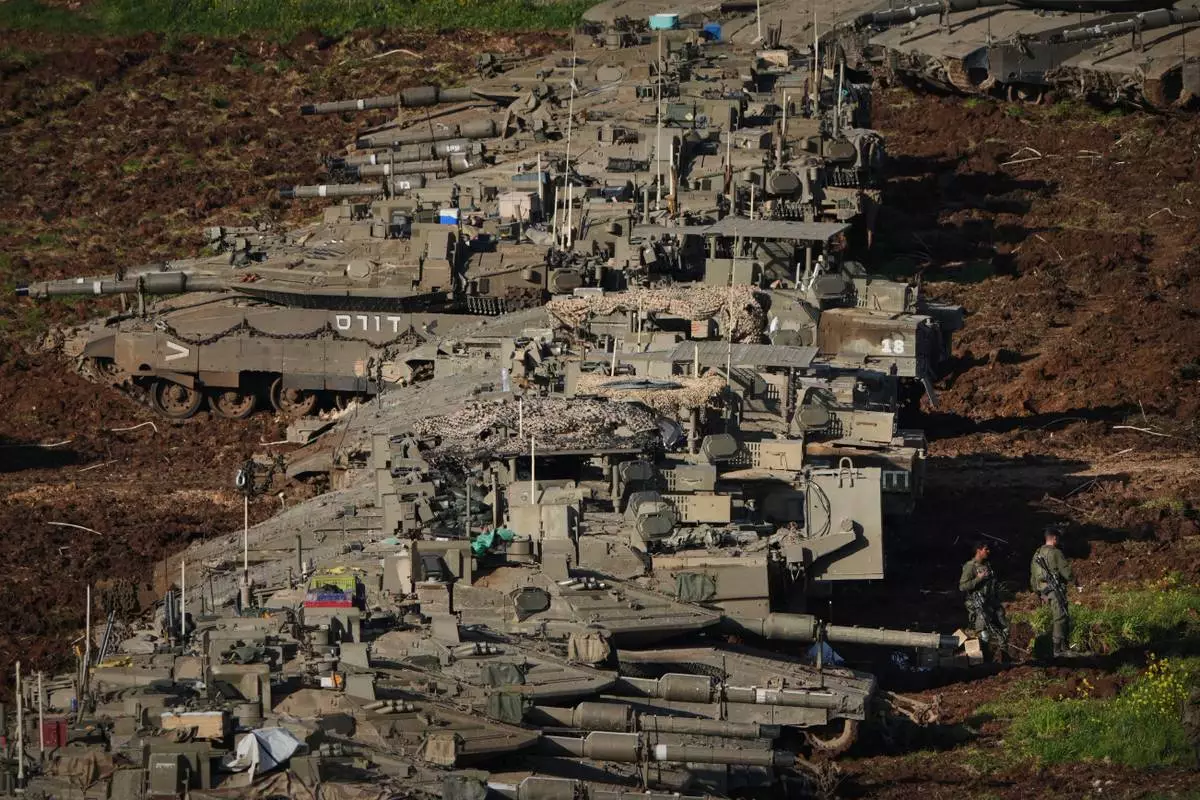
Israeli soldiers work on tanks at a staging area in northern Israel near the border with Lebanon, Friday, March 6, 2026. (AP Photo/Ariel Schalit)
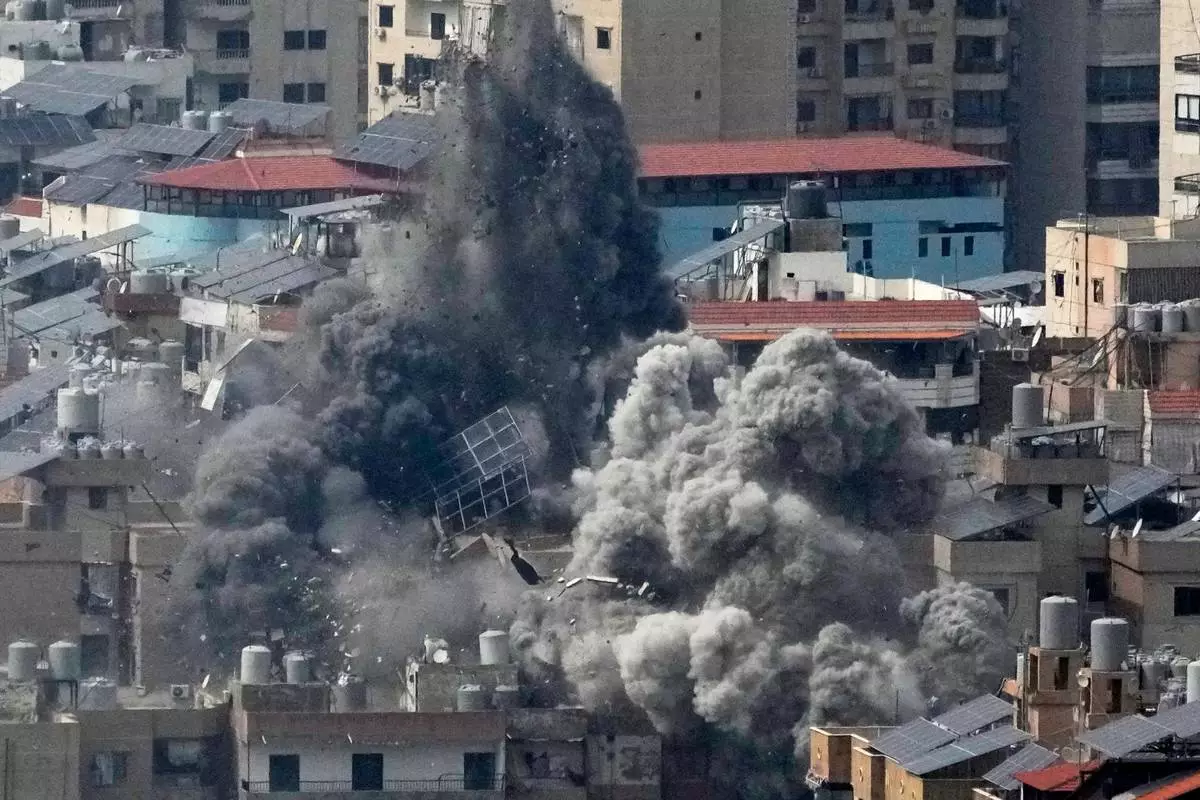
Smoke rises following an Israeli airstrike in Dahiyeh, Beirut's southern suburbs, in Beirut, Lebanon, Friday, March 6, 2026. (AP Photo/Hussein Malla)