Skip to Content Facebook Feature Image

Iran not asking for ceasefire or negotiations, ready to defend itself as long as it takes: FM
HotTV

HotTV

HotTV

Iran not asking for ceasefire or negotiations, ready to defend itself as long as it takes: FM

2026-03-16 14:44 Last Updated At:03-17 12:09

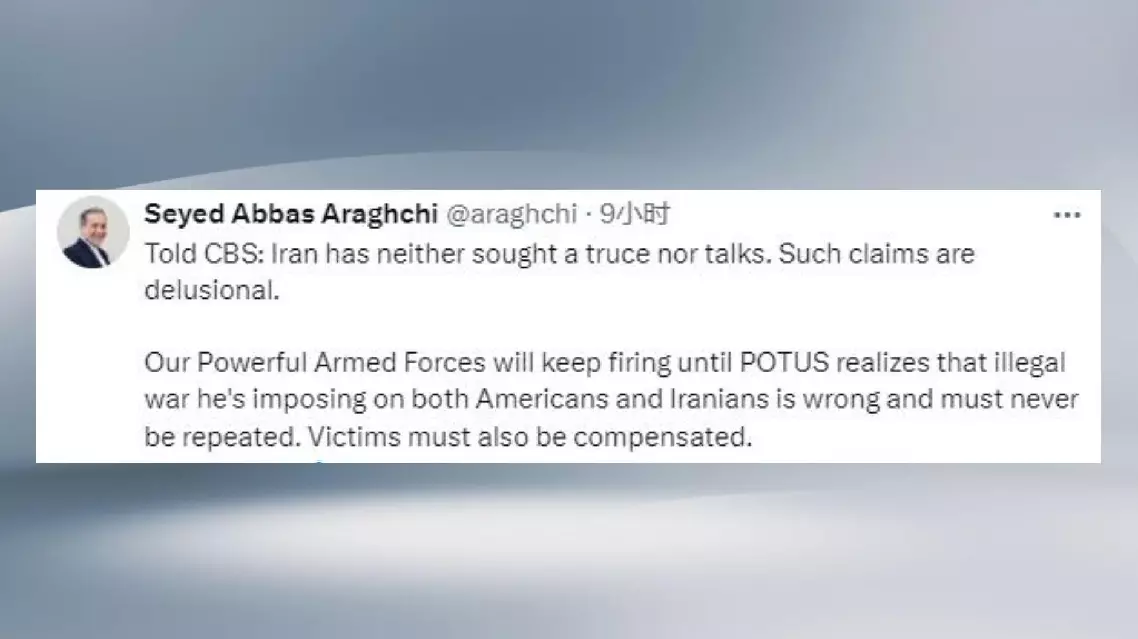
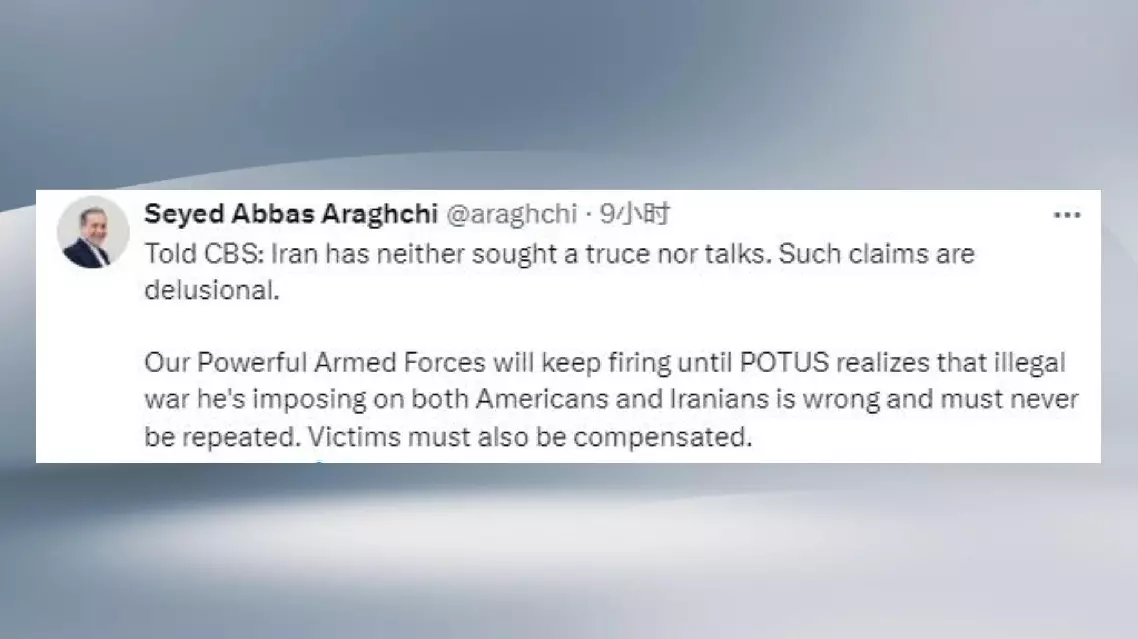
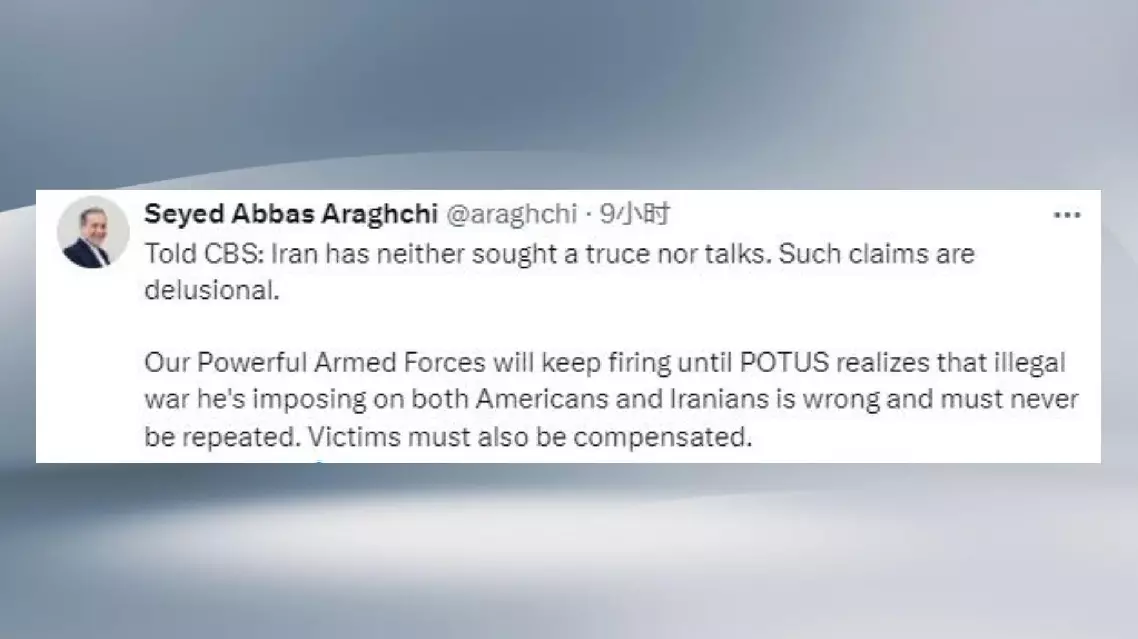
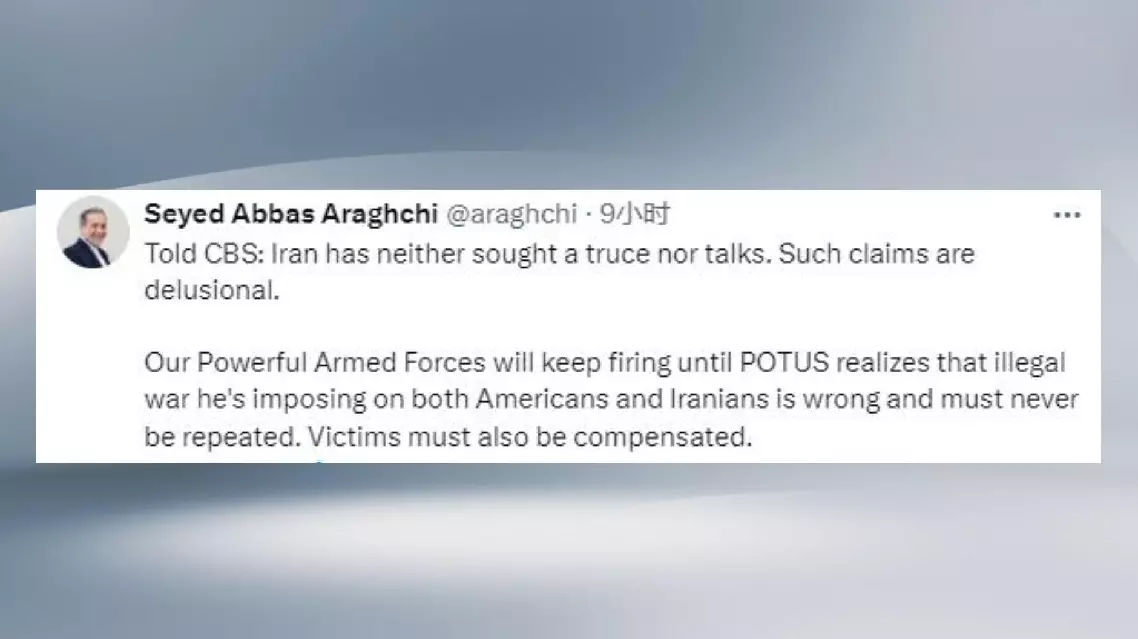
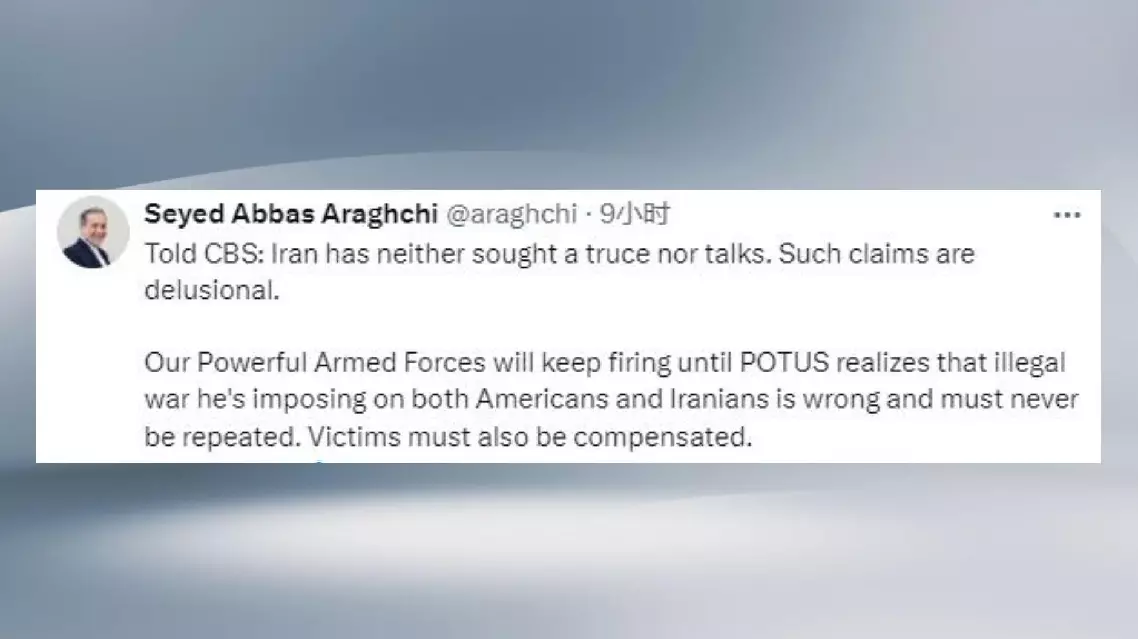
Iranian Foreign Minister Seyed Abbas Araghchi has said that the country is not asking for a ceasefire or negotiations with the United States, stating that Tehran is prepared to defend itself "as long as it takes" against what he described as an "illegal war."

In an interview with CBS News aired Sunday, Araghchi rejected claims that Iran has sought an end to hostilities.

More Images
Iran not asking for ceasefire or negotiations, ready to defend itself as long as it takes: FM

Iran not asking for ceasefire or negotiations, ready to defend itself as long as it takes: FM
Iran not asking for ceasefire or negotiations, ready to defend itself as long as it takes: FM
Iran not asking for ceasefire or negotiations, ready to defend itself as long as it takes: FM
Iran not asking for ceasefire or negotiations, ready to defend itself as long as it takes: FM
Iran not asking for ceasefire or negotiations, ready to defend itself as long as it takes: FM

Iran not asking for ceasefire or negotiations, ready to defend itself as long as it takes: FM
Iran not asking for ceasefire or negotiations, ready to defend itself as long as it takes: FM
Iran not asking for ceasefire or negotiations, ready to defend itself as long as it takes: FM
Iran not asking for ceasefire or negotiations, ready to defend itself as long as it takes: FM
"We never asked for a ceasefire, and we have never asked even for negotiations. We are ready to defend ourselves as long as it takes," said the minister.

He noted that Iran will continue its operations until U.S. President Donald Trump "comes to the point that this is an illegal war with no victory."

"We don't see any reason why we should talk with Americans, because we were talking with them when they decided to attack us, and that was for the second time," Araghchi added.

As for the Strait of Hormuz, the minister stressed that Iran has not closed this waterway. "This is up to our military to decide, and they have already decided to let a group of vessels belongs to different countries to pass," he noted.

Speaking about the nuclear issue, Araghchi reiterated that Tehran has never sought nuclear weapons.

Revealing that Iran had agreed to dilute its enriched uranium during pre-attack talks with the United States, the minister said that those enriched materials are now "under the rubble" following strikes on its nuclear facilities. "Everything is under the rubble," he said, adding that Iran has no current plans to recover enriched uranium stockpiles from the damaged sites.

Iran not asking for ceasefire or negotiations, ready to defend itself as long as it takes: FM
Iran not asking for ceasefire or negotiations, ready to defend itself as long as it takes: FM

Iran not asking for ceasefire or negotiations, ready to defend itself as long as it takes: FM

Iran not asking for ceasefire or negotiations, ready to defend itself as long as it takes: FM

Iran not asking for ceasefire or negotiations, ready to defend itself as long as it takes: FM

Iran not asking for ceasefire or negotiations, ready to defend itself as long as it takes: FM

Iran not asking for ceasefire or negotiations, ready to defend itself as long as it takes: FM

Iran not asking for ceasefire or negotiations, ready to defend itself as long as it takes: FM

Iran not asking for ceasefire or negotiations, ready to defend itself as long as it takes: FM

Iran not asking for ceasefire or negotiations, ready to defend itself as long as it takes: FM

Chinese Premier Li Qiang on Thursday presided over a State Council executive meeting that studied work on building a unified national market and reviewed and approved a plan for the development of a modern emergency response system during the 15th Five-Year Plan period (2026-2030).

Noting that building a unified national market is essential to advancing high-quality development, the meeting called for deepening institutional frameworks in areas such as property rights protection, market access, fair competition, social credit and market exit mechanisms.

The meeting also urged efforts to advance high-standard connectivity of market infrastructure to facilitate smooth economic circulation and effectively reduce logistics costs across society.

Emergency management is critical to protecting people's lives and property, the meeting said. It called for accelerating the development of a modern emergency response system, deepening reform and innovation in emergency management, and improving coordinated response mechanisms.

Efforts should be made to strengthen risk prevention at the source, enhance monitoring, forecasting and early warning, and accelerate a shift in governance toward proactive prevention, according to the meeting.

A draft revision of the Law on the People's Bank of China was also discussed and approved in principle at the meeting, which decided to submit the draft to the Standing Committee of the National People's Congress for deliberation.

Chinese premier chairs State Council executive meeting

Chinese premier chairs State Council executive meeting

Recommended Articles