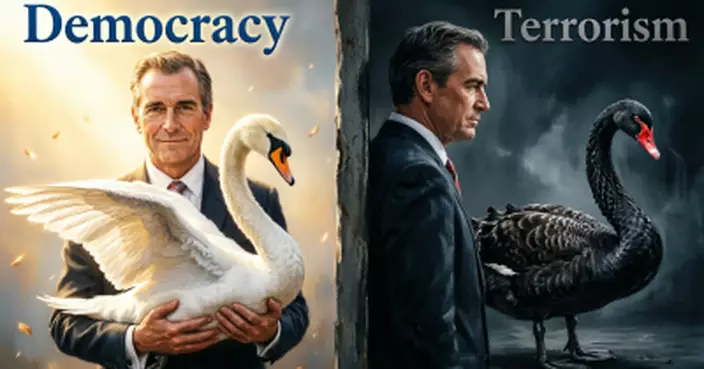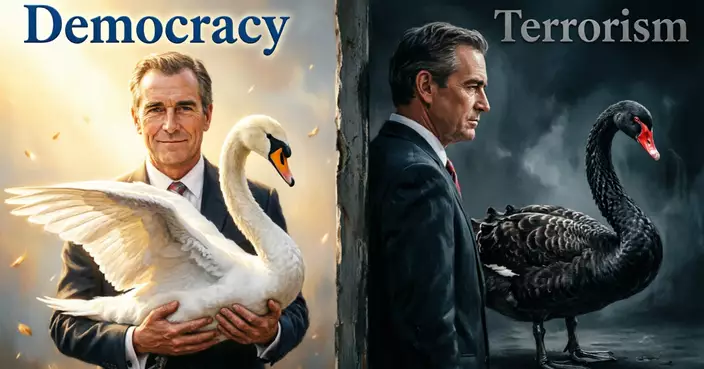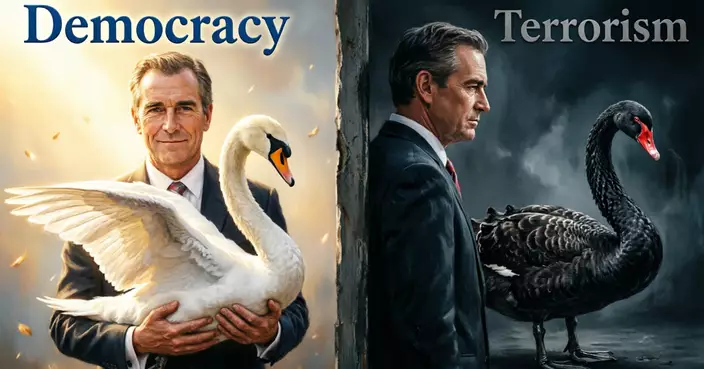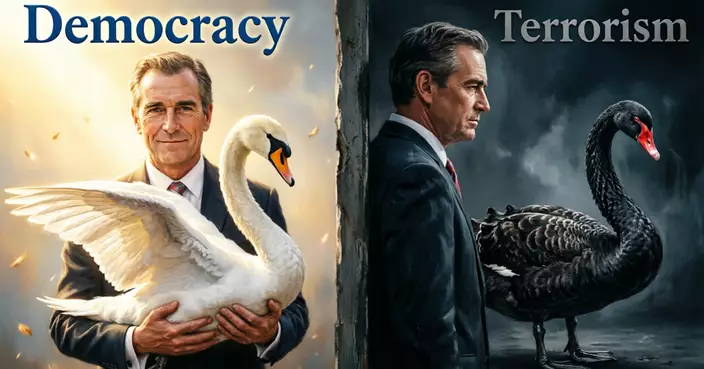

Picture this: Iran infiltrates agents into Mexico, fires missiles at American bases from the Texas border, and "accidentally" destroys a nearby school, killing 175 people, most of them children. Iran then bombs American fuel depots, raining toxic chemicals on civilians. Its forces keep striking residential neighborhoods, schools, and clinics, while its leaders warn that "death, fire, and fury" will pulverize the United States so completely it can never rebuild.
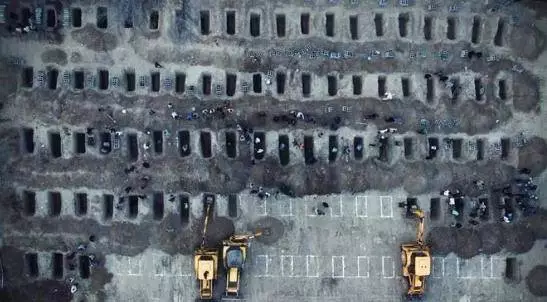
New York Times columnist Nicholas Kristof recently posed these questions in a column, then answered them himself: the American president and all Americans would howl at such "outrageous attacks on innocent civilians."
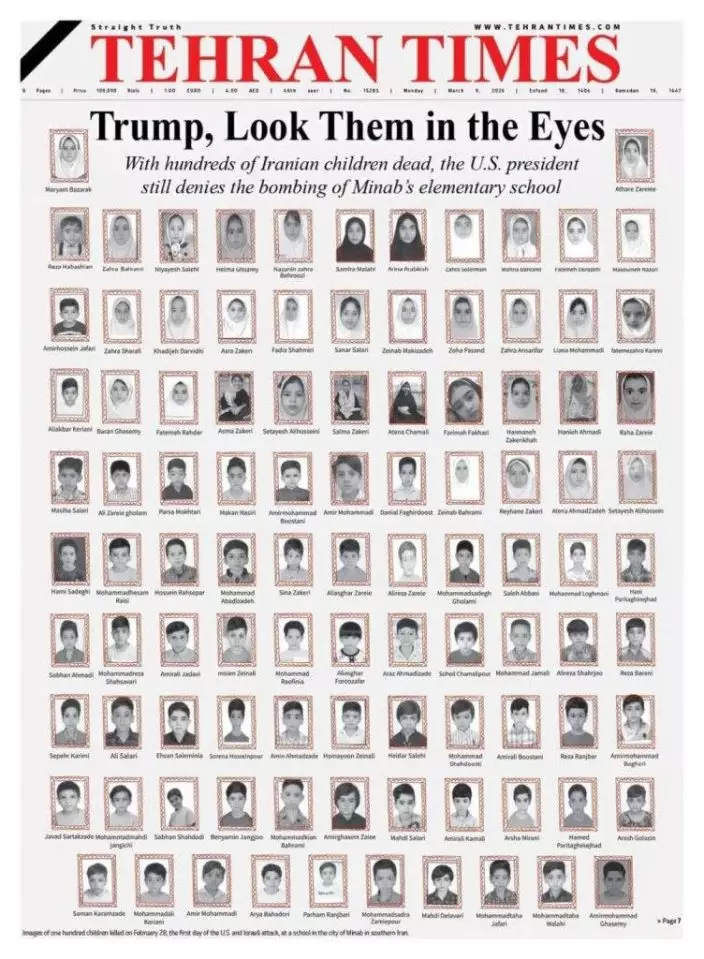
The bitter irony: in every one of those hypotheticals, the perpetrator and victim have swapped places. The country doing all of this is the United States of America, self-proclaimed defender of civilization.
After World War II, the international community tried to bring warfare under the constraints of civilization. The Geneva Conventions and their Additional Protocols explicitly ban the destruction of infrastructure civilians depend on to survive, including water supplies. The United States was the principal architect and champion of that so-called "rules-based international order."
Documented Attacks, Deliberate Destruction
But under President Trump, that veneer is being stripped away by the very hands that stitched it together. Since the joint US-Israeli strikes on Iran began,a U.S. strike hit an Iranian elementary school on February 28, killing more than 170 people; U.S. forces targeted a desalination plant that supplied water to 30 villages; others suffered from U.S. military attacks included more than 17,000 homes, 65 schools, and 14 medical centers, as reported by The Iranian Red Crescent.
Oona Hathaway, a Yale Law School scholar and incoming president of the American Society of International Law, said the U.S. strikes lacked UN authorization and any credible self-defense justification, and thus allegedly violated international law. Former war crimes prosecutor David Crane lamented that the world is entering an 'era of lawless conflict,' one propelled, in no small part, by the United States itself.
Even more chilling: this is not about 'accidents' or 'collateral damage.' It is a deliberate threat and a strategic shift, and it comes from the very top.
Trump publicly threatened to “make it virtually impossible for Iran to ever be built back”, declaring that 'death, fire, and fury will reign upon them.' Defense Secretary Hegseth denounced the 'ridiculous rules of engagement' meant to protect civilians and shut down the Pentagon office responsible for enforcing them. Senator Lindsey Graham boasted that the United States would bomb Iran into oblivion.
Allies Recoil, Strategy Backfires
Military strategy scholar Phillips O'Brien put it plainly: 'One could argue that Trump is threatening to commit one of the greatest war crimes in history.' When a nation's leader openly vows to leave an adversary 'unable to rebuild, ever,' when his defense secretary dismisses civilian protection rules as 'ridiculous,' and when schools, water facilities, and hospitals are systematically destroyed, the question writes itself: what exactly separates this from the 'rogue state' conduct these same leaders have long condemned?
Even America's closest allies couldn't stomach it. Spanish Prime Minister Sánchez called the war 'reckless and illegal.' Switzerland's defense minister said the U.S. strikes violated international law. Former French Prime Minister de Villepin went further, condemning them as 'illegal, illegitimate, ineffective, and dangerous' and calling for sanctions.
Yet this costly war is lurching toward an absurd conclusion. It has failed to topple the Iranian regime and may have hardened it instead. With American 'assistance,' the young Mojtaba Khamenei has succeeded his father killed in the strikes, as Supreme Leader. A source close to the White House put it with resignation: 'You killed his father and his wife. Do you think he'll be more rational, or less?'
Meanwhile, the blockade of the Strait of Hormuz has pushed up global oil prices, threatened fertilizer supplies, and sent the bill for America's 'fury' to the rest of the world. Retired U.S. four-star General Wesley Clark put it simply: the war 'is going off the rails.'
America Drives the World Lawless
Who is driving the world to 'slide into a world where there are no rules anymore'?
To close his piece, New York Times columnist Nicholas Kristof reached for a chilling line. German Vice Chancellor Klingbeil: 'We are sliding into a world where there are no rules anymore.' Kristof's verdict: the United States is one of the leading drivers of that slide.
The spectacle is stark, and the irony sharper still. The nation that once cast itself as the 'world's policeman' and preached a 'rules-based order' at every diplomatic turn is now using its most advanced fighter jets, its most precise missiles, and its highest-level threats to blow those very rules apart. It arms allies who strike civilians in Gaza. It reduces schools and water facilities to rubble in Iran. It shouts 'protect civilians' with one breath, then dismantles the very institutions responsible for doing so with the next.
Tom Fletcher, the UN's head of humanitarian affairs, put it plainly: “The rules-based scaffolding meant to restrain the worst excesses of war is cracking.” The fracture starts in Washington. Trump and his team are running a blood-soaked real-world demonstration of what 'American-style rogue behavior' actually looks like. Stripped bare, it is pure double standards: rules exist to constrain others when convenient, and to be shattered when they are not.
This may be the most chilling legacy this war leaves the world: a superpower that, with a clear conscience, shed civilization's veneer and sprinted naked into barbarism.
Beacon Institute
** 博客文章文責自負,不代表本公司立場 **