Skip to Content Facebook Feature Image

Iran's parliament speaker is floated as a possible US contact in talks as war rages

News

Iran's parliament speaker is floated as a possible US contact in talks as war rages
News

News

Iran's parliament speaker is floated as a possible US contact in talks as war rages

2026-03-24 17:39 Last Updated At:17:50

DUBAI, United Arab Emirates (AP) — Long before he became Iran's parliament speaker, Mohammad Bagher Qalibaf went on a charm offensive for almost two decades, portraying himself as a hard-liner the West could do business with in the Islamic Republic.

“I would like the West to change its attitude to Iran and trust Iran, and rest assured that there’s an attitude in Iran to advance issues through dialogue,” he told The Times newspaper of London in 2008.

With the U.S. and Israel's war with Iran in its fourth week, the 64-year-old pilot and former Revolutionary Guard commander has denied there have been talks with the United States amid reports that he was floated as Washington's negotiating partner in talks.

Questions also remain as to what power Qalibaf has within Iran's theocracy, shattered after the Feb. 28 Israeli airstrike that killed 86-year-old Supreme Leader Ayatollah Ali Khamenei.

Khamenei's son, Mojtaba, now Iran's new supreme leader, has backed Qalibaf through his repeated and failed presidential campaigns. Still, multiple centers of power within Iran's theocracy now likely vie for control of the Islamic Republic — and uncertainties remain over Mojtaba Khamenei's status as he has yet to be seen after reportedly being wounded.

Meanwhile, Qalibaf has been tied to the crackdown against protesters calling for change within Iran's government and has seen corruption allegations swirl around him during his time in office.

U.S. President Donald Trump may just be looking for an Iranian version of Venezuela’s acting President Delcy Rodríguez, who took over as the U.S. military seized former Venezuelan leader Nicolás Maduro in January.

“Many Iranians despise Ghalibaf; diplomats see him as pragmatic,” wrote analyst Michael Rubin, using a different transliteration for the politician's last name. “Those diplomats confuse pragmatism with opportunism. Ghalibaf is a survivor. He sees in Trump someone who can help him achieve what late Supreme Leader Ali Khamenei denied him: the presidency or some equivalent interim leadership role.”

Iran's semiofficial Tasnim news agency, believed close to the Guard, on Tuesday described reports in Western media as a “political bomb” meant to put the country's leaders in disarray.

"Qalibaf was introduced as a negotiating party in order to present a contradictory and non-unified image of Iran," Tasnim said. “The mention of Qalibaf’s name was clearly intended to create internal divisions within Iran and to provoke conflict among political forces.”

Qalibaf was born in the city of Torqabeh in Iran's northeastern Razavi Khorasan province to a father who was a shopkeeper — not a member of the Shiite clergy that seized power in the 1979 Islamic Revolution.

Like many young men of his generation, he joined the paramilitary Guard during the country’s bloody 1980s war with Iraq, quickly rising through the ranks. After the conflict, he served as the head of the Guard’s construction arm, Khatam al-Anbia, for several years leading efforts to rebuild.

Trained as a pilot, he then served as the head of the Guard’s air force. In 1999, he co-signed a letter to reformist President Mohammad Khatami amid student protests in Tehran over the government closing a reformist newspaper and a subsequent security force crackdown. The letter warned Khatami the Guard would take action unilaterally unless he agreed to putting down the demonstrations.

Violence around the protests, the first in a string of widening demonstrations over the last decades, saw several people killed, hundreds wounded and thousands arrested.

Qalibaf then became the head of Iran’s police, modernizing the force and implementing the country’s 110 emergency phone number. However, a leaked recording of a later meeting between Qalibaf and members of the Guard’s volunteer Basij force, had him claiming that he ordered gunfire be used against demonstrators in 2003 and praising the violence used in Iran’s 2009 Green Movement protests.

Iran's then-President Hassan Rouhani hinted at the the 2003 incident when the two sparred in a 2017 presidential election debate.

“There was an argument that you were saying that the students should come then we can pincer attack to them and finish the job,” Rouhani said at the time.

As Tehran's mayor from 2005 to 2017, Qalibaf faced corruption allegations, including over some $3.5 million being donated to a foundation run by his wife.

However, he also used his prominence to travel to the World Economic Forum and even praised New York City in an interview with The Financial Times, undoubtedly raising eyebrows among other hard-liners. His opponents claimed Qalibaf was like Reza Pahlavi, a hard-charging soldier who became shah in 1925 and rapidly pushed to Westernize Persia and rename it Iran before handing power to his son Shah Mohammad Reza Pahlavi.

Qalibaf didn't outright reject the comparison.

“If authoritarianism means when collective sense reaches a plan and decision, I’m very determined and firm in carrying it out,” Qalibaf told The Financial Times in 2008, casting himself as an alternative to the hard-line President Mahmoud Ahmadinejad. “When the expediency of the society is in carrying a project, then I’m very firm and show little flexibility and don’t let that collective sense be marred or disarrayed.”

Qalibaf ran in presidential elections in 2005, 2013, 2017 and 2024 but despite the failures of those campaigns, U.S. diplomats suggested he enjoyed the support of Mojtaba Khamenei, according to diplomatic cables published by WikiLeaks.

“Mojtaba reportedly has long maintained a very close relationship with Tehran Mayor and presidential hopeful Mohammad Baqr Qalibaf; Mojtaba was reportedly the ‘backbone’ of Qalibaf’s past and continuing election campaigns,” an August 2008 cable read. “Mojtaba is said to help Qalibaf as an advisor, financier, and provider of senior-level political support. His support for and closeness to Qalibaf reportedly remains undiminished.”

With Khamenei now Iran’s new supreme leader, Qalibaf’s position may be significantly boosted.

Trump pulled back from a 48-hour deadline for Iran to open the Strait of Hormuz, media reports suggested Qalibaf may be a possible Iranian contact for the U.S. government. Qalibaf himself has denied any talks are ongoing.

“No negotiations have been held with the US, and fakenews is used to manipulate the financial and oil markets and escape the quagmire in which the US and Israel are trapped,” he wrote Monday on X.

Surprisingly, unlike many officials within Iran's government, Qalibaf's name is not on any U.S. bounty.

It remains unclear whether the Israelis view Qalibaf as a target. As parliament speaker, Qalibaf praised the Oct. 7, 2023, Hamas attack on Israel, saying that it showed the “Zionist regime will never have peace until the day it is annihilated.”

Trump as well apparently appeared concerned Monday that his unnamed negotiating partner could jeopardize the safety of any talks.

Asked why he wouldn't name the Iranian negotiator, Trump told journalists: “Because I don’t want them to be killed, OK? I don’t want them to be killed.”
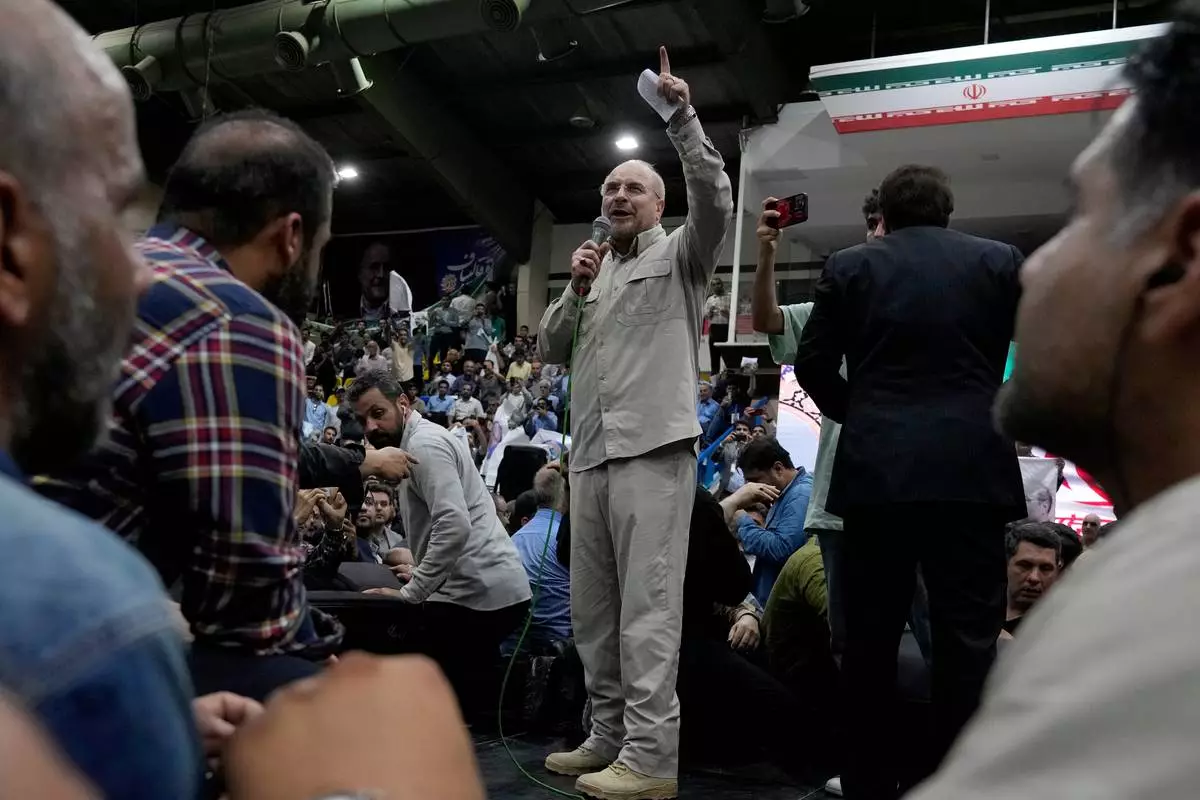
FILE - Iran's parliament speaker Mohammad Bagher Qalibaf, the most prominent hard-line candidate for the June 28 presidential election, speaks in his campaign gathering in Tehran, Iran, on June 26, 2024. (AP Photo/Vahid Salemi, File)
FILE - Iran's parliament speaker Mohammad Bagher Qalibaf, the most prominent hard-line candidate for the June 28 presidential election, speaks in his campaign gathering in Tehran, Iran, on June 26, 2024. (AP Photo/Vahid Salemi, File)

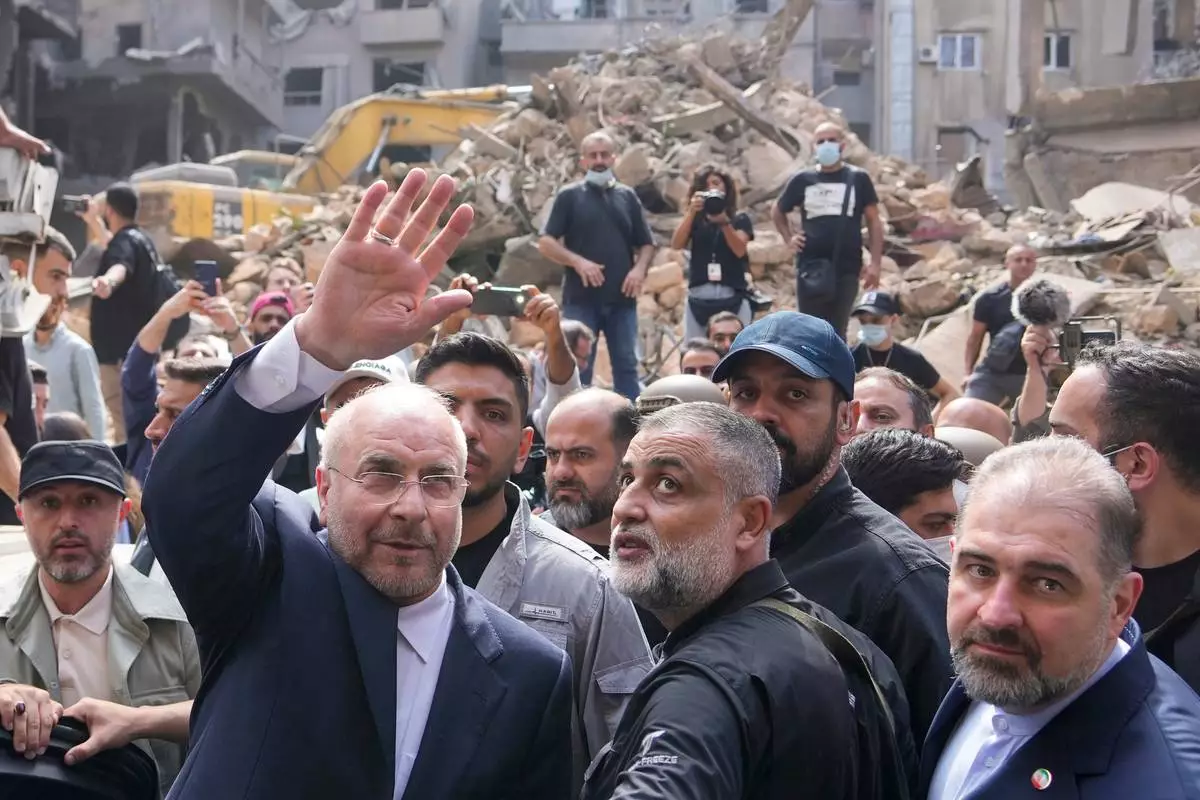
FILE - Iran's parliament speaker Mohammad Bagher Qalibaf, left, waves to residents as he visits the site of an Israeli airstrike in Beirut, Lebanon, on Oct. 12, 2024. (AP Photo/Hassan Ammar, File)
FILE - Iran's parliament speaker Mohammad Bagher Qalibaf, left, waves to residents as he visits the site of an Israeli airstrike in Beirut, Lebanon, on Oct. 12, 2024. (AP Photo/Hassan Ammar, File)

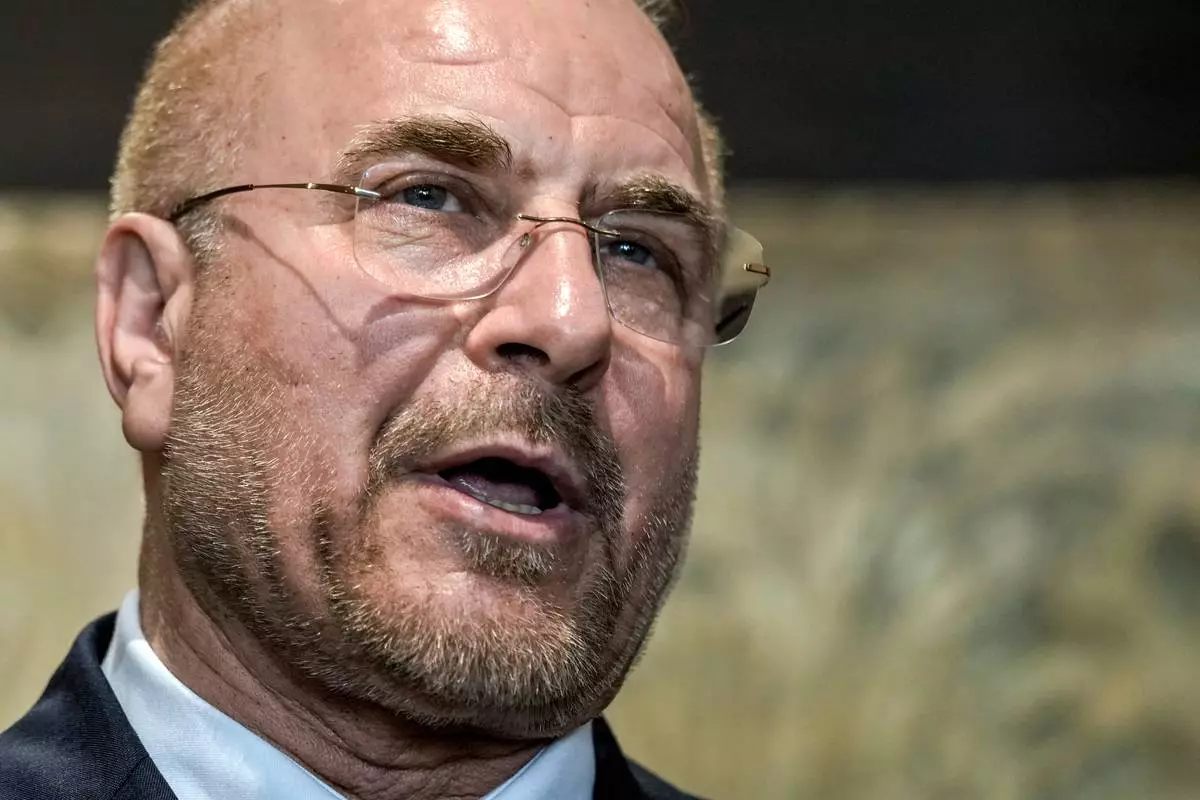
FILE - Iran's parliament speaker Mohammad Bagher Qalibaf, speaks during a press conference in Beirut, Lebanon, on Oct. 12, 2024. (AP Photo/Bilal Hussein, File)
FILE - Iran's parliament speaker Mohammad Bagher Qalibaf, speaks during a press conference in Beirut, Lebanon, on Oct. 12, 2024. (AP Photo/Bilal Hussein, File)
COPENHAGEN, Denmark (AP) — Danish voters went to the polls Tuesday in a general election, with Prime Minister Mette Frederiksen seeking a third term at the helm of the Scandinavian country after a standoff with U.S. President Donald Trump over the future of the kingdom’s semiautonomous territory of Greenland.

More than 4.3 million people are eligible to have their say in the vote for the new Folketing, or parliament, in Copenhagen, which is elected for a four-year term.

Frederiksen called the election in February, several months before she had to in apparent hopes that her resolute image in the crisis over Greenland would help her with voters in the European Union and NATO member country.

In her second term, her support had waned as the cost of living rose — something that, along with pensions and a potential wealth tax, has been a prominent campaign issue.

The 48-year-old center-left Social Democrat is known for strong support of Ukraine in its defense against Russia’s invasion and for a restrictive approach to migration — continuing a tradition in Danish politics that now goes back two decades.

Seeking to counter pressure from the right and pointing to a possible surge in migration because of the Iran war, Frederiksen announced proposals this month that include a potential “emergency brake” on asylum and tighter controls on criminals who lack legal residence. Her government had already unveiled a plan to allow the deportation of foreigners who have been sentenced to at least one year in prison for serious crimes.

Two center-right challengers hope to oust Frederiksen as prime minister. One is in her current government — Defense Minister Troels Lund Poulsen of the Liberal, or Venstre, party, which headed several recent administrations.

The other is Alex Vanopslagh, 34, of the opposition Liberal Alliance, which calls for lower taxes and less bureaucracy, and for Denmark to abandon its refusal to use nuclear power. But a recent admission from Vanopslagh to taking cocaine earlier in his time as party leader may have dented his chances.

Further to the right, the anti-immigration Danish People’s Party looks well-placed to bounce back from a very weak showing at the last election in 2022.

No single party is expected to come anywhere near winning a majority. Denmark’s system of proportional representation typically produces coalition governments, traditionally made up of several parties from either the “red bloc” on the left or the “blue bloc” on the right, after weeks of negotiations.

Frederiksen’s outgoing three-party administration was the first in decades to straddle the political divide. It remains to be seen whether this election will result in a repeat, with the centrist Moderate party of Foreign Minister Lars Løkke Rasmussen possibly acting as the kingmaker.

Greenland, which took up much of the government’s energy in recent months, hasn’t been a significant issue in the campaign because there is broad agreement on its place in the kingdom.

Frederiksen warned in January that an American takeover of Greenland would amount to the end of NATO. But the crisis has simmered down, at least for now.

After Trump backed down on threats to impose tariffs on Denmark and other European countries that opposed the U.S. taking control of the vast Arctic island, the U.S., Denmark and Greenland started technical talks on an Arctic security deal.

Peter Mortensen, a lawyer, speaking just after he had voted, told The Associated Press that, “I would like some politicians who have a vision for our country."

“What are we supposed to do in this world with war and our neighbors and perhaps our allies are threatening us instead of being allies?” he added. “I don’t have the answers, but the politicians don’t have it either.”

Denmark’s single-chamber parliament has 179 seats. Of those, 175 go to lawmakers from Denmark itself and two each for representatives from thinly populated Greenland and the kingdom’s other semiautonomous territory, the Faroe Islands.

Moulson reported from Berlin.

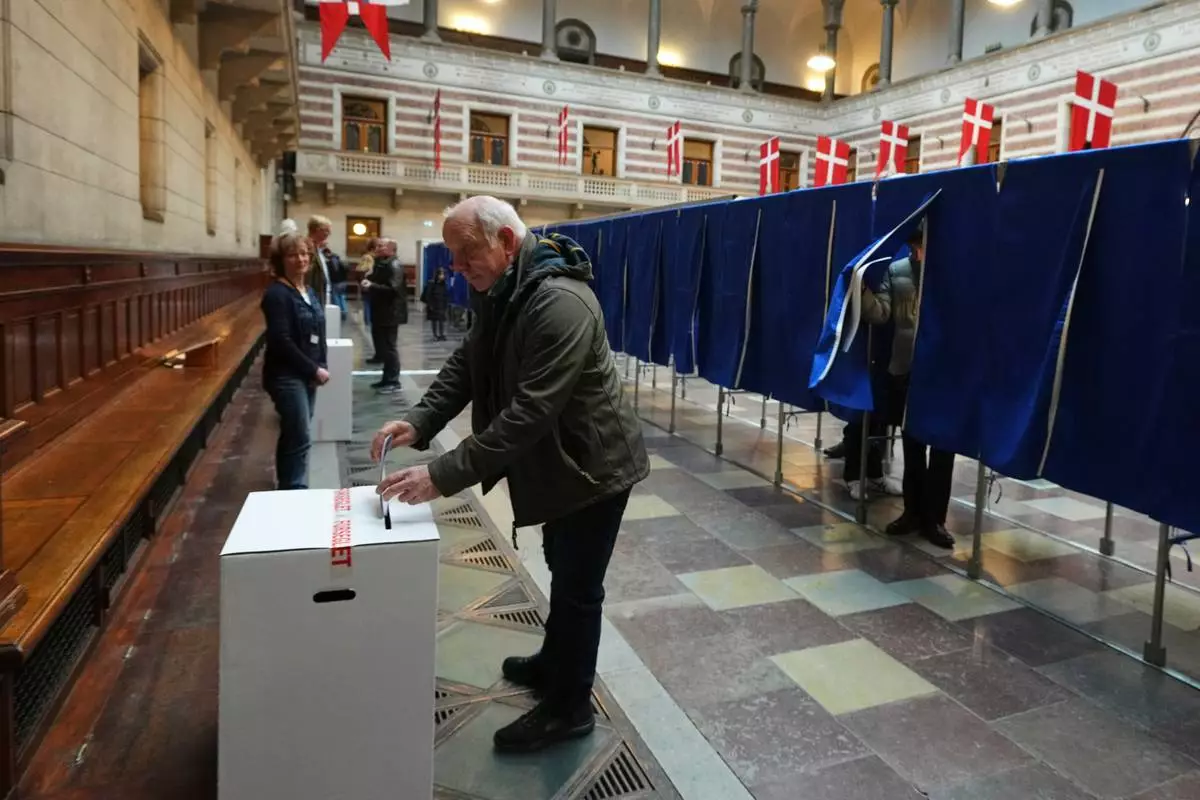
A man casts a ballot at a polling station at City Hall in Copenhagen, Denmark, on Tuesday, March 24, 2026, during the general election. (AP Photo/Sergei Grits)

A man casts a ballot at a polling station at City Hall in Copenhagen, Denmark, on Tuesday, March 24, 2026, during the general election. (AP Photo/Sergei Grits)

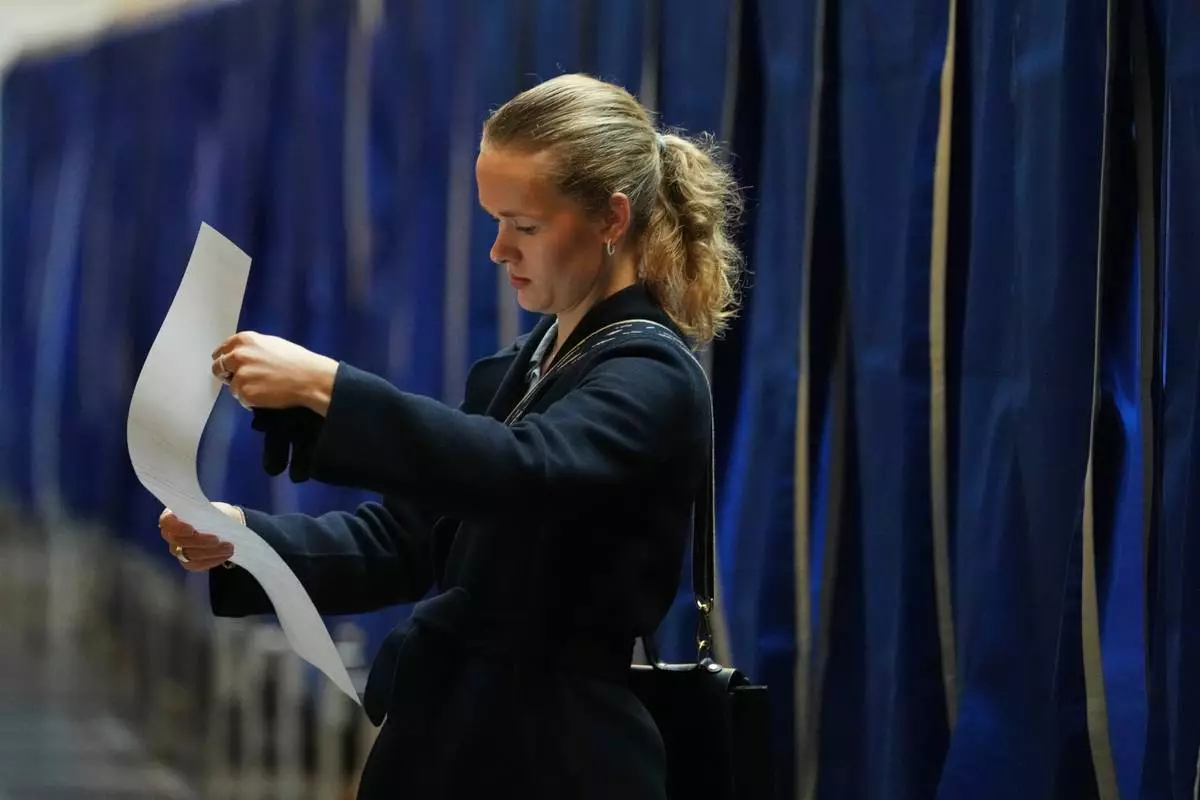
A woman holds a ballot at a polling station at City Hall in Copenhagen, Denmark, on Tuesday, March 24, 2026, during the general election. (AP Photo/Sergei Grits)

A woman holds a ballot at a polling station at City Hall in Copenhagen, Denmark, on Tuesday, March 24, 2026, during the general election. (AP Photo/Sergei Grits)

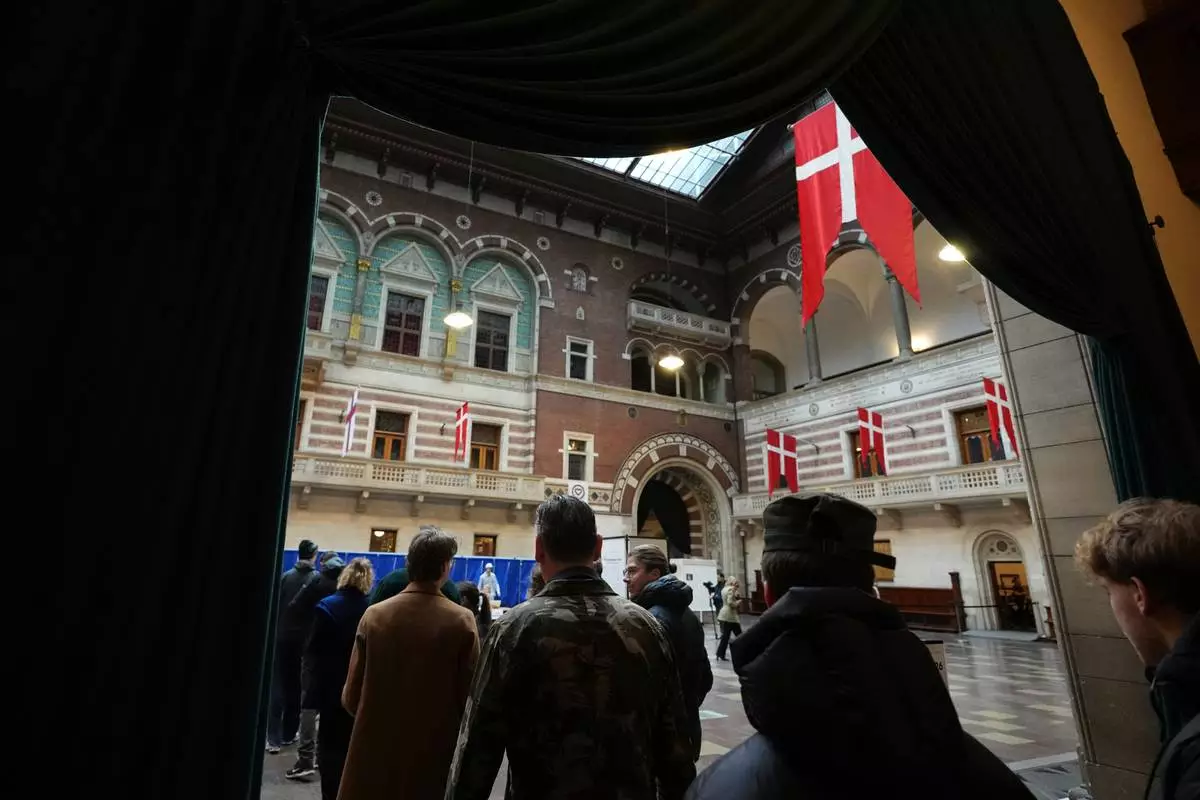
People line up to receive their ballots at a polling station at City Hall in Copenhagen, Denmark, on Tuesday, March 24, 2026, during the general election. (AP Photo/Sergei Grits)

People line up to receive their ballots at a polling station at City Hall in Copenhagen, Denmark, on Tuesday, March 24, 2026, during the general election. (AP Photo/Sergei Grits)

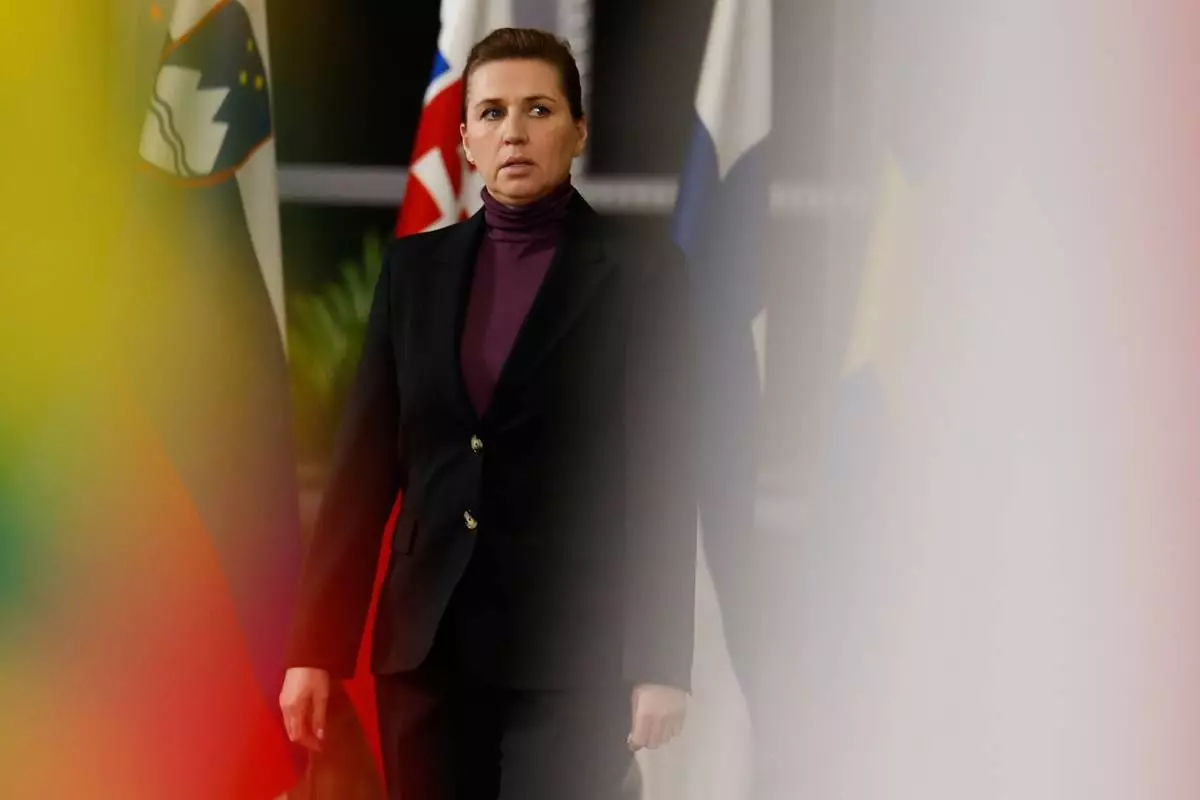
FILE - Denmark's Prime Minister Mette Frederiksen arrives for the EU summit in Brussels, Jan. 22, 2026. (AP Photo/Geert Vanden Wijngaert, File)

FILE - Denmark's Prime Minister Mette Frederiksen arrives for the EU summit in Brussels, Jan. 22, 2026. (AP Photo/Geert Vanden Wijngaert, File)

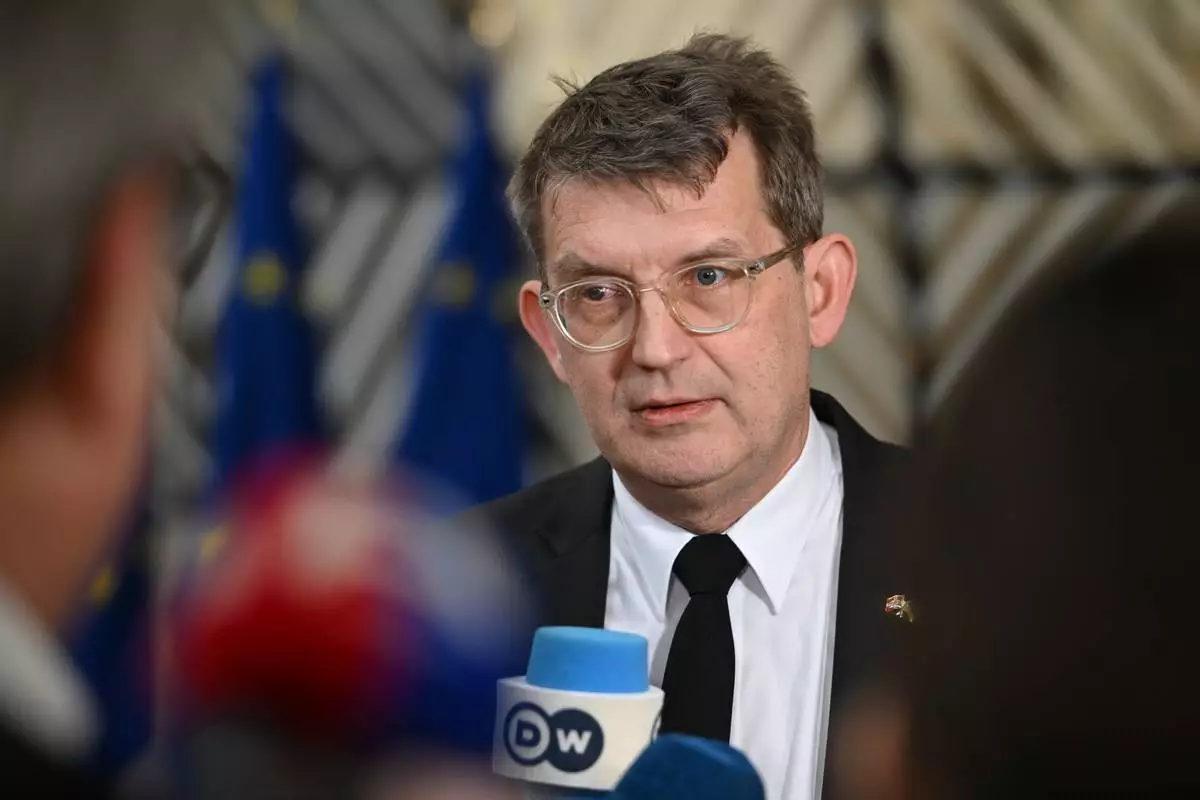
FILE - Denmark's Defense Minister Troels Lund Poulsen speaks with the media as he arrives for a meeting of European Union defense ministers at the European Council building in Brussels, Feb. 11, 2026. (AP Photo/Harry Nakos, File)

FILE - Denmark's Defense Minister Troels Lund Poulsen speaks with the media as he arrives for a meeting of European Union defense ministers at the European Council building in Brussels, Feb. 11, 2026. (AP Photo/Harry Nakos, File)

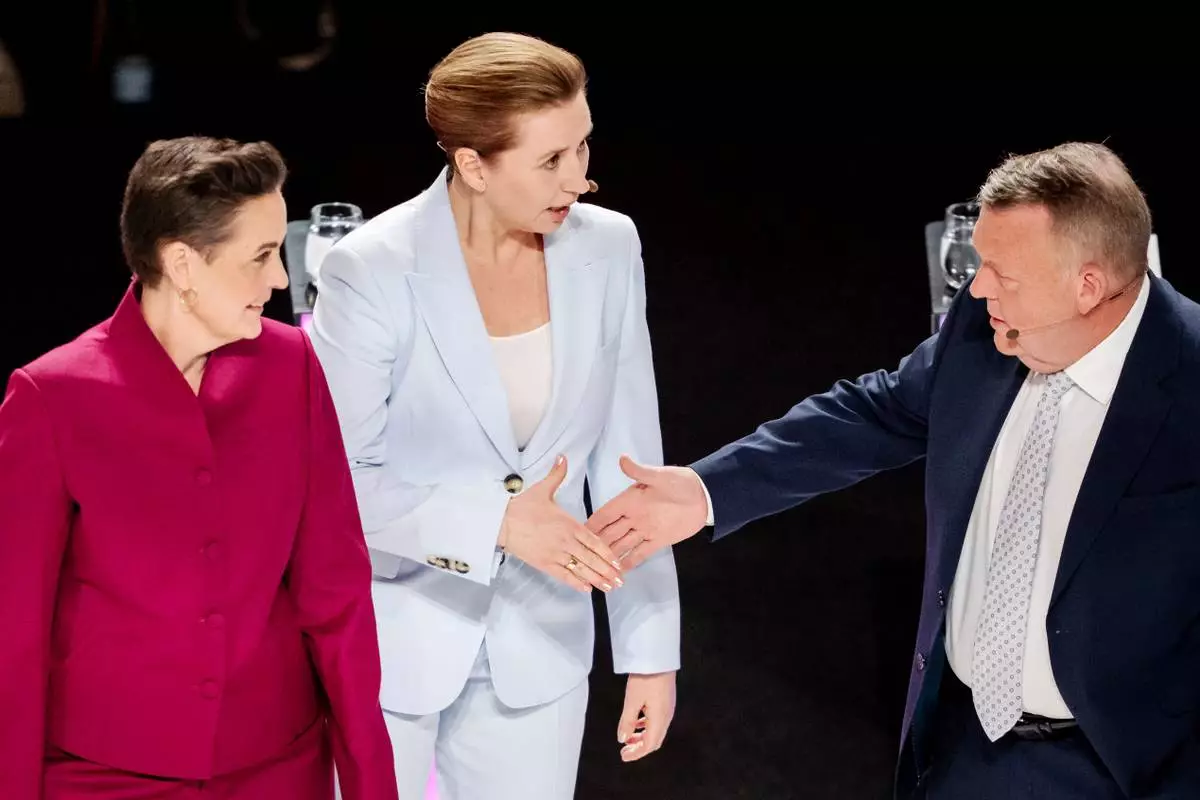
Denmark's Prime Minister Mette Frederiksen, center, Lars Loekke Rasmussen, right, and Pia Olsen Dyhr, left, attend the party leader debate Democracy's Evening on DR1 at the Concert Hall, DR City in Copenhagen, Sunday, March 22, 2026. (Mads Claus Rasmussen/Ritzau Scanpix via AP)

Denmark's Prime Minister Mette Frederiksen, center, Lars Loekke Rasmussen, right, and Pia Olsen Dyhr, left, attend the party leader debate Democracy's Evening on DR1 at the Concert Hall, DR City in Copenhagen, Sunday, March 22, 2026. (Mads Claus Rasmussen/Ritzau Scanpix via AP)

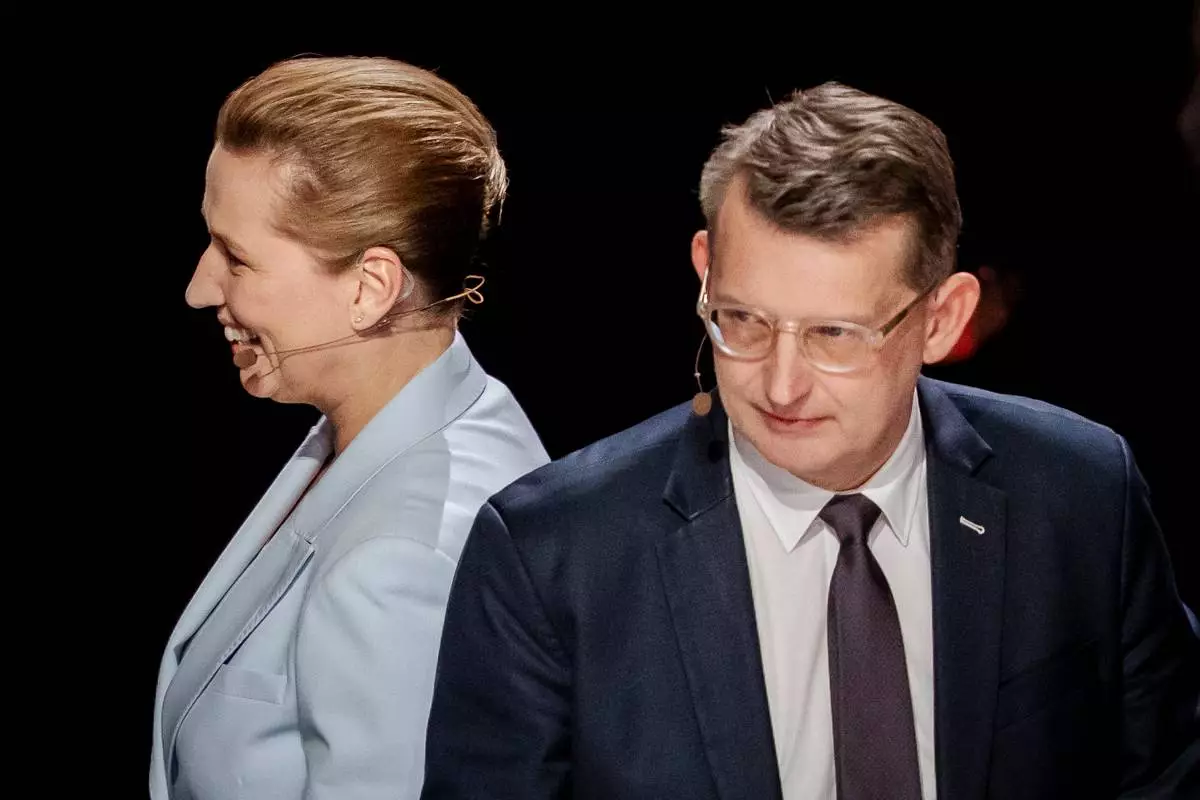
Denmark's Prime Minister Mette Frederiksen, left, and Defense Minister Troels Lund Poulsen, right, attend the party leader debate Democracy's Evening on DR1 at the Concert Hall, DR City in Copenhagen, Sunday, March 22, 2026. (Mads Claus Rasmussen/Ritzau Scanpix via AP)

Denmark's Prime Minister Mette Frederiksen, left, and Defense Minister Troels Lund Poulsen, right, attend the party leader debate Democracy's Evening on DR1 at the Concert Hall, DR City in Copenhagen, Sunday, March 22, 2026. (Mads Claus Rasmussen/Ritzau Scanpix via AP)

Recommended Articles