TORONTO--(BUSINESS WIRE)--Mar 24, 2026--
This spring, the Aga Khan Museum invites visitors to explore the creativity and cultural exchange found in games and sports across time and place. Opening April 3, 2026, Game On! brings together paintings, photography, historic game boards, and contemporary installations to explore how games connect people, spark creativity, and build communities.
This press release features multimedia. View the full release here: https://www.businesswire.com/news/home/20260324747917/en/
As the leading museum in North America dedicated to showcasing the arts and culture of Muslim civilizations, the Aga Khan Museum is bringing global perspectives to Toronto as the city gets ready to celebrate global soccer matches in June and July.
“Games have long brought people together across cultures and centuries, creating shared experiences that connect us beyond borders, languages, and differences,” said Bita Pourvash, Curator at the Aga Khan Museum. “Whether played on boards, performed through physical skill, explored via the spoken or written word, or navigated in digital worlds, games carry educational, symbolic, and social roles that shape how we learn, connect, and make meaning through play.”
Organized into three thematic sections, “The Board,” “The Quest,” and “The Arena,” the exhibition follows the journeys of games as they travelled between regions, adapted to new contexts, and helped shape traditions worldwide. Seen through this cross-cultural lens, it reveals an enduring tradition of creativity and exchange. Visitors will encounter games of strategy and intellect, as well as stories of adventure and competition, that capture the energy and cultural significance of games and sports.
Game On! features masterpieces from the Aga Khan Museum’s collections along with rare loans from other leading international and national institutions, including the British Library, the Art Gallery of Ontario, the Metropolitan Museum of Art, the Los Angeles County Museum of Art, and the Islamic Arts Museum Malaysia.
Highlights of the exhibition include:
“Play is a universal language that everyone understands, and the exhibition is the starting point for us to dive into how games and sports have been one of humanity’s great connectors,” said Dr. Sascha Priewe, Director, Collections and Public Programs at the Aga Khan Museum. “From talks, workshops, and festivals to family activities, performances and the public viewing of soccer games, we invite visitors to experiment with strategy, storytelling, and creativity, offering immersive ways to experience the cultural stories and artistic traditions behind games from around the world.”
As a complement to the exhibition, the Great Canadian Jersey, part of Rogers’ This Is Our Game campaign, will be on display at the Museum from June 16 to July 12, 2026. Created from patches donated by fans across every province and territory and handcrafted by designer and former Ontario Hockey League player Cameron Lizotte, the patchwork jersey celebrates the diversity of Canada’s hockey community in a single, unifying emblem of the game.
As Toronto prepares to welcome visitors from around the world for the upcoming global soccer tournament this year, Game On! offers a timely opportunity to reflect on how games and sports bring people together. During the Museum’s annual Rhythms of Canada festival, sports fans will also have the chance to gather for a series of free livestreams of the major international soccer matches taking place across North America, creating a shared space to celebrate the joy of games together.
Game On! runs through September 7, 2026 . For more information, visit agakhanmuseum.org/gameon.
Game On! is supported by Presenting Sponsor Sunray Group, and Supporting Sponsors, Lizna & Farhan Kabani, Securranty, and Texas Jasmine. It is financially assisted by the Ontario Cultural Attractions Fund, a program of the Government of Ontario through the Ministry of Tourism, Culture and Gaming, administered by the Ontario Cultural Attractions Fund Corporation. We acknowledge the support of the Canada Council for the Arts. With thanks to the Global Patrons of the Aga Khan Museum.
The Museum would like to acknowledge funding support from the Toronto Arts Council, the Ontario Arts Council, the Government of Ontario, the Canada Council for the Arts, and the Government of Canada.
About the Aga Khan Museum
The Aga Khan Museum in Toronto, Canada, has been established and developed by the Aga Khan Trust for Culture (AKTC), which is an agency of the Aga Khan Development Network (AKDN). Through permanent and temporary exhibitions, educational activities and performing arts, the Museum’s mission is to spark wonder, curiosity, and understanding of Muslim cultures and their connection with other cultures through the arts. Designed by architect Fumihiko Maki, the Museum shares a 6.8-hectare site with Toronto’s Ismaili Centre, which was designed by architect Charles Correa. The surrounding landscaped park was designed by landscape architect Vladimir Djurovic.
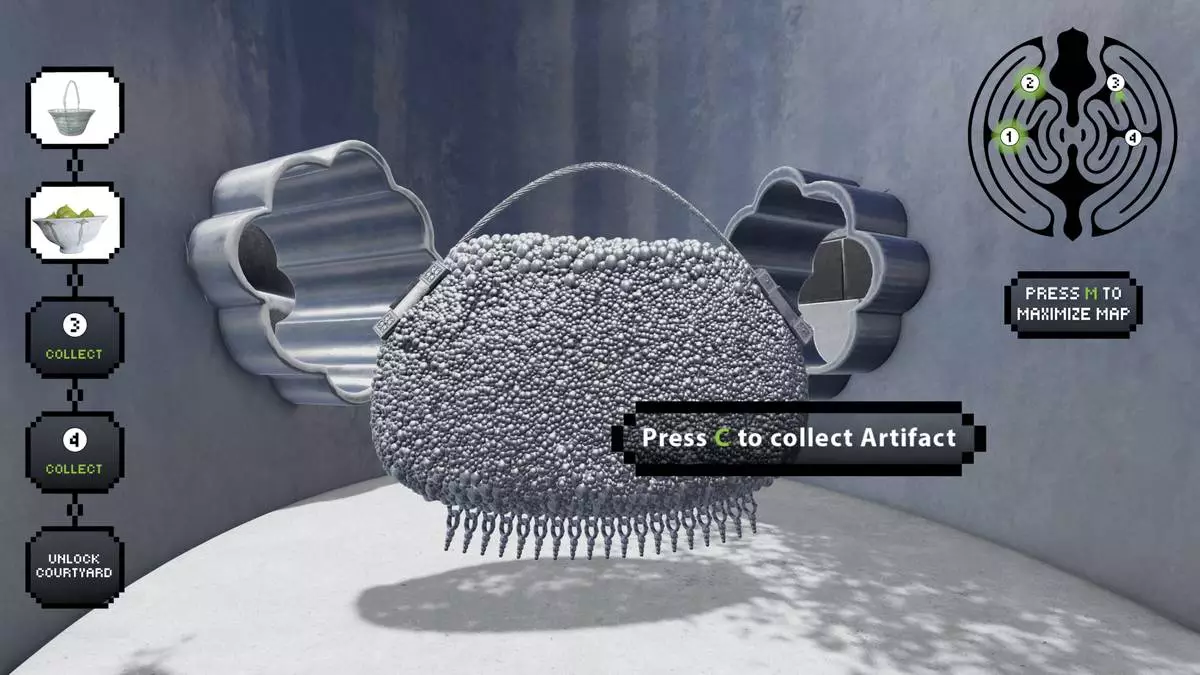
Damask Rose (2026) by Jawa El Khash. Interactive digital simulation. Courtesy of the artist.

Glorious Bones (2019) by Esmaa Mohamoud. Repurposed football helmets, wax print fabrics, steel, and recycled tires. Courtesy of Esmaa Mohamoud Studio.
GENEVA (AP) — Scientists in Geneva took some antiprotons out for a spin — a very delicate one — in a truck, in a never-tried-before test drive that has been deemed a success.
If this so-called antimatter came into contact with actual matter, even for a fraction of an instant, it would have been annihilated in a quick flash of energy. So experts at the European Organization for Nuclear Research, known as CERN, over the course of four hours Tuesday, brought about 100 antiprotons on the road.
The antiprotons were suspended in a vacuum inside a specially designed box and held in place by supercooled magnets.
After easing them from the lab and onto the truck, the scientists transported the antimatter on a half-hour drive to test how — if at all — the infinitesimal particles could be transported by road without seeping out. The antiprotons were then taken back to the lab in Tuesday's final stage that concluded with applause and a bottle of Champagne.
CERN spokeswoman Sophie Tesauri called the experiment successful. It was not immediately clear how many antiprotons had survived the entire journey, but roughly 91 of 100 were still there after the truck's trip.
The hard part: Manipulating antimatter, like antiprotons, can be tricky business. As scientists understand the universe today, for every type particle that exists, there is a corresponding antiparticle, exactly matching the particle but with an opposite charge.
If those opposites come into contact, they “annihilate” each other, setting off lots of energy, depending on the masses involved. Any bumps in the road on the test journey that aren't compensated for by the specially-designed box could spoil the whole exercise.
“The motivation behind these experiments is to compare matter and antimatter with extremely high accuracy and watch for differences which we might have not seen yet,” said Stefan Ulmer, the leader and spokesperson for Tuesday’s experiment.
And Tuesday’s practice was a first step toward making good on hopes, one day, to deliver CERN antiprotons to researchers at Heinrich Heine University in Düsseldorf, Germany, which is about eight hours away in normal driving conditions.
“We are scientists. We want to understand something about the fundamental symmetries of nature, and we know that if we do these experiments outside of this accelerator facility, we can measure 100 to 1000 times better,” Ulmer said.
The antiprotons were encased in a 1,000-kilogram (2,200 pounds) box called a “transportable antiproton trap.” It was compact enough to fit through ordinary laboratory doors and fit on a truck. It used superconducting magnets cooled to -269 degrees Celsius (-452 Fahrenheit) that allowed the antiprotons to be remain suspended in a vacuum — not touching the inner walls, which are made of ... matter.
The mass in Tuesday's test — slightly less than that of about 100 hydrogen atoms — is so little, experts say, that the worst possible outcome was the loss of the antiprotons. Even if they did touch matter, any release of energy would be unnoticeable, only an oscilloscope, which picks up electrical signals, was be able to detect it.
The trap, says Tesauri, “is supposed to contain these antiprotons no matter what: if the truck stops, if it starts again, if it has to slam on the brakes — all that.” Work remains: The trap can contain the antiprotons on its own for only about four hours, and the drive to Düsseldorf is twice that.
The Geneva-based center is best known for its Large Hadron Collider, a network of magnets that accelerates particles through a 27-kilometer (17-mile) underground tunnel and slams them together at velocities approaching the speed of light. Scientists then study the results of those collisions.
But the sprawling, buzzing complex of scientific experiment is more than just about smashing atoms together: the World Wide Web, for example, was invented here by Britain’s Tim Berners-Lee in 1989.
Heinrich Heine University is seen as a better place to study antiprotons in-depth because CERN, with all its other activities, generates a lot of magnetic interference that can skew the study of antimatter.
But to get them there, those antiprotons will have to avoid touching anything on the way.
The center's Antiproton Decelerator, where a proton beam gets fired into a block of metal, causes collisions that generate secondary particles, including lots of antiprotons. It’s billed as a unique machine that produces low-energy antiprotons for the study of antimatter.
CERN’s “Antimatter Factory,” lab officials say, is the only place in the world where scientists can store and study antiprotons.
The center has been experimenting with antimatter for years, and has made breakthroughs on measurement, storage and interaction of antimatter. Two years ago, the team transported a “cloud” of about 70 protons — not antiprotons — across CERN's campus.
It was a similar drill this time, except that with antiprotons, a much better vacuum chamber is needed, according to Christian Smorra, head of a team behind the apparatus designed to store and transport antimatter.
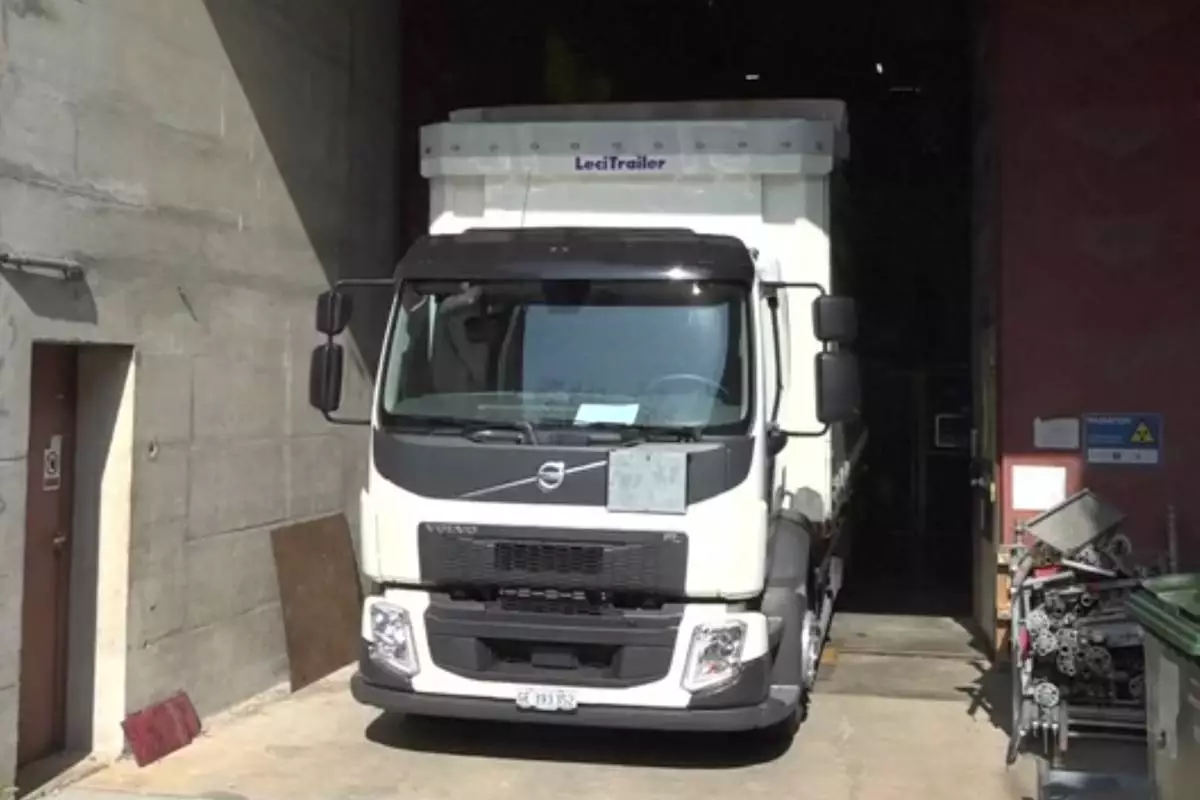
This image, taken from video, shows a truck transporting antiprotons in a first-ever test drive to study antimatter at the European Organization for Nuclear Research, CERN, in Meyrin, near Geneva, Switzerland, March 24, 2026. (AP Photo/Jamey Keaten)
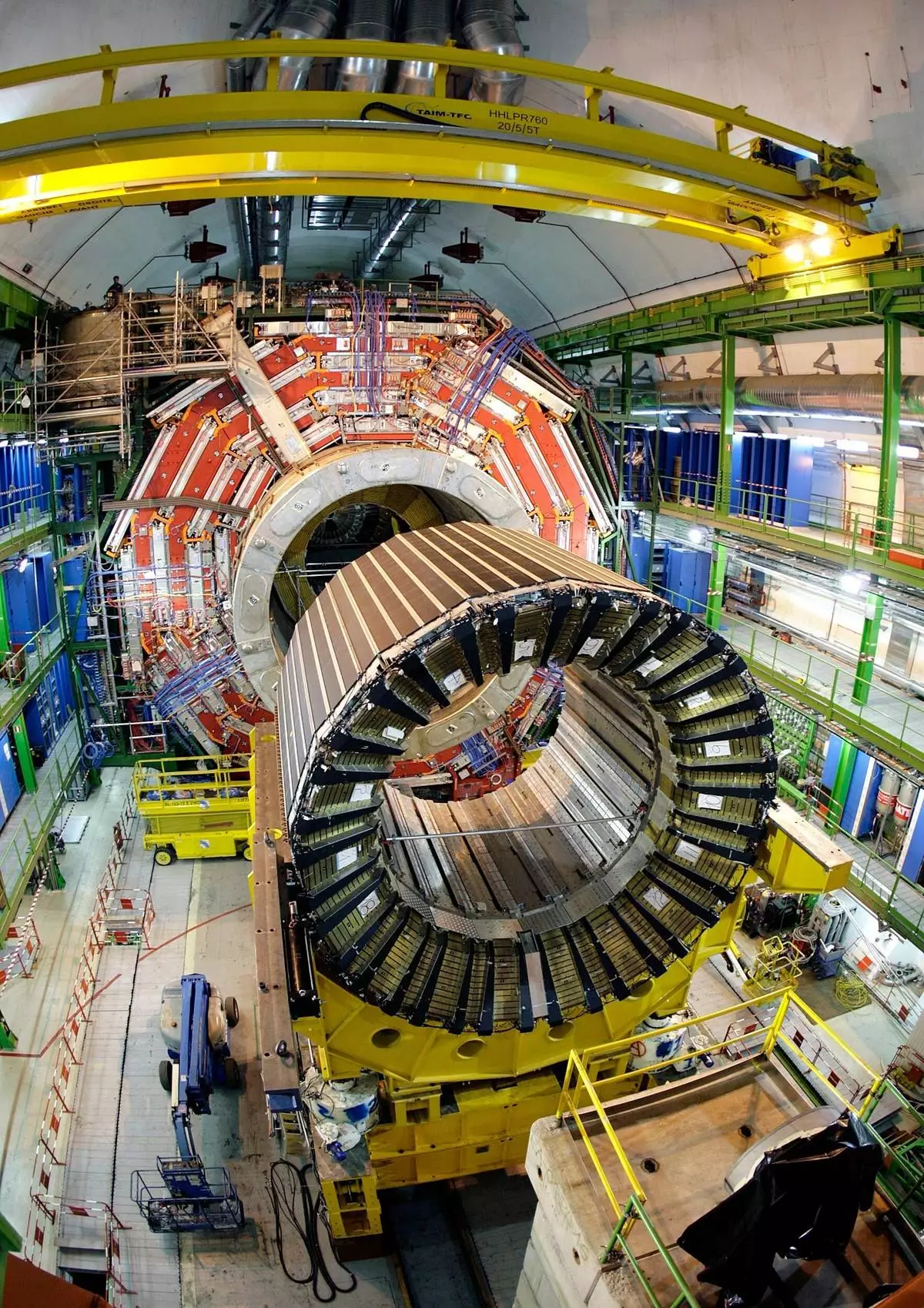
FILE - The magnet core of the world's largest superconducting solenoid magnet (CMS, Compact Muon Solenoid) at the European Organization for Nuclear Research (CERN)'s Large Hadron Collider (LHC) particle accelerator, in Geneva, Switzerland, March 22, 2007. (AP Photo/Keystone, Martial Trezzini, File)
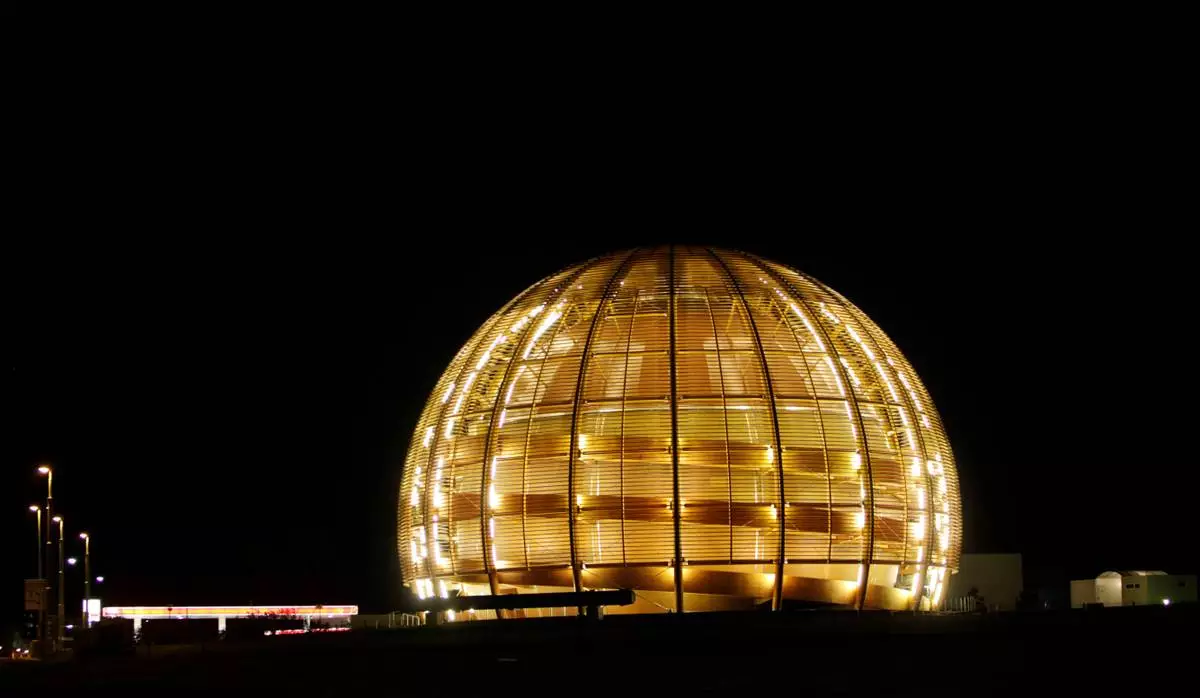
FILE - The globe of the European Organization for Nuclear Research, CERN, is illuminated outside Geneva, Switzerland, March 30, 2010. (AP Photo/Anja Niedringhaus, File)
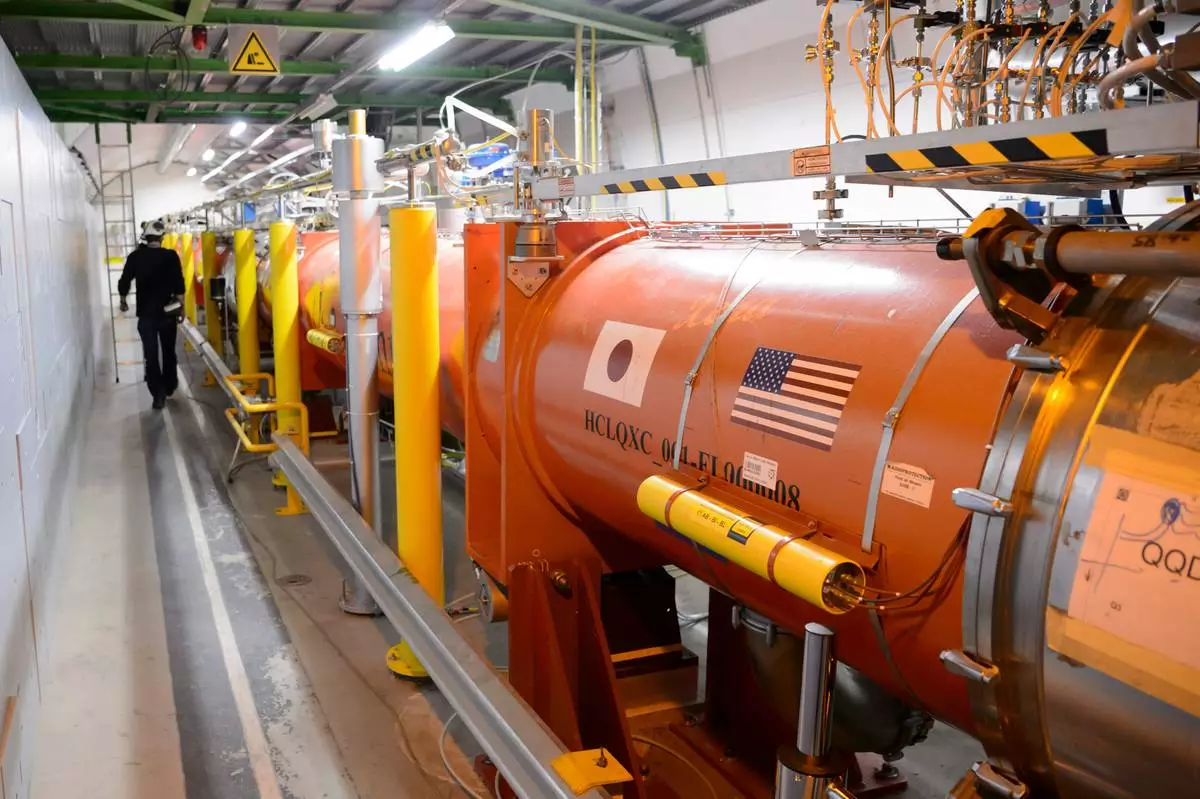
FILE - A technician works in the LHC (Large Hadron Collider) tunnel of the European Organization for Nuclear Research, CERN, during a press visit in Meyrin, near Geneva, Switzerland, Feb. 16, 2016. (Laurent Gillieron/Keystone via AP, File)
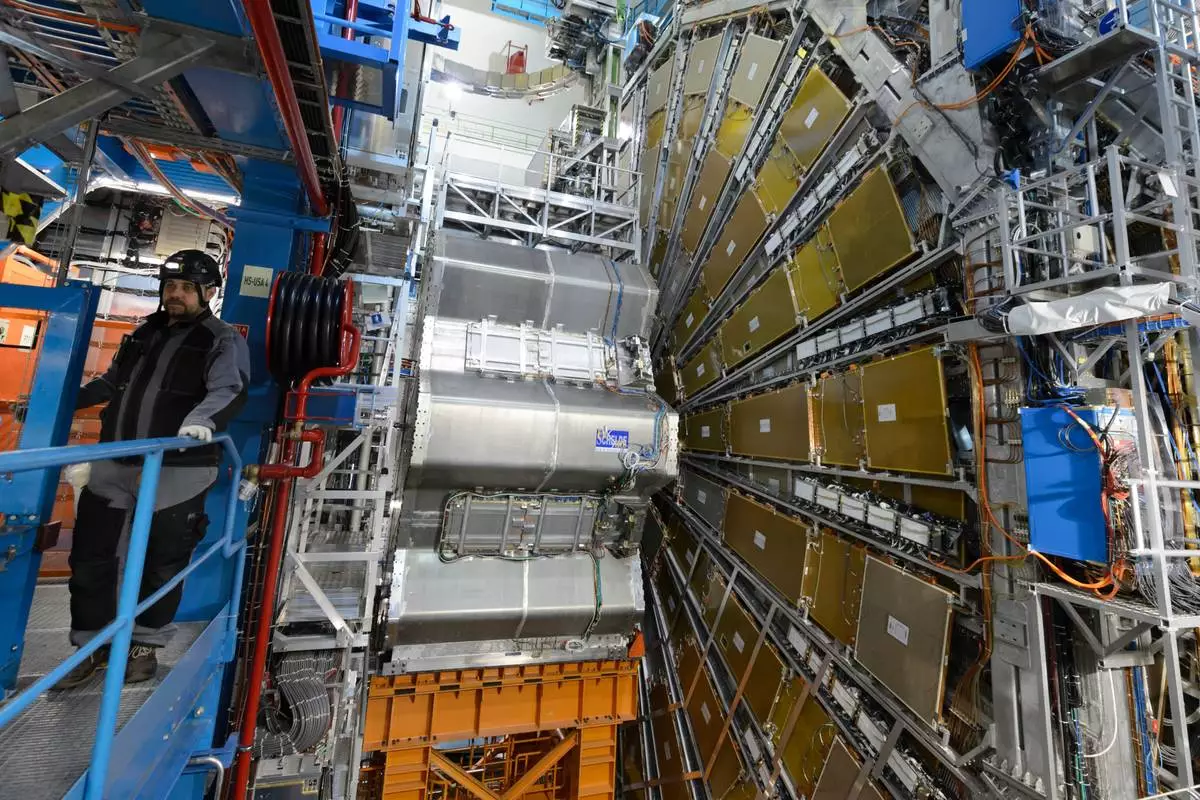
FILE - A technician works in the LHC (Large Hadron Collider) tunnel of the European Organization for Nuclear Research, CERN, during a press visit in Meyrin, near Geneva, Switzerland, Feb. 16, 2016. (Laurent Gillieron/Keystone via AP, File)