Nigerian businesses and residents are already feeling the ripple effects of the ongoing crisis in the Middle East, as the uncertainty over the continuing conflict and ongoing tensions raise oil prices and disrupt global energy supplies.
Concerns over the widening global impact of the conflict have been rising since the first joint U.S.-Israeli strikes were launched on Iran late last month, with particular focus also falling on the disruption along the Strait of Hormuz, a key waterway through which one-fifth of the world's oil is typically transported.
Global oil prices have experienced significant volatility in recent days as the direction of the war remains unclear.
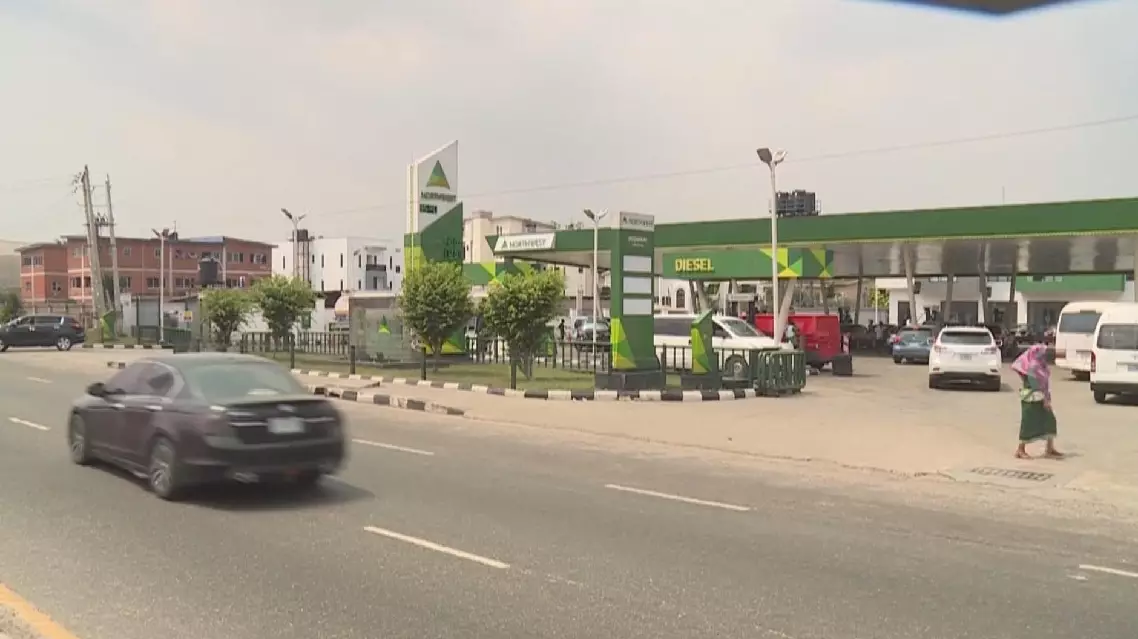
In Nigeria, petrol prices have seen sharp rises despite increased local refining, putting fresh pressure on households and businesses already grappling with inflation and a weakening of the country's Naira currency.
In the port city of Lagos in the country's southwest, local bakery owner Emmanuel Onuorah is among the many business operators who are facing up to these mounting energy challenges, as he noted how much fuel is needed to keep his bakery production lines ticking over.
"Every week we do not [use] less than 3,000 to 4,000 liters of diesel, every week here. Look at the place where we have our generators. We have two generators that are standing there [outside]. Both of them run constantly. We interchange one for the other. One of them we use in the daytime. The 150KV we use at night. We have about four delivery vans -- four delivery trucks -- not even vans. And we use them every day," he said.
Onuorah's energy costs have shot up dramatically over the last month, while an unreliable grid supply means he is left with no choice but to continue to use expensive diesel and petrol sources to keep his operations going.
Much of the domestic fuel consumed in Nigeria is now refined locally, thanks to the huge facility run by the Dangote Group, a Nigerian multinational industrial conglomerate, which processes 650,000 barrels per day and is the biggest single-train refinery in the world.
However, only a fraction of the country's crude is supplied to the refinery, with Nigeria left to import a significant portion of its feedstock for refining. Even the crude it buys locally is also benchmarked to international market pricing, leaving it exposed to global supply shocks.
Analysts point to the need to step up local production if Nigeria is to overcome the current crisis.
"To shield Nigeria from, I'll use the words 'foreign supply' or 'external supply shocks', two things must happen. Crude oil production must increase. Once that crude oil production increases, more can go to local refineries. If more goes to local refineries, then this 'shock' is reduced in terms of supply sourcing," said energy expert Jide Pratt.
One positive is that the increase in local refining has made the previous scarcity of petroleum products in Nigeria a thing of the past, but now pricing is the only headache.
The Dangote Group's founder and president Aliko Dangote warned there might be considerably more pain to come for Nigerians across all walks of life if the U.S.-Israel war on Iran continues.
"If this thing doesn't de-escalate, [pricing] is going to keep going up and up and up. And governments cannot really now go and add salaries, also. So, people will really, really feel the heat. People who are now doing barbers, people who are doing bread, people who have industries, who have to prepare their own generator. You can see in some countries today what they've done, they ask everybody to work from home. So I pray, and we all need to pray that this [situation] de-escalates," he said.
Ripple effects of Middle East crisis hit Nigeria as businesses worry over fuel prices