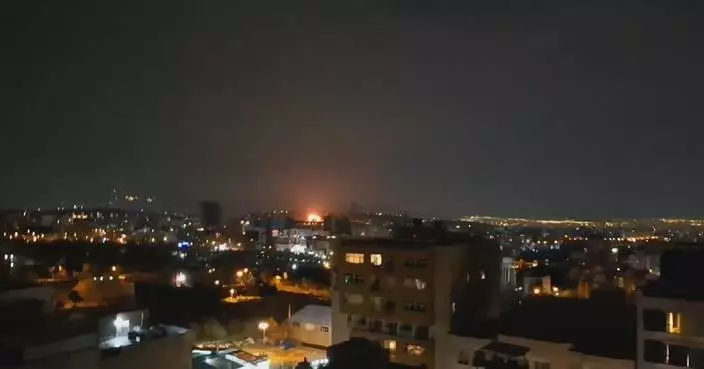
A total of 49 people were killed and 116 others injured due to the Israeli attacks in Lebanon on Sunday, bringing the death toll to 1,238 and the number of wounded to 3,543 since the escalation of hostilities on March 2, Lebanon's Disaster Risk Management Unit at the prime minister's office said, as Israeli attacks continued to escalate across the country.
In its daily report on Sunday, the unit said the number of hostile incidents recorded so far has reached 4,401, with 663 shelters across the country housing 136,147 displaced people and 35,170 families.
Israeli Prime Minister Benjamin Netanyahu instructed the military on Sunday to widen what Israel refers to as a "security buffer zone" in southern Lebanon, as Israeli forces expanded their targeted ground offensive.
Israel uses the term to describe an area seized by its troops inside Lebanese territory, a designation not recognized internationally or by Lebanon.
Since fighting with Hezbollah began in October 2023, Israel has established at least five positions in southern Lebanon. It has not withdrawn from them even after a ceasefire was announced in November 2024.
After hostilities resumed in early March amid the war with Iran, Israeli ground forces entered southern Lebanon and have been advancing toward the Litani River.
The Israel Defense Forces (IDF) also said it struck multiple Hezbollah military targets in Lebanon and killed several Hezbollah militants on Sunday.
Hezbollah said it fired several rockets toward northern Israel on Sunday, triggering air raid sirens.
Some of the rockets were intercepted, while others landed in open areas.
In a series of statements later in the day, Hezbollah said its fighters attacked Israeli tanks and troop assembly points with rockets and missiles, and shot down an Israeli drone over the Lebanese airspace.
Also on Sunday, Lebanon's Public Health Emergency Operation Center issued a statement, condemning Israel for launching attacks on hospitals, ambulances and other medical facilities, and accusing Israel of again violating international humanitarian law.
An Israeli military spokesperson warned Hezbollah against using medical institutions as cover for military activities, saying Israel would continue targeted strikes.
Cross-border fighting has continued since March 2, when Hezbollah launched rockets toward Israel for the first time since a ceasefire agreed on Nov. 27, 2024, triggering intensified Israeli airstrikes across southern and eastern Lebanon.
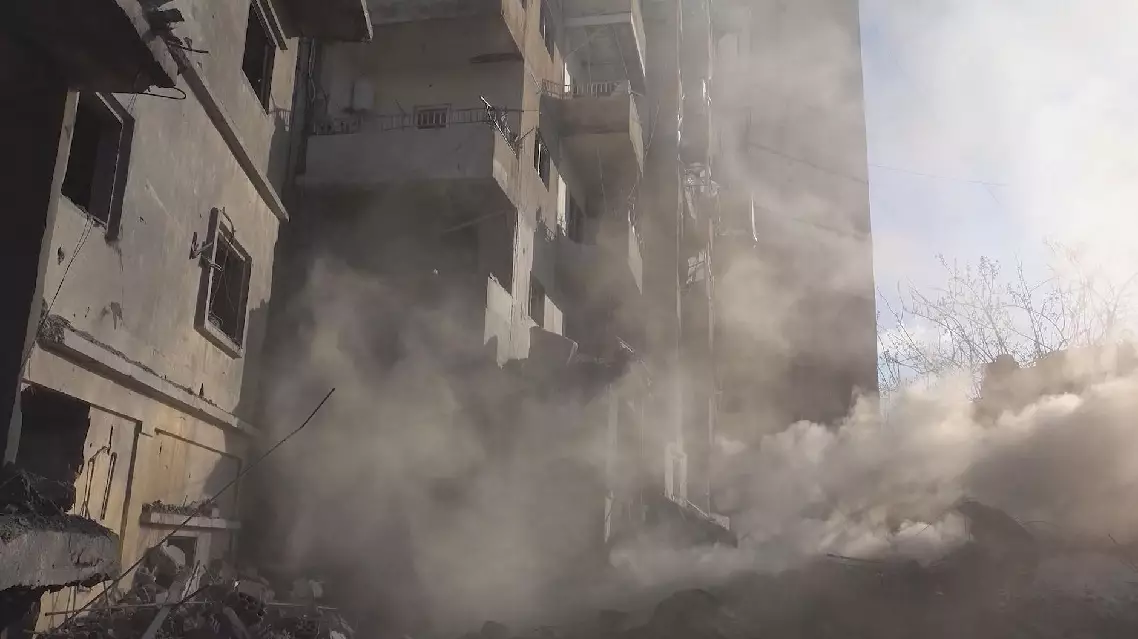
Death toll in Lebanon reaches 1,238 since start of Israeli attacks
Demonstrations swept across U.S. cities on Saturday in the third wave of "No Kings" rallies, with tens of thousands voicing anger over foreign wars and immigration enforcement.
In Los Angeles, protesters filled downtown streets, denouncing the administration's policies and demanding accountability after joint U.S.-Israeli strikes on Tehran and other Iranian cities.
Organizers said more than 3,100 rallies erupted across major cities including Washington, New York, Boston, Los Angeles and San Francisco, with U.S. reports estimating 900,000 participants, the biggest single-day protest ever recorded.
Alyssa, a protester in Los Angeles, said she joined the march to highlight what she called a widespread rejection of government actions, describing the rallies as a channel for public dissent.
"I came here today because what's going on is really wrong and really evil. And this is one of the great ways to let people know that this is unacceptable and that a huge portion of the population is against everything that this regime is doing," she said.
Many demonstrators tied the protests directly to the strikes in Iran, saying the conflict had been imposed on the public as a distraction from domestic troubles.
"This is a war that nobody wanted, an illegal war, one that we were forced into by a wannabe fascist dictator in order to distract from the issues going on at home," Alyssa said.
Others pointed to confusion over U.S. objectives in the Middle East, saying the government lacked a clear strategy.
"It's hard to know what my country even thinks it's doing right now in the Middle East. I'm distraught and I mainly distraught for the Iranian people," said David, another protester.
Some compared the intervention to historic blunders, warning it risked becoming another Vietnam‑style quagmire of a costly conflict with no clear objectives and little public support.
"I'm absolutely disgusted with our government for getting involved in a war that we have no business being in. It's like another Vietnam with even less of a reason," said another protester Lucy.
Lucy believes that U.S. foreign policy has broken down entirely, leaving no coherent framework to guide decisions.
"No, not even a tiny bit. There is no foreign policy right now," Lucy said.
David added that current foreign policy appeared to be rooted in outdated corporate-style governance, rather than democratic decision-making.
"So currently, the US government foreign policy, it seems like it's really scattershot. And it seems to be based on a kind of outdated model of corporate governance. And that's not how governments, and that's not how people actually get things done. So no, the foreign policy right now seems to be about murky backroom deals. And that's not what democracy is," said David.
Others cited civilian casualties and loopholes used to justify military actions.
"As far as what the US does for policies, what loopholes they used to justify bombing a school for instance, there is no justification for that. So I don't understand the US policy when it comes to foreign wars. I don't understand it at all," said Jeremy, a protester.
Nate, another demonstrator, accused the government of hypocrisy and corruption.
"The USA government is nothing but a bunch of hypocrites. All there are about is money, power and protecting child predators," said Nate, another protester.
The protests underscored mounting public opposition to the administration's foreign policy, following joint U.S.-Israeli strikes on Tehran and other Iranian cities on Feb. 28 that killed Iran's former Supreme Leader Ali Khamenei along with senior commanders and civilians.
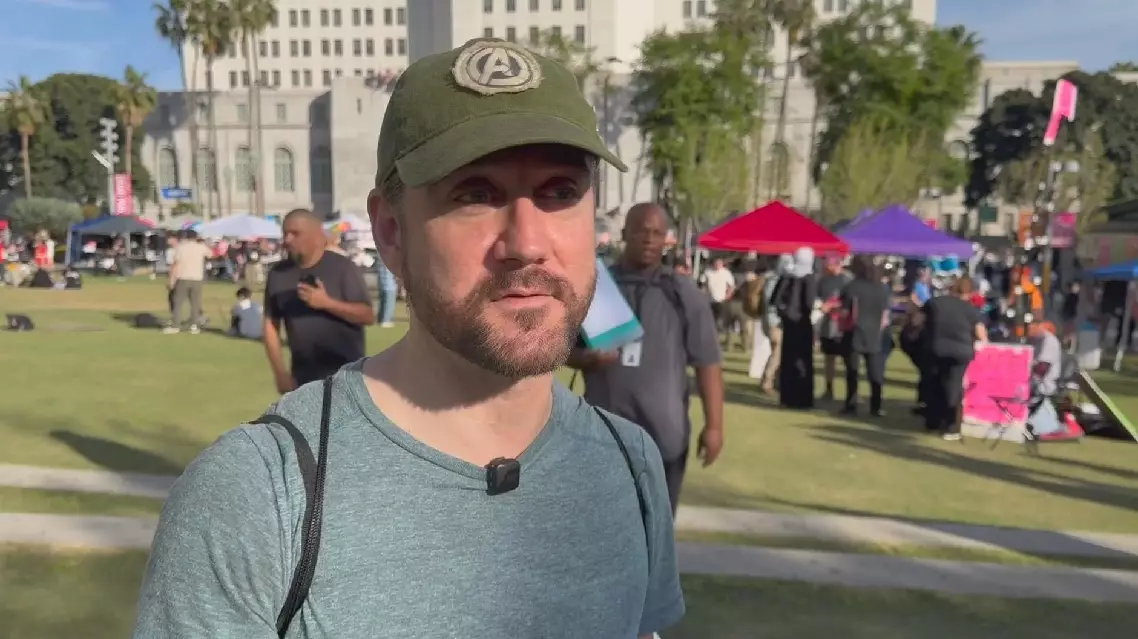
Mass "No Kings" protests sweep US cities as Middle East tension drags on