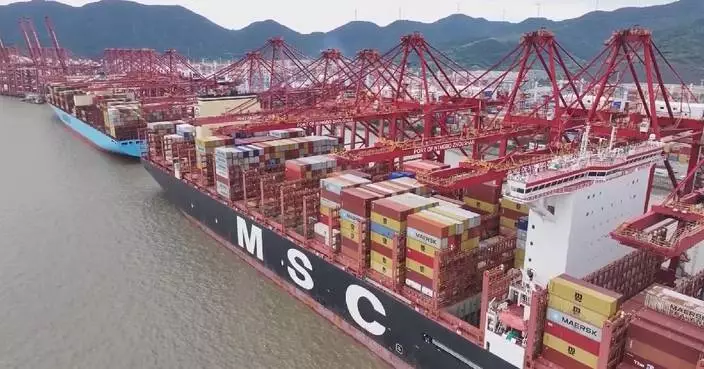
The purchasing managers' index (PMI) for China's non-manufacturing sector came in at 50.1 in March, up 0.6 percentage points from February, official data showed Tuesday.
This reflected improved business sentiment in the non-manufacturing sector, according to the National Bureau of Statistics.
A reading above 50 indicates expansion, while a reading below 50 reflects contraction.
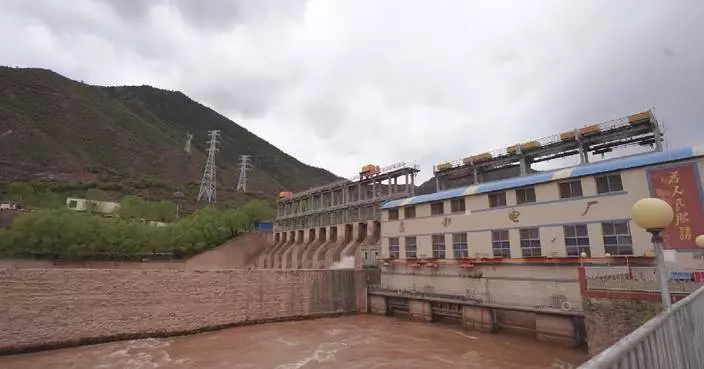
In March, business activities related to infrastructure investment saw a notable improvement, with the construction sub-index standing at 49.3, up 1.1 percentage points from the previous month.
Business activity indices in sectors related to telecommunications, radio, television and satellite transmission services climbed above 60, while the index for internet software and information technology services rose to above 51.
The business activity index for the financial industry also rose in March, remaining above 60 for four consecutive months.
"The expectation indices indicate a recovery trend, reflecting a further rebound in business confidence. This suggests that the momentum toward a positive economic performance will be stronger in the coming period," said He Hui, vice president of the China Federation of Logistics and Purchasing.

China's non-manufacturing PMI at 50.1 in March
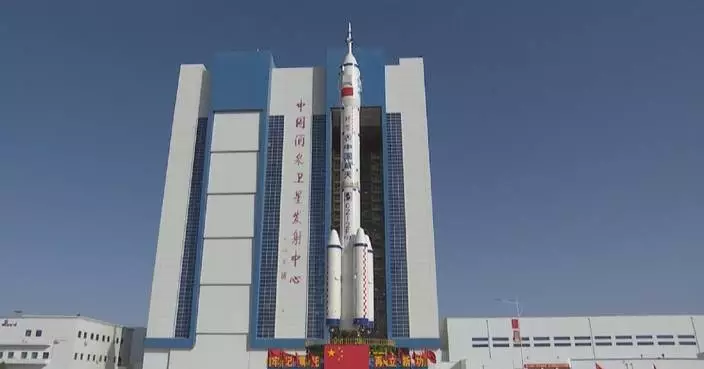
Chinese spacecraft developers have accelerated development of the spacecraft for the country's Shenzhou-23 crewed spaceflight mission by five months — moving its launch from the original schedule in October to late May — achieving greater efficiency without compromising safety or reliability.
According to He Yu, general commander of China's manned spacecraft project of China Aerospace Science and Technology Corporation, the accelerated development began shortly after the emergency launch readiness of the Shenzhou-22 last November.
"We have accelerated the development of the Shenzhou-23 spacecraft. It was originally planned for launch in late October, but has now been moved up to late May. In the six months since last November, we have gained five months of progress. This means the pace of work has been quickened by nearly one time," He said.
He further explained that a series of measures to ensure mission success have been adopted alongside the accelerated development, adding multiple layers of assurance.
"We have continued the proven measures that have ensured success in the past, which are fundamentally based on a sound product assurance system and strict process control. We have maintained high-quality assembly operations, continued to implement efficient and high-quality automated testing procedures, adopted a specialized flight control model, and maintained a full-process quality confirmation system to ensure reliability and safety of the product," He said.
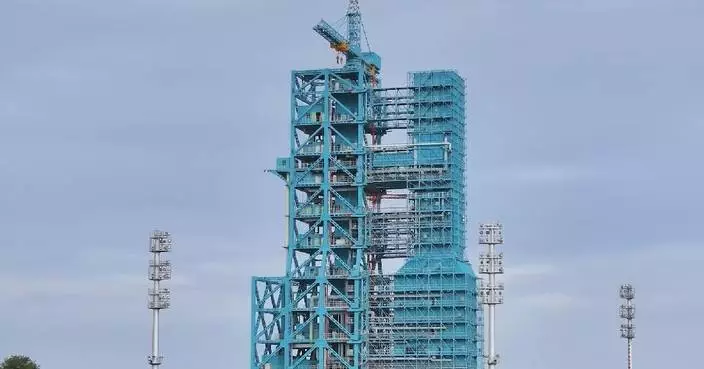
The Shenzhou-23 crewed spaceship is scheduled to be launched at 23:08 Beijing time (15:08 GMT) on Sunday from the Jiuquan Satellite Launch Center in northwest China.
Chinese astronauts Zhu Yangzhu, Zhang Zhiyuan and Lai Ka-ying will carry out the Shenzhou-23 crewed spaceflight mission, and Zhu will be the commander, the China Manned Space Agency announced at a press conference on Saturday.
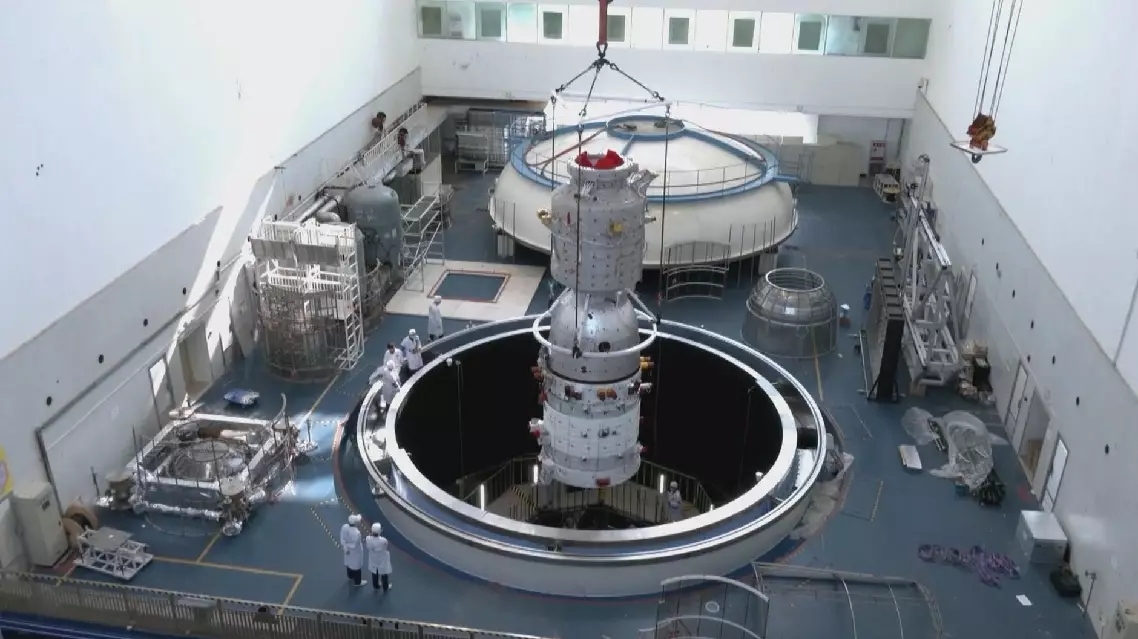
Chinese engineers move Shenzhou-23 manned spacecraft mission forward by 5 months while ensuring safety