Skip to Content Facebook Feature Image

Embassy honors Chinese experts fallen in aiding Senegal on Qingming Festival

China

China

China

Embassy honors Chinese experts fallen in aiding Senegal on Qingming Festival

2026-04-06 17:30 Last Updated At:22:07

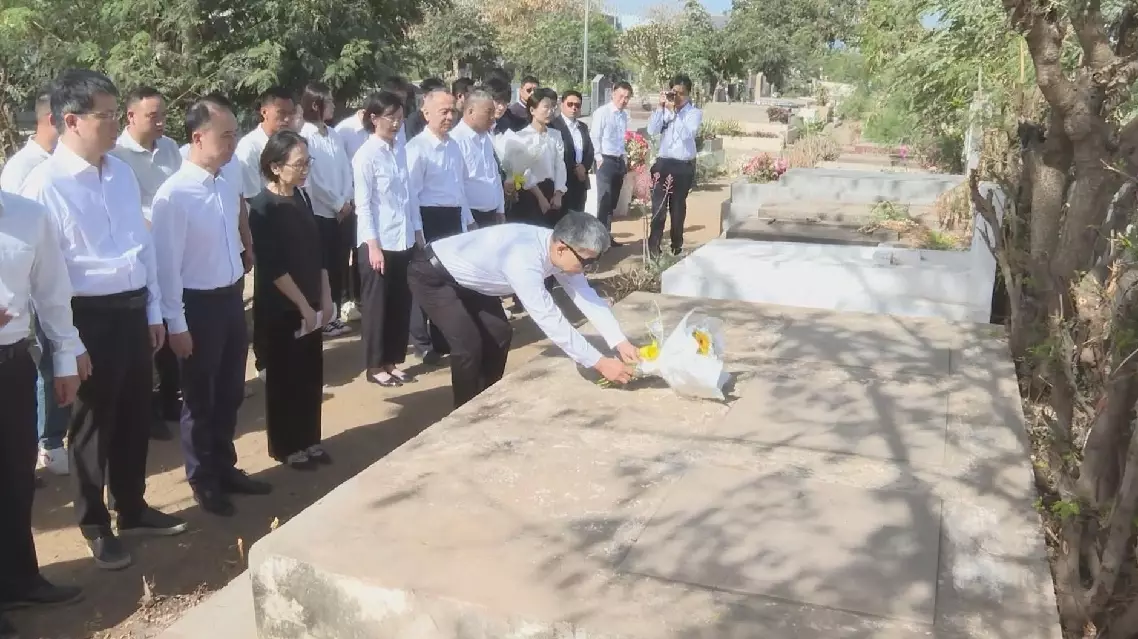
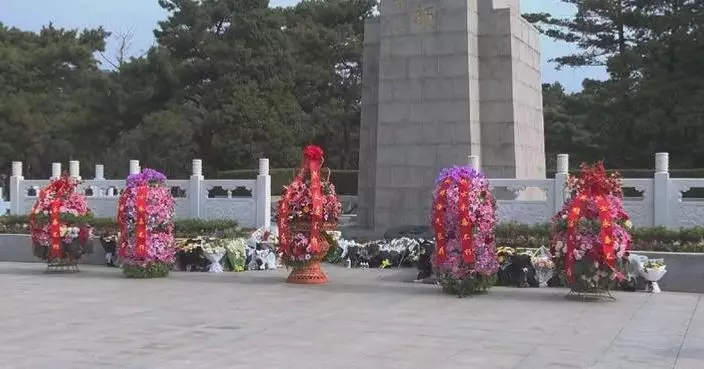
The Chinese Embassy in Senegal, along with representatives from Chinese associations and enterprises in the country, held a Qingming tomb-sweeping ceremony in Dakar on Sunday to honor three Chinese experts who perished while serving on an aid mission in the African country.

Falling on Sunday this year, the Qingming Festival, or Tomb-Sweeping Day, is a traditional Chinese festival for honoring the deceased and paying tributes to ancestors.

Participants in the ceremony observed a minute of silence in honor of the fallen martyrs and laid flowers to commemorate them.

The three experts honored at the event, Wen Rongsheng, Zhang Guohua, and Cheng Daikun, were members of an agricultural technical team dispatched to Senegal by the Jiangxi Provincial Department of Agriculture and Rural Affairs in March 1973. Wen served as the team's deputy chief, Zhang as a technician, and Cheng as a mechanic.

During their mission, the three experts worked to promote vegetable farming techniques and taught local farmers modern cultivation methods, making significant contributions to the development of China-Senegal friendship. Tragically, they died in a car accident while on duty in Senegal in November 1973.

Speaking at the ceremony, Li Zhigang, Chinese Ambassador to Senegal, underscored the lasting legacy of the fallen experts and the future direction of China-Africa cooperation.

"As the president of Senegal has stated, Senegal has achieved what it has today thanks to the unwavering support of its international partners, including its Chinese friends. The fact that Wen Rongsheng and his two fellow experts rest eternally in Senegal is a testament to the Chinese people's deep friendship with Senegal. I believe the core purpose of this commemoration is to look to the future, to better build the China-Senegal community with a shared future and the China-Africa Community with a shared future, so that China-Senegal and China-Africa cooperation can be strengthened and achieve new development in this new era," Li said.

During the 1960s and 1970s, the Chinese government sent experts in various fields to Africa to provide assistance. Some of these experts died in the line of duty and were buried in Africa, embodying the great spirit of internationalism with their lives.
Embassy honors Chinese experts fallen in aiding Senegal on Qingming Festival

Embassy honors Chinese experts fallen in aiding Senegal on Qingming Festival
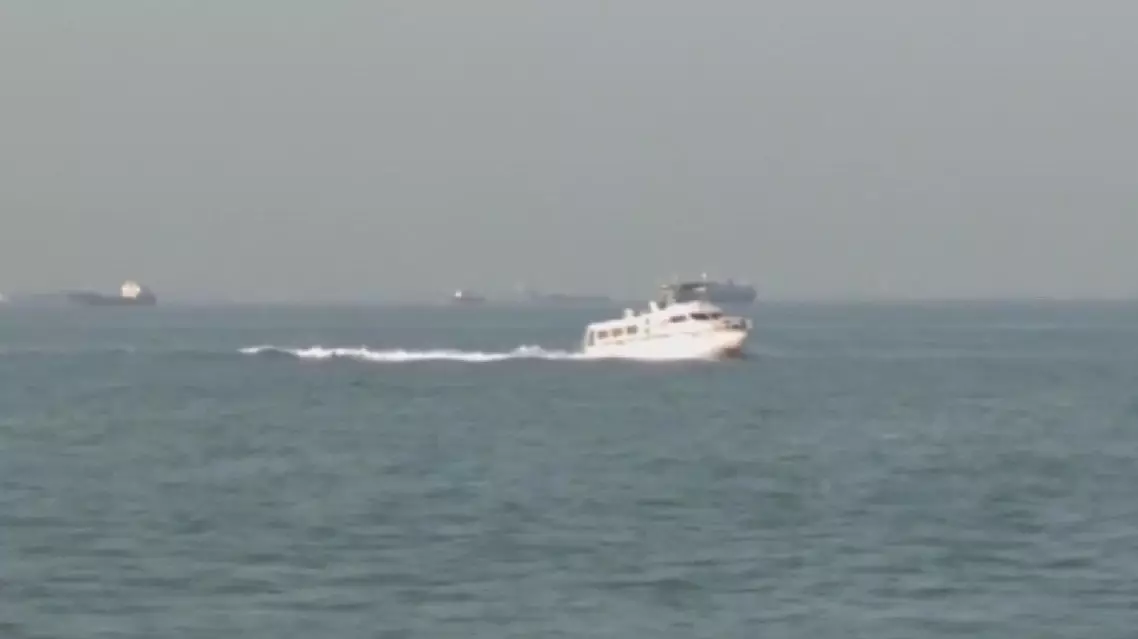
The conflict in the Middle East has disrupted traffic through the Strait of Hormuz, leading to a systemic economic shock that has reverberated through energy markets, industrial supply chains and critical maritime routes.

As part of its response to U.S. and Israeli attacks, Iran has restricted navigation through the Strait of Hormuz, targeting ships associated with the United States and Israel. The blockade of this vital global energy route has driven up oil and gas prices worldwide.

As a key energy shipping lane, the strait saw 20 million barrels crude and oil product flowing through per day, around 25 percent of the world's seaborne oil trade in 2025, according to a report released by the International Energy Agency (IEA) this March.

In addition, about 20 percent of global liquefied natural gas (LNG) trade transited Hormuz in 2024, primarily from Qatar, with a smaller volume from the United Arab Emirates (UAE).

Over 70 percent of the oil flowing through the strait is transported to the Asian market. Japan and Republic of Korea (ROK) import 90 percent and 95 percent of their respective oil consuption.

The IEA estimates that as of the end of March, Hormuz disruptions have led to an oil supply gap of roughly 10 million to 16 million barrels per day.

Though the IEA made 400 million barrels of emergency oil stocks available in March -- the largest-ever release coordinated by the agency, it still failed to curb the rapid rise in international oil prices.

Based on Fitch Ratings' March outlook, should the Middle East conflict persist until the end of June, it could see global real GDP growth shrink by approximately 0.8 percentage points.

"Shipping costs are rising because of insurance premiums, because of higher fuel costs, and because of longer trips as you have to avoid certain parts. Then that starts feeding through to higher prices of other goods as well. That could be food, commodities, etc. And then the other thing to think about is inventory and supply chain disruptions. And then when you combine all of these factors together, it feeds into producer price indices and consumer price indices," said Cedric Chehab, chief economist at BMI, a Fitch Solutions company.

Middle East tensions hit global economy

Middle East tensions hit global economy

Recommended Articles