China's growing hospice care network is increasingly relieving families of the strain of caring for elderly patients with terminal illnesses and preserving their dignity at the end of life.
In the final journey of life, terminally ill patients endure the torment of their diseases. Meanwhile, family members who care for them around the clock often show signs of exhaustion and feel overwhelmed by the unrelenting pressure.
Peng Wanglian, who works at the hospice care center of Hunan Cancer Hospital in Changsha, capital of central China's Hunan Province, is part of a team of hospice caregivers. Her job goes beyond comforting patients, as she steps into the lives of families weighed down by stress. She works to relieve the family members of inescapable fatigue, so that their love for each other is no longer worn away by exhaustion and misunderstanding.
One of the patients Peng cares for is an elderly woman surnamed Liu, who is in the advanced stages of lung cancer. Since aggressive treatment can no longer reverse her condition, her family has respected her wish to be brought home, where they can accompany her through her final days.
Over the past year or more, the disease has not only tormented Liu but also cast a shadow over the entire family. Unable to care for herself, Liu requires round-the-clock attention. The daily grind of caregiving has left her family physically and emotionally drained, while they also bear the brunt of her volatile moods, triggered by the pain of her illness.
"Patients at this stage become deeply dependent on their caregivers. They may vent their physical discomfort through verbal or even physical outbursts directed at those caring for them. So, from the caregiver's perspective, the pressure comes from every direction. When all that builds up, it takes a huge toll on their own mental and physical well-being," said Peng.
This deep understanding of both patients and their families stems from Peng's own childhood experience. Growing up in a village, she was very close to an elderly neighbor who doted on her. The old woman later fell ill with cancer. The intense pain she endured was heartbreaking to see, and she died just a few months afterward. For the young Peng, the experience left a lasting scar.
"The suffering and agony that cancer brought to her body, and the helplessness and powerlessness I felt as a bystander -- it all made me feel so useless. It also showed me how cruel life can be. That's part of why I chose to do this work," Peng said.
This year marks Peng Wanglian's 11th year working at the hospice care center. Every day, she and her colleagues visit five or six households of advanced-stage cancer patients, providing free palliative care services including pain management, nursing guidance, and psychological support.
Through years of making house calls, she has witnessed not only the pain of the patients but also the toll the illness takes on their families. She emphasized that it is not enough to focus solely on the patient, because the family members, who are often trapped by their own love and exhaustion, also need to be seen and cared for.
During each home visit, she makes a point to chat with the family members about daily life, their children's growth, or anything cheerful. Through listening, she helps ease their pent-up emotions.
"We remind ourselves to think more about the hardships the elderly have been through, and to cherish the time we have with her," said He Hua, a family member of Liu.
"We are not just serving the patient. We are serving the entire family. When a patient is sick, it means the whole family's ecosystem has been disrupted. So, we provide physical and emotional care for the patient, and we also need to fully support the family members. Only when the caregiver can relax -- both physically and mentally -- can we truly help improve the patient's quality of life," Peng said.
Guided by this philosophy, she views every home visit as an opportunity to help repair the family's disrupted ecosystem. After each visit, she carefully compiles her notes and files them away. On the shelves of her office, row after row of neatly labeled notebooks document her daily work -- and behind those pages lie countless warm stories of families who have moved from distress to reconciliation.
"So many times, after a patient has passed away, their family members come back to us -- specifically to our office -- just to say thank you. They tell us, 'Our loved one has passed away, but we are deeply grateful that you were there for us during that time. Your help allowed our loved one to pass away peacefully.' When we see that kind of gratitude, we truly feel the value of what we do," said Peng.
Hospice care, which provides comprehensive support for the terminally ill and elderly, aims to manage pain, improve quality of life, and ensure a decent, peaceful passing through multidisciplinary care. Since 2017, China's National Health Commission has launched hospice care pilot programs in 185 cities and districts. Many local governments are prioritizing hospice infrastructure.
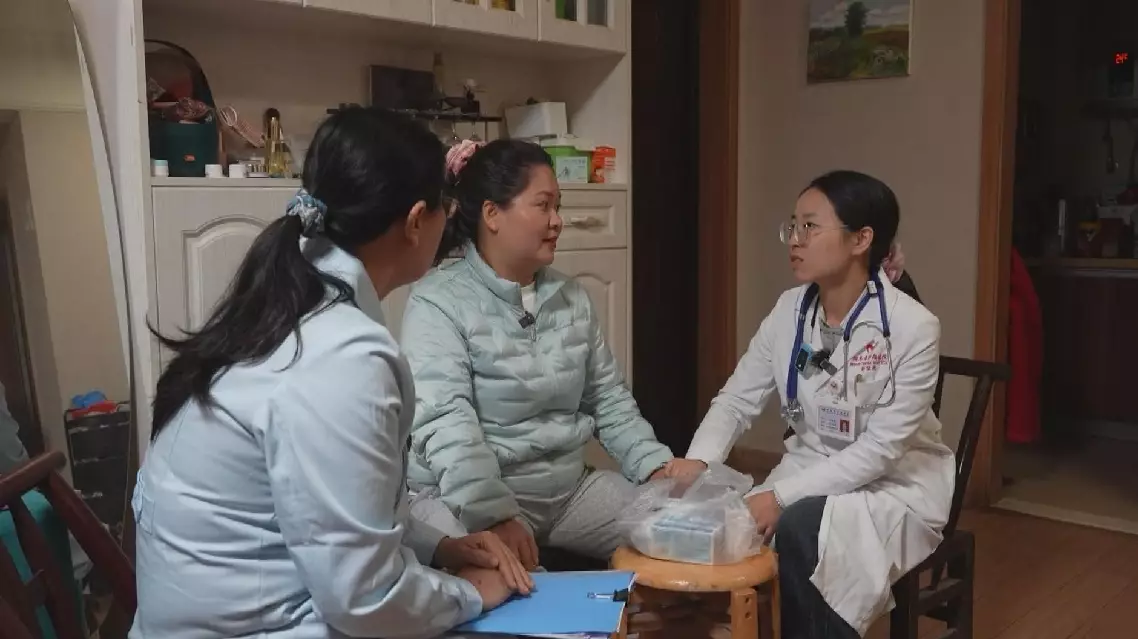
End-of-life nursing provides care, comfort to both patients and their families