Chinese-made window cleaning robots are rapidly capturing market share as international sales continue to climb at an accelerated pace
As the latest rising trend in China's smart electronics sector, smart window cleaning robots, ranging from small bots for home use to large ones for cleaning skyscrapers, are delivering a spotless finish to the often difficult and sometimes dangerous work of window cleaning.
A leading technology company in east China's Suzhou City said that its window cleaning robots use now command over 60 percent of the domestic market share, with production lines running at full capacity around the clock.
"In the first quarter of this year, sales revenue of window cleaning products in China alone exceeded 18 million yuan (about 2.62 million U.S. dollars), a quarter-on-quarter increase of 50 percent. The actual revenue in the first quarter has already exceeded half of last year's, and orders are already booked until late May," said Zhang Mengjie, the global CEO of the company's window cleaning robot division.
At another robot manufacturing facility, a brand-new window cleaning robot rolls off the assembly line and gets packed every tens of seconds.
The factory manager said that the plant has been operating at maximum capacity since January, with more than half of its orders now coming from Europe.
"In the first quarter of this year, we saw remarkable growth in markets such as North America, Australia, and parts of the Middle East, with some regions achieving triple-digit growth, representing a breakthrough. At the same time, we received our first orders for window cleaning robots from several Eastern European countries, including Romania," said Wu Qi, the global marketing director of the company.
The commercial window cleaning robot sector is also seeing strong international demand. A Guangzhou-based manufacturer specializing in high-rise building cleaning robots said nearly half of its products are now exported overseas.
"We currently have eight products, and our exports are growing at a rate of approximately 40 to 50 percent annually," said Huang Jian, the co-founder of the company.
According to market research firm Stratistics MRC, the global window cleaning robot market will grow from 583 million U.S. dollars in 2025 to 2.2 billion U.S. dollars in 2032, representing a compound annual growth rate of 20.9 percent.
Industry insiders said the industry is entering a period of rapid growth with bright and promising prospects ahead.
"Chinese companies are gaining the lead, overtaking their competitors through continuous technological breakthroughs and advancements in LDS laser sensors, navigation modules and AI algorithms. We expect global shipments of window cleaning robots to exceed 3 million units in 2026," said Cheng Kaiwen, a home appliance analyst at Shenwan Hongyuan Securities Research Institute.
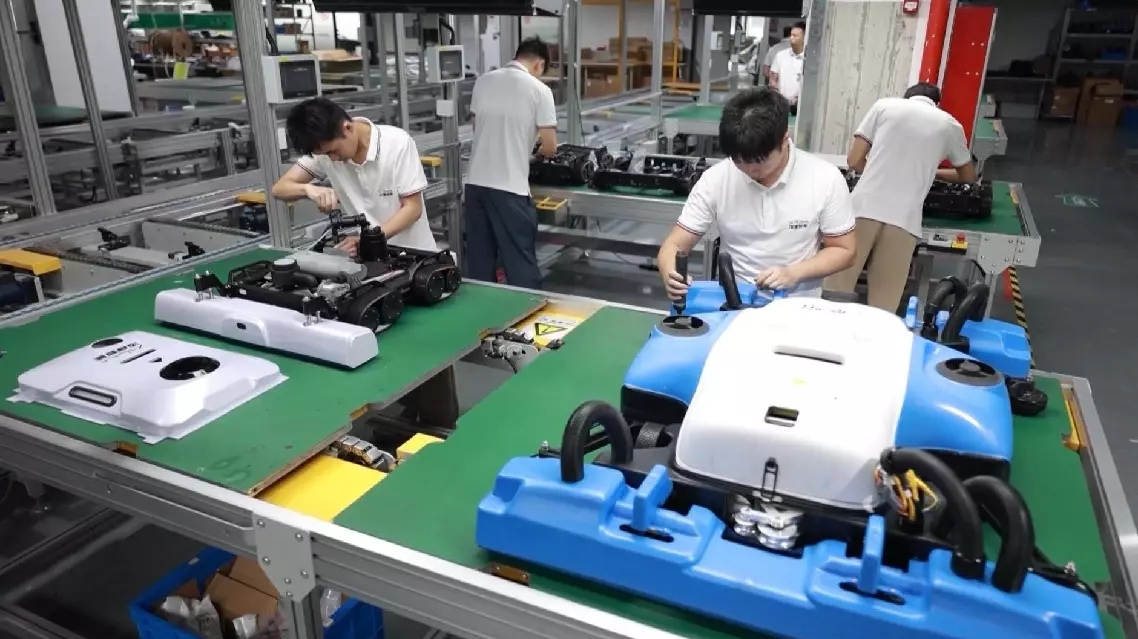
China-made window cleaners capture growing global demand