Newly-released minutes from a meeting of U.S. Federal Reserve policymakers last month showed widespread concern regarding the multiple negative impacts resulting from the then escalating Middle East conflict on U.S. economic growth, inflation, and the labor market. According to the minutes of the Federal Open Market Committee (FOMC)'s March 17-18 meeting, participants maintained that any prolonged war in the region would likely keep energy prices elevated for a longer period and increase the risk that higher costs could feed through into core inflation.
A large majority of participants at the meeting said progress toward the Fed's 2-percent inflation target had been slower than previously expected, and that the risk of inflation remaining above that target had increased.
Other monetary policymakers also noted that short-term inflation expectation indicators had risen in recent weeks which reflected a sharp increase in oil prices linked to the war, which erupted following joint U.S.-Israeli strikes on Iran on Feb. 28.
The minutes showed that most participants also saw challenges in achieving the Fed's employment goal. Many warned that the labor market appeared vulnerable to negative shocks at a time when net job creation was already at a low level. A prolonged crisis in the Middle East could weigh on business sentiment and further reduce hiring, meeting attendees said.
Fed officials also warned that the war in Iran had increased uncertainty over the outlook for economic activity and raised downside risks to the economy. U.S. farmers, they said, were already facing pressure from higher fuel and fertilizer prices, primarily as a result of the wider global impact of the conflict and the closure of the Strait of Hormuz, a vital chokepoint through which a considerable share of the world's oil, liquefied natural gas, and fertilizers are transported.
The Federal Reserve concluded its two-day policy meeting on March 18 by leaving the target range for the federal funds rate unchanged at 3.5 percent to 3.75 percent. Its next monetary policy meeting is scheduled for April 28-29.
Following weeks of escalating tensions, Iran and the United States agreed to a 2-week ceasefire less than two hours before a deadline set by U.S. President Donald Trump late on Tuesday evening U.S.-time, and are set to hold negotiations in Pakistan on Saturday.
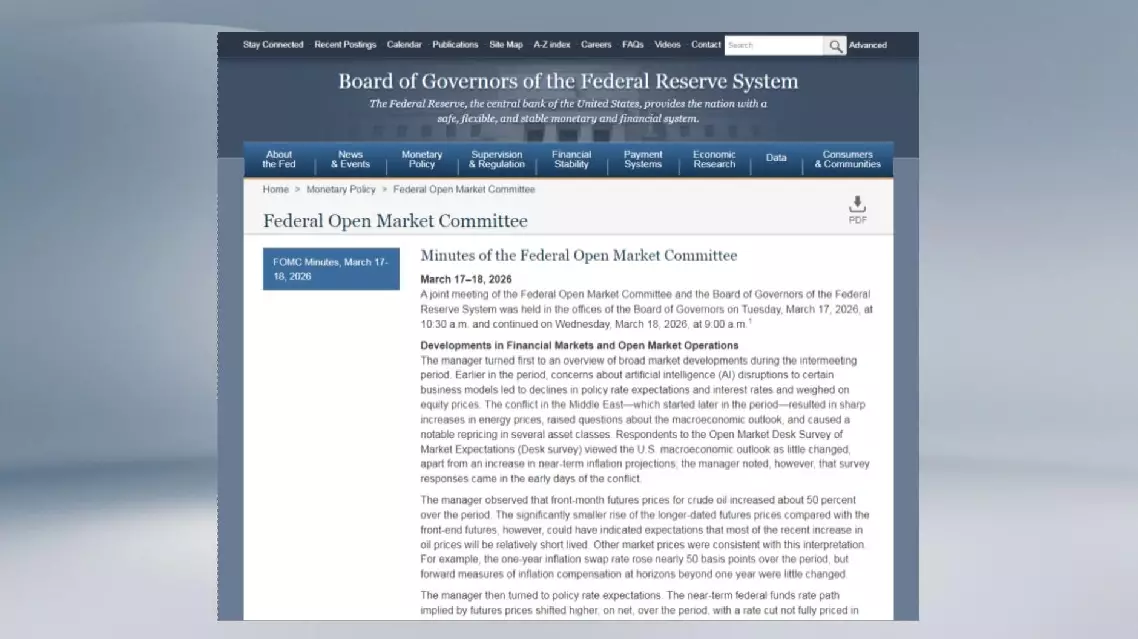
Newly-released US Fed minutes show concern over Middle East war's economic impact