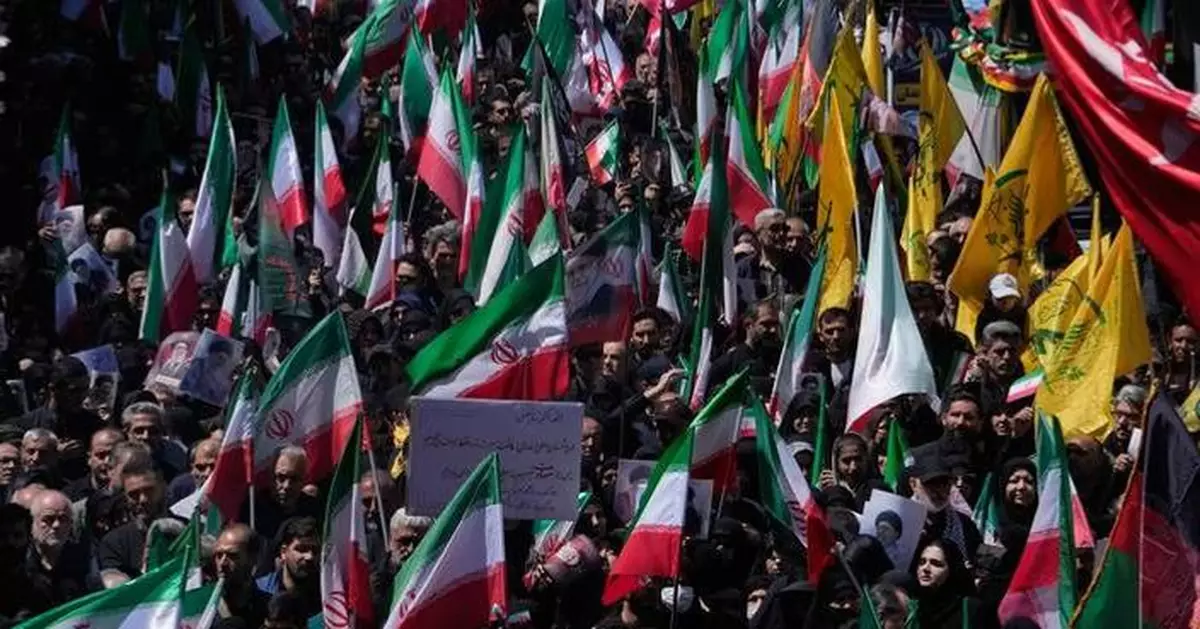
Prediction markets let people wager on just about anything — from basketball games to elections. And among more jarring bets recently, the fate of the U.S. and Israel’s war against Iran.
Shortly ahead of a fragile ceasefire agreement earlier this week, a new group of accounts on prediction market platform Polymarket made highly specific, well-timed trades betting there'd be an announcement about a halt in fighting for April 7. Some quickly pocketed awards, which amounted to hundreds of thousands of dollars in profits combined. Others are still awaiting payouts as an end to the deadly conflict still seems uncertain.
Regardless, the trades once again put the spotlight on a murky — and growing — world of speculative, 24/7 transactions now filling the internet. And some have raised questions about suspicious activity, including an anonymous Polymarket trader pocketing more than $400,000 following the U.S. military's capture of former Venezuelan President Nicolás Maduro in January.
The timing and subjects of such trades have fueled concerns about potential insider trading — with calls increasing among lawmakers for investigations. Popular platforms, including Polymarket, have rolled out added guardrails in efforts to combat insider trading recently, but critics say it isn't enough.
Meanwhile, because prediction market wagers are categorized differently than traditional forms of gambling, tensions about government oversight have erupted. President Donald Trump's administration has already thrown its support behind company operators — and sued three states over their efforts to regulate them further.
Here's what we know:
The scope of topics involved in prediction markets can range immensely. Recently, there’s been a surge of wages on elections and sports games. But some users have also bet millions on things like a rumored — and ultimately unrealized — “secret finale” for the Netflix’s “Stranger Things,” whether the U.S. government will confirm the existence of extraterrestrial life and how much billionaire Elon Musk might post on social media this month.
In industry-speak, what someone buys or sells in a prediction market is called an “event contract.” They're typically advertised as “yes” or “no” wagers. And the price of one fluctuates between $0 and $1, reflecting what traders are collectively willing to pay based on a 0% to 100% chance of whether they think an event will occur.
The more likely traders think an event will occur, the more expensive that contract will become. And as those odds change over time, users can cash out early to make incremental profits, or try to avoid higher losses on what they’ve already invested.
Proponents of prediction markets argue putting money on the line leads to better forecasts and allow you to gauge public opinion as an alternative to polling. And some think there's value in monitoring prediction markets for potential news, particularly elections.
Still, prediction markets can also be wrong. People investing their money may be closely following certain events, but others could just be randomly guessing.
Who is behind all of the trading is also pretty unclear.
The companies running today's biggest platforms know who their customers are — as they collect personal information to verify identities and payments. But most users can trade under anonymous pseudonyms on public-facing websites, making it difficult for the world to tell who is profiting off many event contracts.
Critics also stress that the ease and speed of joining these 24/7 wagers leads to financial losses everyday, particularly harming users who may already struggle with gambling.
Polymarket is one of the largest prediction markets in the world. Users can fund event contracts through cryptocurrency, debit or credit cards and bank transfers.
Restrictions vary by country, but in the U.S., the reach of these markets has expanded rapidly over recent years, coinciding with shifting policies out of Washington.
While prediction markets have found backing from the Trump-controlled Commodity Futures Trading Commission, former President Joe Biden was more aggressive in cracking down. Following a 2022 settlement with the CFTC, Polymarket was barred from operating in the country. That changed under Trump late last year, when Polymarket announced it would be returning to the U.S. after receiving clearance from the commission. American-based users can now join a “waitlist” to access the platform.
Meanwhile, Polymarket’s top competitor, Kalshi, has been a federally-regulated exchange since 2020. The platform offers similar ways to buy and sell event contracts as Polymarket — and it currently allows event contracts on elections and sports nationwide. Kalshi won court approval just weeks before the 2024 election to let Americans put money on upcoming political races and began to host sports trading last year.
The space is now crowded with other big names. Major League Baseball inked a deal with Polymarket last month, following other partnerships in professional hockey and soccer. Meanwhile, sports betting giants DraftKings and FanDuel have launched their own prediction platforms. Trump’s social media site Truth Social has also promised to offer an in-platform prediction market through a partnership with Crypto.com — and one of the president’s sons, Donald Trump Jr., holds advisory roles at both Polymarket and Kalshi.
Last month, The Associated Press agreed to sell its U.S. elections data to Kalshi.
Because they’re positioned as selling event contracts, prediction markets are regulated by the CFTC. That means they can avoid state-level restrictions or bans in place for traditional gambling and sports betting today.
“It’s a huge loophole,” said Karl Lockhart, an assistant professor of law at DePaul University who has studied this space. “You just have to comply with one set of regulations, rather than (rules from) each state around the country.”
Sports betting is taking center stage. There are a handful of big states — like California and Texas, for example — where sports betting is still illegal, but people can now wager on games, athlete trades and more through event contracts.
A growing number of states and tribes are trying to stop this. But the Trump administration has already pushed back, maintaining that the CFTC has the sole authority to regulate prediction markets. Many lawyers expect litigation to eventually reach the U.S. Supreme Court.
Despite overseeing trillions of dollars for the overall U.S. derivatives market, the CFTC is much smaller than the Securities and Exchange Commission, which regulates the securities industry. And at the same time event contracts are growing rapidly on prediction market platforms, there have been sizeable workforce cuts and leadership departures. CFTC chairman Michael Selig is the sole member filling just one of five commissioner slots.
Meanwhile, Congress members from both sides of the aisle have introduced broad legislation for more guardrails in recent months. Soon after, Kalshi — which has maintained that it's always banned insider trading — quickly moved to bar political candidates from trading on their own campaigns, and preemptively block anyone involved in college or professional sports from contracts related to the sports they play or are employed by. Polymarket rewrote its rules to clearly say users cannot trade on contracts where they might possess confidential information, or could influence the outcome of an event.
The CFTC can also bar event contracts related to war, terrorism and assassinations, which experts say could put some prediction market trades — including those related to the Iran war — on added shaky ground, at least in the U.S. Lawmakers like Democratic Sen. Adam Schiff are seeking an outright ban of these kinds of trades.
Still, users might find ways to buy certain contracts while traveling abroad, or through connecting to different VPNs.
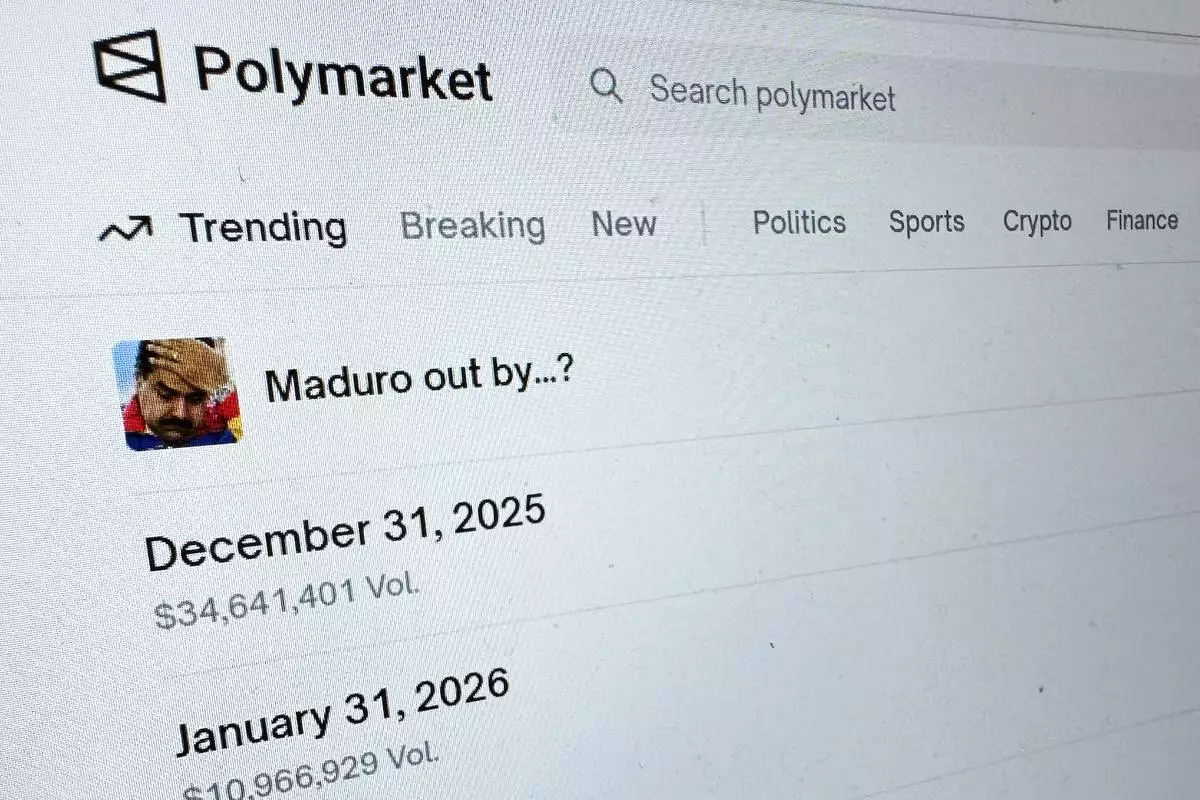
FILE - The Polymarket prediction market website is displayed on a computer screen, Jan. 11, 2026, in New York. (AP Photo/Wyatte Grantham-Philips, File)
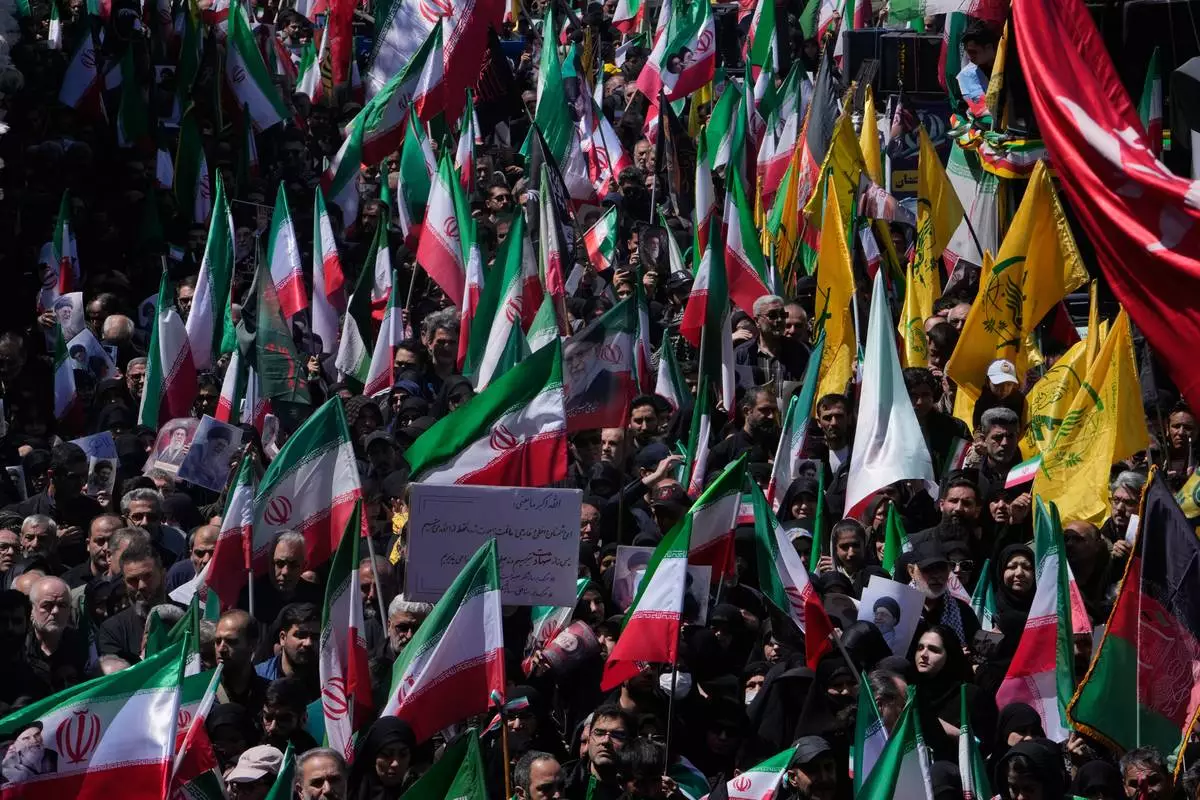
Government supporters gather to mark the 40th day since the death of Supreme Leader Ayatollah Ali Khamenei in Tehran, Iran, Thursday, April 9, 2026. (AP Photo/Vahid Salemi)