KUALA LUMPUR, Malaysia (AP) — A Vietnamese man pleaded guilty in a Malaysian court on Friday to possessing protected wildlife parts without a license, his lawyer said.
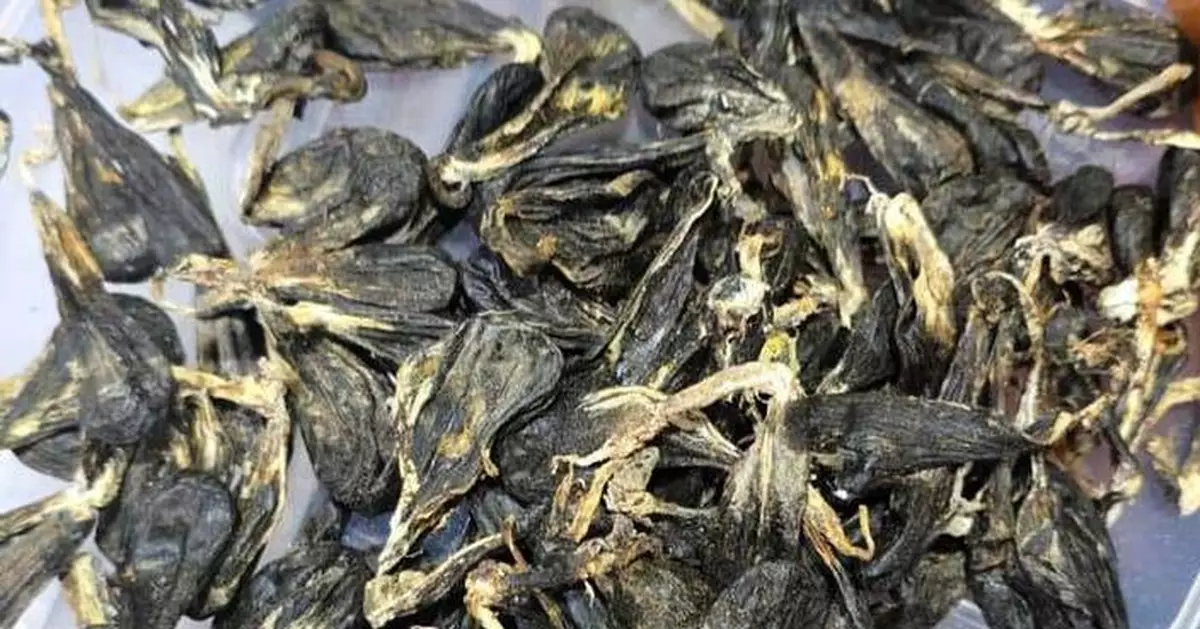
Hoang Van Thai, 39, was charged with possessing 1,022 gallbladders and 191 tongue parts from the python reticulatus, a protected species, at a property in southern Johor state.
The items were among wildlife parts found during a raid on April 4 by the Wildlife Department, which estimated the value of the haul at nearly 37 million ringgit ($9.3 million). The haul included python gallbladders and other parts, bear bile, suspected tiger parts, primate remains and reproductive organs believed to be linked to the illegal international wildlife trade.
Malaysia is a major hub for the illegal wildlife trade, serving as both a source and transit point for trafficked species, driven by demand for exotic animals and their parts.
It's unclear why Hoang was charged with only the python parts. Python bile, which is contained in the gallbladder, is believed by some to have medicinal properties, while the tongue is used in traditional rituals or as an aphrodisiac.
Defense lawyer Mohamad Fazaly Ali Mohamad Ghazaly said he had disputed the valuation by the wildlife department in court as there was no documentation to support it. He said Hoang came to Malaysia in November and worked as a driver, while his two children were studying in Malaysia.
Hoang, who will be sentenced later, faces up to three years in jail, a fine or both. The court will verify his immigration status on April 20 before ruling on bail. Prosecutors objected to bail, saying the large quantity of seized items suggested an organized activity.
Johor Malaysia Nature Society adviser Vincent Chow was quoted by The Star English-language newspaper as saying that Hoang may have acted as a stockist for a larger syndicate.
“Most of the wildlife parts seized have already been processed and some were even packed, likely waiting to be shipped out either to the local or international market,” he said.
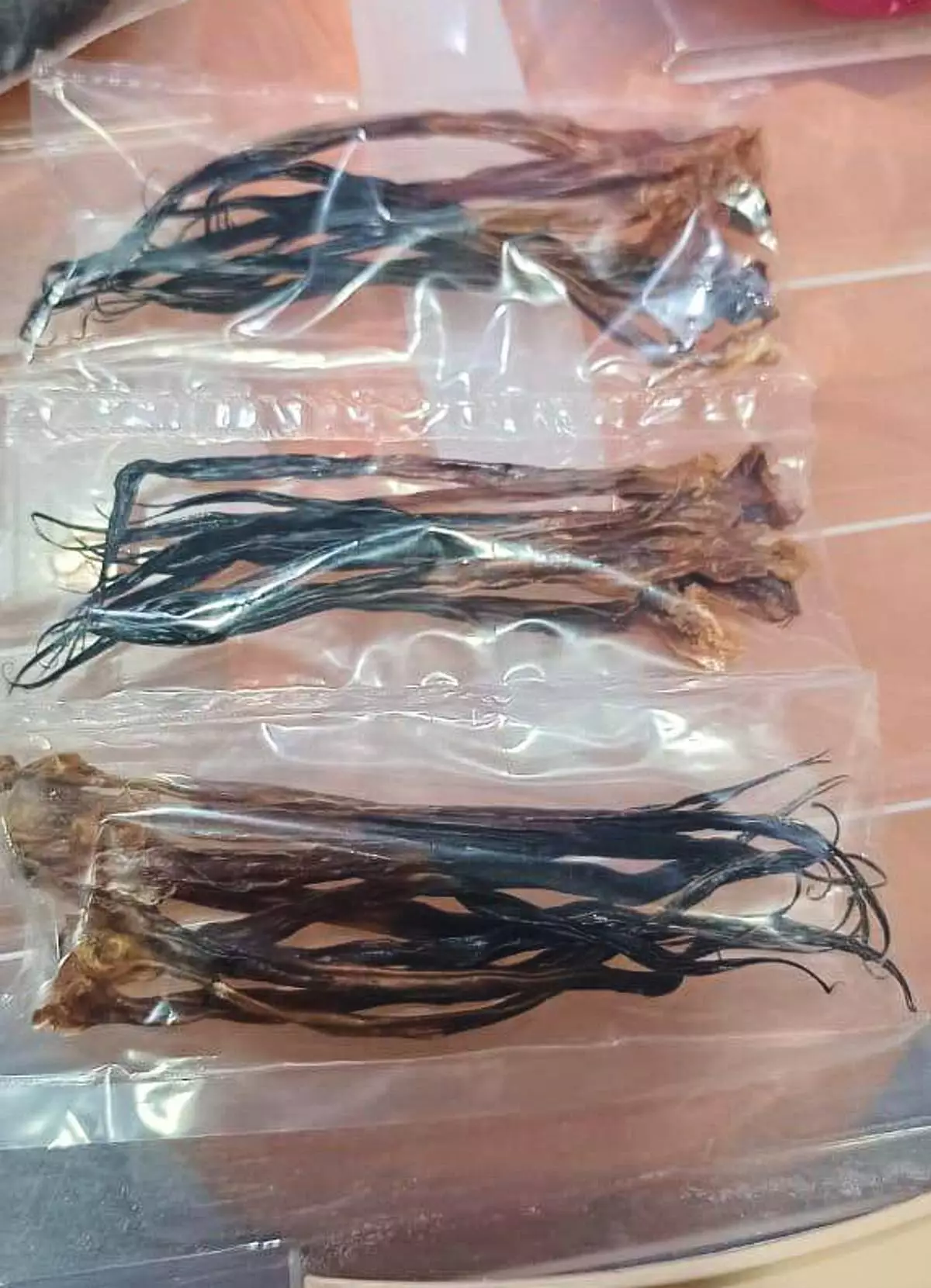
In this handout picture provide by Malaysia Wildlife Department on Saturday, April 14, 2026, suspected python sexual organs are seen after a seizure of wildlife parts in Johor, Malaysia. (Malaysia Wildlife Department via AP)
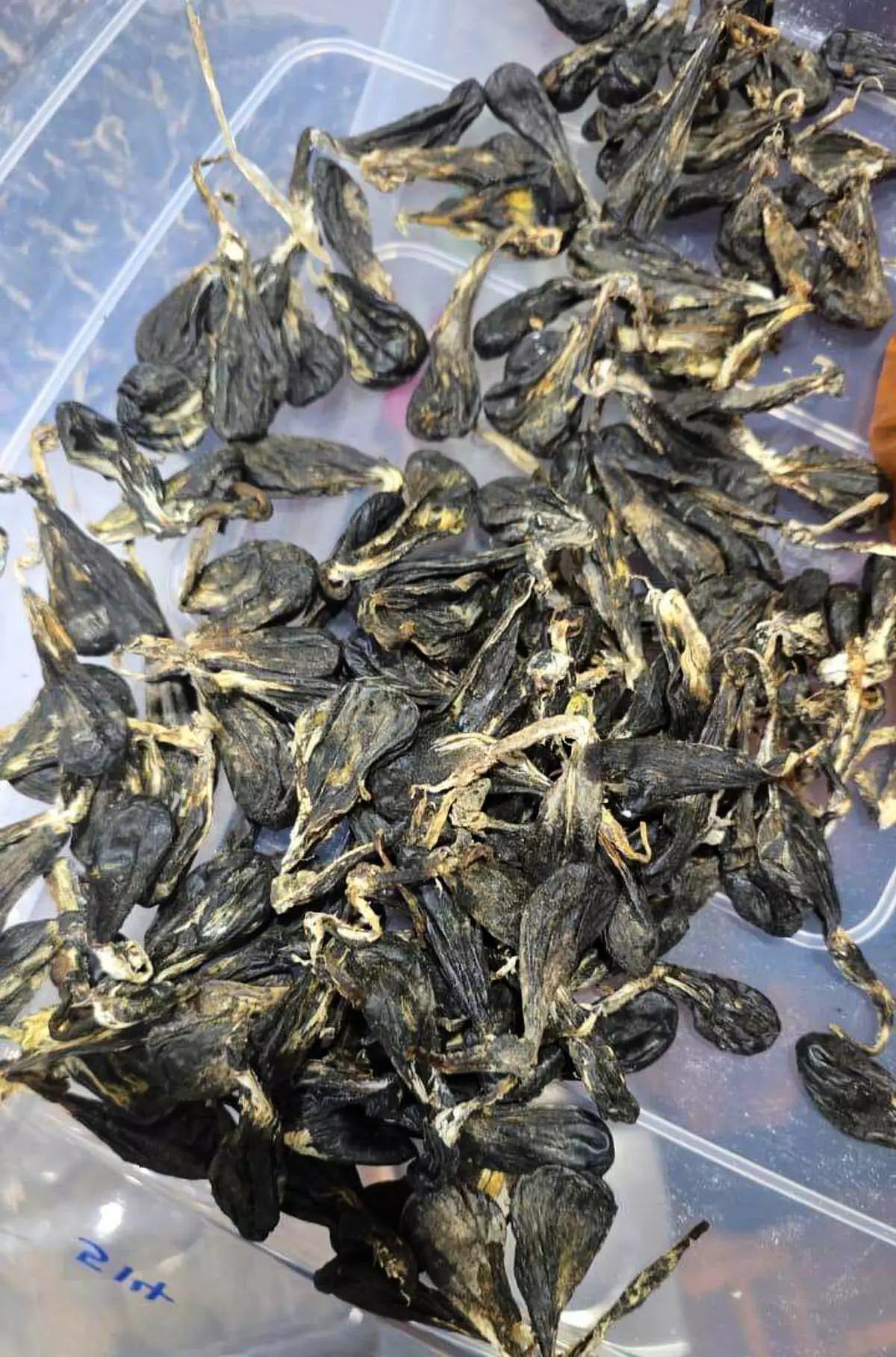
In this handout picture provide by Malaysia Wildlife Department on Saturday, April 14, 2026, python gallbladders are seen after a seizure of wildlife parts in Johor, Malaysia. (Malaysia Wildlife Department via AP)
MOGADISHU, Somalia (AP) — Voters in the small Horn of Africa nation of Djibouti cast ballots to elect their president on Friday, with longtime leader Ismaïl Omar Guelleh expected to secure a sixth term in office after lawmakers scrapped presidential age limits last year.
Guelleh, 78, has ruled the country of about 1 million for more than two decades. The results of the 2021 election showed him winning nearly 99% of the vote.
He faces a single challenger, Mohamed Farah Samatar, a former ruling party member, in a race analysts say offers little genuine competition. Opposition groups frequently boycott elections, citing restrictions on political freedoms.
Guelleh succeeded his uncle, former President Hassan Gouled Aptidon, in 1999, extending a family-led system that has shaped the country’s politics for decades.
Regional observers from the African Union and the Intergovernmental Authority on Development monitored the vote.
Election results are expected to be announced within one or two days.
“The scrapping of term limits in Djibouti is less about electoral competition and more about preserving regime continuity in a highly strategic state," Mohamed Husein Gaas of the Raad Peace Research Institute told The Associated Press.
"While it raises concerns about democratic backsliding, external actors are likely to prioritize stability given Djibouti’s critical role in Red Sea security and global trade routes, especially amid ongoing tensions in the Middle East,” he said.
Djibouti hosts multiple foreign military bases, including those of the U.S., China, France and Japan, underscoring its strategic importance along a key global shipping route linking the Red Sea and the Gulf of Aden. Revenues from these arrangements, along with port services for neighboring Ethiopia, underpin the economy.
But that model leaves Djibouti exposed to external shocks. It depends heavily on Ethiopia’s use of its ports, while global disruptions — including Red Sea shipping insecurity — pose risks to revenue.
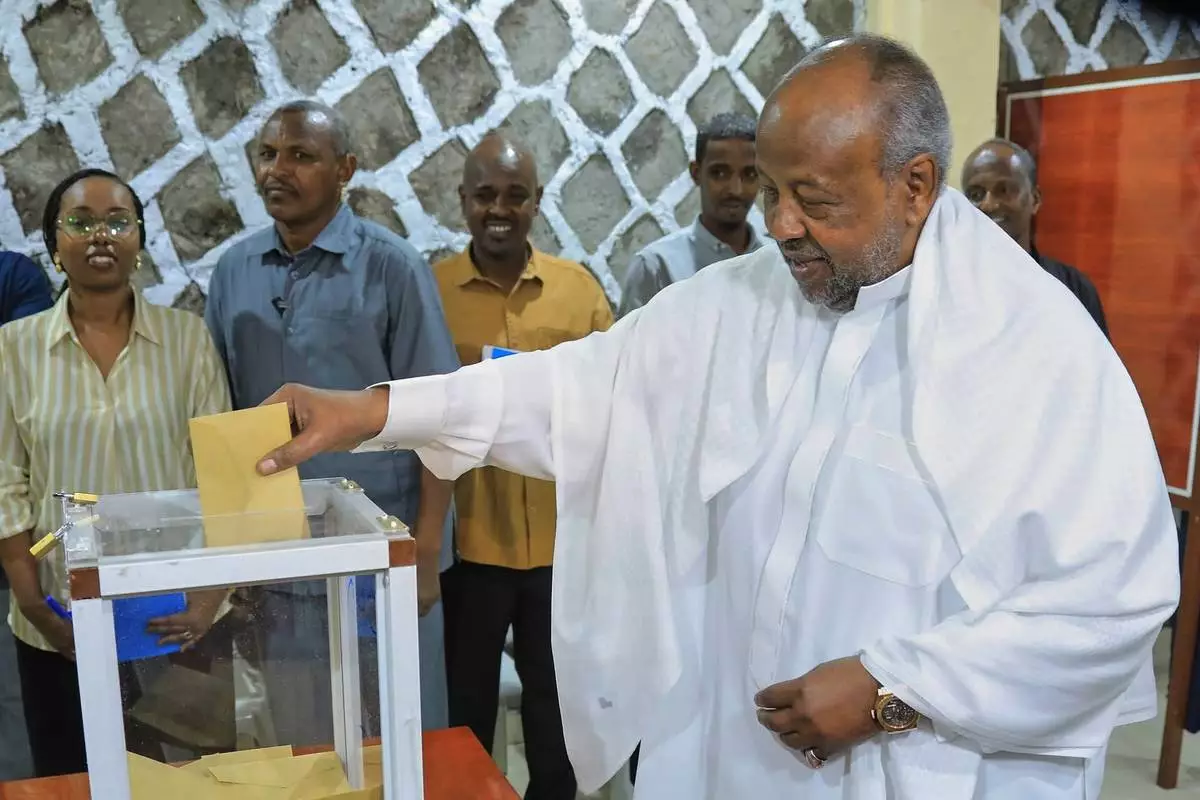
Djibouti's incumbent President Ismail Omar Guelleh casts his vote at the City Hall polling station during the presidential election in Mouloud, Djibouti, Friday, April 10, 2026. (AP Photo/Guirreh Moumin)
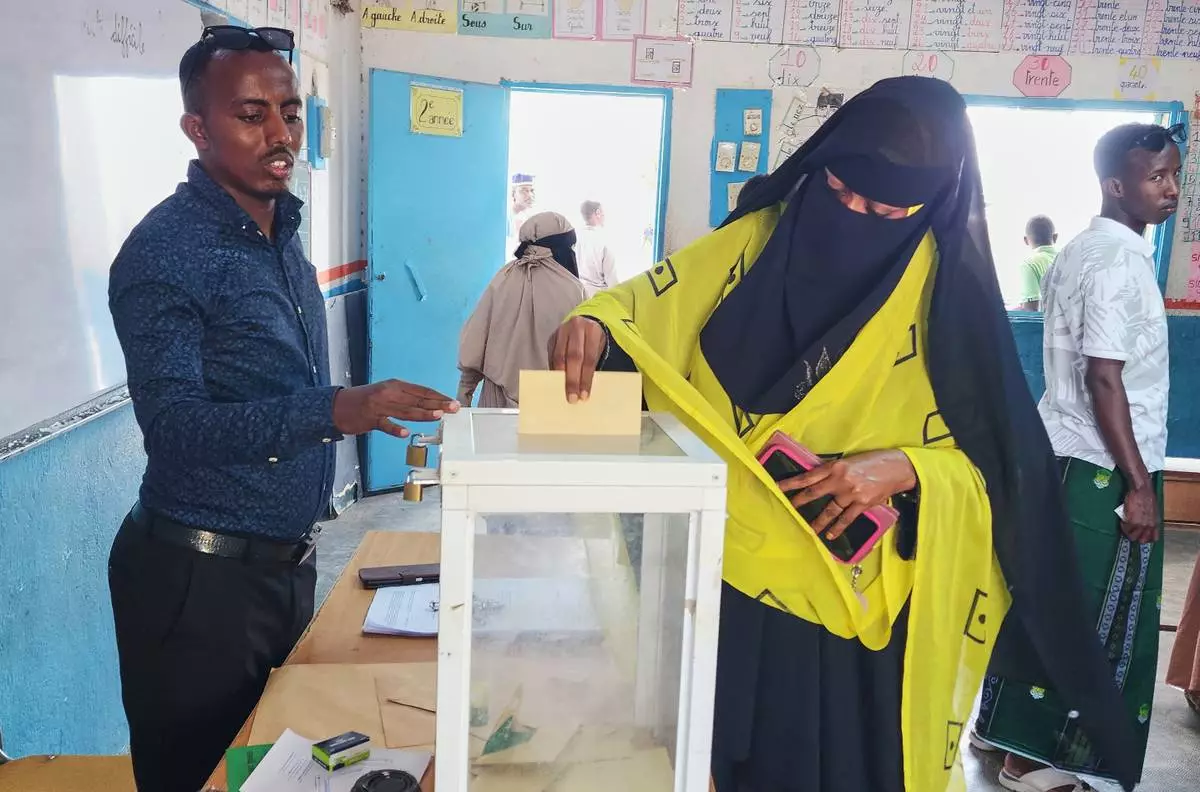
A woman casts her vote at a polling station during early voting in the presidential elections, in Mouloud, Djibouti, Friday, April 10, 2026. (AP Photo/Guirreh Moumin)
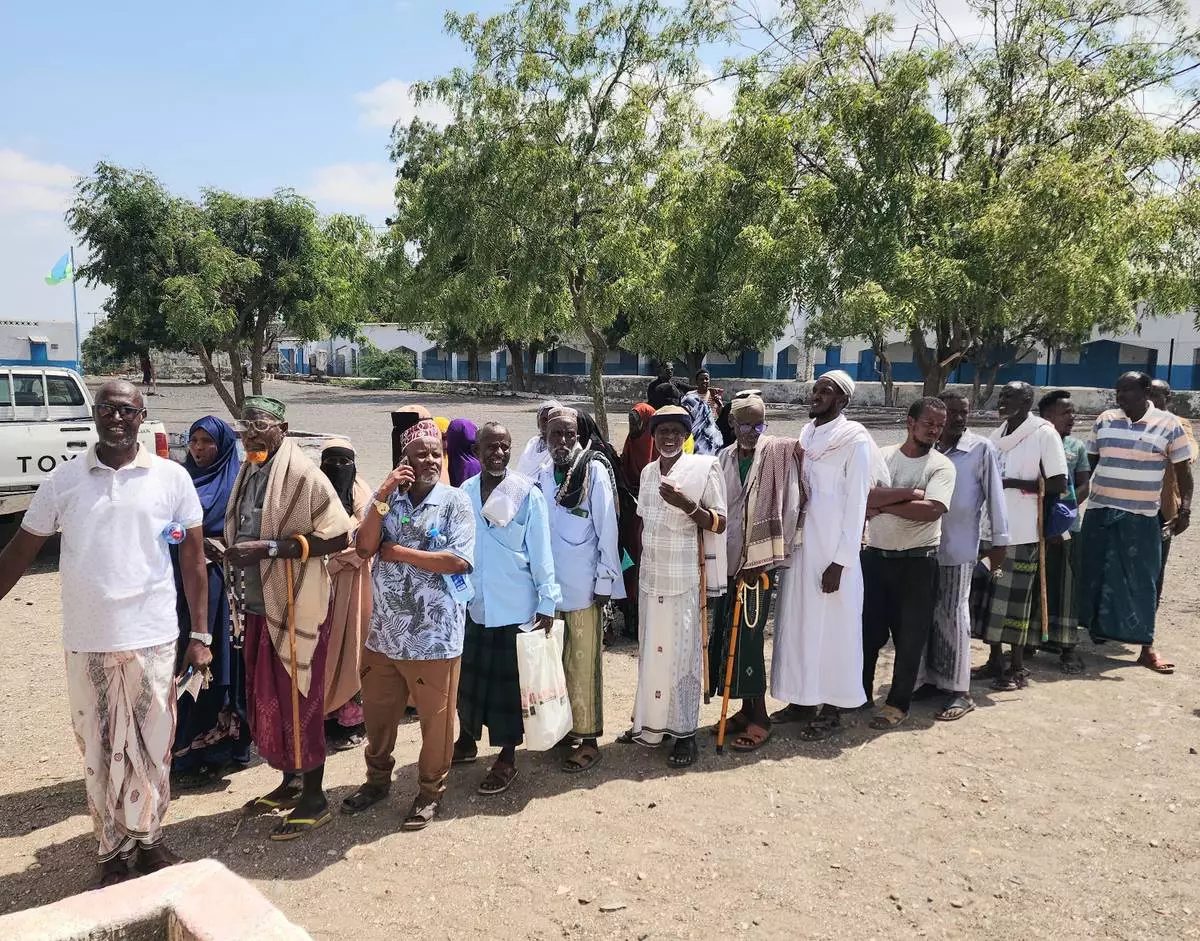
People line up to vote at a polling station during the 2026 Djibouti presidential election, in Mouloud, Djibouti, Friday, April 10, 2026. (AP Photo/Guirreh Moumin)
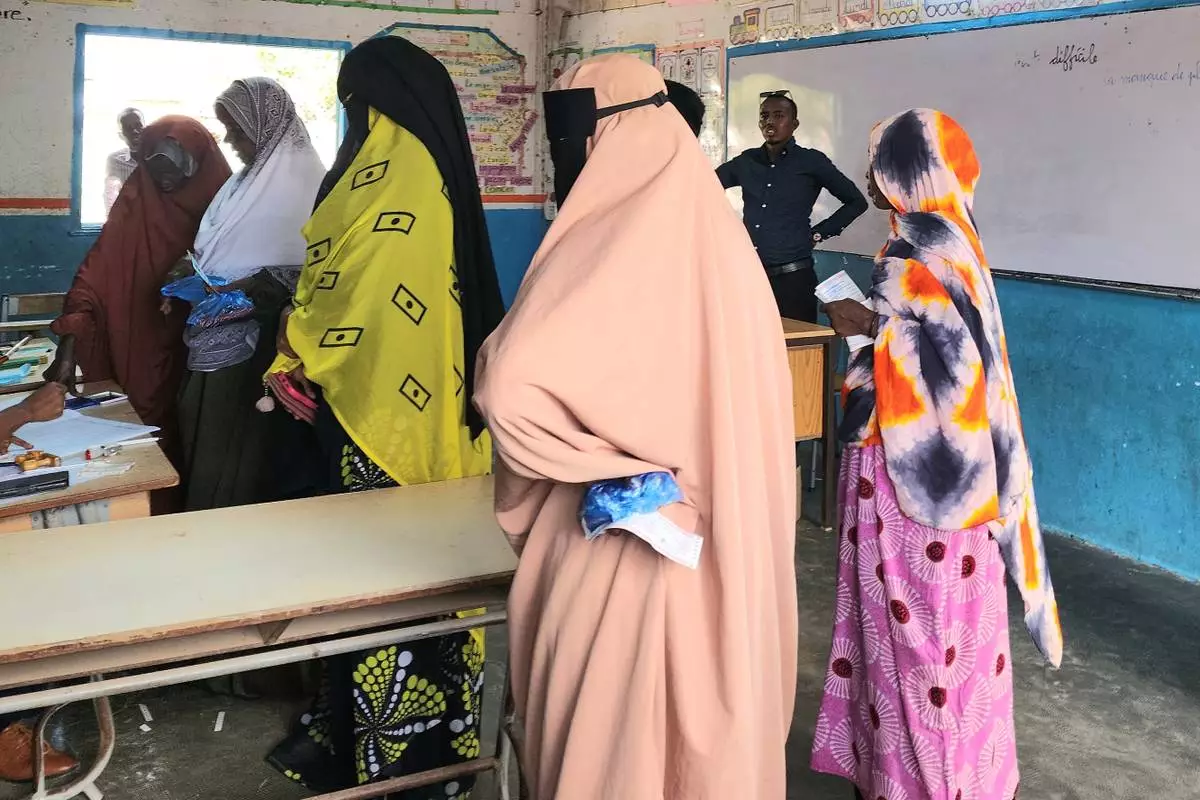
Women cast their votes at a polling station during the Djibouti presidential elections in Mouloud, Djibouti, Friday, April 10, 2026. (AP Photo/Guirreh Moumin)
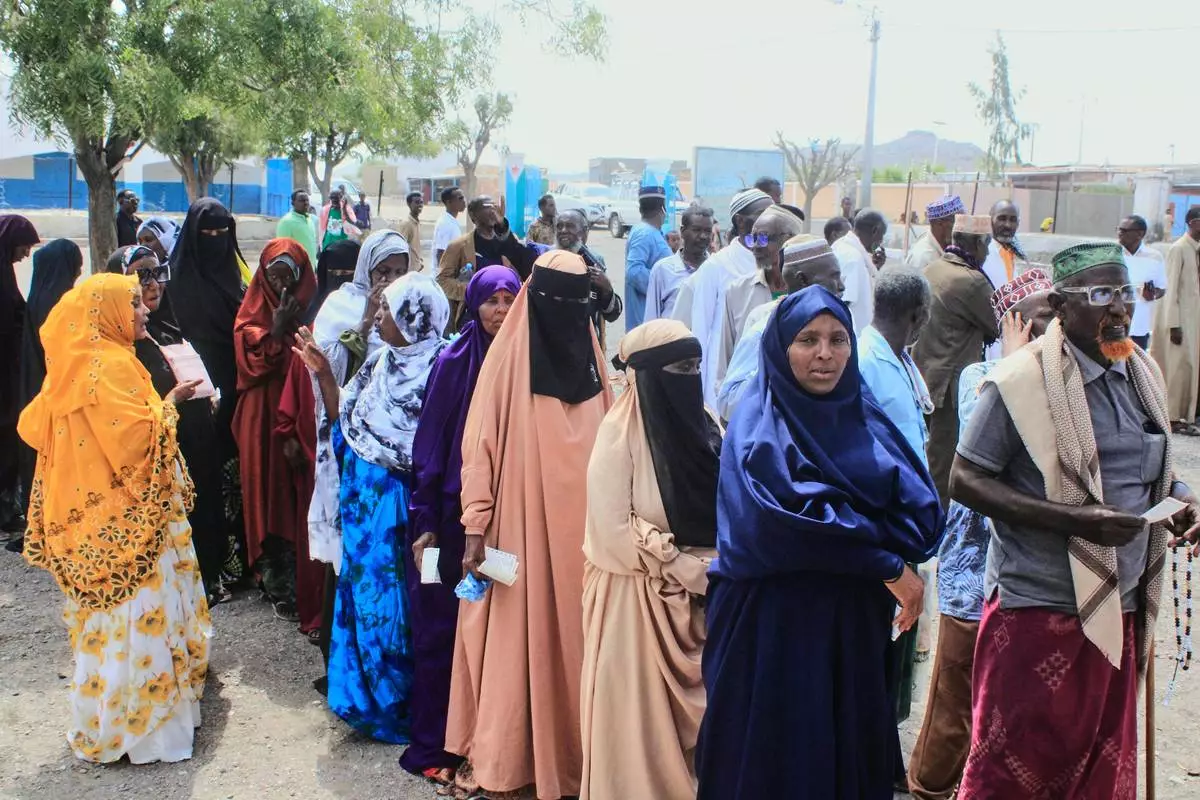
People line up to vote at a polling station during the 2026 Djibouti presidential election, in Mouloud, Djibouti, Friday, April 10, 2026. (AP Photo/Guirreh Moumin)
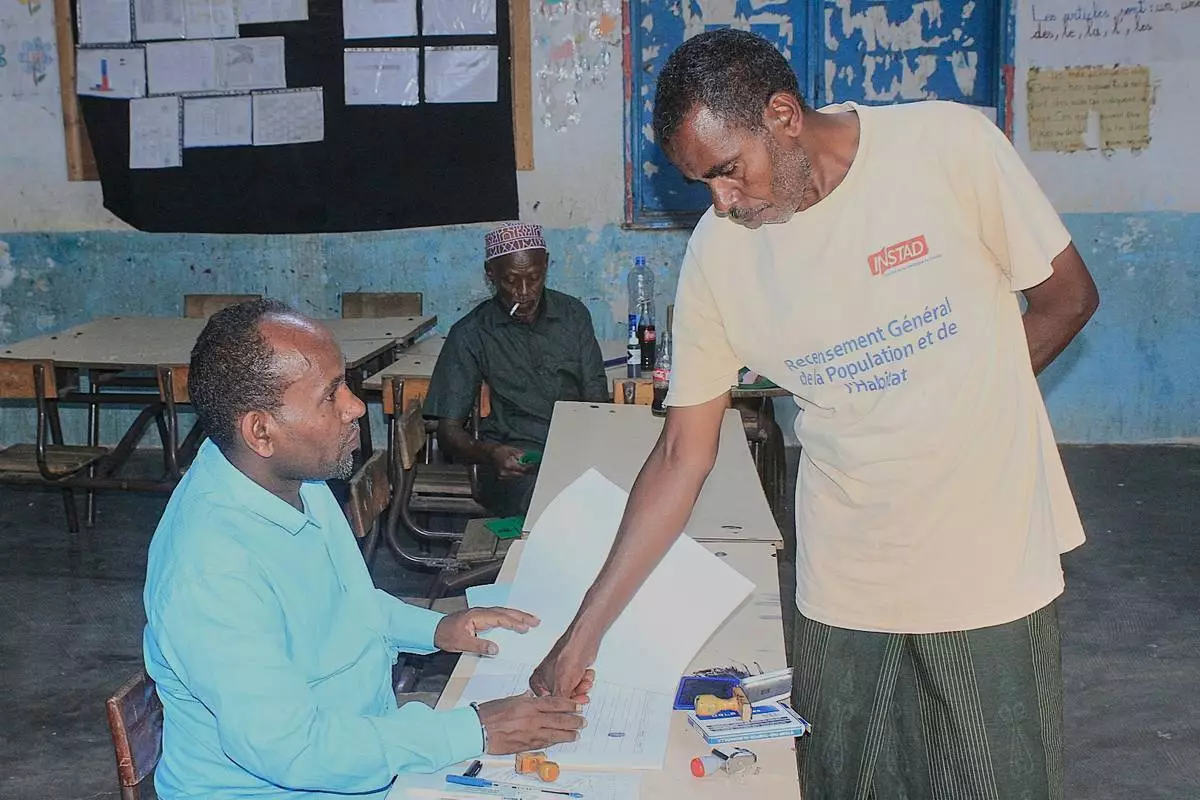
A man casts his vote at a polling station during early voting in the presidential elections at Mouloud, in Djibouti, Friday, April 10, 2026. (AP Photo/Guirreh Moumin)
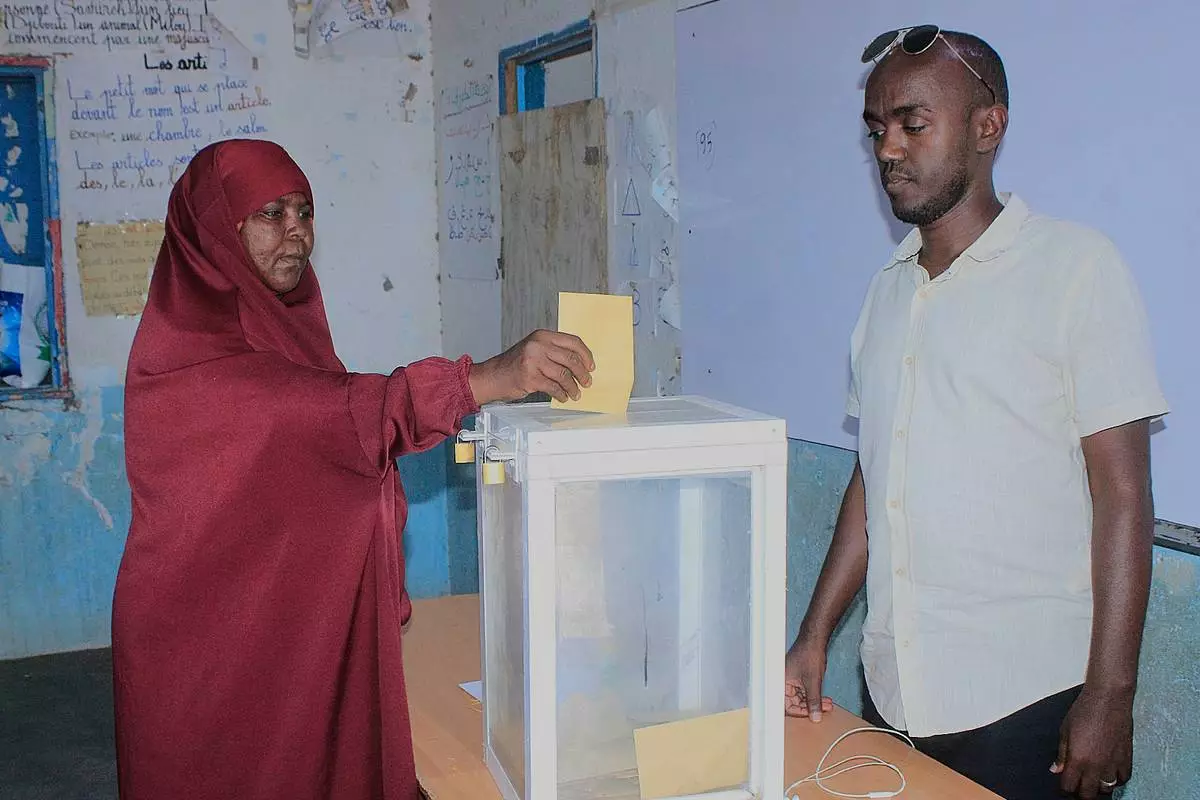
A woman casts her vote at a polling station during early voting in the presidential elections at Mouloud, in Djibouti, Friday, April 10, 2026. (AP Photo/Guirreh Moumin)