Space-mutated seeds bred in Sanya, south China's Hainan Province, have yielded promising traits after multiple generations, with new varieties entering a critical development stage.
The seeds, part of those returned to Earth in 2024 aboard China's reusable returnable experimental satellite, Shijian-19, have been cultivated at a biobreeding base in Yazhou Bay Science and Technology City in Sanya.
Leveraging Sanya's abundant sunlight and heat, as well as its well-established research system, researchers have propagated the seeds through multiple generations. Offspring with desirable traits have been identified and selected, pushing the program into a key stage of new variety development.
Space breeding involves exposing seeds to cosmic radiation, microgravity, and vacuum conditions aboard spacecraft to induce genetic mutations. Upon return, these seeds undergo selective cultivation to isolate desirable traits, including enhanced yield, disease resistance, and climate adaptability.
At the breeding base, space-bred soybeans grown over several planting seasons have shown marked differences compared with conventional varieties.
"These are SP3 (third-generation space-bred) lines we have developed and selected, with their parental controls grown alongside. The plants are taller, have more branches and denser pods, indicating strong yield potential. At the SP1 (first-generation space-bred) stage, we focused on survival and germination rates. In the SP2 (second-generation space-bred) cultivation, we identified some individual plants with significantly increased branching. We tagged those plants and later conducted indoor phenotyping," said Liu Fengqin, a researcher at a biotechnology company in Hainan.
According to researchers, although seeds exposed to the space environment can develop mutations that are difficult to achieve on Earth, the changes are random, requiring multiple generations of screening to identify superior lines. So far, promising lines have been identified in soybean, corn and rice.
"In soybeans, we've identified lines with more branching and higher yield potential. In corn, we found shorter-stalk lines. In rice, some lines are tolerant to the double dose of herbicides. Conventional breeding takes eight to ten years to produce a new variety, while space breeding could shorten that to three to five years if favorable traits are identified," said Jia Zhiwei, head of the research and development platform at the company.
The lines are expected to be moved to northern planting regions in May for further evaluation, so as to lay the groundwork for large-scale production.
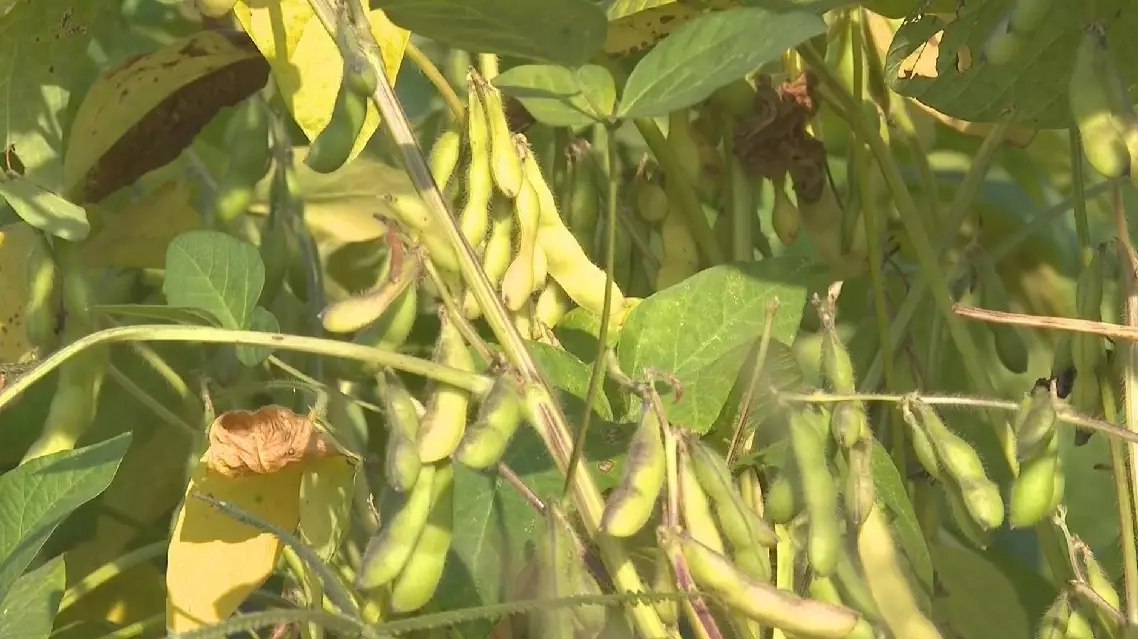
Space-bred seeds enter key breeding stage in China
China's newly approved Inner Mongolia Pilot Free Trade Zone (FTZ) is expected to help turn the northern border areas into a new frontier of opening-up.
China on Thursday released a plan for the establishment of the China (Inner Mongolia) Pilot Free Trade Zone, bringing the total number of pilot free trade zones nationwide to 23. Leveraging its unique location linking Russia, Mongolia and wider Eurasia, the zone is designed to advance the country's high-level opening-up through policy support, industrial upgrading and improved connectivity.
The pilot FTZ covers 119.74 square kilometers and comprises three subzones in Hohhot, capital of the autonomous region, Manzhouli, a northern border city, and Erenhot, a land port on the China-Mongolia border, each tasked with differentiated functions and the development of industries tailored to local conditions.
Specifically, the Hohhot subzone will serve as a central hub, focusing on developing specialty industries and innovation clusters. The Manzhouli subzone will build on China-Russia-Mongolia cooperation to become an important gateway to Northeast Asia and Europe. The Erenhot subzone will tap into the China-Mongolia-Russia Economic Corridor and serve as a model for cooperation with neighboring countries.
At the Hohhot Comprehensive Bonded Zone, a gold and silver refining project due to start operations will have an annual processing capacity of 100 tonnes of gold and 1,000 tonnes of silver.
The Manzhouli subzone will prioritize industries including the processing of imported resources, cross-border tourism, cross-border financial services and port services.
"Following the approval of the free trade zone, companies like ours are more confident in expanding our cross-border business further and broadening its scope. Specifically, we aim to achieve full coverage across the entire industrial chain," said Cui Rongzheng, head of Manzhouli Xincheng Supply Chain Limited Company.
Notably, in the first quarter of this year, the Erenhot Railway Port, a key hub on the "middle corridor" of the China-Europe Railway Express, handled a record-high 1,145 freight train trips, a 22.3 percent increase from last year, underscoring its role in stabilizing global supply chains and supporting foreign trade growth.
"The establishment of the Inner Mongolia Pilot Free Trade Zone will strengthen links between border provinces and China's inland regions, and enhance cooperation between land ports, coastal ports and inland ports. It is expected to play a key role in improving the wellbeing of ethnic minority populations in the border areas and turning China's northern border areas into a new frontier of opening-up," said Wang Xuekun, head of the Chinese Academy of International Trade and Economic Cooperation under the Ministry of Commerce.
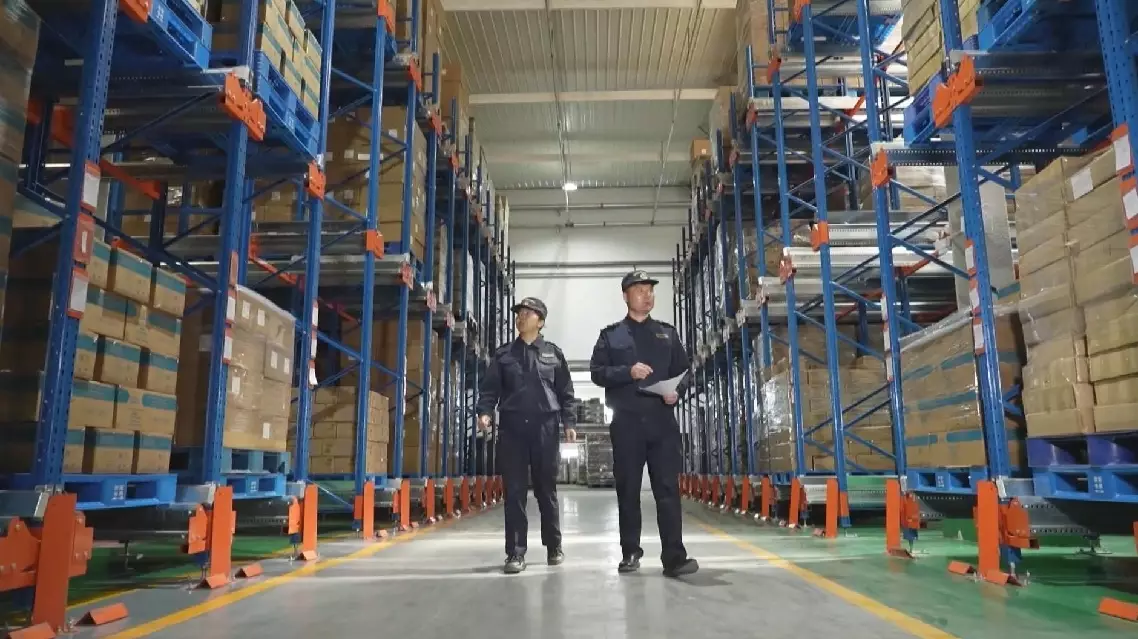
Inner Mongolia FTZ subzones to drive coordinated opening-up