African officials on Wednesday pledged to scale up investment to accelerate development across the member states of the Economic Community of West African States (ECOWAS) at a meeting in Accra, Ghana's capital.
They made the commitment during the 24th Annual General Meeting of the ECOWAS Bank for Investment and Development (EBID), where leaders highlighted the need to expand the bank's capital base to finance transformative projects.
Ghanaian Finance Minister Cassiel Ato Forson stressed that timely capital payments would strengthen EBID's leverage and sustain its growth, enabling the institution to stimulate inclusive economic expansion across the region.
"Timely capital payments are critical. It strengthens EBID leverage and sustains its growth and impact across our region. Expanding our capital base is essential to strengthen our ability to finance transformative development projects and stimulate inclusive economic growth among our member states," said Forson.
EBID recorded strong achievements in 2025, with total disbursements of about 722 million U.S. dollars, up 47.7 percent from 2024. Building on that momentum, President George Agyekum Donkor said the bank remains committed to helping member states tackle poverty and close infrastructure gaps across the region.
"We aim to direct at least 63 percent of new commitments towards the private enterprises to catalyze job creation and innovation. Simultaneously, the bank would embed environmental, social and governance principles across its operations, dedicating over 41 percent of resources to climate mitigation and social inclusion projects," said Donkor.
With disbursements surging nearly 48 percent last year, EBID officials said the bank is positioned to channel more resources into private-sector growth and climate-focused projects, reinforcing its role as a driver of inclusive development across West Africa.
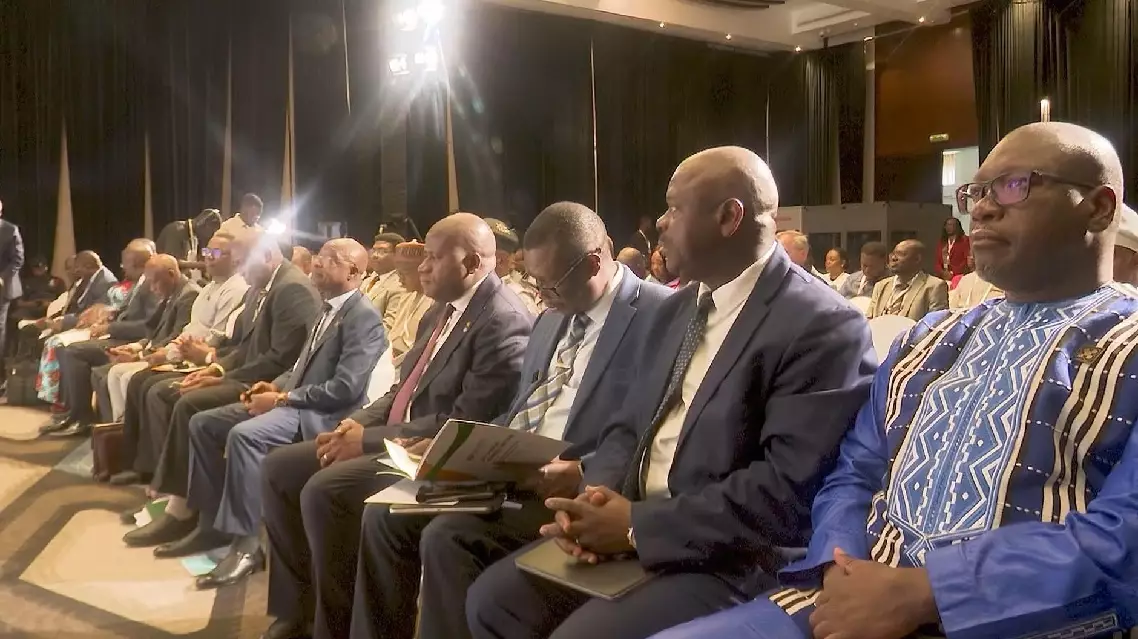
African officials vow stronger investment push at ECOWAS bank meeting in Accra
Iran and the United States remained locked in disagreement over control of the Strait of Hormuz during talks in Islamabad, the Pakistani capital, on Saturday, with the Islamic Republic flatly rejecting an American proposal for "joint management" of the strategic waterway.
Two sources familiar with the negotiations said Iranian negotiators insisted on retaining full control of the Strait, including the right to levy transit fees on vessels passing through the key maritime chokepoint.
The issue has emerged as a major sticking point in the negotiations between the two sides, which began on Saturday.
Tensions over the Strait have escalated in recent days.
On Saturday, the U.S. Central Command (CENTCOM) announced that two American guided-missile destroyers, the USS Frank E. Peterson and USS Michael Murphy, transited the Strait and commenced mine-sweeping operations in the Strait of Hormuz.
CENTCOM described the operation as part of an effort to clear mines allegedly laid by Iran's Islamic Revolutionary Guards Corps and to establish a new safety corridor for commercial shipping.
Brad Cooper, commander of CENTCOM, said the new corridor would be opened to the maritime industry soon to facilitate the free flow of commerce. He stressed that the Strait, a vital international waterway, is crucial for regional and global economies.
Additional U.S. forces, including underwater drones, will join the clearance effort in the coming days.
Iran, however, has categorically denied the U.S. account.
On Saturday, a spokesperson for Iran's Khatam al-Anbiya Central Headquarters rejected the American claim that its warships had approached or entered the Strait. The spokesperson reaffirmed that Iran maintains full control over transit through the waterway.
The conflicting statements came as delegations from Iran and the United States are currently in Islamabad for talks on easing tensions in the Middle East after a ceasefire was achieved between the two countries early Wednesday.
Following a meeting between senior officials, Iranian and U.S. expert and technical teams had reached the stage of exchanging texts to develop a joint framework for further talks.
However, the third round of U.S.-Iran negotiations concluded with "serious disagreements," the semi-official Tasnim news agency reported Sunday. According to Tasnim, the Strait of Hormuz and several other issues remain sources of "serious disagreement" in the negotiations held in Pakistan.
Iran's government said on social media that despite the disagreements, negotiations will continue.
The Iranian delegation at the talks includes Mohammad Bagher Ghalibaf, speaker of the Iranian Parliament; Iranian Foreign Minister Seyed Abbas Araghchi; and Ali Bagheri, a member of Iran's Supreme National Security Council.
The U.S. side is represented by Vice President J.D. Vance, President's Middle East Envoy Steve Witkoff, and Special Peace Envoy Jared Kushner.
Iranian officials have previously signaled that any outcome must preserve the country's military achievements and safeguard the rights of its people, underscoring the high stakes of the discussions over the strategic waterway.
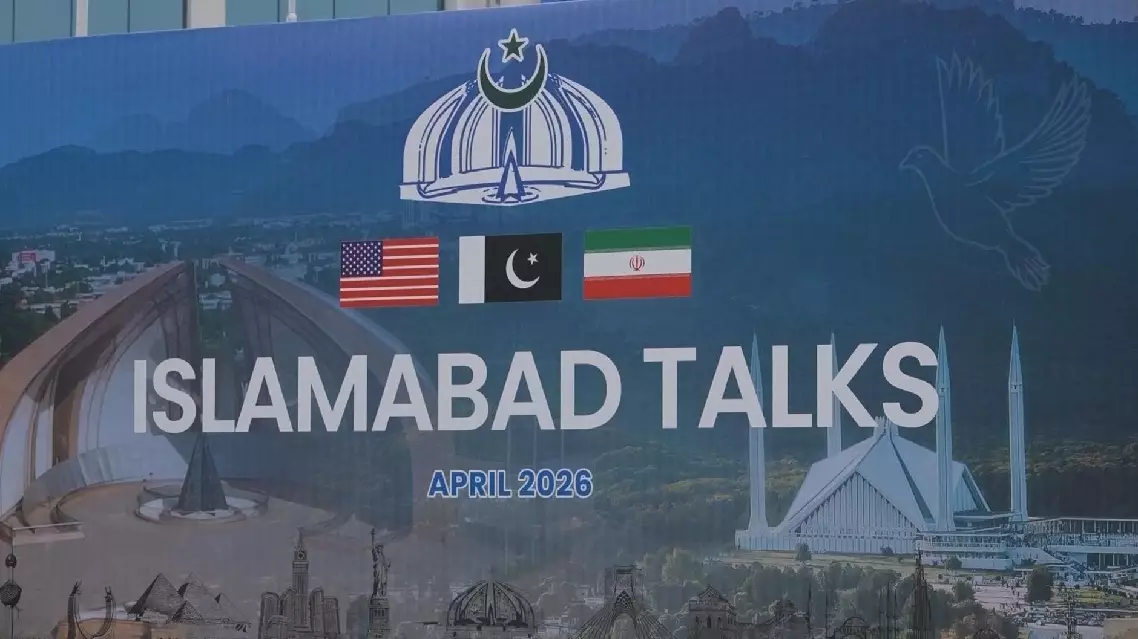
Iran, U.S. at odds over control of Strait of Hormuz as Tehran rejects joint management