Iran's Khatam al-Anbiya Central Headquarters "strongly" denied Saturday that U.S. vessels had approached or entered the Strait of Hormuz, refuting a U.S. claim that two warships had transited the waterway.
According to the semi-official Fars news agency, Ebrahim Zolfaghari, spokesman for the headquarters commanding all Iranian armed forces, said that the claim by U.S. Central Command (CENTCOM) commander Brad Cooper about "the approach and entry of U.S. vessels to the Strait of Hormuz is strongly denied," and "authority over any vessel's passage lies with the Armed Forces of the Islamic Republic of Iran."
Earlier on Saturday, CENTCOM said that two U.S. Navy guided-missile destroyers -- USS Frank E. Peterson and USS Michael Murphy -- transited the waterway and began mine-clearing operations in the Gulf.
In a post on social media platform X, CENTCOM said that the operation was "part of a broader mission to ensure the Strait is fully clear of sea mines".
"Today, we began the process of establishing a new passage and we will share this safe pathway with the maritime industry soon to encourage the free flow of commerce," said Cooper.
Iranian military analyst Nima Akbarkhani told the semi-official Mehr news agency that even the world's most advanced warship could not pass through the Strait of Hormuz undetected.
Akbarkhani added that the U.S. warship attempted a "high-risk operation" on Saturday using electronic warfare and identity disguise, but Iran's naval forces exercised restraint amid a recent ceasefire and issued a serious warning.
The developments come as delegations from Iran and the United States are currently in Islamabad for talks on easing tensions in the Middle East after a ceasefire was achieved between the two countries early Wednesday.
On Feb. 28, Israel and the United States launched joint attacks on Tehran and several other Iranian cities, killing Iran's then Supreme Leader Ali Khamenei, along with senior military commanders and civilians. Iran responded with waves of missile and drone strikes targeting Israel and U.S. assets in the Middle East, and tightened control over the Strait of Hormuz by restricting passage by vessels belonging to or affiliated with Israel and the United States.
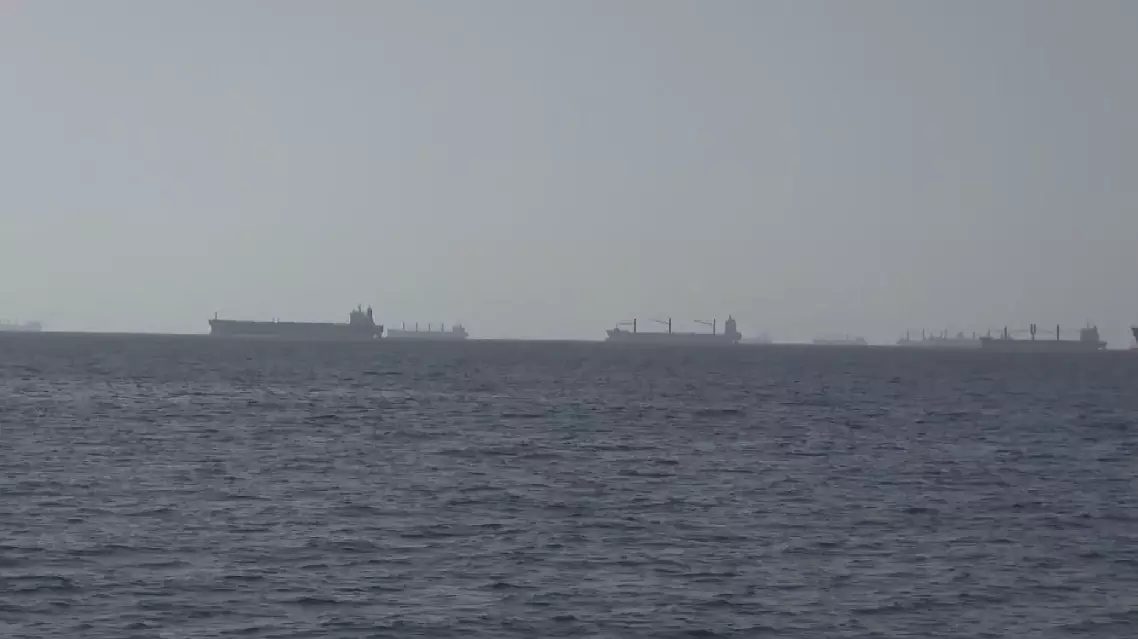
Iran refutes US account of warships transiting Strait of Hormuz
Lebanon's Health Ministry said Saturday that Israeli strikes during the latest round of fighting have killed 2,020 people and wounded 6,436 others since hostilities escalated.
The ministry said the toll reflects cumulative casualties recorded across multiple regions amid continued Israeli airstrikes and cross-border exchanges of fire.
On Saturday, the Israel Defense Forces (IDF) said that Israeli forces engaged in close-range firefights with Hezbollah militants, striking multiple targets and killing several militants while seizing various weapons. In the past 24 hours, the IDF targeted over 200 Hezbollah sites within Lebanon and continued to target Hezbollah rocket launchers to prevent attacks against Israel.
Additionally, the IDF's Home Front Command has tightened public safety guidelines, suspending or limiting educational activities in border communities, Upper Galilee, and Haifa Bay, while also restricting the size of gatherings in those areas.
Hezbollah, in its statement, claimed that its operations in southern Lebanon continued, attacking Israeli tanks and personnel. The group also targeted Israeli military infrastructure, soldiers, and vehicles in northern Israel.
The escalation followed renewed hostilities involving Hezbollah, which said it launched rockets from southern Lebanon toward Israel on March 2 for the first time since a ceasefire on Nov. 27, 2024. The exchange prompted Israel to expand its military campaign across Lebanon.
Lebanon has since been hit by sustained strikes in several areas, with fighting spreading beyond border regions into other parts of the country.
Iran and the United States agreed to a ceasefire on Wednesday. Israel said it would abide by the truce but argued the agreement does not apply to Lebanon. That assertion was rejected by Iran and by mediator Pakistan.
Israeli Prime Minister Benjamin Netanyahu said Saturday that the disarmament of Hezbollah is a prerequisite for any ceasefire agreement with Lebanon.
In a video statement, he said Lebanon had approached Israel several times over the past month seeking to begin direct talks following Israeli military actions.
"I approved this, subject to two conditions: we want to achieve the disarmament of Hezbollah, and we want a real peace agreement that will last for generations," Netanyahu said.
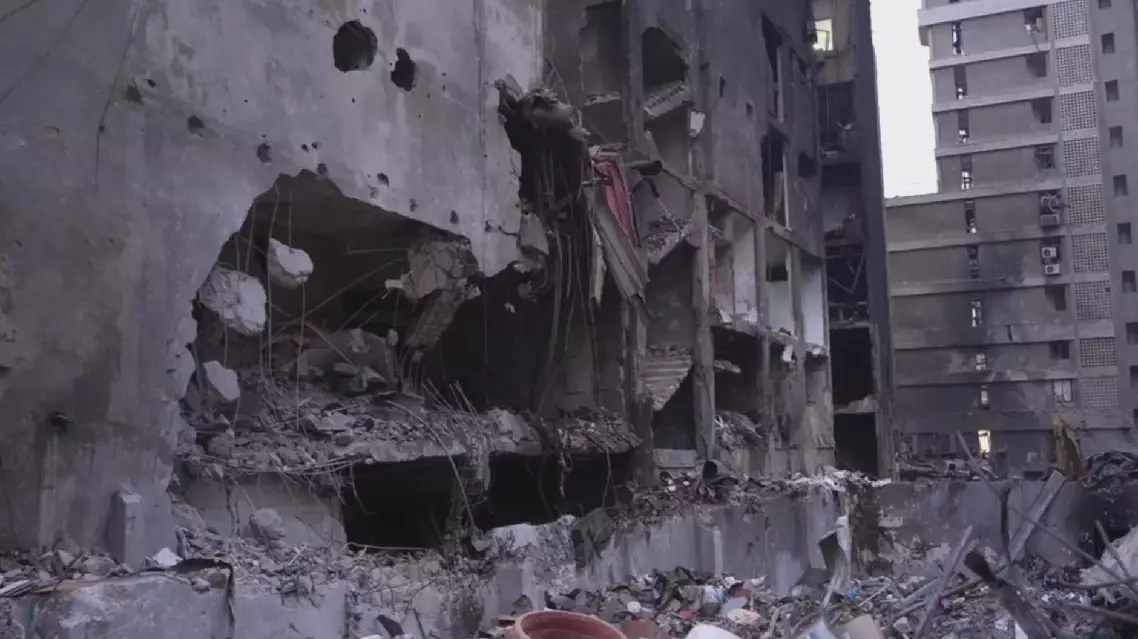
Death toll from Israeli attacks in Lebanon reaches 2,020