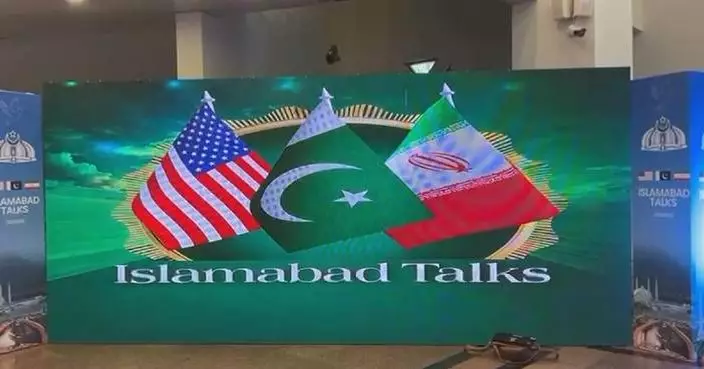
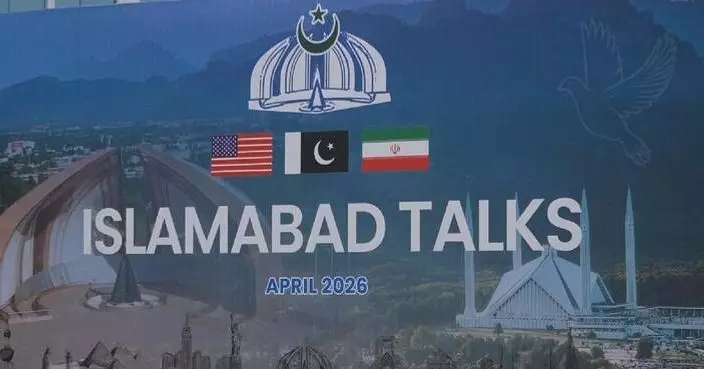
Marathon negotiations between the United States and Iran in the Pakistani capital ended early Sunday without a breakthrough, with both sides failing to bridge deep differences over nuclear issues, the Strait of Hormuz, and sanctions relief, officials said.
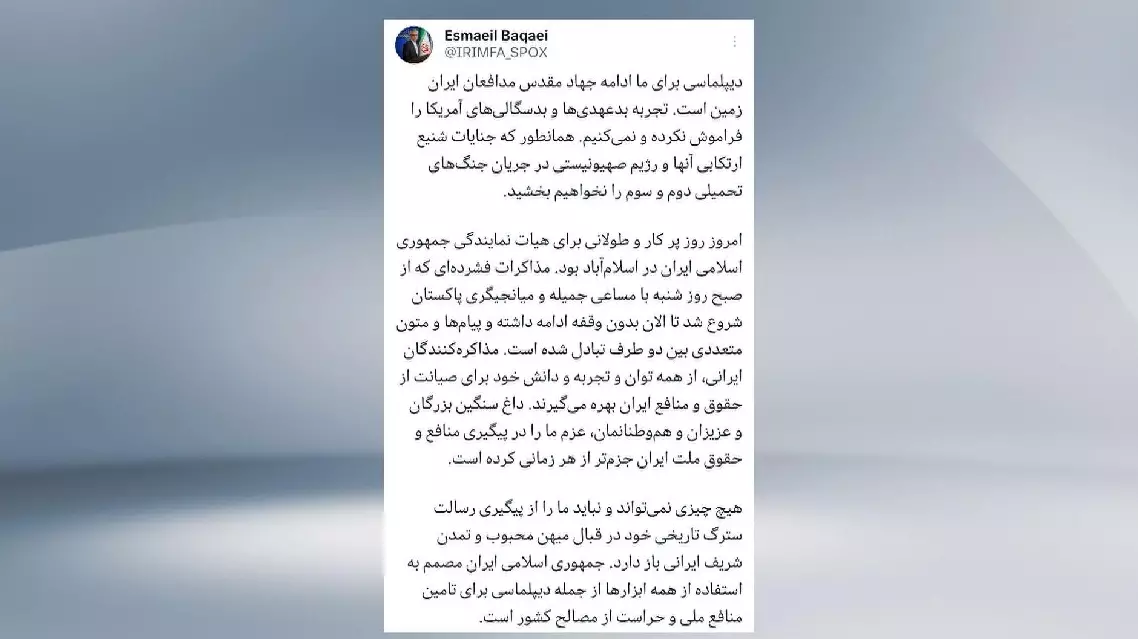
The talks, hosted by Pakistan, lasted about 21 hours from Saturday to early Sunday. Shortly after their conclusion, Iranian Foreign Ministry spokesman Esmaeil Baghaei said on social media that discussions covered key issues including the Strait of Hormuz, nuclear matters, war reparations, sanctions removal, and an end to the war against Iran and the region.
He said Iranian negotiators used all their capabilities to defend the country's rights and interests, adding that the two sides exchanged substantial information and texts.
However, U.S. Vice President J.D. Vance told a news conference in Islamabad on Sunday morning that no consensus had been reached and that the U.S. delegation would return home.
Vance thanked Pakistan for its mediation efforts, noting that the country had played an active role in helping bridge differences between the two sides. He added that the failure to reach an agreement would have greater consequences for Iran than for the United States.
Vance said the core sticking point remains Iran's nuclear ambitions. He said the U.S. side demands a clear and long-term commitment from Iran to forgo developing nuclear weapons or related capabilities, but has not seen such a willingness. He described this as a "red line" set by President Donald Trump for the negotiations.
The failed talks have left a fragile two-week ceasefire hanging in the balance, raising concerns of renewed hostilities in the region.
US-Iran talks in Islamabad conclude without breakthrough
Lebanon's Health Ministry said Saturday that Israeli strikes during the latest round of fighting have killed 2,020 people and wounded 6,436 others since hostilities escalated.
The ministry said the toll reflects cumulative casualties recorded across multiple regions amid continued Israeli airstrikes and cross-border exchanges of fire.
On Saturday, the Israel Defense Forces (IDF) said that Israeli forces engaged in close-range firefights with Hezbollah militants, striking multiple targets and killing several militants while seizing various weapons. In the past 24 hours, the IDF targeted over 200 Hezbollah sites within Lebanon and continued to target Hezbollah rocket launchers to prevent attacks against Israel.
Additionally, the IDF's Home Front Command has tightened public safety guidelines, suspending or limiting educational activities in border communities, Upper Galilee, and Haifa Bay, while also restricting the size of gatherings in those areas.
Hezbollah, in its statement, claimed that its operations in southern Lebanon continued, attacking Israeli tanks and personnel. The group also targeted Israeli military infrastructure, soldiers, and vehicles in northern Israel.
The escalation followed renewed hostilities involving Hezbollah, which said it launched rockets from southern Lebanon toward Israel on March 2 for the first time since a ceasefire on Nov. 27, 2024. The exchange prompted Israel to expand its military campaign across Lebanon.
Lebanon has since been hit by sustained strikes in several areas, with fighting spreading beyond border regions into other parts of the country.
Iran and the United States agreed to a ceasefire on Wednesday. Israel said it would abide by the truce but argued the agreement does not apply to Lebanon. That assertion was rejected by Iran and by mediator Pakistan.
Israeli Prime Minister Benjamin Netanyahu said Saturday that the disarmament of Hezbollah is a prerequisite for any ceasefire agreement with Lebanon.
In a video statement, he said Lebanon had approached Israel several times over the past month seeking to begin direct talks following Israeli military actions.
"I approved this, subject to two conditions: we want to achieve the disarmament of Hezbollah, and we want a real peace agreement that will last for generations," Netanyahu said.
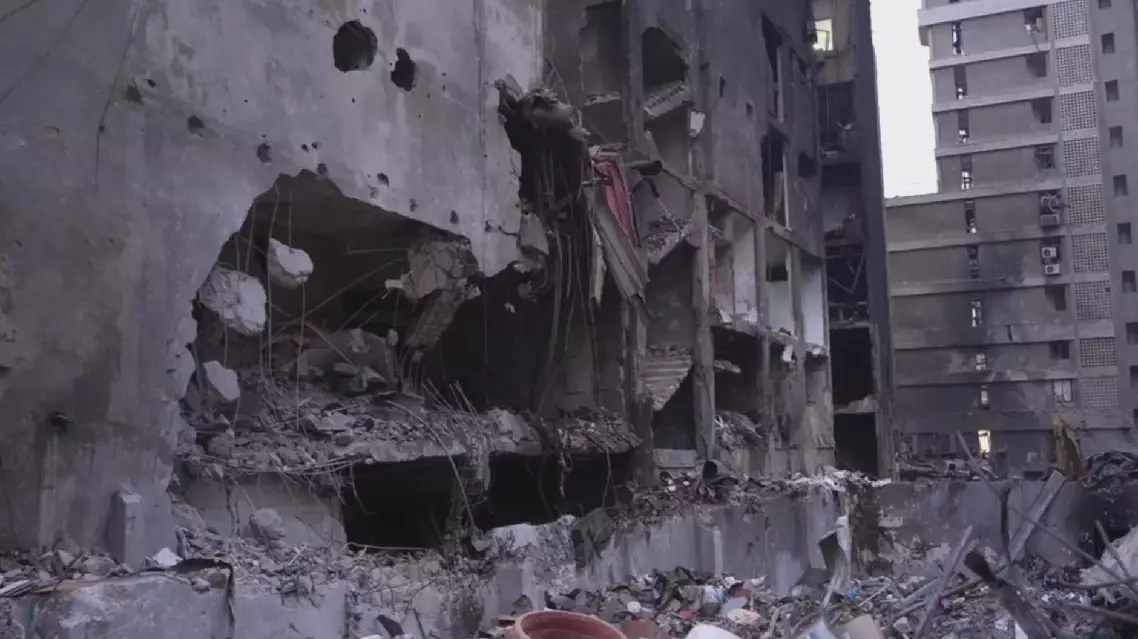
Death toll from Israeli attacks in Lebanon reaches 2,020