ST. PAUL, Minn. (AP) — A Minnesota county is investigating the arrest of a Hmong American man by federal officers that was captured on video as a potential case of kidnapping, burglary and false imprisonment, officials announced Monday.
Ramsey County Attorney John Choi and Sheriff Bob Fletcher said at a news conference they are pursuing information from the Department of Homeland Security that they need for their investigation into the arrest of ChongLy “Scott” Thao, 56, on Jan. 18. Ramsey County includes the state capital of St. Paul.
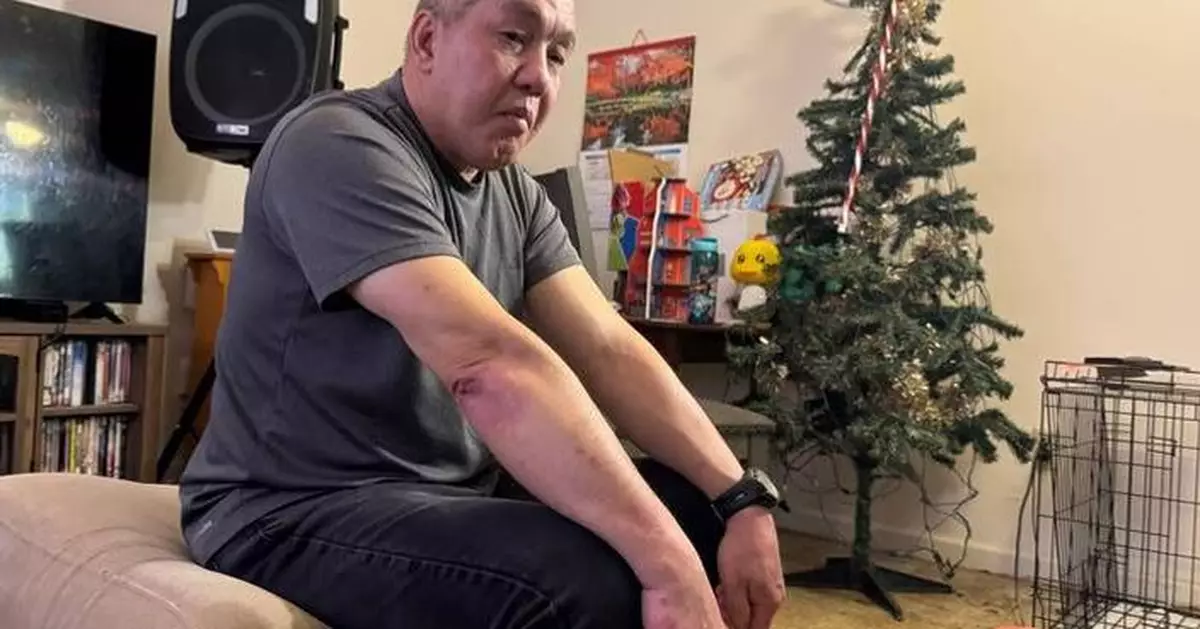
Immigration and Customs Enforcement officers bashed open the front door of Thao’s St. Paul home at gunpoint — without a warrant as far as Choi and Fletcher have been able to determine — then led him outside in just his underwear and a blanket in freezing conditions.
“There are many facts we don’t know yet, but there’s one that we do know. And that is that Mr. Thao is and has been an American citizen. There’s not a dispute over that," Fletcher said. “There’s no dispute that he was taken out of his house, forcibly taken out of his home and driven around.”
The sheriff continued: "Is that good law enforcement, to take an American citizen out of their home and drive them around aimlessly, trying to determine what they can tell them?”
DHS, which oversees ICE, has refused so far to cooperate with Ramsey County, or with other state and local investigations into the killings by federal officers of two U.S. citizens in Minneapolis during the Trump administration’s immigration crackdown.
“ICE does not ‘kidnap’ people," the agency said in a statement that called Ramsey County's announcement “nothing but a political stunt to demonize ICE law enforcement.”
Choi said they’re trying to determine whether any crimes were committed that they could prosecute under state or federal law. He also said St. Paul police were investigating another case related to the immigration crackdown for potential violations, but he declined to provide details.
“This is not about any type of predetermined agenda other than to seek the truth and to investigate the facts,” Choi said.
Agents who arrested Thao eventually realized he was a longtime U.S. citizen with no criminal record, Thao said in an interview with The Associated Press in January. They returned him to his home after a couple of hours.
Homeland Security later said ICE officers had been seeking two convicted sex offenders. But Thao told the AP he had never seen the two men before and that they did not live with him. The Minnesota Department of Corrections later said one of the two wanted men was still in prison.
The ICE statement did not address the county’s request for evidence, but it asserted that investigators “concluded sexual predator targets had ties to the property” — something that Thao and his family denied.
Videos captured the scene, which included people blowing whistles and horns, and neighbors screaming at more than a dozen gun-toting agents to leave Thao’s family alone.
Thao declined to comment on the announcement Monday.
The director of the trial division in the County Attorney's Office, Hao Nguyen, said they wrote to DHS, ICE and local federal prosecutors March 20 outlining the evidence they're seeking.
“We know there are reports, there’s just no way that there aren’t," Nguyen said. "We want also to know who was working that day, who was working that month. Where did they report to? Who did they report to? We also want to understand what recordings might be out there in terms of digital recordings, witness interviews, video recordings.”
They set a deadline of April 30, after which they could sue or convene a grand jury, Choi said.
The state and the chief prosecutor in neighboring Hennepin County, which includes Minneapolis, sued the Trump administration last month to gain access to evidence they say they need to independently investigate three shootings by federal officers in Minneapolis, including the killings of Renee Good and Alex Pretti. It happened during the surge of around 3,000 federal law enforcement officers into Minnesota.
Choi urged members of the public who might have evidence about Thao's case or other potential violations to come forward. Minnesota and Hennepin County have made similar appeals.
The Trump administration has suggested Minnesota officials lack jurisdiction to investigate federal law enforcement actions. But Fletcher said he believes they do.
“There is no such thing as absolute immunity for federal agents," the sheriff said. "There’s qualified immunity for all law enforcement in a lot of different capacities. But seizing a person out of their home who’s an American citizen, they’re not immune from that.”
Karnowski reported from Minneapolis. Associated Press reporter Jack Brook contributed to this story from New Orleans.
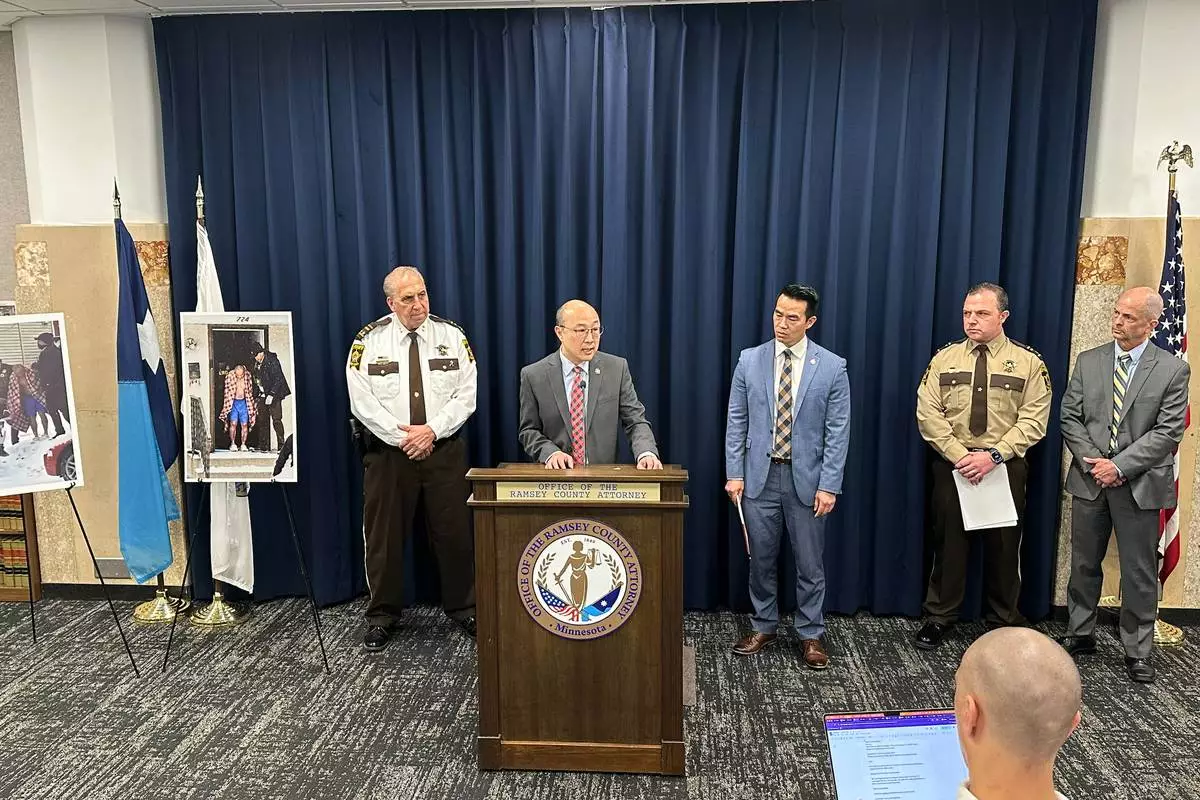
From left, Ramsey County Sheriff Bob Fletcher, Ramsey County Attorney John Choi and Ramsey County Attorney's Office Trial Division Director Hao Nguyen make an announcement on Monday, April 13, 2026 in St. Paul, Minn., about investigations into possible crimes committed by federal agents during the Trump administration's immigration enforcement surge. (AP Photo/Mark Vancleave)
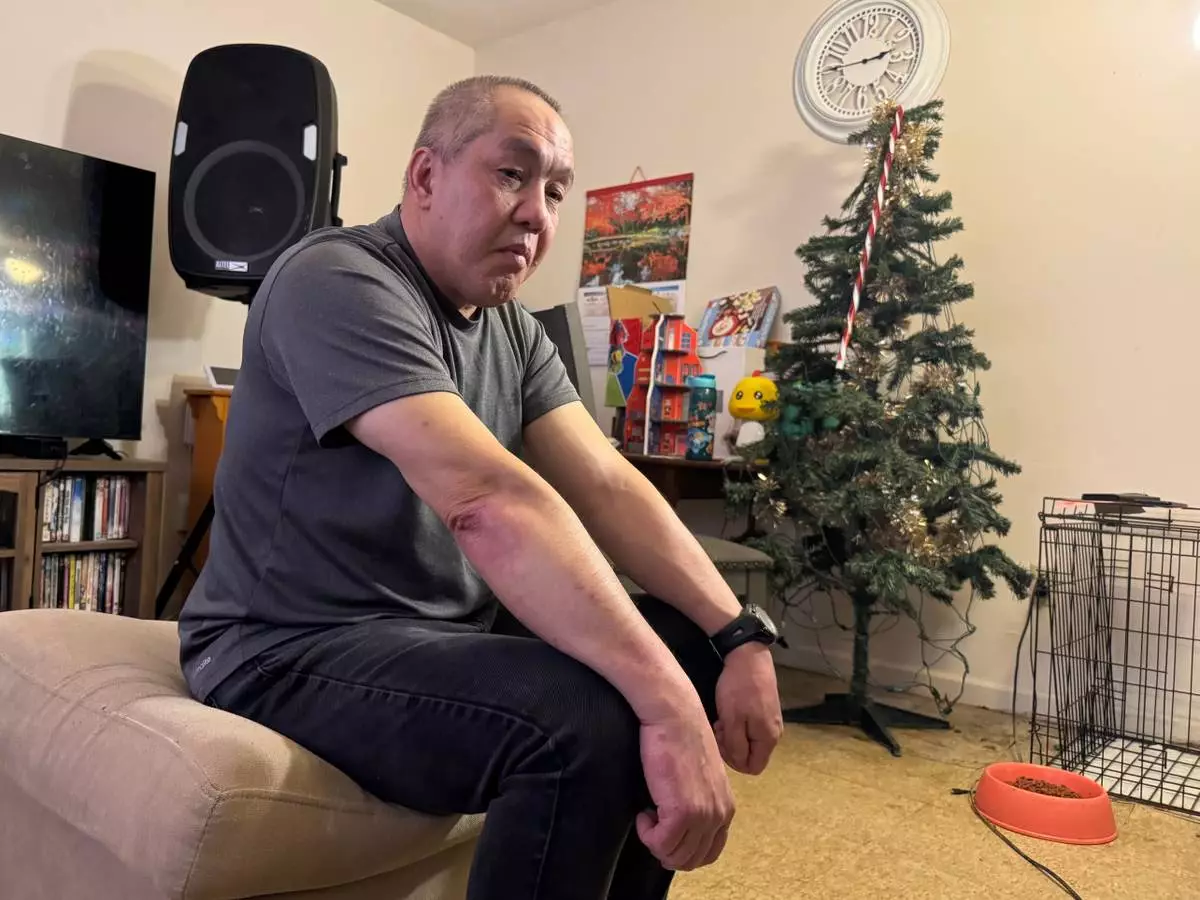
FILE - Chongly "Scott" Thao, a U.S. citizen, sits for a photo at his home Jan. 19, 2026, in St. Paul, Minn., the day after federal agents broke open his door and detained him without a warrant. (AP Photo/Jack Brook, file)
LUANDA, Angola (AP) — Pope Leo XIV called Sunday for Angolans to fight the “scourge of corruption” with a culture of justice as he opened a poignant day in his African odyssey that will take the American pope to an epicenter of the African slave trade.
Leo celebrated Mass before an estimated 100,000 people outside the capital and again sought to encourage Angolans. He denounced the exploitation of their mineral-rich land and people, who still bear the scars of a brutal, post-independence civil war.
“We wish to build a country where old divisions are overcome once and for all, where hatred and violence disappear, and where the scourge of corruption is healed by a new culture of justice and sharing,” Leo said in his homily in Kilamba, a Chinese-built development about 25 kilometers (15 miles) outside the capital.
Later Sunday, Leo will celebrate the Rosary prayer at the Sanctuary of Mama Muxima, an important Catholic shrine on the edge of the Kwanza River about 110 kilometers (70 miles) south of Luanda.
The Church of Our Lady of Muxima, built by Portuguese colonizers at the end of the 16th century as part of a fortress complex, became a hub in the slave trade. It was where enslaved Africans were gathered to be baptized by Portuguese priests before being forced to walk to the port of Luanda to be put on ships to the Americas.
While it's a popular Catholic shrine today, its history is emblematic of the Catholic Church’s role in the slave trade hundreds of years ago, the forced baptisms of enslaved people and what some scholars say is the Holy See’s continued refusal to fully acknowledge it and atone for it.
The visit is particularly significant because the Creole ancestors of the first U.S.-born pope include enslaved people and slave owners, according to genealogical research.
“For Black Catholics, Pope Leo’s visit to the Muxima shrine is an important moment of healing,” said Anthea Butler, senior fellow at the Koch Center, Oxford University.
She noted that many Black Catholics are Catholic because of slavery and the “Code Noir,” which she said required slaves purchased by Catholic owners to be baptized in the church.
“Others were already Catholic when they were trafficked from Angola to slave holding colonies,” said Butler, a Black Catholic scholar whose maternal family hails from Louisiana, where the pope’s ancestors also had their roots.
Angola’s Portuguese colonizers were emboldened by 15th-century directives from the Vatican that authorized them to enslave non-Christians.
In 1452, for example, Pope Nicholas V issued the papal bull Dum Diversas, which gave the Portuguese king and his successors the right “to invade, conquer, fight and subjugate” and take all possessions — including land — of “Saracens, and pagans, and other infidels, and enemies of the name of Christ” anywhere, said the Rev. Christopher J. Kellerman, a Jesuit priest and author of “All Oppression Shall Cease: A History of Slavery, Abolitionism, and the Catholic Church.”
The bull also gave the Portuguese permission “to reduce their persons to perpetual slavery.”
That bull and another issued three years later, Romanus Pontifex, formed the basis of the Doctrine of Discovery, the theory that legitimized the colonial-era seizure of land in Africa and the Americas, and justified slavery.
The Vatican in 2023 formally repudiated the Doctrine of Discovery, but it never formally rescinded, abrogated or rejected the bulls themselves. The Vatican insists that a later bull, Sublimis Deus in 1537, reaffirmed that Indigenous peoples shouldn’t be deprived of their liberty or the possession of their property, and were not to be enslaved.
Kellerman recalled that most of the 12.5 million Africans who were direct victims of the trans-Atlantic slave trade were sold into slavery by other Africans and were not captured by Europeans.
“That being said, at the time of the building of Muxima, the Portuguese were doing both — buying enslaved people and colonizing/slave raiding. So they were fully using their papal permissions during this time,” he said in emailed comments to The Associated Press.
He said the first pope to condemn slavery itself was Pope Leo XIII, the current pope’s namesake and inspiration, in two encyclicals in 1888 and 1890. But Kellerman said that pope and others since have continued to perpetuate the “false narrative” that the Holy See was always against slavery, when the historical record says otherwise.
While Leo's visit to Muxima was in honor of its role as a shrine, Kellerman said he hoped that the visit would also give Leo a chance to learn more about the history of the slave trade.
“The popes repeatedly authorized Portugal’s colonization efforts in Africa and Portuguese participation in the slave trade, but the Vatican has never fully admitted this,” he said. “It would be so powerful if at some point Pope Leo were to apologize for the popes’ role in the trade.”
During a 1985 visit to Cameroon, St. John Paul II asked forgiveness of Africans for the slave trade. In 1992 visit to Goree Island, Senegal, the largest slave-trading center in West Africa, he denounced the injustice of slavery and called it a “tragedy of a civilization that called itself Christian.”
According to genealogical research published by Henry Louis Gates Jr., 17 of Leo's American ancestors were Black, listed in census records as mulatto, black, Creole or a free person of color. His family tree includes slaveholders and enslaved people, Gates reported in an essay in the New York Times.
Gates, a Harvard University professor who hosts the popular PBS documentary series “Finding Your Roots,” presented his research to Leo during a July 5 audience at the Vatican. According to a report of their meeting in The Harvard Gazette, “The pope asked about ancestors, both Black and white, who were enslavers.”
Leo has not spoken publicly about his family heritage or the Gates research, and some Black Catholic scholars are hesitant to impose on him a narrative about his identity that he himself has not yet addressed publicly.
“It’s important that we tell our own stories,” said Tia Noelle Pratt, a sociologist of religion and professor at Villanova University, the pope’s alma mater.
“We haven’t heard anything from him about what he thinks about it, and so to impose anything on him, I think would be completely inappropriate,” said Pratt, author of “Faithful and Devoted: Racism and Identity in the African-American Catholic Experience.”
Cardinal Wilton Gregory, the retired archbishop of Washington and the first African American cardinal, said he was “delighted” to have facilitated the encounter.
“It’s one of the things that I think for many African Americans and people of color, they identify with great pride the pope has roots in our own heritage,” Gregory said. “And I think he’s happy about that too, because it’s another link to the people that he tries to serve and is called to serve.”
Associated Press religion coverage receives support through the AP’s collaboration with The Conversation US, with funding from Lilly Endowment Inc. The AP is solely responsible for this content.
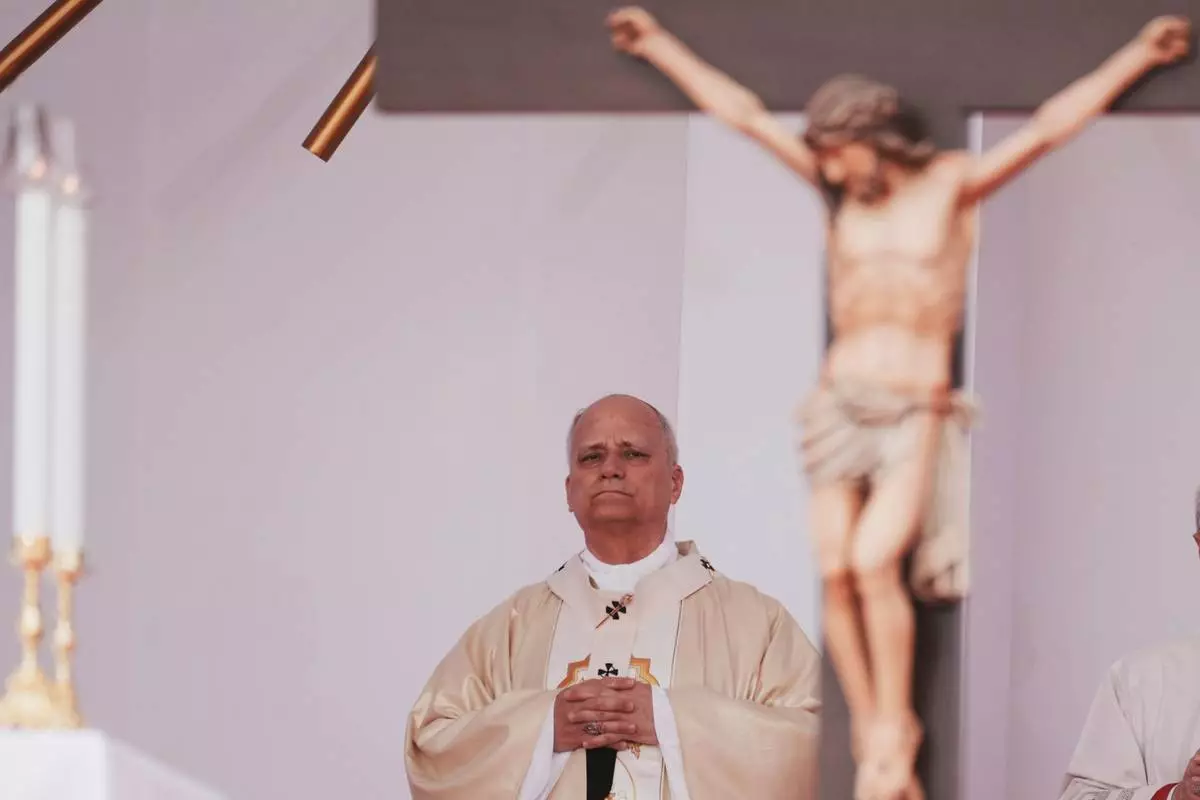
Pope Leo XIV presides over Sunday Mass, Sunday, April 19, 2026, in Kilamba, some 30 kilometers south of Luanda, Angola, on the seventh day of an 11-day apostolic journey to Africa. (AP Photo/Andrew Medichini)
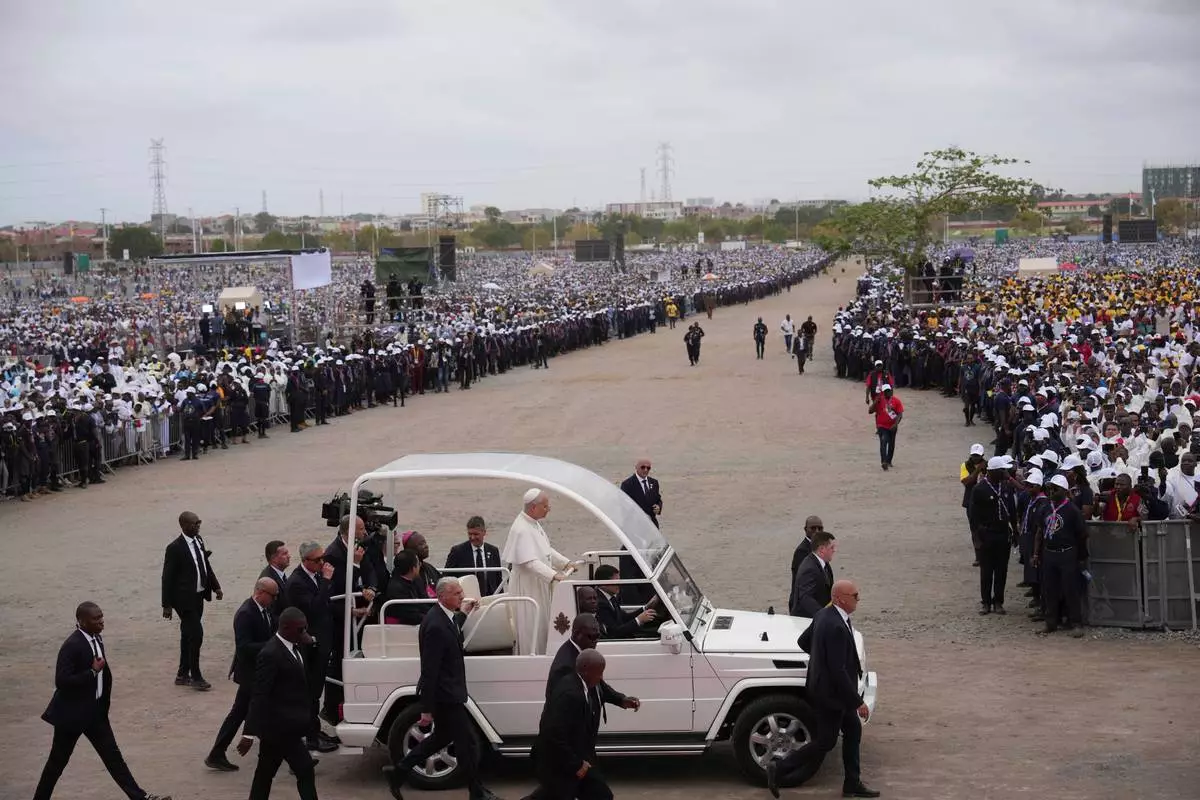
Pope Leo XIV arrives in Kilamba, some 30 kilometers south of Luanda, Angola, to preside over Sunday Mass, Sunday, April 19, 2026, on the seventh day of an 11-day apostolic journey to Africa. (AP Photo/Andrew Medichini)
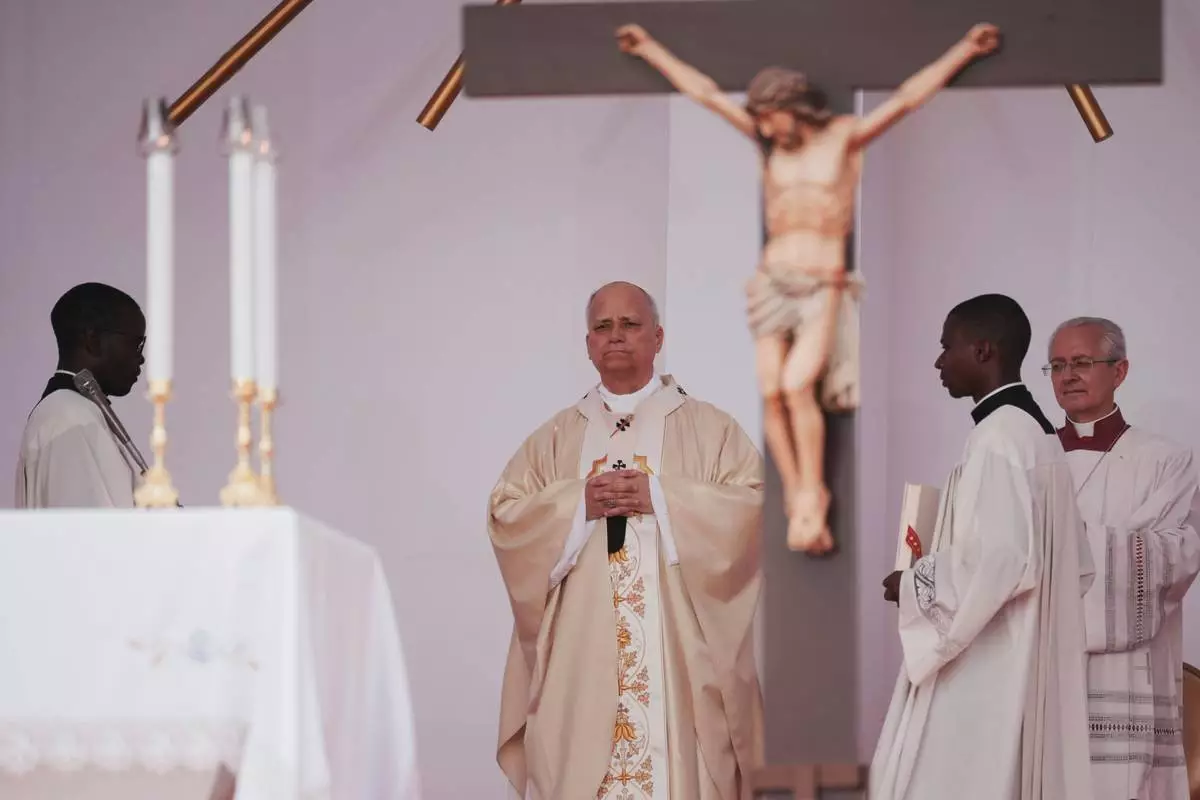
Pope Leo XIV presides over Sunday Mass, Sunday, April 19, 2026, in Kilamba, some 30 kilometers south of Luanda, Angola, on the seventh day of an 11-day apostolic journey to Africa. (AP Photo/Andrew Medichini)