YUCAIPA, Calif.--(BUSINESS WIRE)--Apr 13, 2026--
The Yucaipa-Calimesa Joint Unified School District (YCJUSD), in partnership with OPTERRA Energy Services, today announced the successful completion of a comprehensive $33 million, district-wide energy modernization project. This initiative reflects the District’s leadership in advancing economic sustainability for the broader community, while improving campus infrastructure for students, staff, and faculty.
This press release features multimedia. View the full release here: https://www.businesswire.com/news/home/20260413864117/en/
Focused on modernizing its facilities without placing additional financial burden on local taxpayers, YCJUSD initiated a performance-based energy contract with OPTERRA Energy Services in 2023. Over the past three years, OPTERRA implemented a holistic, district-wide approach to the project, completing significant upgrades to lighting systems, replacement of aging heating, ventilation, and air conditioning (HVAC) equipment, and the installation of on-site solar energy generation.
The District has completed $33 million in critical infrastructure improvements across its campuses while also prioritizing overall reduction in energy consumption and leveraging available grants and incentives. By taking a comprehensive approach to their program design and implementation goals, YCJUSD has been able to enhance operational efficiency while supporting long-term financial stability.
“This project represents a major step forward for our District,” said Cathy Bogh, President of the YCJUSD Board of Education. “We are proud to invest in modern, efficient, and sustainable facilities that directly benefit our students and staff, all while being responsible stewards of taxpayer dollars. This partnership has allowed us to improve our schools for the current community of students and teachers, while planning responsibly for growth into the future.”
Key components of the project include:
The project is expected to deliver significant financial and environmental benefits, including more than $42 million in net savings over 20 years. YCJUSD will also secure more than $5 million dollars in an Inflation Reduction Act grant, further maximizing the value of their investment.
Ensuring that the project infrastructure improvements also had a direct impact on District education goals, the energy program includes a customized student engagement initiative with multiple offerings. One key activity focuses on student internships designed to enrich YCJUSD’s vision to expand workforce development and readiness for students in energy and sustainability fields. Led by OPTERRA’s in-house energy education team and advised by District leadership, the program also includes the development of elementary science, technology, engineering, art, and math (STEAM) learning kits aligned to the District’s curriculum to be distributed across all elementary schools. With the unique combination of energy infrastructure upgrades and tailored education tie-ins, YCJUSD’s program is helping to equip educators with hands-on tools to engage students in sustainability, energy, and engineering concepts.
“Our team is so proud to support YCJUSD’s vision for future success through the successful completion of our project together this spring. YCJUSD’s leadership demonstrates how school districts can take a proactive, strategic approach to modernizing facilities while delivering measurable financial and environmental benefits,” said Courtney Jenkins, CEO of OPTERRA Energy Services. “By leveraging a comprehensive energy program, the District has transformed its campuses into more efficient, sustainable learning environments without increasing costs to the community.”
About OPTERRA Energy Services
OPTERRA Energy Services, an LS Power company, is a national energy company headquartered in Oakland, California, and employs nearly 300 energy professionals across the U.S. The company provides comprehensive energy and infrastructure solutions to municipalities, K-16 education, special districts, and state and federal agencies. To date, OPTERRA has helped customers achieve more than $3 billion dollars in guaranteed energy cost savings. For more information, visit www.opterraenergy.com.
About YCJUSD
YCJUSD serves more than 8,600 students - in preschool through comprehensive adult education - in California’s Inland Empire. With 14 schools offering both in-person and online pathways to graduation, YCJUSD provides a modern, innovative educational program for students across San Bernardino and Riverside Counties. To learn more about the District, visit www.yucaipaschools.com, and for specific details on long-term solar cost savings, visit www.yucaipaschools.com/page/solar-project.
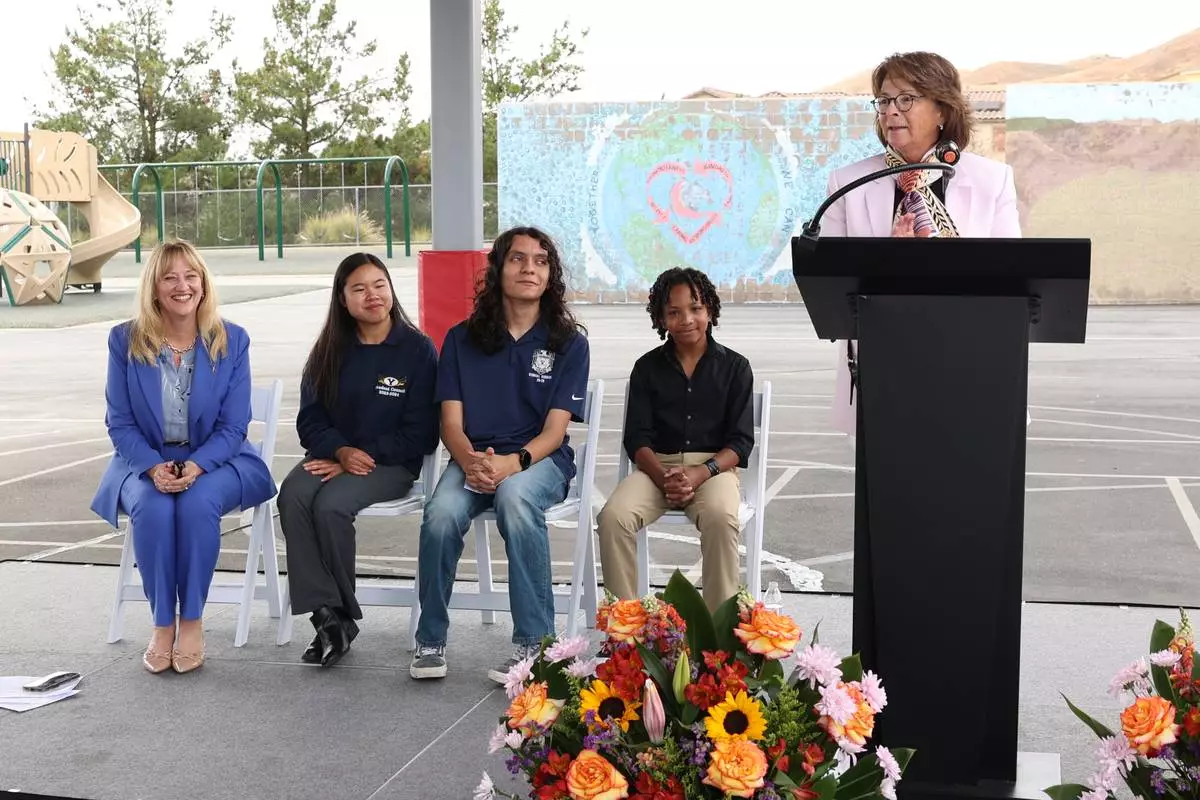
Nancy Rorabaugh of OPTERRA Energy Services, YCJUSD Superintendent Cali Binks, and students celebrate the district’s energy modernization project—expected to deliver more than $42 million in net savings over 20 years while securing over $5 million in Inflation Reduction Act funding. The initiative also supports student internships and hands-on STEAM learning opportunities, helping prepare the next generation for careers in energy and sustainability.
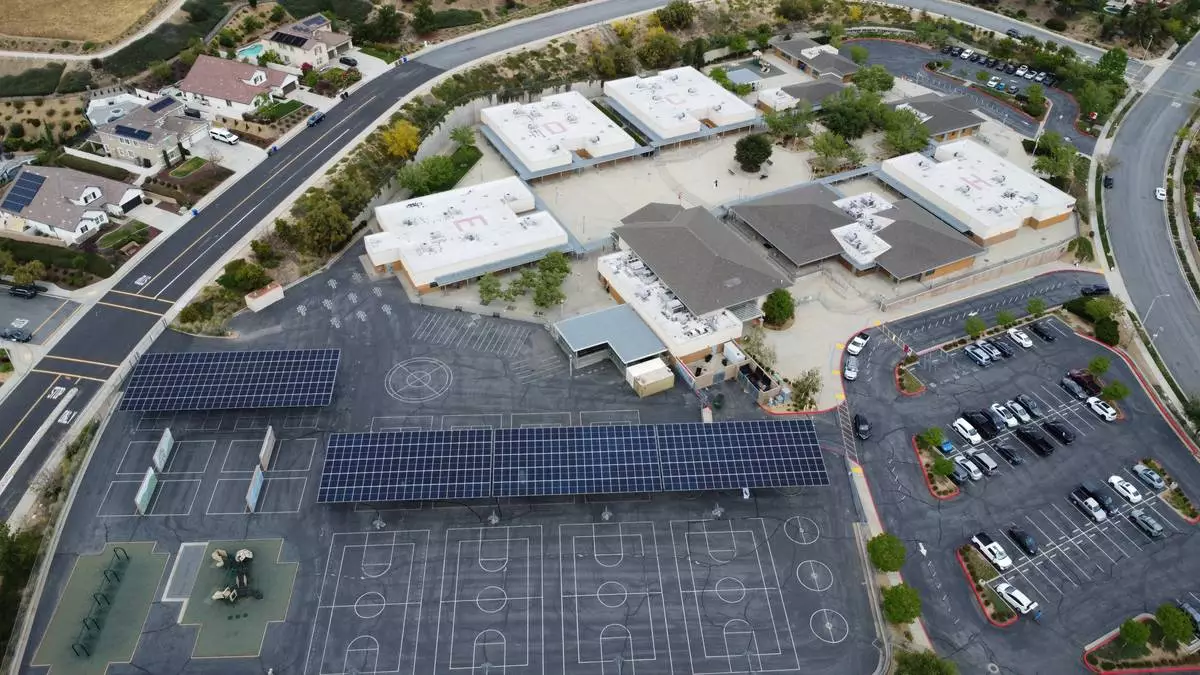
An aerial view of newly installed solar arrays across Yucaipa-Calimesa Joint Unified School District—part of a 3.1-megawatt solar photovoltaic system spanning 12 schools, helping power campuses with clean, renewable energy.
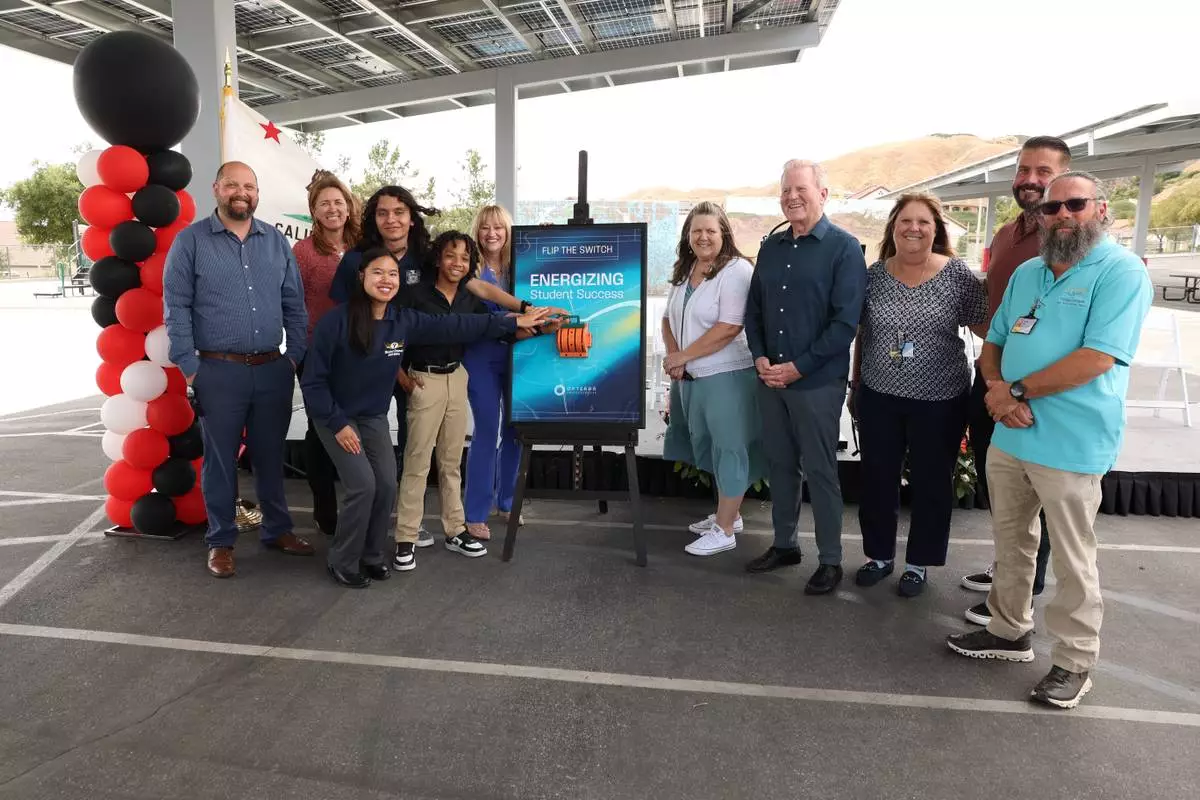
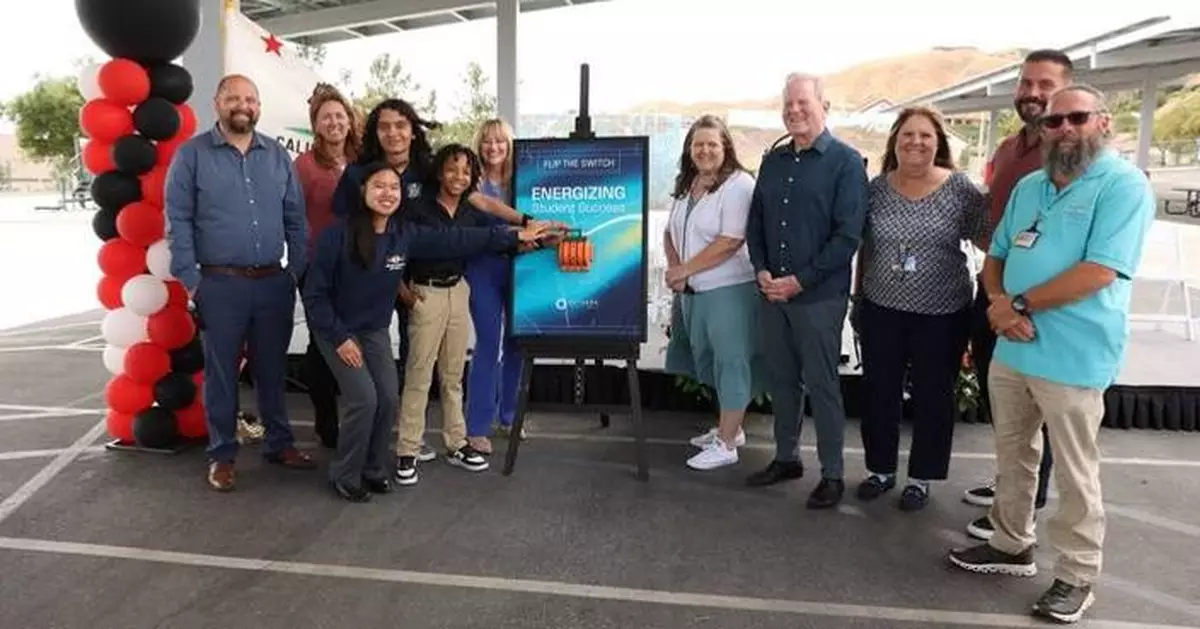
Students, staff, and partners from Yucaipa-Calimesa Joint Unified School District joined OPTERRA Energy Services to “flip the switch” and celebrate the completion of a $33 million campus-wide modernization project—marking a major step toward more sustainable, energy-efficient schools for the community.
LUANDA, Angola (AP) — Pope Leo XIV called Sunday for Angolans to fight the “scourge of corruption” with a culture of justice as he opened a poignant day in his African odyssey that will take the American pope to an epicenter of the African slave trade.
Leo celebrated Mass before an estimated 100,000 people outside the capital and again sought to encourage Angolans. He denounced the exploitation of their mineral-rich land and people, who still bear the scars of a brutal, post-independence civil war.
“We wish to build a country where old divisions are overcome once and for all, where hatred and violence disappear, and where the scourge of corruption is healed by a new culture of justice and sharing,” Leo said in his homily in Kilamba, a Chinese-built development about 25 kilometers (15 miles) outside the capital.
Later Sunday, Leo will celebrate the Rosary prayer at the Sanctuary of Mama Muxima, an important Catholic shrine on the edge of the Kwanza River about 110 kilometers (70 miles) south of Luanda.
The Church of Our Lady of Muxima, built by Portuguese colonizers at the end of the 16th century as part of a fortress complex, became a hub in the slave trade. It was where enslaved Africans were gathered to be baptized by Portuguese priests before being forced to walk to the port of Luanda to be put on ships to the Americas.
While it's a popular Catholic shrine today, its history is emblematic of the Catholic Church’s role in the slave trade hundreds of years ago, the forced baptisms of enslaved people and what some scholars say is the Holy See’s continued refusal to fully acknowledge it and atone for it.
The visit is particularly significant because the Creole ancestors of the first U.S.-born pope include enslaved people and slave owners, according to genealogical research.
“For Black Catholics, Pope Leo’s visit to the Muxima shrine is an important moment of healing,” said Anthea Butler, senior fellow at the Koch Center, Oxford University.
She noted that many Black Catholics are Catholic because of slavery and the “Code Noir,” which she said required slaves purchased by Catholic owners to be baptized in the church.
“Others were already Catholic when they were trafficked from Angola to slave holding colonies,” said Butler, a Black Catholic scholar whose maternal family hails from Louisiana, where the pope’s ancestors also had their roots.
Angola’s Portuguese colonizers were emboldened by 15th-century directives from the Vatican that authorized them to enslave non-Christians.
In 1452, for example, Pope Nicholas V issued the papal bull Dum Diversas, which gave the Portuguese king and his successors the right “to invade, conquer, fight and subjugate” and take all possessions — including land — of “Saracens, and pagans, and other infidels, and enemies of the name of Christ” anywhere, said the Rev. Christopher J. Kellerman, a Jesuit priest and author of “All Oppression Shall Cease: A History of Slavery, Abolitionism, and the Catholic Church.”
The bull also gave the Portuguese permission “to reduce their persons to perpetual slavery.”
That bull and another issued three years later, Romanus Pontifex, formed the basis of the Doctrine of Discovery, the theory that legitimized the colonial-era seizure of land in Africa and the Americas, and justified slavery.
The Vatican in 2023 formally repudiated the Doctrine of Discovery, but it never formally rescinded, abrogated or rejected the bulls themselves. The Vatican insists that a later bull, Sublimis Deus in 1537, reaffirmed that Indigenous peoples shouldn’t be deprived of their liberty or the possession of their property, and were not to be enslaved.
Kellerman recalled that most of the 12.5 million Africans who were direct victims of the trans-Atlantic slave trade were sold into slavery by other Africans and were not captured by Europeans.
“That being said, at the time of the building of Muxima, the Portuguese were doing both — buying enslaved people and colonizing/slave raiding. So they were fully using their papal permissions during this time,” he said in emailed comments to The Associated Press.
He said the first pope to condemn slavery itself was Pope Leo XIII, the current pope’s namesake and inspiration, in two encyclicals in 1888 and 1890. But Kellerman said that pope and others since have continued to perpetuate the “false narrative” that the Holy See was always against slavery, when the historical record says otherwise.
While Leo's visit to Muxima was in honor of its role as a shrine, Kellerman said he hoped that the visit would also give Leo a chance to learn more about the history of the slave trade.
“The popes repeatedly authorized Portugal’s colonization efforts in Africa and Portuguese participation in the slave trade, but the Vatican has never fully admitted this,” he said. “It would be so powerful if at some point Pope Leo were to apologize for the popes’ role in the trade.”
During a 1985 visit to Cameroon, St. John Paul II asked forgiveness of Africans for the slave trade. In 1992 visit to Goree Island, Senegal, the largest slave-trading center in West Africa, he denounced the injustice of slavery and called it a “tragedy of a civilization that called itself Christian.”
According to genealogical research published by Henry Louis Gates Jr., 17 of Leo's American ancestors were Black, listed in census records as mulatto, black, Creole or a free person of color. His family tree includes slaveholders and enslaved people, Gates reported in an essay in the New York Times.
Gates, a Harvard University professor who hosts the popular PBS documentary series “Finding Your Roots,” presented his research to Leo during a July 5 audience at the Vatican. According to a report of their meeting in The Harvard Gazette, “The pope asked about ancestors, both Black and white, who were enslavers.”
Leo has not spoken publicly about his family heritage or the Gates research, and some Black Catholic scholars are hesitant to impose on him a narrative about his identity that he himself has not yet addressed publicly.
“It’s important that we tell our own stories,” said Tia Noelle Pratt, a sociologist of religion and professor at Villanova University, the pope’s alma mater.
“We haven’t heard anything from him about what he thinks about it, and so to impose anything on him, I think would be completely inappropriate,” said Pratt, author of “Faithful and Devoted: Racism and Identity in the African-American Catholic Experience.”
Cardinal Wilton Gregory, the retired archbishop of Washington and the first African American cardinal, said he was “delighted” to have facilitated the encounter.
“It’s one of the things that I think for many African Americans and people of color, they identify with great pride the pope has roots in our own heritage,” Gregory said. “And I think he’s happy about that too, because it’s another link to the people that he tries to serve and is called to serve.”
Associated Press religion coverage receives support through the AP’s collaboration with The Conversation US, with funding from Lilly Endowment Inc. The AP is solely responsible for this content.
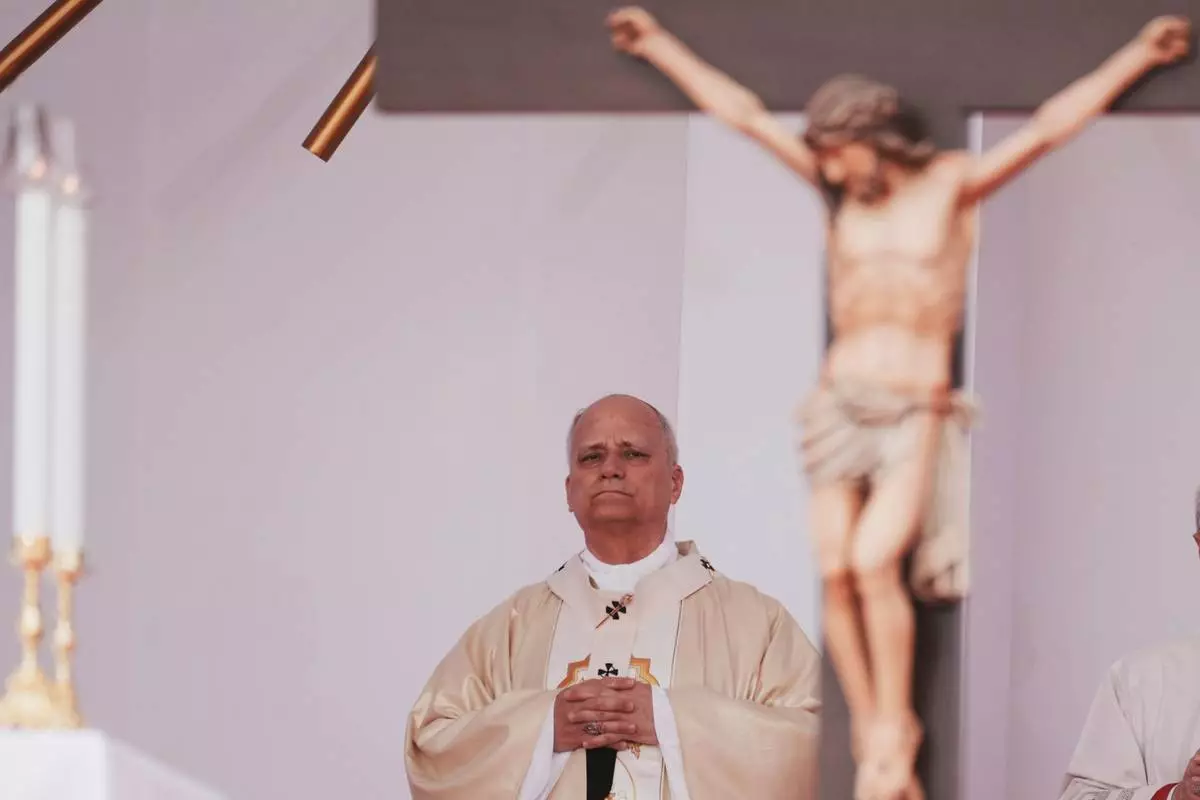
Pope Leo XIV presides over Sunday Mass, Sunday, April 19, 2026, in Kilamba, some 30 kilometers south of Luanda, Angola, on the seventh day of an 11-day apostolic journey to Africa. (AP Photo/Andrew Medichini)
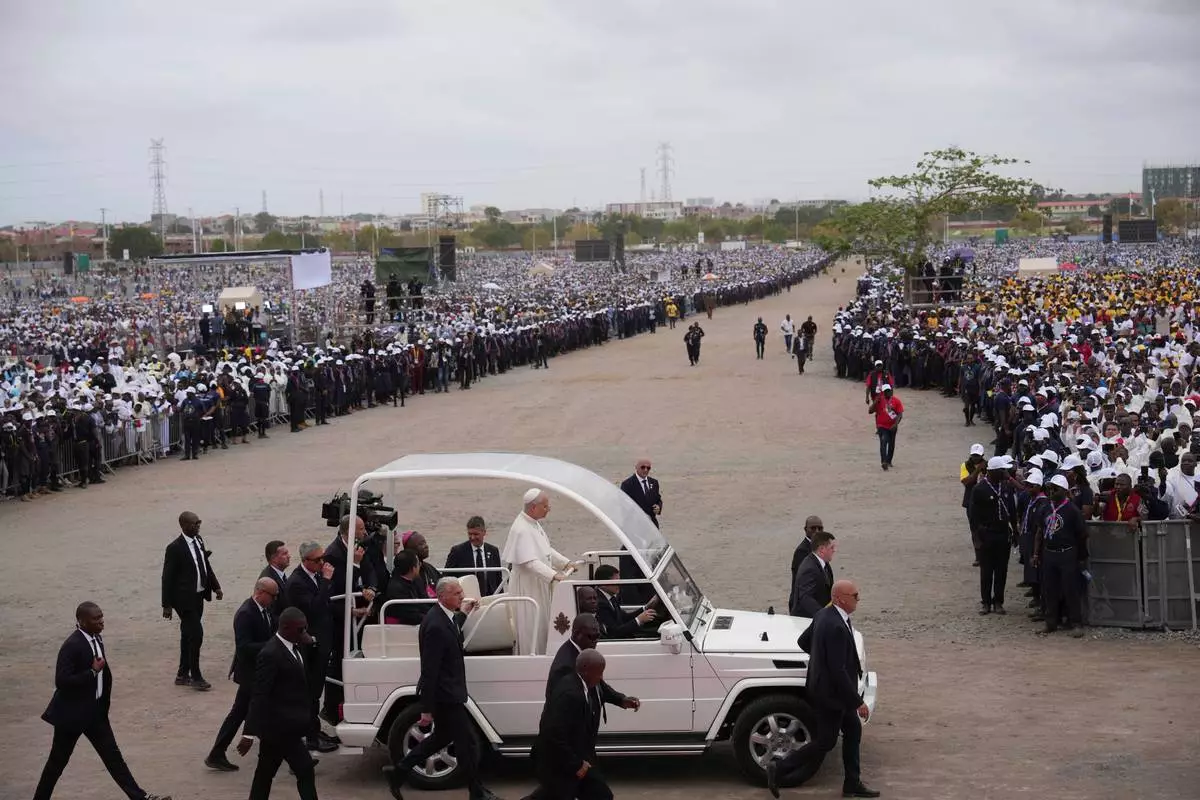
Pope Leo XIV arrives in Kilamba, some 30 kilometers south of Luanda, Angola, to preside over Sunday Mass, Sunday, April 19, 2026, on the seventh day of an 11-day apostolic journey to Africa. (AP Photo/Andrew Medichini)
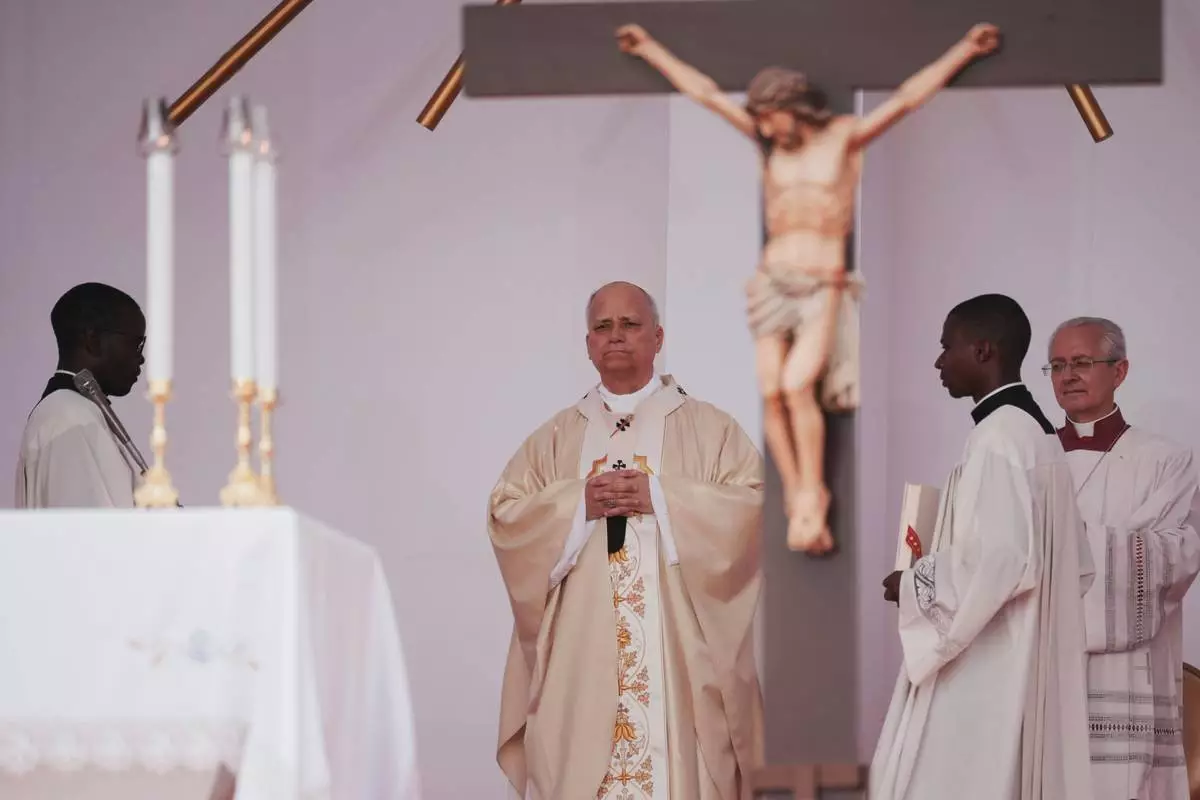
Pope Leo XIV presides over Sunday Mass, Sunday, April 19, 2026, in Kilamba, some 30 kilometers south of Luanda, Angola, on the seventh day of an 11-day apostolic journey to Africa. (AP Photo/Andrew Medichini)