ABUJA, Nigeria (AP) — Nigerian authorities have charged six people, including a retired major general and a serving police inspector, with terrorism and treason, over an alleged plot to overthrow President Bola Tinubu, according to a charge sheet seen by The Associated Press on Tuesday.
The six were all in custody. A seventh suspect, former Bayelsa state Gov. Timpre Sylva, is accused of helping to conceal the plot and is still at large.
In the 13-count charge sheet, authorities said suspects “conspired with one another to levy war against the state to overawe the president of the Federal Republic."
The Nigerian government first said it had foiled a coup attempt in January, when it announced that several military officers would stand trial. They were part of a group of 16 military officers arrested in 2025 over what military authorities described as “acts of indiscipline and breaches of service regulations," which fueled rumors of a coup plot that the government initially denied.
Africa's most populous nation experienced five coups in the 20th century but has not seen one since it transitioned to democracy in 1999.
The alleged coup plot comes on the heels of a surge in coups and attempted coups in West and Central Africa, the latest in Benin and Guinea-Bissau late last year. The military takeovers, experts say, follow a pattern of disputed elections, constitutional upheaval, security crises and youth discontent.
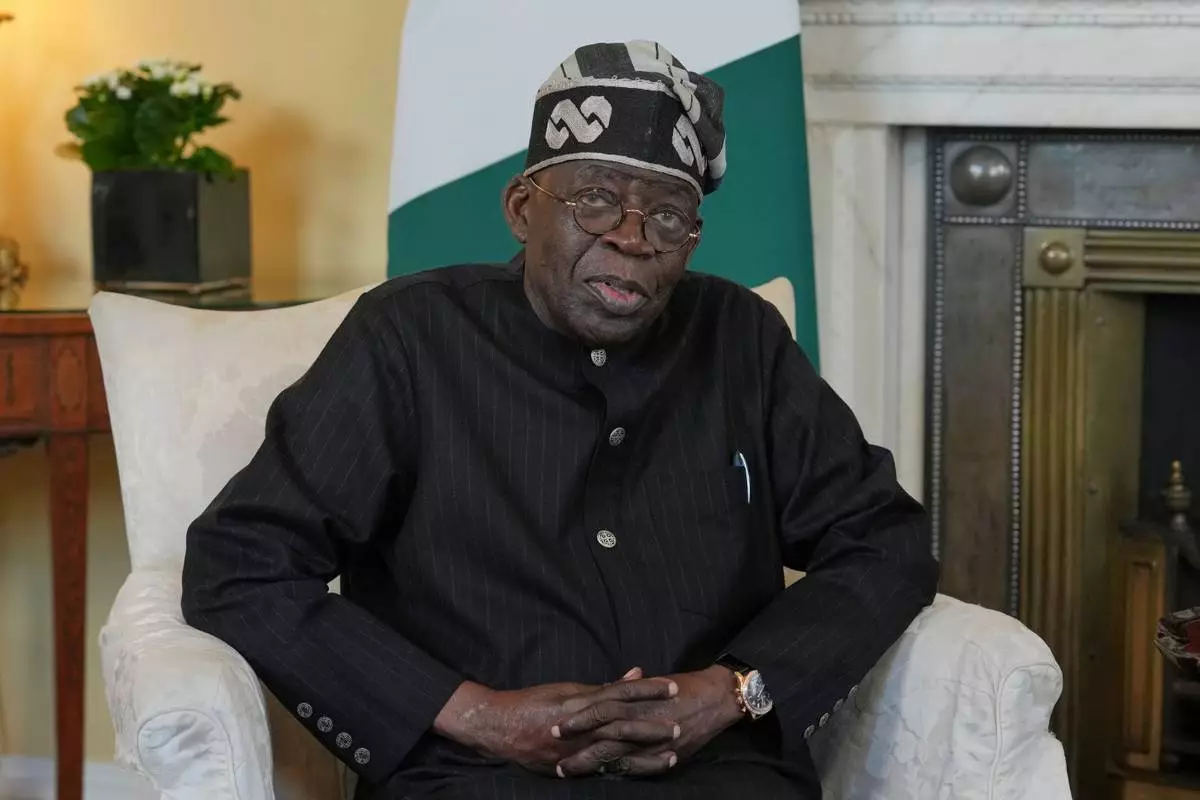
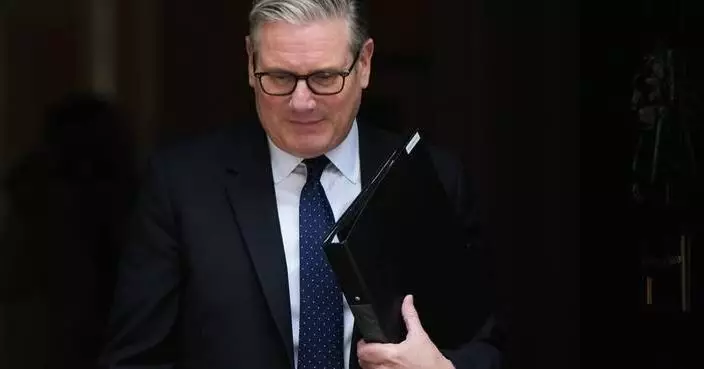
FILE - President of Nigeria Bola Ahmed Tinubu speaks to the media ahead of his meeting with Britain's Prime Minister Keir Starmer inside 10 Downing Street in London, Thursday, March 19, 2026. (AP Photo/Kin Cheung, Pool File)
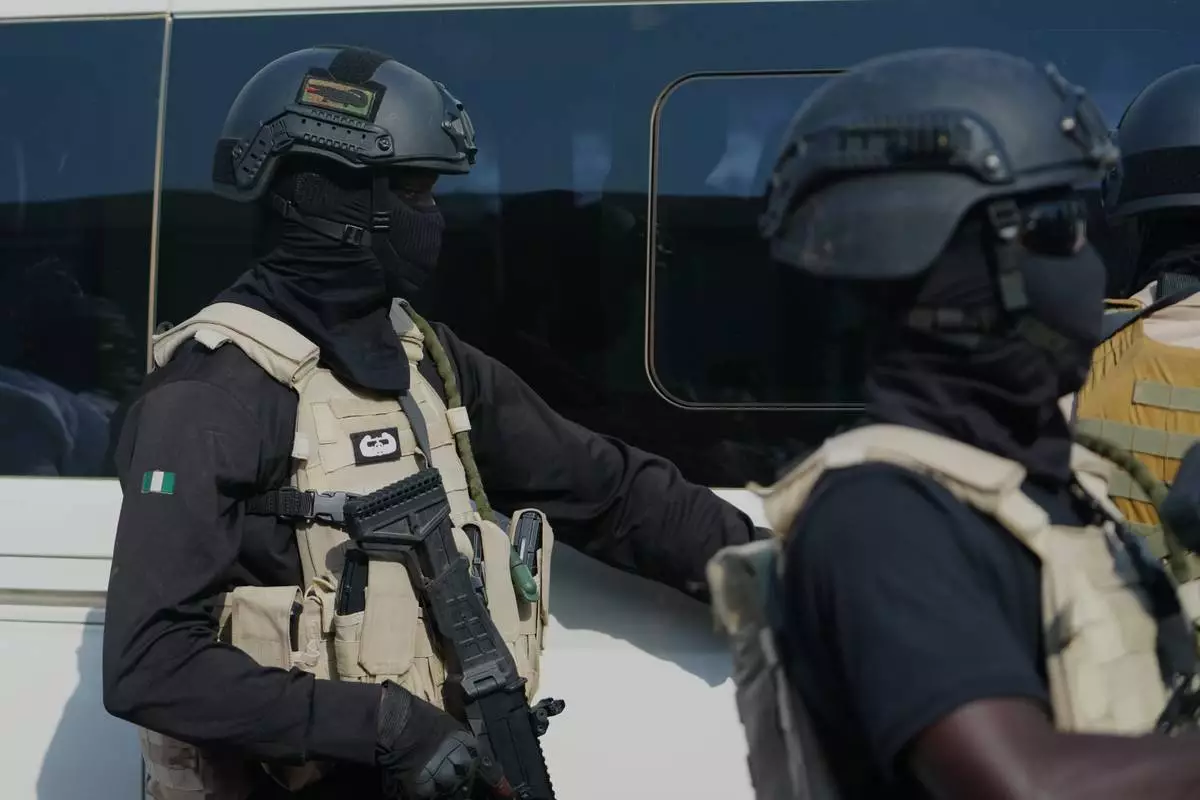
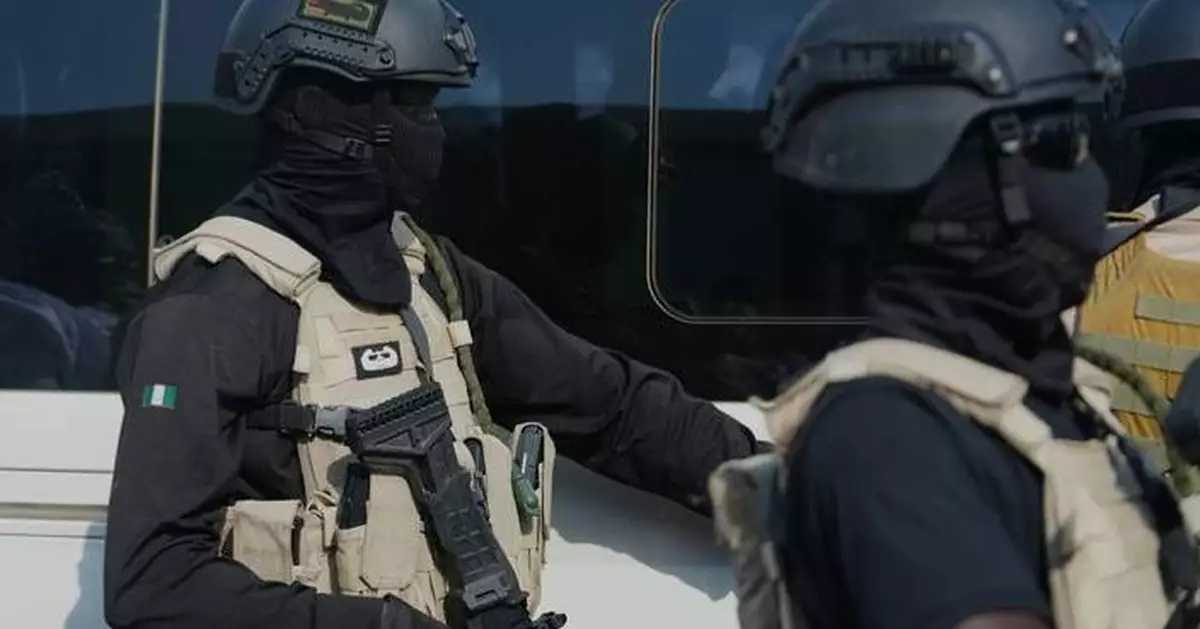
FILE - Members of the Nigerian army provide security during an event in Minna, Nigeria, Dec. 22, 2025. (AP Photo/Sunday Alamba, File)
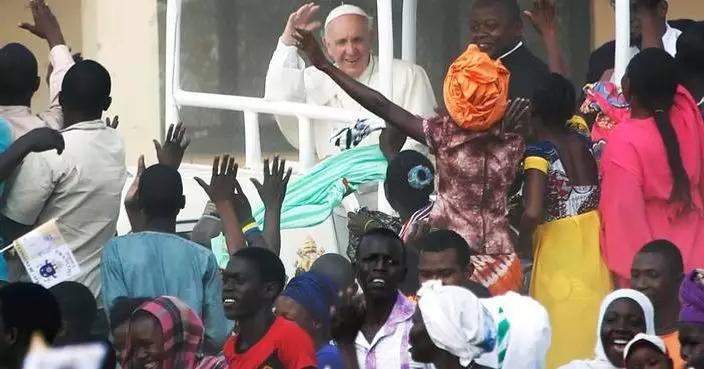
Pope Leo XIV’s 11-day tour of four African nations has given the usually reserved pontiff a global platform to speak out, in sometimes explosive terms, about Africa's problems while preaching peace and uprightness in a world battered by war.
History’s first American pope is visiting the continent against the backdrop of his calls for peace that have sparked a feud with U.S. President Donald Trump over the war in Iran.
Leo is now in Equatorial Guinea, the final stop of his tour, after visiting Algeria, Cameroon and Angola. His trip is so dizzying in its complexity it recalls some of the globe-trotting odysseys of St. John Paul II in his early years.
In meetings with leaders and with Africa's young population, the pope has also focused on themes including Christian-Muslim coexistence, the overexploitation of the region’s natural and human resources, corruption, migration and the legacy of colonialism.
Here’s a country-by-country look at each destination and highlights of the itinerary:
In Algeria, Leo walked in the footsteps of his spiritual father, St. Augustine, making a pilgrimage to the archaeological ruins where the fifth-century titan of early Christianity lived, died and wrote some of the most important works in Western thought.
The Algeria stop clearly carried the most personal importance for Leo, given his ties to St. Augustine, the inspiration of his Augustinian religious order.
Migration and Christian-Muslim coexistence were other top themes in Algeria, a former French colony which is a majority Sunni Muslim nation on North Africa’s Mediterranean coast. Leo also paid homage to migrants killed in shipwrecks trying to reach Europe and visited the Great Mosque in Algiers.
In Annaba, the modern-day Hippo, Leo met with a small community of Augustinians and celebrated Mass at the Basilica of St. Augustine, the 19th century basilica overlooking the ruins of Hippo where thousands of pilgrims including Muslims visit every year.
A major highlight of Leo's visit to Cameroon were his remarks at a “peace meeting” in the western city of Bamenda, the epicenter of Cameroon's separatist conflict. There, he blasted the “handful of tyrants” who are ravaging the planet with war and exploitation.
Although the remarks were directed at the separatist conflict, considered one of the world’s most neglected crises, Vatican officials have said the pope's Gospel-mandated message of peace on this trip is meant for all those responsible for wars and exploitation.
Leo met with both religious and political leaders including Cameroon's 93-year-old president, Paul Biya, the world's oldest leader. He called for an end to the “chains of corruption” and for upright leadership.
Biya has been accused of using corrupt means and the targeting of opponents to remain in power.
Cameroon sits atop significant reserves of oil, natural gas, cobalt, bauxite, iron ore, gold and diamonds. But revenues rarely reach rural and Indigenous communities and mostly benefit only foreign companies and a small national elite, activists say.
The pope also visited an orphanage for children taken off the streets after suffering abandonment or maltreatment from their parents.
He celebrated a Mass before thousands of people in the economic hub of Douala, where he urged young people to resist the temptation of corruption.
As Leo headed for Angola, he again addressed the back-and-forth with Trump, saying it was "not in my interest at all” to debate the American president over the Iran war, but he would continue preaching a message of peace.
In Angola, where around 58% of the population is Catholic, Leo prayed at the Sanctuary of Mama Muxima, a Marian shrine that has become one of the most important Catholic pilgrimage sites in Angola.
That church also has deep links to Angola's history of slavery. It was first built around the end of the 16th century by Portuguese colonizers after they established a fortress at Muxima, and became a key point in the Portuguese trans-Atlantic human trade as a place where enslaved people were baptized before they were sent on ships to the Americas.
While Leo didn't directly address slavery, his visit to the small town of Muxima drew reflections on his own complex heritage after research last year showed the first American pope has both Black and white ancestors who include enslaved people and slave owners.
Angola today is an oil- and mineral-rich country, yet many of its 38 million people live in poverty. Previous leaders have been accused of large-scale corruption, while the country still bears the scars of a 27-year civil war that began straight after independence from Portugal in 1975.
At a meeting with Angolan President Joao Lourenco, Leo challenged current Angolan leaders to break the “cycle of interests” that have exploited Africa and its people for centuries.
Equatorial Guinea, the last stop, presents the pope with perhaps the most delicate diplomatic challenge of his tour.
The overwhelmingly Catholic former Spanish colony has been led for nearly 50 years by a president who is accused of widespread corruption and holding on to power through the harassment, arrest and intimidation of political opponents, critics and journalists.
Equatorial Guinea's leader, Teodoro Obiang Nguema Mbasogo, is Africa’s longest-serving president and has been in power since 1979.
The discovery of offshore oil in the mid-1990s transformed Equatorial Guinea’s economy virtually overnight, with oil now accounting for almost half its GDP and more than 90% of exports, according to the African Development Bank.
Several rights groups, including Human Rights Watch, have documented how revenues have enriched the ruling Obiang family rather than the broader population, where at least 70% of the country’s nearly 2 million people live in poverty.
In addition to the negative impacts of the extraction industries, Vatican spokesman Matteo Bruni said Leo would raise issues of corruption and the proper role of governing authorities during the trip to Africa.
Associated Press religion coverage receives support through the AP’s collaboration with The Conversation US, with funding from Lilly Endowment Inc. The AP is solely responsible for this content.
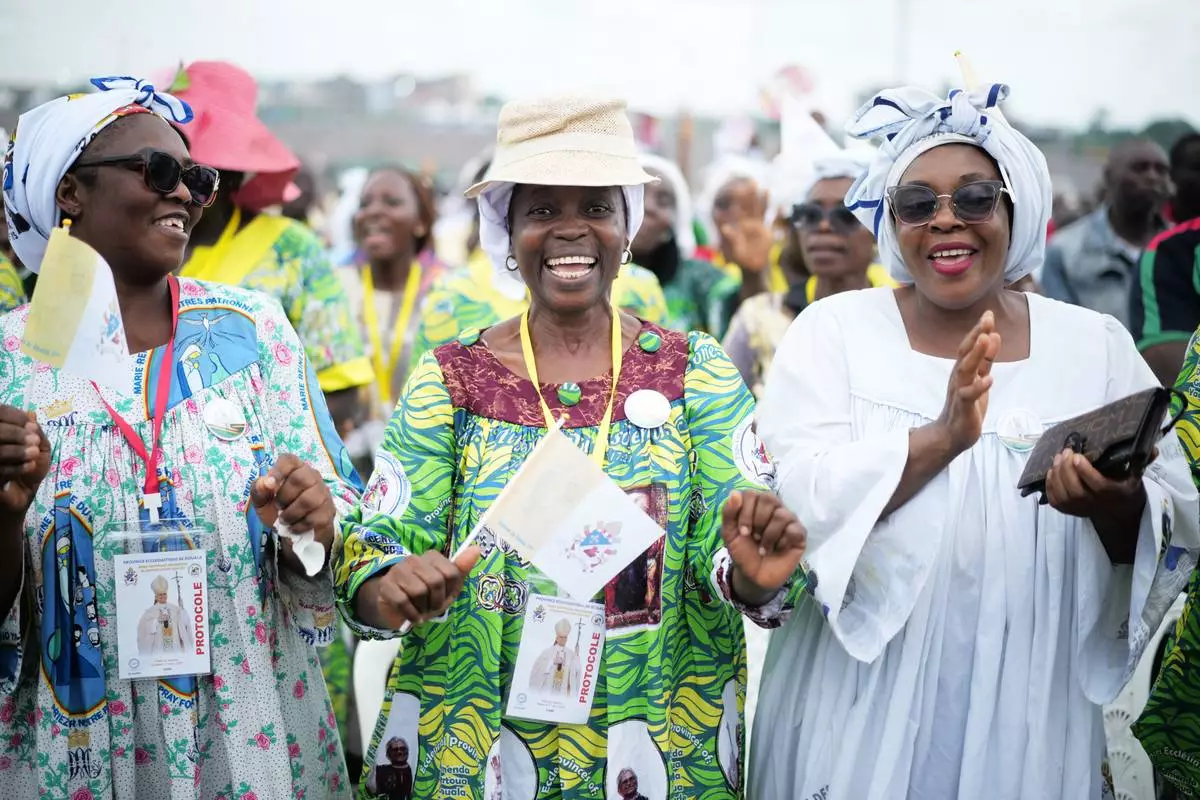
Faithful attend a Mass celebrated by Pope Leo XIV in the Japoma Stadium, in Douala, Cameroon, Friday, April 17, 2026 on the fifth day of his 11-day pastoral visit to Africa. (AP Photo/Andrew Medichini)
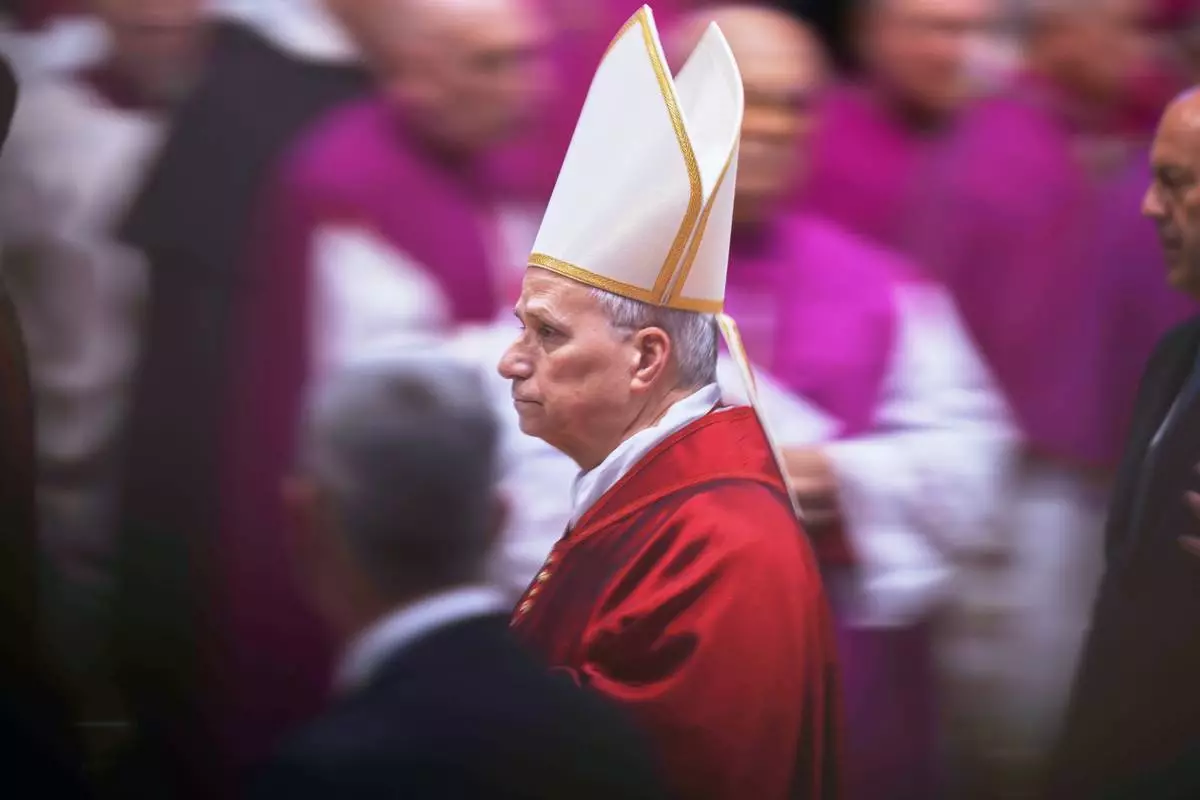
Pope Leo XIV attends the Celebration of the Passion of the Lord in St. Peter's Basilica at the Vatican on Catholic Good Friday, Friday, April 3, 2026 (AP Photo/Andrew Medichini)