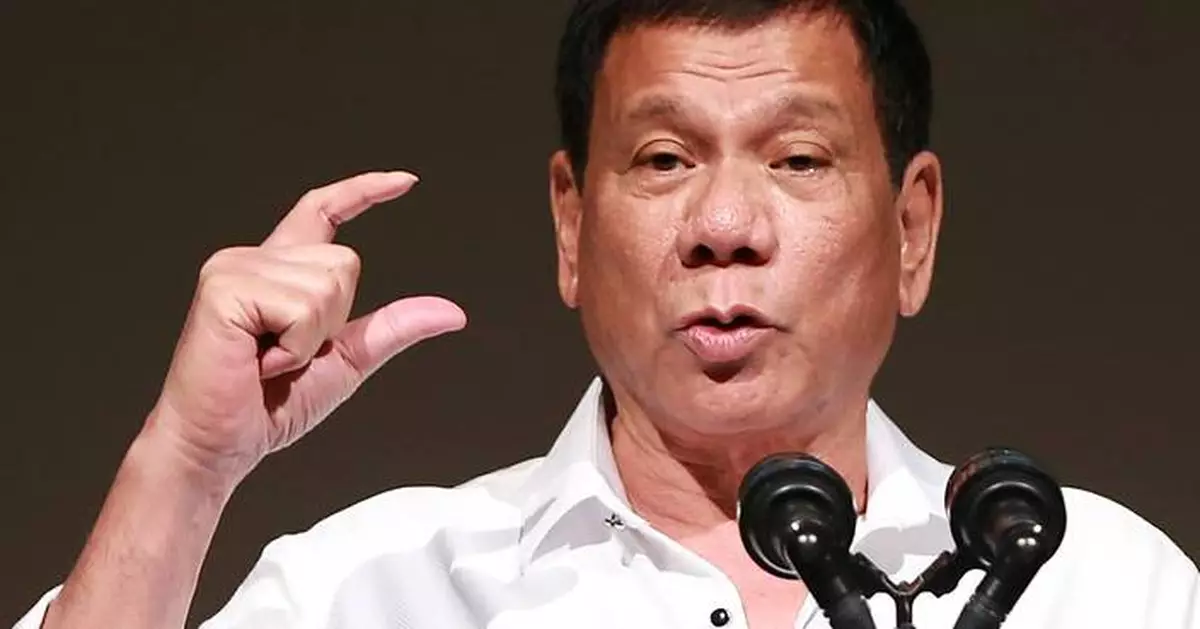
THE HAGUE, Netherlands (AP) — Judges at the International Criminal Court on Thursday confirmed crimes against humanity charges against former Philippine president Rodrigo Duterte for deadly anti-drugs crackdowns he allegedly oversaw while in office.
A three-judge panel found unanimously there were “substantial grounds” to believe the ex-leader was responsible for dozens of murders, first as mayor of the southern Philippine city of Davao and later when he was president.
Duterte, who served as president from 2016 to 2022, was arrested in the Philippines last year and flown to the Hague, where the global court is located. He denies the charges against him.
In their 50-page decision, judges found that the evidence shows that Duterte, 81, “developed, disseminated and implemented” a policy “to ‘neutralize’ alleged criminals.”
According to prosecutors, police and hit squad members carried out dozens of murders at Duterte’s behest starting in 2011, motivated by the promise of money or to avoid becoming targets themselves.
“For some, killing reached the level of a perverse form of competition,” deputy prosecutor Mame Mandiaye Niang told the court in pretrial hearings in February.
Estimates of the death toll during Duterte’s presidential term vary, from the more than 6,000 that the national police have reported to up to 30,000 claimed by human rights groups.
Prosecutors said in a statement on Wednesday that the decision “represents a significant milestone” in their effort to bring accountability.
Duterte's lead defense lawyer Nick Kaufman told The Associated Press he was disappointed in the decision, saying it “is based on the uncorroborated statements of vicious self-confessed murderers acting as cooperating witnesses.”
A date for the start of the trial has not yet been set.
Duterte has not been present in the courtroom for any hearings, having waived his right to appear. Last month judges found he was fit to stand trial, after postponing an earlier hearing over concerns about his health.
In the Philippines, families of slain victims in the brutal anti-drugs crackdown rejoiced over the decision, saying it will bring them closer to justice and toward a closure of a tragic chapter in their lives.
“This is for all the victims, who were not even given the chance to be recognized as victims because their stories were twisted in police reports, investigations and findings,” said Randy delos Santos, whose nephew, Kian delos Santos, was gunned down in an alley in August 2017 by three police officers.
“Unlike Kian, most other victims were nameless, voiceless and were just numbers and statistics whose horrific stories were never heard. Now the ICC will give their stories a chance to be told,” delos Santos told The Associated Press.
Human rights groups also praised the decision.
“Duterte’s trial will send a powerful message that no one responsible for grave crimes is above the law, whether in the Philippines or elsewhere, and that justice will eventually catch up with them,” Maria Elena Vignoli, senior international justice counsel at Human Rights Watch, said.
ICC prosecutors said in 2018 that they would open a preliminary investigation into the violent drug crackdowns. In a move that human rights activists say was aimed at avoiding accountability, Duterte, who was president at the time, announced a month later that the Philippines would leave the court.
On Tuesday, appeals judges rejected a request from Duterte’s legal team to throw out the case on the grounds that the court did not have jurisdiction because of the Philippine withdrawal.
In October, judges disqualified the court’s chief prosecutor Karim Khan from the case, citing a “reasonable appearance of bias” because he represented victims of Duterte’s alleged crimes before he took office at the ICC. Khan had already stepped back from his duties pending the outcome of an independent investigation into allegations of sexual misconduct.
Associated Press journalist Jim Gomez in Manila, Philippines contributed to this report.
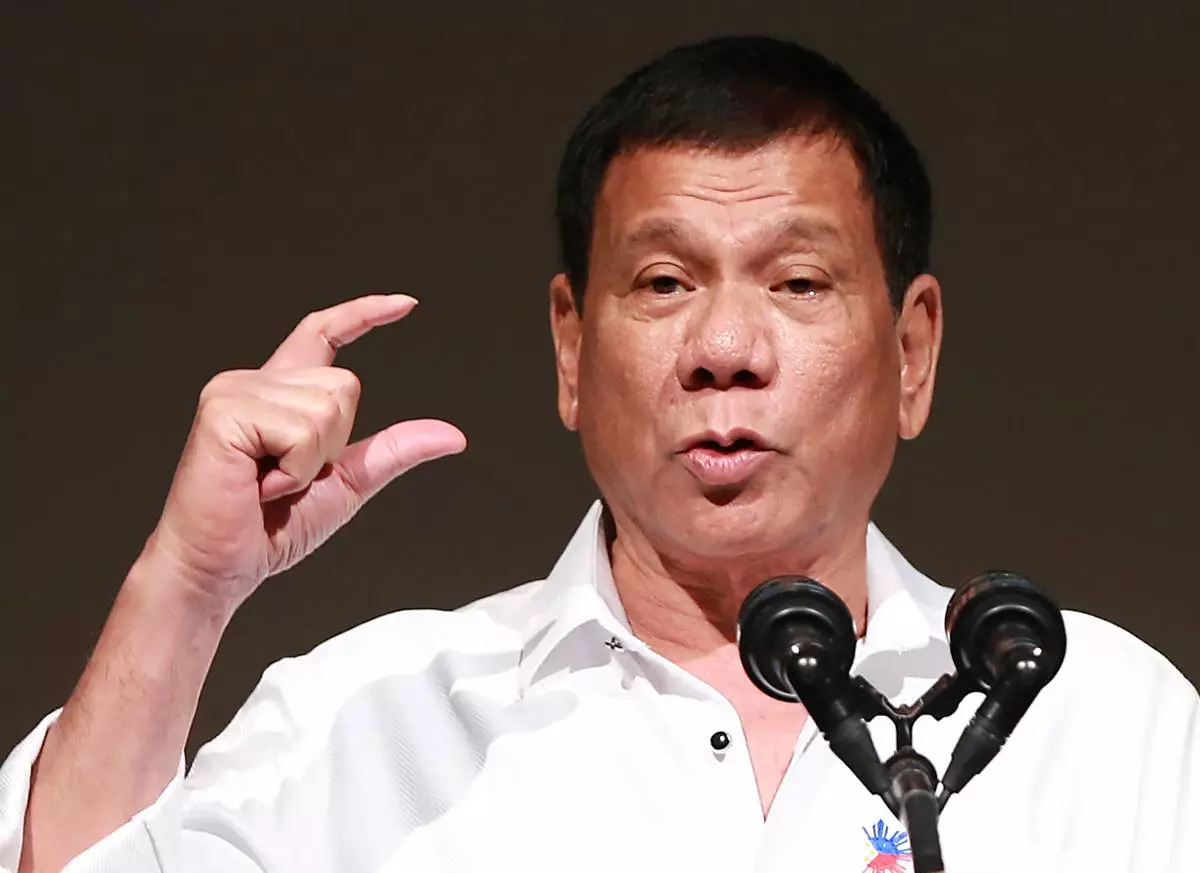
FILE - In this Oct. 26, 2016 file photo, Philippine President Rodrigo Duterte delivers a speech at the Philippine Economic Forum in Tokyo. (AP Photo/Eugene Hoshiko, File)
BRUSSELS (AP) — The European Union on Thursday approved a massive loan package to help Ukraine meet its economic and military needs for the next two years, the bloc’s Cypriot presidency said, after Hungary lifted its veto.
The EU also approved a new raft of sanctions against Russia over its war on Ukraine. The measures were prepared early this year and set to be announced in February to mark the fourth anniversary of the conflict, but Hungary and Slovakia opposed the move.
Hungary and Slovakia have been locked in a feud with Ukraine since Russian oil deliveries to the two EU countries were halted in January after a pipeline was damaged. Ukrainian officials blamed the damage on Russian drone attacks.
Ukraine desperately needs the 90-billion-euro ($106 billion) loan package to prop up its war-ravaged economy and help keep Russian forces at bay. Hungary angered its EU partners by reneging on a December deal to provide the funds.
“Today the Council approved the final element needed to allow for the disbursement of the 90-billion-euro loan for Ukraine,” Cypriot Finance Minister Makis Keravnos said. “Loan disbursements will start flowing as soon as possible, providing vital support for Ukraine’s most pressing budgetary needs.”
THIS IS A BREAKING NEWS UPDATE. AP’s earlier story follows below.
BRATISLAVA, Slovakia (AP) — The flow of Russian oil to Slovakia through the Druzhba pipeline that crosses Ukraine has resumed, Slovak Economy Minister Denisa Saková said Thursday, a breakthrough in an issue that has caused a major diplomatic spat in Europe.
The development is expected to unblock a large financial assistance package for war-ravaged Ukraine.
Populist Slovak Prime Minister Robert Fico welcomed the development, calling it “good news.”
“Let’s hope a serious relation between Ukraine and the European Union has been established,” Fico said. He thanked all those involved in solving the issue, including the European Commission and Hungary.
Hungary and Slovakia were locked in a feud with Ukraine since Russian oil deliveries to Hungary and Slovakia through the pipeline were halted in January after the pipeline was damaged.
Ukrainian officials blamed the damage on Russian drone attacks.
Hungary’s nationalist Prime Minister Viktor Orbán, who was recently defeated in an election, accused Ukraine of deliberately delaying repairs — an allegation that Ukrainian President Volodymyr Zelenskyy denied.
Fico said Thursday he still didn’t believe the pipeline was damaged at all and alleged that the pipeline and oil “were used in the current geopolitical battle.”
Ukraine and most of its European backers oppose imports of Russian oil which have helped to fund Russian President Vladimir Putin’s war against Ukraine, now in its fifth year. But unlike the rest of the European Union, Hungary and Slovakia still depend on Russia for their energy needs.
For two months, the two countries have accused Ukraine of failing to repair the damaged pipeline. Citing the issue, Hungary blocked a massive EU loan to Ukraine while Slovakia refused to endorse new sanctions against Russia until the supplies resumed.
The flow resumed after three months at 2 a.m. Thursday, the Slovak economy ministry said, lifting a major obstacle to approving the EU funds for Ukraine later Thursday, just as EU leaders gather for a summit in Cyprus.
Ukraine desperately needs the 90 billion euro ($106 billion) loan package, originally agreed in December, to prop up its war-ravaged economy and help keep Russian forces at bay for the next two years.
The 27-nation EU had originally intended to use frozen Russian assets as collateral for the loan. But that option was blocked by Belgium, where the bulk of the frozen assets are held.
In December, the Czech Republic, Hungary and Slovakia agreed not to stop their EU partners from borrowing the money on international markets as long as the three countries did not have to take part in the scheme.
But Orbán, who has repeatedly blocked EU aid to Ukraine, angered the other 24 countries by later reneging on that deal over the pipeline dispute and as campaigning heated up ahead of the April 12 election that he lost in a landslide.
The EU has also been trying since February to push through a new raft of sanctions against Russia, which Hungary and Slovakia have blocked due to the oil feud.
Fico said he expected both issues to be solved on Thursday.
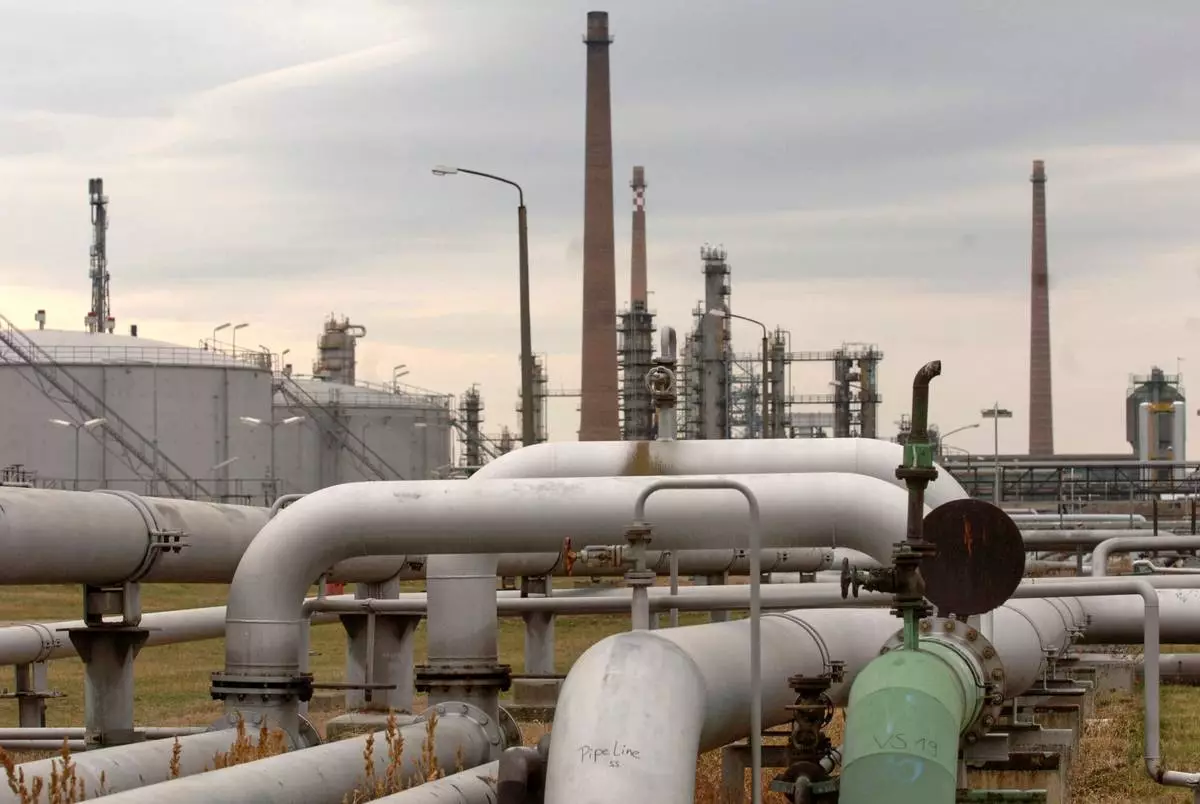
FILE - A general view of a pumping station at the end of the Druzhba oil pipeline in the east German refinery PCK in Schwedt, Jan. 10, 2007. (AP Photo/Sven Kaestner, File)