Skip to Content Facebook Feature Image

Brazil's VP Alckmin, a negotiator of the Mercosur-EU deal, sees it as relief in a turbulent world

News

Brazil's VP Alckmin, a negotiator of the Mercosur-EU deal, sees it as relief in a turbulent world
News

News

Brazil's VP Alckmin, a negotiator of the Mercosur-EU deal, sees it as relief in a turbulent world

2026-04-23 19:51 Last Updated At:20:00

BRASILIA, Brazil (AP) — The trade deal between South American bloc Mercosur and the European Union that capped a quarter-century of talks offers some solace at a time when unilateral moves have dominated the geopolitical landscape, Brazil's Vice President Geraldo Alckmin said.

He was one of the key negotiators of the agreement reached in late 2024 that provisionally comes into force May 1.

“In a moment that the world much needed it, at a time of protectionism, a tough world, this gives a message that it is possible to open markets,” Alckmin said Wednesday during an interview with media, including The Associated Press, at the presidential palace in Brasilia. “It is the biggest deal between trade blocs in the world. A market of $22 trillion and 720 million people.”

Fierce opposition by farmers and environmentalists delayed the deal in December. It then hit another wall after EU lawmakers sent the deal to the bloc’s judiciary. The EU executive responded by saying it would provisionally enact the deal, which sidesteps the European Parliament. After the trade deal is implemented, it will be halted if the European Court of Justice rules against it.

Alckmin said not finishing the deal with the EU would have meant staying behind while other competitors accomplished other agreements.

“It is a win-win. The societies of the Mercosur countries win, and so the 27 countries of the EU,” added Alckmin, who expects a boost in Brazilian exports to the EU of about 13% per year.

The trans-Atlantic trade deal was signed Jan. 17. The European Commission’s president Ursula von der Leyen repeatedly paid tribute to Brazilian President Luiz Inácio Lula da Silva’s administration for its efforts in making the deal happen despite opposition in Europe. Brazil is by far the largest economy of Mercosur, with a gross domestic product estimated at more than $2.3 trillion in 2025.

Alckmin confirmed other potential deals with the United Arab Emirates and Canada are being negotiated.

Two decades ago, Alckmin and Lula were on opposite camps in almost every issue, including the negotiations for a deal between the EU and the bloc that includes Brazil, Argentina, Paraguay and Uruguay. While the man who was then governor of the powerful Sao Paulo state advocated for a pact with European nations, Lula did not.

Fast forward to 2022, the two gathered forces to unseat then-President Jair Bolsonaro, who they deemed to be a risk to Brazil's democracy. Both gravitated toward the political center. Lula made Alckmin his trade and industry minister, one of the government's key negotiators in any front.

Lula's win in 2022 for a third nonconsecutive term and his bid for reelection this year did not assure the Mercosur-EU trade deal was going ahead, but the conversations gained a new momentum after U.S. President Donald Trump took office last year and imposed tariffs against several countries, including Brazil.

French President Emmanuel Macron, one of the critics of the deal, has demanded safeguards to monitor and stop large economic disruption in the EU, increased regulations in the Mercosur nations like pesticide restrictions, and more inspections of imports at EU ports.

Alckmin rejected the accusation that Mercosur countries have less concerns about environmental preservations, as some EU farmers have said.

“If there’s one country that is a role model of environmental preservation, that is Brazil … Brazil reduced deforestation in 50%,” Alckmin said.

“So no one is too scared in either side, if there’s an import boom any of the two (blocs) can ask for safeguards,” he added.

The full implementation of the deal might take up to 12 years, which Alckmin sees as key for Mercosur companies to improve productivity and quality of thousands of products. He said the fruit, beef and sugar industries of the South American bloc will be among the first to benefit but many more will over time.

“It is better to do it gradually than not do it at all,” Alckmin said. “This was a very well-built deal.”

Follow AP’s coverage of Latin America and the Caribbean at https://apnews.com/hub/latin-america
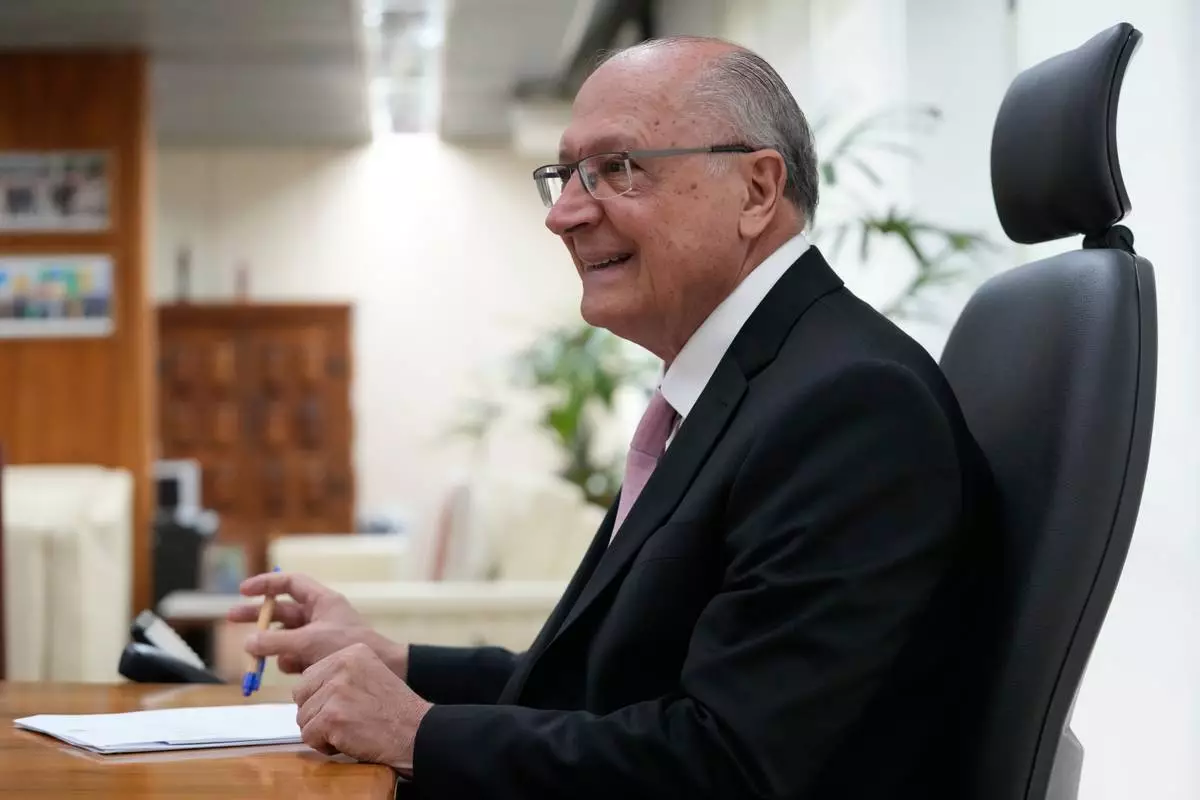
Brazil's Vice President Geraldo Alckmin gives an interview in his office in Brasilia, Brazil, Wednesday, April 22, 2026. (AP Photo/Eraldo Peres)
Brazil's Vice President Geraldo Alckmin gives an interview in his office in Brasilia, Brazil, Wednesday, April 22, 2026. (AP Photo/Eraldo Peres)
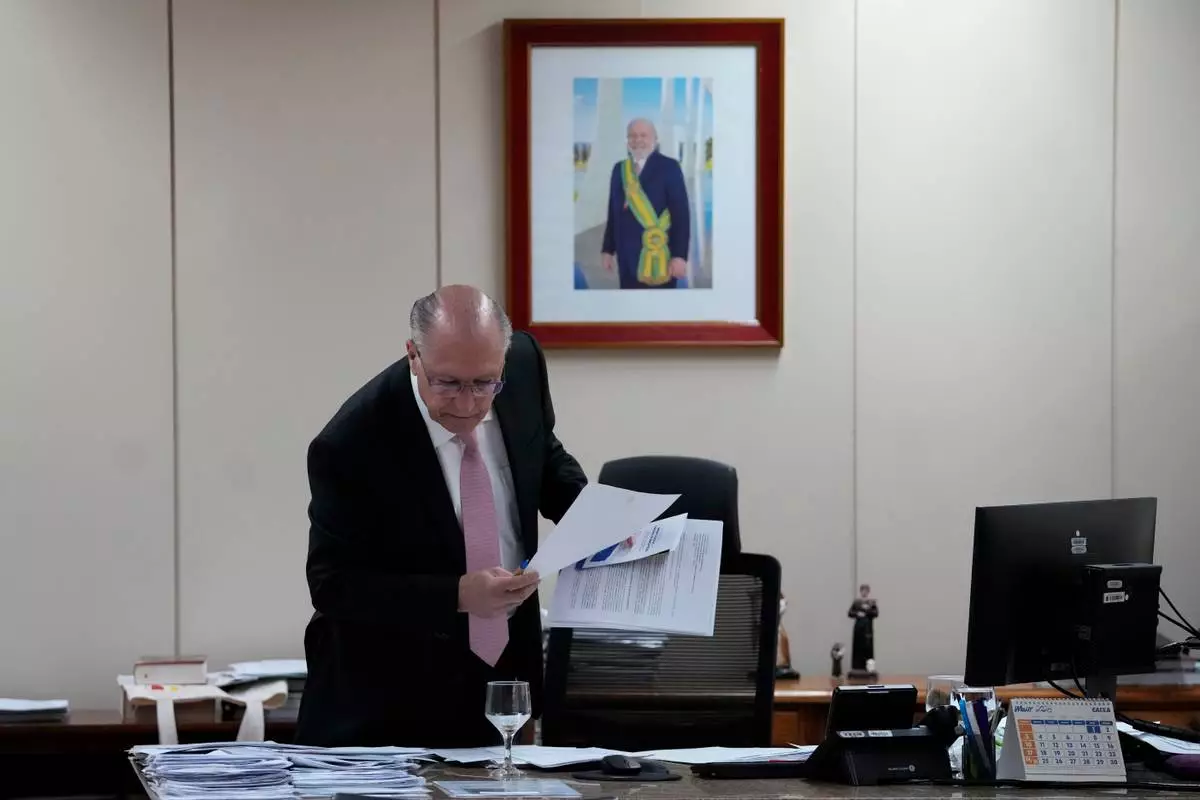
Brazil's Vice President Geraldo Alckmin picks up papers in front of a portrait of Brazil's President Luiz Inacio Lula da Silva before an interview in his office in Brasilia, Brazil, Wednesday, April 22, 2026. (AP Photo/Eraldo Peres)

Brazil's Vice President Geraldo Alckmin picks up papers in front of a portrait of Brazil's President Luiz Inacio Lula da Silva before an interview in his office in Brasilia, Brazil, Wednesday, April 22, 2026. (AP Photo/Eraldo Peres)
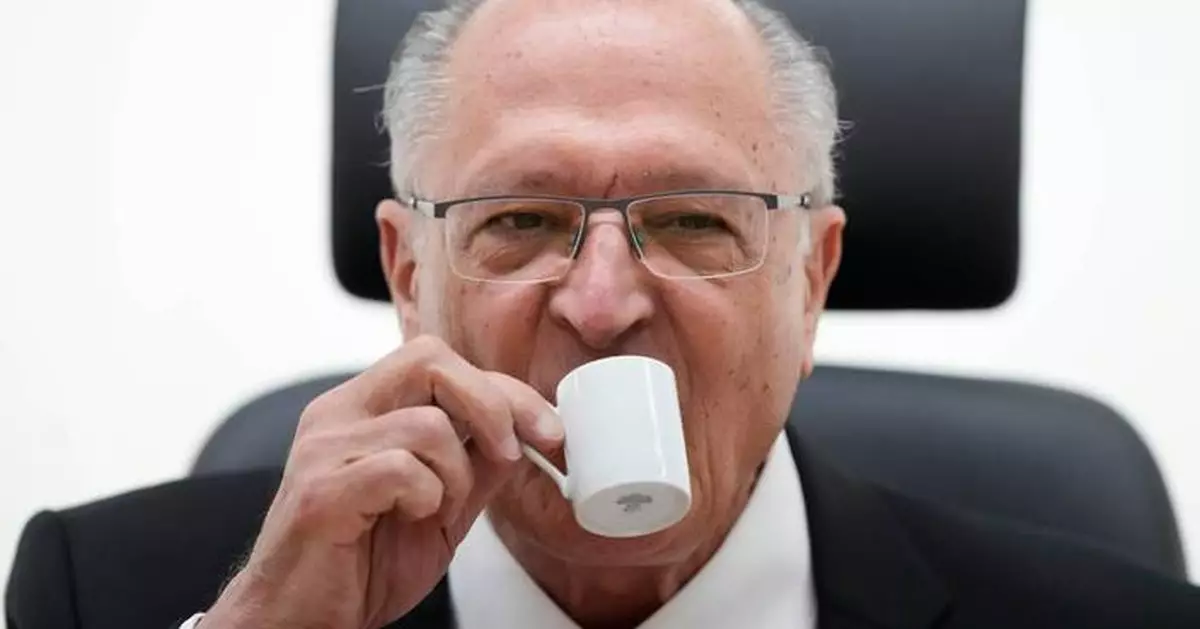
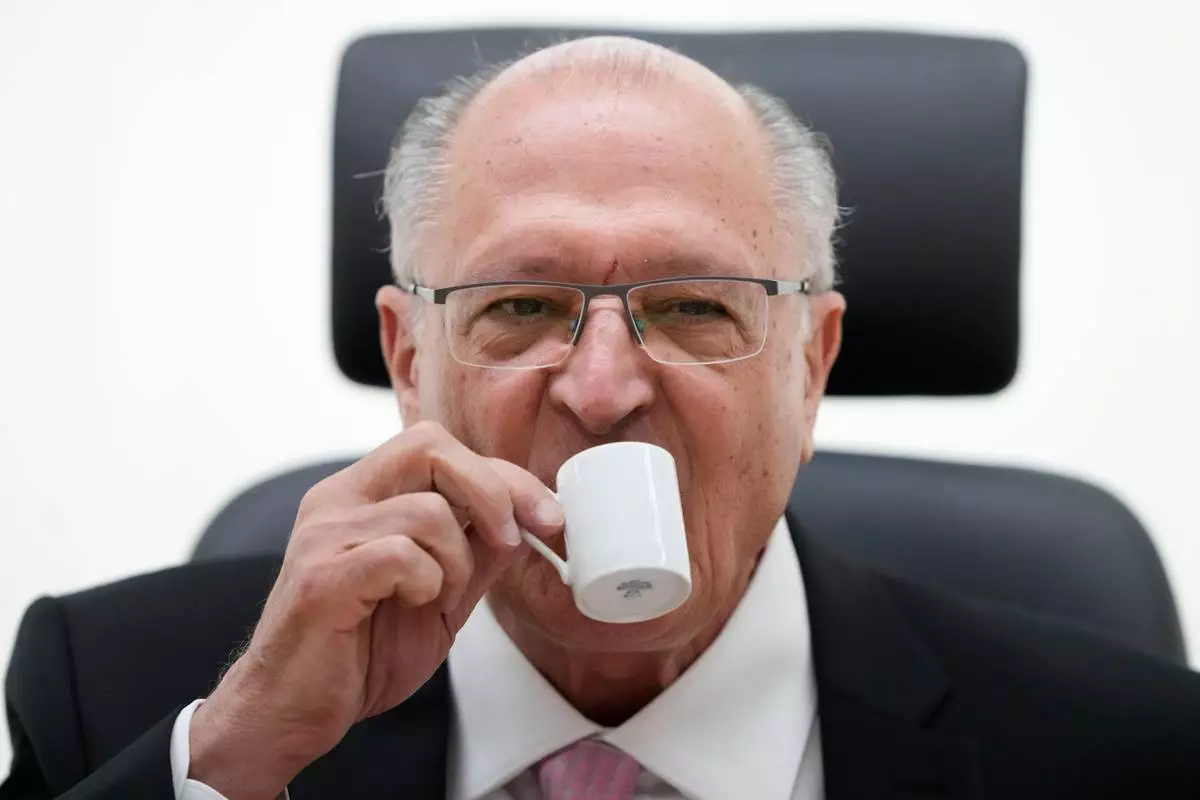
Brazil's Vice President Geraldo Alckmin drinks coffee during an interview in his office in Brasilia, Brazil, Wednesday, April 22, 2026. (AP Photo/Eraldo Peres)
Brazil's Vice President Geraldo Alckmin drinks coffee during an interview in his office in Brasilia, Brazil, Wednesday, April 22, 2026. (AP Photo/Eraldo Peres)

BRUSSELS (AP) — The European Union on Thursday approved a massive loan package to help Ukraine meet its economic and military needs for the next two years, the bloc’s Cypriot presidency said, after Hungary lifted its veto.

The EU also approved a new raft of sanctions against Russia over its war on Ukraine. The measures were prepared early this year and set to be announced in February to mark the fourth anniversary of the conflict, but Hungary and Slovakia opposed the move.

Hungary and Slovakia have been locked in a feud with Ukraine since Russian oil deliveries to the two EU countries were halted in January after a pipeline was damaged. Ukrainian officials blamed the damage on Russian drone attacks.

Ukraine desperately needs the 90-billion-euro ($106 billion) loan package to prop up its war-ravaged economy and help keep Russian forces at bay. Hungary angered its EU partners by reneging on a December deal to provide the funds.

“Today the Council approved the final element needed to allow for the disbursement of the 90-billion-euro loan for Ukraine,” Cypriot Finance Minister Makis Keravnos said. “Loan disbursements will start flowing as soon as possible, providing vital support for Ukraine’s most pressing budgetary needs.”

THIS IS A BREAKING NEWS UPDATE. AP’s earlier story follows below.

BRATISLAVA, Slovakia (AP) — The flow of Russian oil to Slovakia through the Druzhba pipeline that crosses Ukraine has resumed, Slovak Economy Minister Denisa Saková said Thursday, a breakthrough in an issue that has caused a major diplomatic spat in Europe.

The development is expected to unblock a large financial assistance package for war-ravaged Ukraine.

Populist Slovak Prime Minister Robert Fico welcomed the development, calling it “good news.”

“Let’s hope a serious relation between Ukraine and the European Union has been established,” Fico said. He thanked all those involved in solving the issue, including the European Commission and Hungary.

Hungary and Slovakia were locked in a feud with Ukraine since Russian oil deliveries to Hungary and Slovakia through the pipeline were halted in January after the pipeline was damaged.

Ukrainian officials blamed the damage on Russian drone attacks.

Hungary’s nationalist Prime Minister Viktor Orbán, who was recently defeated in an election, accused Ukraine of deliberately delaying repairs — an allegation that Ukrainian President Volodymyr Zelenskyy denied.

Fico said Thursday he still didn’t believe the pipeline was damaged at all and alleged that the pipeline and oil “were used in the current geopolitical battle.”

Ukraine and most of its European backers oppose imports of Russian oil which have helped to fund Russian President Vladimir Putin’s war against Ukraine, now in its fifth year. But unlike the rest of the European Union, Hungary and Slovakia still depend on Russia for their energy needs.

For two months, the two countries have accused Ukraine of failing to repair the damaged pipeline. Citing the issue, Hungary blocked a massive EU loan to Ukraine while Slovakia refused to endorse new sanctions against Russia until the supplies resumed.

The flow resumed after three months at 2 a.m. Thursday, the Slovak economy ministry said, lifting a major obstacle to approving the EU funds for Ukraine later Thursday, just as EU leaders gather for a summit in Cyprus.

Ukraine desperately needs the 90 billion euro ($106 billion) loan package, originally agreed in December, to prop up its war-ravaged economy and help keep Russian forces at bay for the next two years.

The 27-nation EU had originally intended to use frozen Russian assets as collateral for the loan. But that option was blocked by Belgium, where the bulk of the frozen assets are held.

In December, the Czech Republic, Hungary and Slovakia agreed not to stop their EU partners from borrowing the money on international markets as long as the three countries did not have to take part in the scheme.

But Orbán, who has repeatedly blocked EU aid to Ukraine, angered the other 24 countries by later reneging on that deal over the pipeline dispute and as campaigning heated up ahead of the April 12 election that he lost in a landslide.

The EU has also been trying since February to push through a new raft of sanctions against Russia, which Hungary and Slovakia have blocked due to the oil feud.

Fico said he expected both issues to be solved on Thursday.

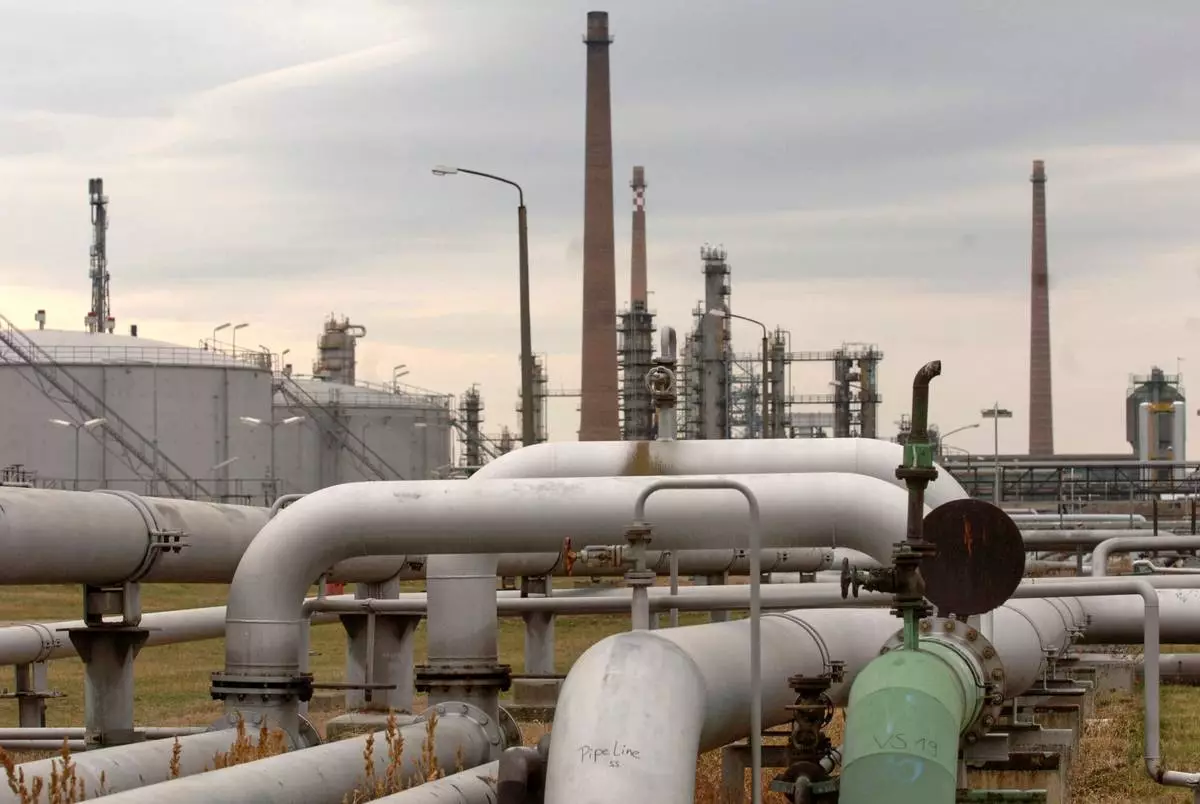
FILE - A general view of a pumping station at the end of the Druzhba oil pipeline in the east German refinery PCK in Schwedt, Jan. 10, 2007. (AP Photo/Sven Kaestner, File)

FILE - A general view of a pumping station at the end of the Druzhba oil pipeline in the east German refinery PCK in Schwedt, Jan. 10, 2007. (AP Photo/Sven Kaestner, File)

Recommended Articles